Key points
- Mosquito eggs, larvae and pupae all develop in water, so removing standing water is the most lasting form of control.
- Aedes mosquitoes breed in small containers of fairly clean water and bite mainly during the day.
- Fogging kills adult mosquitoes on contact but leaves little lasting effect and does not reach larvae.
- Indoor residual spray targets the sheltered surfaces where adult mosquitoes rest.
- Anyone with a fever or other symptoms after mosquito bites should see a doctor.
Mosquito control works best when it starts with water. Every mosquito biting you indoors began life as a larva in standing water, usually somewhere close by: inside the property, on the terrace, in a drain or in the building next door. Our mosquito control service follows an Integrated Pest Management (IPM) approach. We survey for breeding sites, remove or treat them, then use indoor residual spraying and fogging where they genuinely help, matched to the property and the season.
This page explains each step, what it can and cannot achieve, how to prepare, and how to stay safe.
Why does mosquito control start with breeding sites?
Mosquitoes pass through four stages: egg, larva, pupa and adult. The first three stages all happen in water. In warm weather the journey from egg to biting adult can take about a week. A forgotten bucket or a blocked gutter can therefore keep producing new mosquitoes week after week.
Spraying adults without dealing with the water behind them gives short-lived relief. Removing breeding water cuts the number of mosquitoes that emerge in the first place. This part of the work keeps paying off between visits.
Different mosquitoes prefer different water, which is why the survey matters:
- Aedes breed in small containers of fairly clean water, such as pots, saucers, coolers, tyres and tanks. They bite mainly during the day. Their eggs can survive for long periods on the dry walls of a container and hatch when water returns.
- Anopheles generally use cleaner standing water, such as tanks, wells, ponds and seepage pools. They bite mostly from evening through the night.
- Culex favour polluted or organically rich water, such as blocked drains, septic overflow and wastewater. They mostly bite at night and are the familiar nuisance mosquito in many homes.
What happens during a breeding survey?
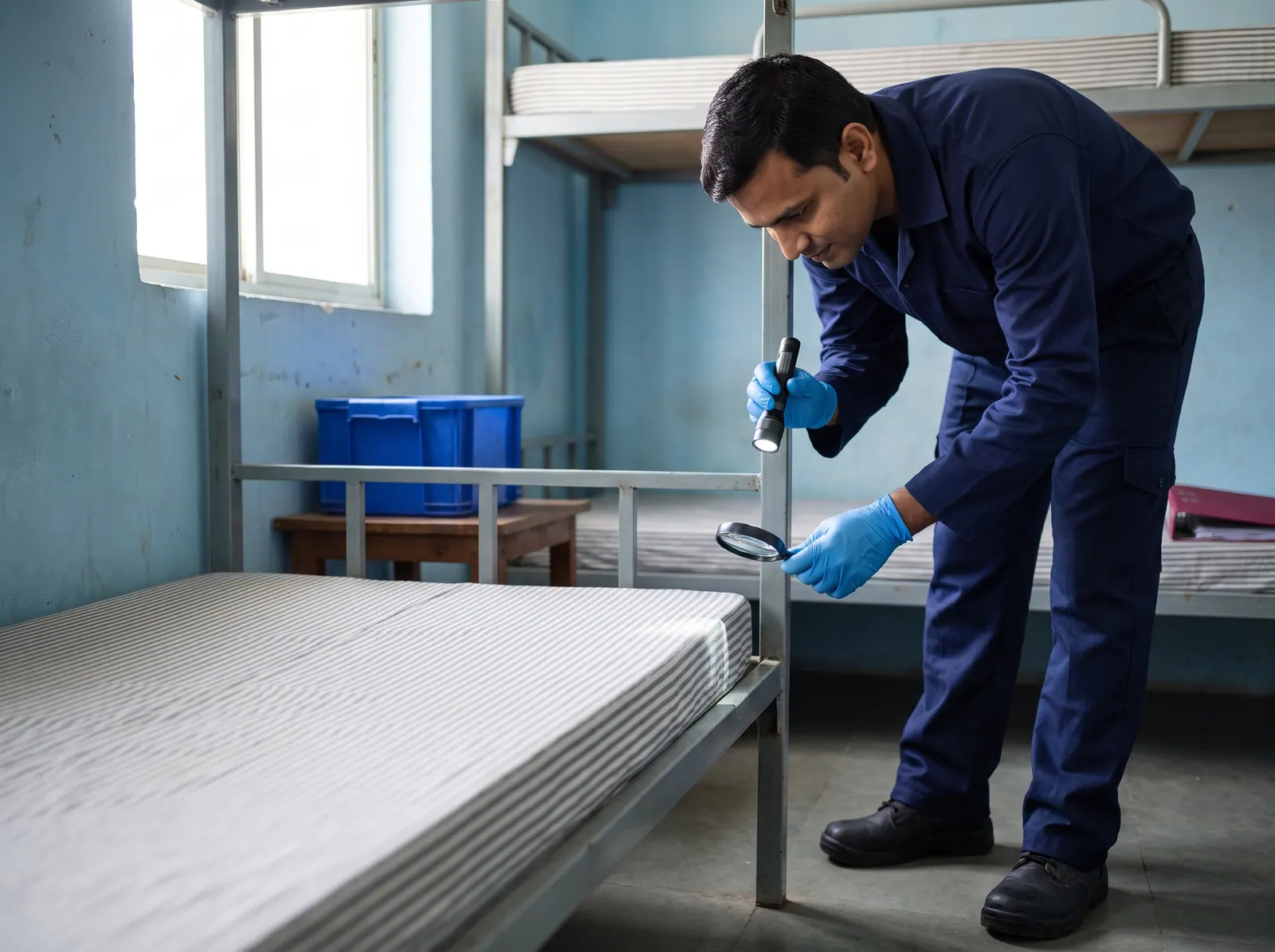
A technician walks the property inside and out. They look for standing water and for the dark, sheltered places where adult mosquitoes rest during the day. Each breeding site is noted, along with whether it can be removed, covered or needs treatment. We also explain which sites you can manage yourself between visits, because a weekly check by the household or society staff makes a real difference.
Common breeding sites we check
- Flower-pot saucers, vases, money-plant bottles and water held in plant leaves
- Desert coolers, AC drip trays and refrigerator defrost trays
- Overhead tanks and underground sumps with loose or missing lids
- Roof gutters, flat terraces and balconies where rainwater collects
- Discarded tyres, containers, coconut shells and tarpaulin folds
- Construction sites, curing water and unused toilets or bathrooms
- Blocked drains, chambers, lift pits and basement seepage
- Ornamental ponds, fountains and other water features
Climate also shapes where mosquitoes breed. In Goa, the very heavy south-west monsoon and humid coastal climate keep water lying in gardens, gutters and open ground for long stretches. In the Hyderabad area, on the Deccan plateau, desert coolers left half-full during the hot, dry summer are common breeding sites, as are monsoon puddles and poorly covered sumps. Our guide to seasonal pests and how to prepare for them covers what each part of the year tends to bring.
How do we control mosquito larvae?
Larval control is the most targeted part of the programme, because larvae are confined to water and cannot fly away. We work through these options in order of preference:
- Remove: empty, tip out or discard containers that do not need to hold water.
- Cover or screen: fit lids to tanks and sumps, and put mesh on overflow and vent pipes.
- Drain or repair: clear gutters and drains, fix leaks and deal with areas where water pools.
- Treat: where water cannot be removed, such as drains, chambers, lift pits, basement seepage or some water features, we apply a registered larvicide in line with its label.
We do not add treatments to drinking water as a matter of routine. Drinking-water storage is protected by covering, screening and regular cleaning. In ornamental ponds, larva-eating fish are a well-established non-chemical option worth considering.
How do we control adult mosquitoes?
Indoor residual spraying
After feeding, mosquitoes rest in shaded, still spots. These include the lower parts of walls, the undersides of furniture, the areas behind curtains and inside cupboards, and store rooms, stairwells and basements. A residual spray applied to these resting surfaces continues to act on mosquitoes that land there for a period after treatment. How long depends on the product, the surface and the conditions.
Residual treatment is not applied to food-contact surfaces, kitchen counters, bedding, toys or utensils.
Fogging and ULV treatment
Thermal fogging produces a visible cloud. ULV (ultra-low volume) treatment releases very fine droplets without the visible smoke. Both work by contact with adult mosquitoes that are flying at the time. They are useful for quick knockdown in gardens, open grounds, drains, basements and around buildings, for example during a sharp rise in mosquito numbers or before an outdoor event.
What fogging cannot do
- It leaves little lasting effect once the droplets settle or disperse.
- It does not reach eggs, larvae or pupae in water, so new adults keep emerging.
- Wind, rain and the heat of the day reduce how well it works, so timing matters.
- Mosquitoes from neighbouring properties can move back in within days.
- Relying repeatedly on one type of insecticide can contribute to mosquitoes becoming less sensitive to it.
For these reasons we treat fogging as a supplement to breeding-site work and residual treatment, not a replacement. Residents with questions can read whether mosquito fogging is safe and what to expect.
Which method suits which situation?
| Method | Targets | Main benefit | Main limit |
|---|---|---|---|
| Breeding-site reduction | Eggs, larvae, pupae | Lasting reduction while sites stay dry or covered | Needs ongoing checks by the household or site staff |
| Larviciding | Larvae in water that cannot be removed | Precise, confined to the breeding source | Only for suitable, non-drinking water; needs repeating |
| Indoor residual spray | Adults resting indoors | Continues to act for a period on treated surfaces | Not for food-contact surfaces; does not stop breeding |
| Fogging / ULV | Adults in flight | Rapid knockdown over larger areas | Short-lived; no effect on larvae; affected by weather |
How should you prepare, and how do we keep treatment safe?
We use registered products and maintain Material Safety Data Sheets for the products we use. Our Goa branch is a licensed pest control operator with the Directorate of Agriculture, Goa, and uses CIB&RC-registered products. Every product is applied according to its label directions.
Before the visit
- Cover or put away food, drinking water, utensils and children's toys.
- Cover aquariums and switch off their air pumps. Move bird cages and pet bowls out of the area.
- Clear access to drains, sumps, terraces, store rooms and the areas under beds and furniture.
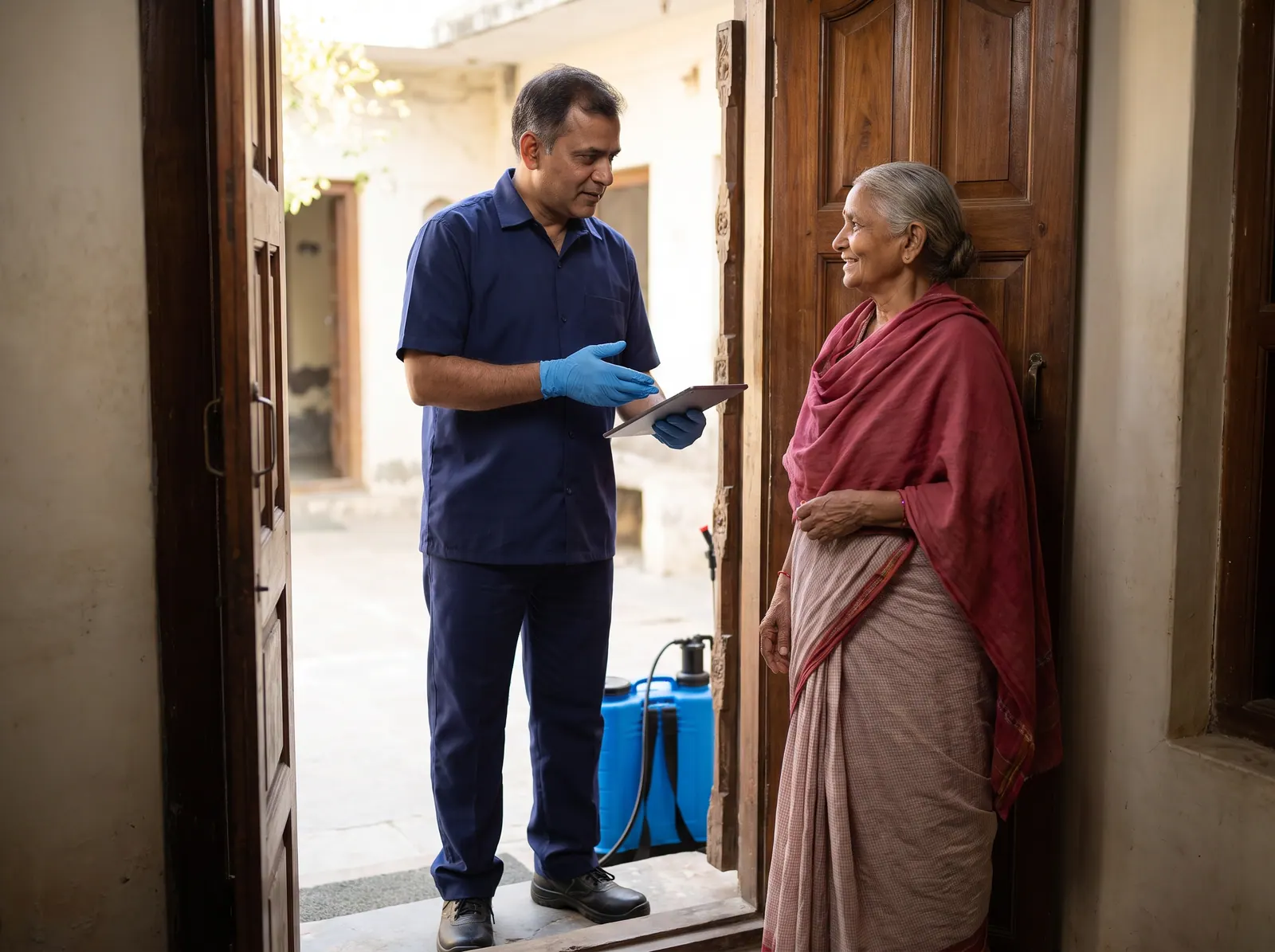
- Tell us in advance if anyone at home has asthma or another breathing condition, is pregnant, is elderly or is unwell, so the treatment can be planned around them.
During and after treatment
- Keep children and pets away from treated areas until surfaces are dry, or for as long as the technician advises.
- Stay out of the area during fogging and until the fog has settled. Ventilate well before re-entering.
- Avoid wiping or washing sprayed wall surfaces for the period the technician advises.
- Wash your hands after touching any treated surface.
Our article on the dos and don'ts of pest control covers the general precautions in more detail.
A note on mosquitoes and health
In India, mosquitoes can transmit diseases such as dengue, chikungunya and malaria, among others. Pest control reduces mosquito numbers but cannot remove the risk entirely. Keep using personal protection: mosquito nets, window and door screens, long sleeves at peak biting times, and repellents used according to their labels.
If you or anyone in your household develops a fever, severe headache, joint pain, rash or other symptoms after mosquito bites, see a doctor promptly. Please do not self-medicate. Mosquito control supports good health at home and work, but it is not a substitute for medical care.
Mosquito control for homes, societies and businesses
Flats and independent houses: the focus is usually on balconies, plant areas, coolers, bathrooms and bedrooms. Mosquito control often fits alongside other residential pest control.
Housing societies: mosquitoes do not respect flat boundaries. Common sumps, terrace tanks, lift pits, basements and drains need attention, so we work best with the management committee on a building-wide plan.
Hotels, resorts and commercial sites: gardens, water features, pool surrounds, drains and staff accommodation all need regular attention. Mosquito work can form part of a wider hotel pest management programme. At our Goa branch, service reports are shared after visits, which helps facility teams keep records.
Because mosquito pressure changes through the year, scheduled visits under an annual maintenance contract can suit some properties better than one-off treatments.
How to get started
Every job begins with an inspection, so the plan fits what is actually breeding and resting on your property. You can read more about how we work, from inspection to follow-up.
Check availability for your branch on this page, then get in touch with our Goa branch in Chimbel or our Shamshabad office. Our Shamshabad branch has recently opened. Tell us your location and the problem, and we'll confirm whether we can help.
Mosquito Control in Goa towns
Frequently asked questions
QHow long does a mosquito treatment keep working?
It depends on the method. Fogging gives quick knockdown of flying mosquitoes but has little lasting effect once it settles. Indoor residual spray continues to act on treated surfaces for a period that depends on the product, the surface and conditions. Breeding-site removal keeps working for as long as containers stay empty, covered or drained, which is why regular checks between visits matter most.
QDo we need to leave the house during fogging?
Yes. People and pets should stay out of the area being fogged and keep away until the fog has settled and the space has been ventilated. The technician will tell you how long to wait for your property. Cover food and aquariums beforehand, and let us know in advance about anyone with asthma or another breathing condition.
QCan you treat our overhead water tank or sump?
We do not routinely add treatments to drinking water. The better approach is a tight-fitting lid, mesh on overflow and vent pipes, and regular cleaning of the tank. During the breeding survey we check tanks and sumps for gaps and suggest practical fixes. Larvicides are kept for non-drinking water that cannot be removed, such as drains and chambers.
QWhy do mosquitoes come back a few days after treatment?
Mosquitoes can fly in from neighbouring buildings, open plots and drains, and new adults keep emerging from any untreated water nearby. Fogging in particular has a short effect. Lasting results come from removing breeding sites, treating resting areas and, in housing societies, covering common areas as well as individual flats.
QHow often should mosquito control be done?
There is no single schedule. It depends on the property, the surroundings and the time of year. Mosquito pressure usually rises during and after the monsoon, so visits may need to be more frequent then. After the inspection we suggest a schedule. Regular visits under an annual maintenance contract are one option for homes and businesses.
QIs mosquito treatment safe around pets and aquarium fish?
Fish are very sensitive to many insecticides, so cover aquariums and switch off their air pumps before treatment. Move bird cages and pet bowls out of the area. Keep pets away from treated surfaces until they are dry or for as long as the technician advises. If a pet seems unwell afterwards, contact your vet.
QWill mosquito control protect my family from dengue or malaria?
Reducing mosquito numbers lowers the chance of bites, but no pest control treatment can remove the risk of mosquito-borne disease entirely. Keep using nets, screens, suitable clothing and repellents as directed on their labels. If anyone develops a fever or feels unwell after mosquito bites, see a doctor promptly.