Key points
- Residential pest control covers flats, independent houses, villas and housing societies.
- Every job starts with an inspection to identify the pest, its source, entry points and attracting conditions.
- Homes can choose a one-time treatment for a specific problem or an annual maintenance contract for scheduled visits.
- Keep children and pets away from treated areas until dry or as advised, ventilate rooms and wash hands.
- Housing societies get better results when common areas such as drains, garbage areas and basements are included.
Residential pest control is about more than spraying a few corners. A home has kitchens, bathrooms, wardrobes, balconies, gardens and shared walls, and each attracts different pests for different reasons. Our residential service covers flats, independent houses, villas and housing societies, using an inspection-led approach that targets the source of the problem rather than treating every surface.
This page explains which pests we commonly deal with in homes, how the work is planned, how a one-time visit compares with an annual contract, and how to prepare your home so treatment is safe and effective. Availability depends on your branch, so please check availability for your branch before booking.
Which household pests does residential pest control cover?
Most homes deal with one or more of the following. Each needs a slightly different method, which is why identifying the pest correctly matters.
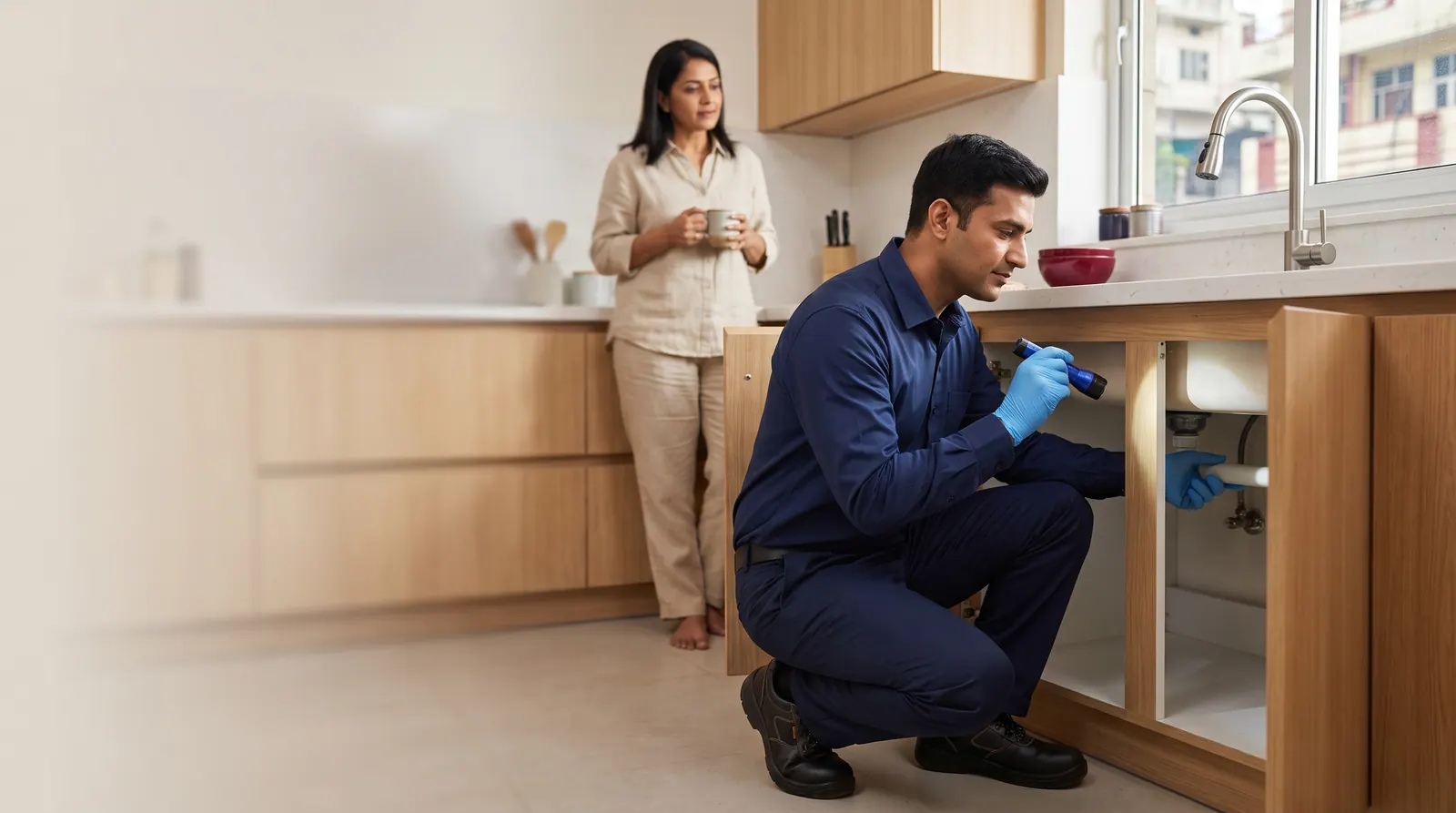
- Cockroaches – usually in kitchens, under sinks, behind appliances and in drains. We rely on gel baiting and crack-and-crevice treatment; see our cockroach control service for details.
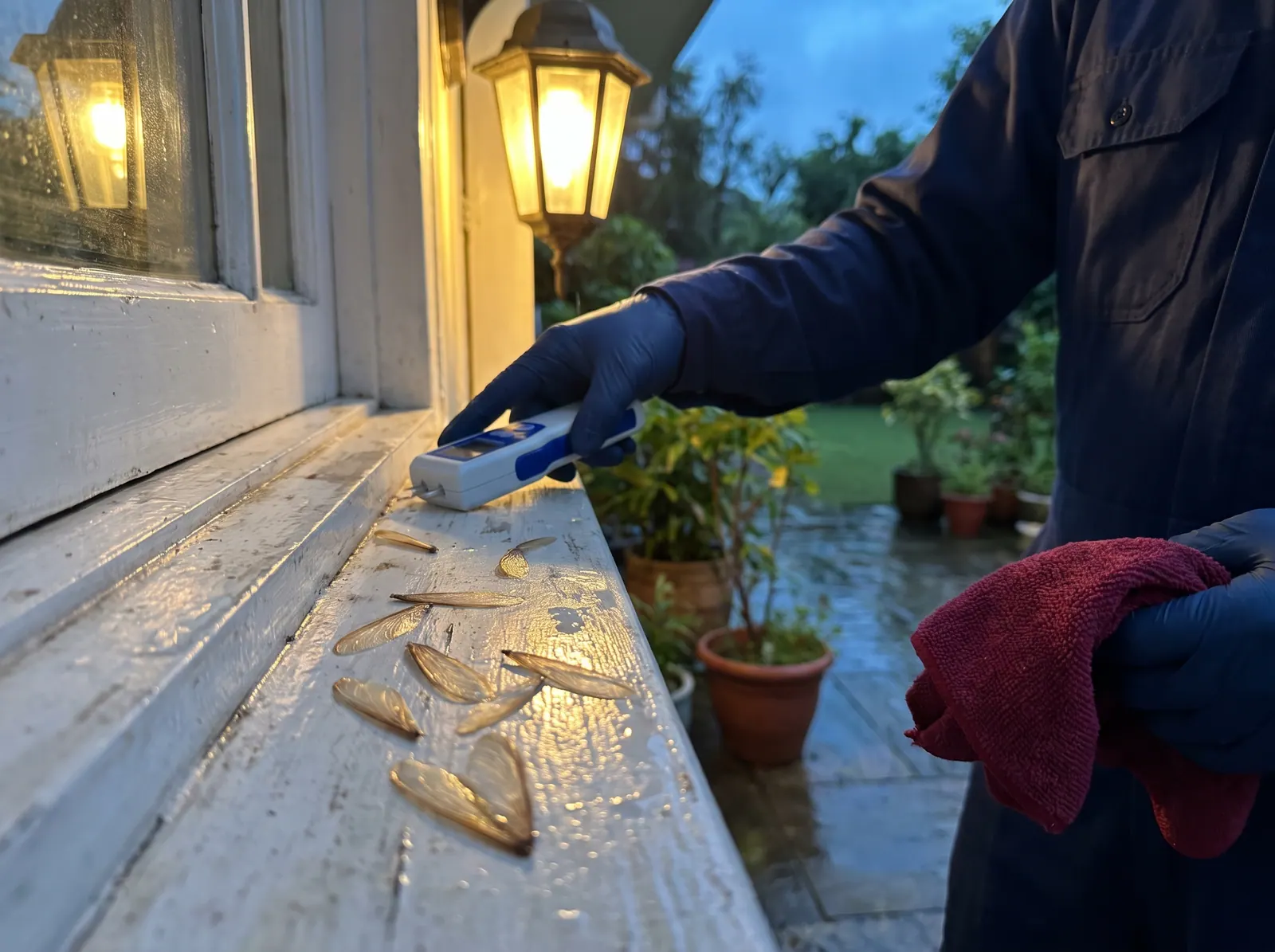
- Termites – often found in door frames, skirting, wooden furniture and soil around the building. Damage is frequently hidden until it is advanced. Read about our termite control for new and occupied buildings.
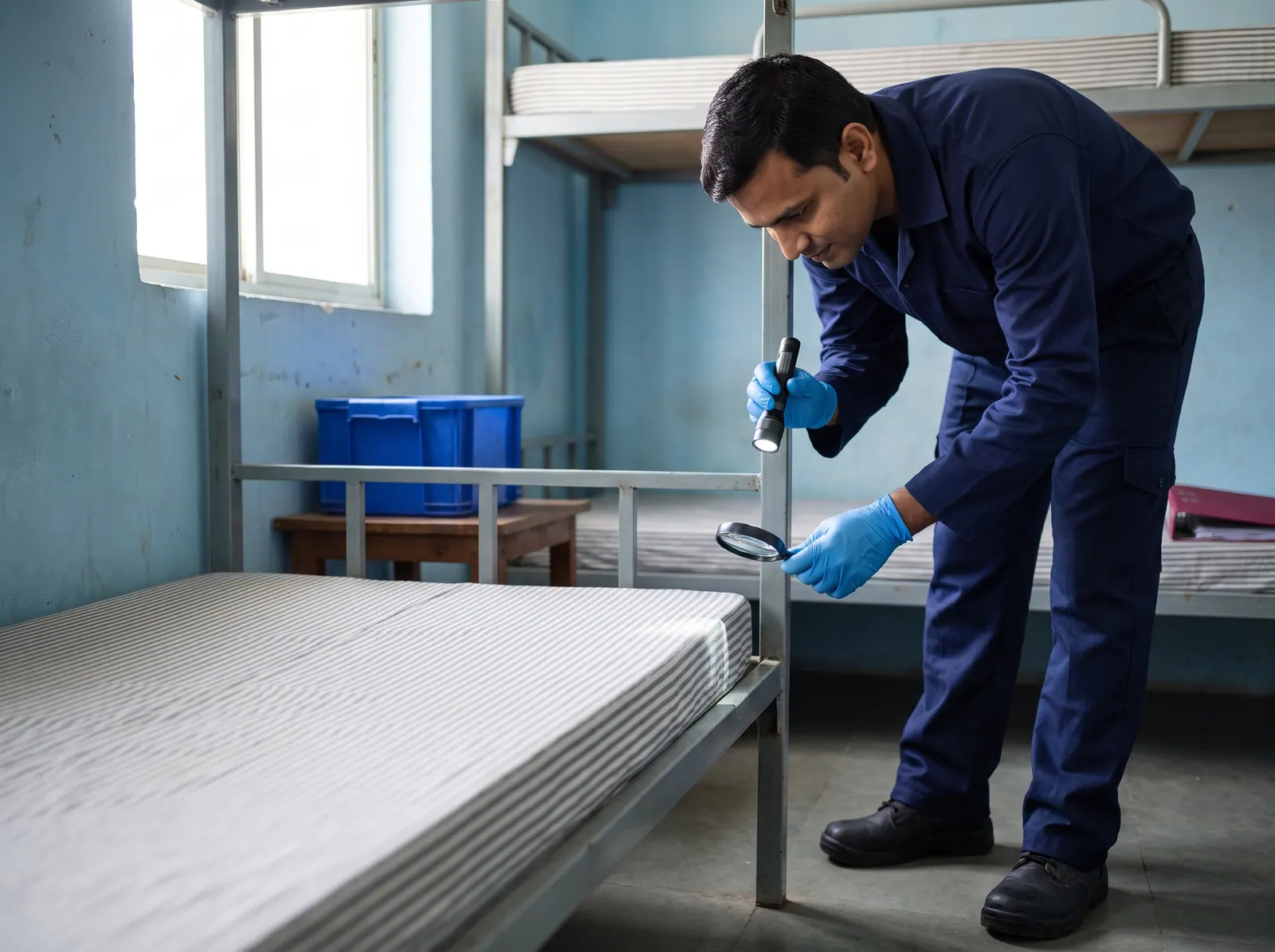
- Bed bugs – hide in mattress seams, bed frames, sofas and cracks near sleeping areas. They need room-by-room treatment and follow-up; our bed bug treatment page explains the process.
- Rats and mice – enter through gaps around pipes, drains and doors, and contaminate food and stored items.
- Mosquitoes – breed in standing water in flower-pot trays, overhead tanks, coolers, gutters and blocked drains.
- Ants – follow trails to food and moisture; controlling them means finding the nest, not just the trail.
- Wood borers – powder-post and furniture beetles that leave small holes and fine dust in furniture, doors and frames.
- House lizards, flies, spiders and silverfish – usually linked to lighting, moisture, open entry points or food sources.
Climate plays a part too. Goa's humid coastal climate and heavy south-west monsoon keep homes damp for months, while the Hyderabad region's hot, dry summer, monsoon and mild winter bring their own seasonal shifts. Moisture, standing water and pests moving indoors are common themes in both.
Why does every job start with an inspection?
Treating without inspecting often means treating the wrong place. Under our Integrated Pest Management (IPM) approach, the first step is to understand what is happening in your home before deciding what to apply and where.
- Identify the pest – droppings, damage, shed skins, mud tubes or live sightings tell us what we are dealing with.
- Find the source and entry points – drains, plumbing gaps, cracks, window frames, ducts, garden soil or neighbouring units.
- Look at conditions that attract pests – leaks, damp walls, food storage, waste handling, clutter and standing water.
- Recommend a plan – targeted treatment, plus sanitation and proofing advice you can act on yourself.
This keeps chemical use focused on where pests actually live and travel, which is better for your household and usually gives a more lasting result.
How does treatment differ for flats, houses, villas and societies?
Flats and apartments
In flats, pests often move between units through plumbing shafts, electrical ducts, drains and shared walls. Treatment focuses on kitchens, bathrooms and the points where services enter the flat. Sealing gaps around pipes and keeping drain covers in place make a real difference.
Independent houses and villas
Houses with gardens, compound walls and open areas have more outdoor pressure. Termites can come from the soil, rodents from the garden or drains, and mosquitoes from water collecting in pots, gutters and tanks. The inspection therefore covers the perimeter, roof areas and outdoor storage as well as the interior.
Housing societies
For a housing society, treating one flat while the common areas are left untouched rarely solves the problem. Garbage areas, basements, drains, stairwells, lift pits and gardens need a coordinated plan. Societies usually benefit from scheduled visits agreed with the managing committee, with residents informed in advance so they can prepare their homes.
One-time treatment or an annual maintenance contract?
Both options have a place. The right choice depends on the pest, the size of the property and how often the problem returns.
| Consideration | One-time treatment | Annual maintenance contract (AMC) |
|---|---|---|
| Best suited to | A specific, current problem such as cockroaches in the kitchen or wood borer in a cupboard | Homes and societies that want regular, preventive cover through the year |
| Visits | A single treatment, with follow-up where the pest requires it (for example, bed bugs) | Scheduled visits across the year, planned around seasons |
| Records | Service details for that visit | Service reports for each scheduled visit |
| Seasonal changes | Addresses the problem at the time of the visit | Allows for pre-monsoon and post-monsoon attention |
Termite work for existing buildings is usually planned as its own treatment, following the general approach of the Indian Standard for post-construction anti-termite treatment (IS 6313 Part 3). You can read more about scheduled cover on our annual maintenance contracts page.
How should you prepare your home before treatment?
Good preparation helps the treatment reach the right places and reduces exposure for your family. Your technician will give specific instructions for your treatment, but these general steps apply to most visits:
- Store food, utensils, cutlery and toothbrushes in closed cupboards or containers.
- Clear the areas to be treated, such as under the kitchen sink, behind appliances or around beds.
- Move pets, pet food and water bowls out of the treatment area; cover aquariums and switch off their air pumps if advised.
- Plan for children, elderly family members and anyone with breathing difficulties to stay away from treated rooms during the visit.
- Arrange for an adult family member to be present to accompany the technician and answer questions.
Some treatments have their own checklists. For example, see how to prepare for cockroach gel treatment and the bed bug treatment preparation checklist. If you need to reschedule, please let us know at least 48 hours before the visit, as a late-cancellation fee may apply.
Is residential pest control safe for children and pets?
Safety depends on using the right product in the right place and following simple precautions afterwards. We use targeted methods such as gel baits, bait stations and crack-and-crevice treatment where they suit the problem, which keeps product away from open surfaces. Material Safety Data Sheets are maintained for the products we use.
After treatment:
- Keep children and pets away from treated areas until they are dry, or for as long as the technician advises.
- Open windows and ventilate the rooms before using them again.
- Do not wipe or wash away gel bait placements or treated cracks unless advised.
- Wash hands after handling items from treated areas.
Our Goa operation is a licensed pest control operator under the Directorate of Agriculture, Goa, and uses CIB&RC-registered products. If anyone in the household feels unwell after treatment, or has a reaction to a bite or sting, please see a doctor.
What happens after the visit?
Some pests disappear within a day or two; others, such as cockroaches on gel bait or bed bugs, take longer and may need a follow-up visit. Your technician will explain what to expect for your treatment.
In Goa, clients receive service reports after visits and updates on WhatsApp. A warranty applies to the treated area for specific services, as set out in the service agreement. Pests can still come in from neighbouring homes or outside, so the prevention advice given during the visit, such as sealing gaps, fixing leaks and managing waste, is an important part of keeping your home clear.
Check availability for your branch
We have two offices: our Goa branch in Chimbel and our Shamshabad office for the Hyderabad region. Availability for residential pest control is shown for each branch on this page. Tell us your location, the type of home and the pest you are seeing through our contact page, and we will confirm whether and how we can help.
Residential Pest Control in Goa towns
Frequently asked questions
QHow often should a home have pest control?
It depends on the pest and how severe the problem is. A single treatment can resolve a specific issue, such as cockroaches in one kitchen. Homes that see recurring pests, or have gardens and outdoor areas, often benefit from scheduled visits through the year, which may be monthly or quarterly. Your technician will suggest a frequency after the inspection, based on what they find in your home.
QDo I need to leave the house during treatment?
For most targeted treatments, such as gel baiting, you do not need to leave the house, but you should keep children and pets away from the rooms being treated. For sprays or larger treatments, the technician may advise staying out of treated rooms for a set time and ventilating before you return. An adult should remain available to accompany the technician during the visit.
QCan one flat be treated if the neighbours have the same problem?
Yes, an individual flat can be treated, and targeted methods help reduce pests inside your home. However, cockroaches, ants and rodents often travel through shared drains, ducts and walls. If neighbouring flats or common areas are untreated, pests may return. Sealing gaps around pipes and drains helps, and a society-wide plan covering common areas usually gives better long-term results.
QIs an annual maintenance contract worth it for a single home?
An AMC suits homes that face pests repeatedly or want preventive cover around seasonal changes, such as before and after the monsoon. It brings scheduled visits and service reports, so problems are caught early. If you only have an occasional, isolated issue, a one-time treatment may be enough. The inspection helps you decide which option fits your home.
QHow long does a typical home treatment take?
Time depends on the pest, the size of the home and the method used. Many residential treatments are completed within a few hours. Termite treatment for an occupied building or room-by-room bed bug treatment can take longer. The technician will give you an estimated time frame after the initial assessment so you can plan your day.
QWhat should I do if pests come back after treatment?
Let us know what you are seeing and where. In Goa, a warranty applies to the treated area for specific services, as set out in your service agreement. If pests are entering from neighbouring homes or outside, the technician can advise on proofing steps such as sealing entry points, fixing leaks and changing how waste and food are stored.