Key points
- Bites alone do not confirm bed bugs; look for live bugs, dark droppings, rust-coloured stains, shed skins and eggs.
- Bed bugs hide in mattress seams, bed frames, headboards, furniture joints and wall cracks near where people sleep.
- Follow-up visits matter because eggs can survive a first treatment and hatch later.
- Household sprays used between visits can scatter bed bugs into new hiding places or other rooms.
- Bed bugs arrive on people and belongings, so travel habits and checking second-hand furniture are the main prevention steps.
Bed bug treatment works best when it is thorough rather than fast. Bed bugs are small, flat insects that hide in tight gaps close to where people sleep or sit. They come out mainly at night to feed on blood.
Because they hide so well and their eggs are hard to reach, a single spray rarely ends an infestation. In Goa, our bed bug treatment is built around three things: a careful room-by-room inspection, targeted treatment of every hiding place found, and follow-up visits, where your treatment plan includes them, to deal with bugs that hatch after the first round.
This page explains how the service works for homes, hotels, hostels and staff accommodation. It also covers what you can do to help and how to reduce the risk of bed bugs coming back. Bed bug treatment is currently confirmed only in Goa, through our Chimbel branch. It is not yet confirmed in the Hyderabad region.
How can you tell if you have bed bugs?
Bites alone are not a reliable sign. Some people react strongly, others show no marks at all, and itchy bites can have many other causes, including mosquitoes. The evidence that matters is what you find on and around the bed.
- Live bugs: adults are reddish-brown, flat and oval, roughly the size of an apple seed. Young bed bugs (nymphs) are smaller and paler, and look redder after feeding.
- Dark spots: small black or brown dots along mattress seams, on the bed frame or on the wall behind the headboard. These are droppings, and they tend to smear like ink when wiped with a damp cloth.
- Rust-coloured stains on sheets or pillowcases, often from a bug crushed during sleep.
- Shed skins and eggs: pale, papery casings and tiny whitish eggs, usually tucked into seams, joints and crevices.
- A musty, sweetish smell in rooms with heavy infestations.
These signs often appear after travel or after bringing home second-hand furniture. If either applies to you, check more closely. Our guide to bed bugs after travel in hotels, buses and trains explains how to deal with luggage when you get home.
See a doctor if anyone in the household has a skin reaction that worries them, or signs of infection from scratching.
What happens during a room-by-room inspection?
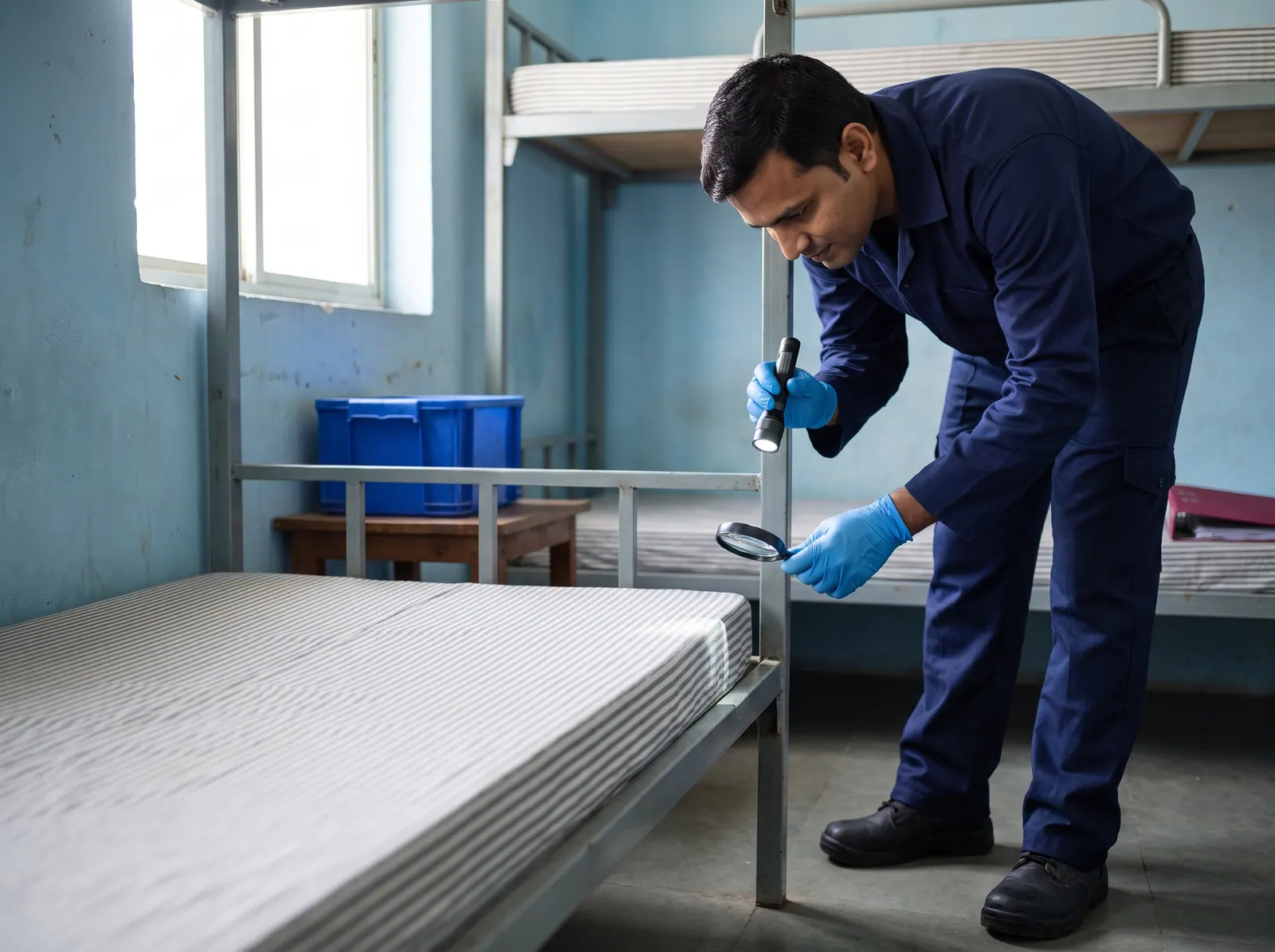
The inspection decides how well the treatment will work. The technician confirms that the problem really is bed bugs, finds where they are hiding and judges how far the infestation has spread.
Rooms next to an infested room are checked as well. Bed bugs can sometimes crawl between adjoining rooms through gaps and cracks, and they more often travel on bags, clothes and furniture.
| Area | What is checked |
|---|---|
| Bed and mattress | Seams, piping, labels, zips and the underside of the mattress. Also the joints, slats and screw holes of the bed frame, and storage boxes under divan beds. |
| Headboard and walls | Behind the headboard, along skirting, cracks in plaster, peeling paint or wallpaper, and behind picture frames. |
| Furniture near the bed | Bedside tables, drawers, wardrobes, cushions, and sofas or chairs that people sleep or rest on. |
| Fittings | Around switchboards, sockets, curtain rails and other fixtures close to the bed. |
| Belongings | Luggage, bags, piles of clothes and clutter stored under or beside the bed. |
Hotels, hostels and staff quarters have many rooms, so the technician will also ask about the problem's history. Useful details include which rooms had complaints, when they started, and how bedding and linen move between rooms.
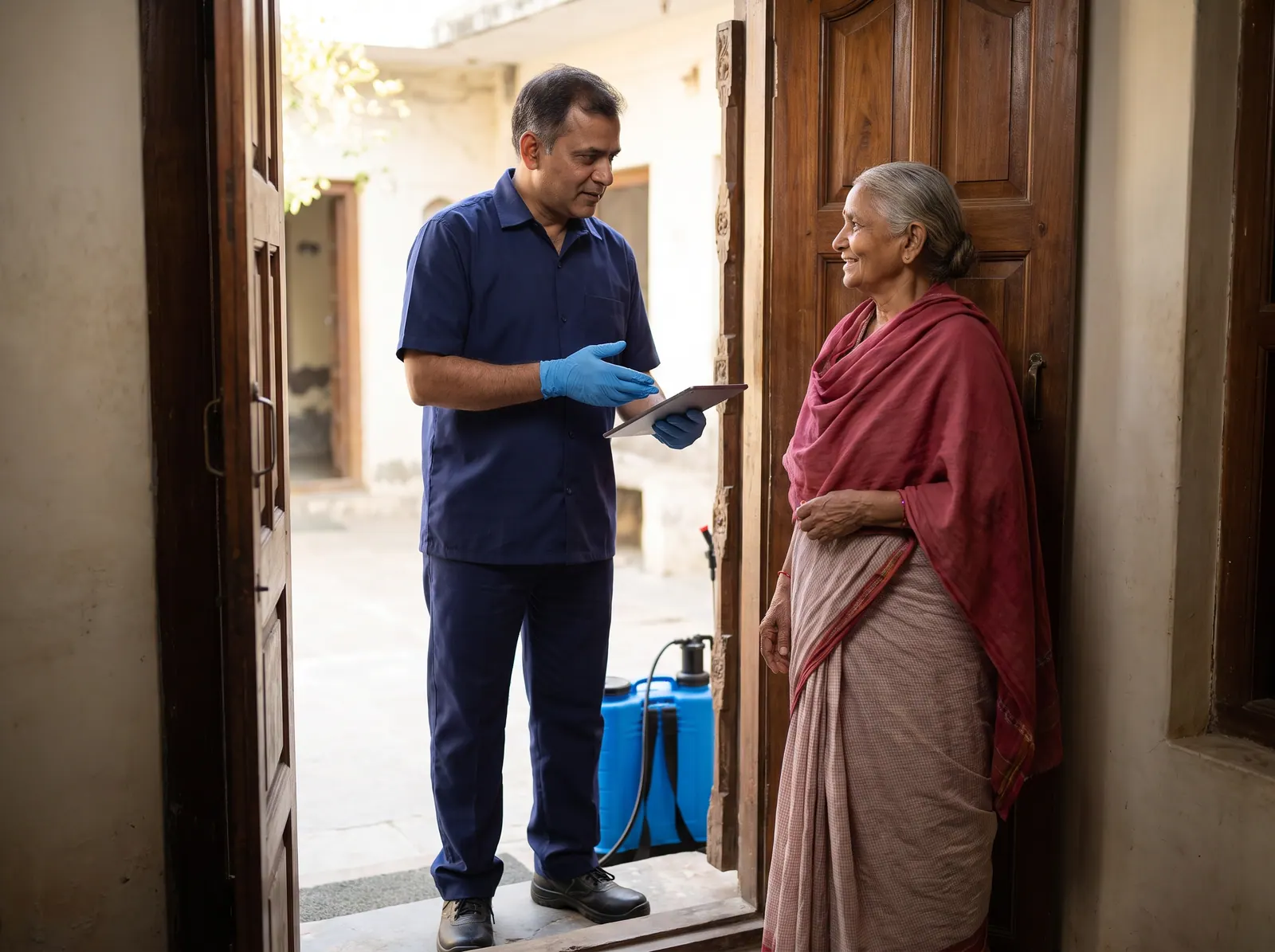
A representative of the client accompanies the technician during the service. That person can open rooms, point out problem areas and hear the advice first-hand. You can read more about our general approach in how we work: inspection, treatment and follow-up.
How is bed bug treatment carried out?
We follow an Integrated Pest Management (IPM) approach: inspection first, then sanitation and proofing advice, then targeted treatment. For bed bugs, a typical job looks like this:
- Agree the plan. The technician explains which rooms will be treated, what preparation is needed and how long the rooms should stay out of use.
- Reduce numbers physically. Removing clutter, bagging and laundering bedding, and vacuuming seams and crevices all reduce the number of bugs and eggs before treatment.
- Treat the hiding places. Treatment is applied directly into seams, joints, cracks and crevices where bed bugs shelter, following label directions. It is not a blanket spray over the whole room.
- Give aftercare advice. You are told when it is safe to return to the room, what to wash and what to avoid between visits.
- Follow up. Where your treatment plan includes follow-up visits, the technician returns to re-inspect and re-treat as needed.
Why are follow-up visits needed?
Bed bug eggs are protected and well hidden, and some can survive the first treatment and hatch later. A follow-up visit catches these young bugs before they grow up and lay eggs of their own.
The number and spacing of visits depend on how severe the infestation is, and the technician will advise you. Please keep to the follow-up schedule even if you stop seeing bugs after the first visit.
What should you expect afterwards?
It is common to see a few bed bugs for some days after treatment, with numbers falling over time. Note where you see them and tell the technician at the next visit.
Avoid household insect sprays between visits. They can interfere with the treatment and drive bugs into new hiding places or other rooms. Unless you are advised otherwise, return to your usual bed once the room is safe to use. Moving to a sofa or another room can spread the problem.
How should you prepare, and is the treatment safe?
Preparation has a real effect on results. Bedding and clothes need laundering, clutter needs clearing, and belongings should not be moved to other rooms without first being bagged.
We cover each step in detail in our separate bed bug treatment preparation checklist. Please go through it before the visit.
On safety, these simple precautions apply to every treatment:
- Tell the technician in advance about babies, pregnant family members, elderly people, anyone with asthma or allergies, and any pets or aquariums, so the plan can be adjusted.
- Keep children and pets out of treated rooms until surfaces are dry, or for as long as the technician advises.
- Ventilate treated rooms before using them again.
- Wash your hands after handling treated items or cleaning treated areas.
Material Safety Data Sheets are maintained for the products we use. In Goa, we are a licensed pest control operator (Directorate of Agriculture, Goa) and use CIB&RC-registered products.
How does treatment differ for homes, hotels, hostels and staff accommodation?
The method is the same everywhere, but the way a job is planned changes with the setting.
| Setting | What usually matters | How the plan adapts |
|---|---|---|
| Flats, houses and villas | Family routines, children and pets, and furniture that cannot easily be moved | Affected bedrooms and nearby rooms are treated together, with clear advice on when to return to them |
| Hotels and guest houses | Guest privacy, room turnover and housekeeping routines | Rooms are treated one by one and kept out of use as advised. Neighbouring rooms are checked and housekeeping staff are briefed on what to look for. |
| Hostels and PG accommodation | Many beds per room, shared storage and frequent arrivals | All beds in an affected room are treated in the same visit, and residents are asked to prepare their own belongings |
| Staff accommodation | Shared rooms, bunk beds and personal belongings | Treatment is coordinated with shift timings, and every bed and locker in the room is covered |
For homes and housing societies, bed bug work can sit alongside our wider range of pest control services.
In Goa, service reports are shared after visits and clients receive WhatsApp updates. Hotels and employers can use these records to track which rooms were treated and when.
Mr. Sunil Ambokar, a purchase manager in Goa, wrote in published feedback that bed bugs in their staff accommodation had been a real headache. He reported that they were no longer present after our treatment.
How can you stop bed bugs coming back?
Bed bugs do not come from dirt. They arrive on people and their belongings. Prevention is about stopping new bugs from coming in and spotting any early.
- After travel, unpack luggage away from the bed and check bag seams. Wash travel clothes on the hottest setting the fabric allows.
- Inspect second-hand beds, sofas and mattresses carefully before bringing them indoors.
- Keep clutter under and around beds to a minimum, so there are fewer hiding places and inspection is easier.
- Fill cracks in walls and skirting, and repair peeling paint or loose wallpaper near beds.
- In hotels, hostels and staff rooms, have housekeeping check mattress seams and headboards at linen changes, and report signs straight away.
- Act early. A small infestation in one room is far easier to clear than one that has spread.
In Goa, a limited warranty applies to the treated area for specific services, as set out in the service agreement, and it varies by pest and treatment. It excludes structural changes, new construction, and problems caused by not following post-service instructions. Your technician can explain the terms for your treatment.
Checking availability for your branch
We have two offices. Bed bug treatment is currently confirmed only at our Goa branch; it is not yet confirmed in the Hyderabad region.
In Goa, contact our Goa branch in Chimbel with your location, the type of property and what you have found.
In the Hyderabad region, our Shamshabad branch has recently opened. Tell us your location and the problem, and we'll confirm whether we can help. You can find details on the Hyderabad branch (Shamshabad) page, or reach either branch through our contact page.
Bed Bug Treatment in Goa towns
Frequently asked questions
QHow many visits does bed bug treatment usually need?
Most infestations need an initial treatment and at least one follow-up visit, because eggs can survive the first round and hatch later. The exact number and spacing depend on how widespread the infestation is, how many rooms are affected and how well preparation and aftercare advice are followed. The technician will recommend a schedule after the inspection and adjust it if bugs are still found at a follow-up.
QDo I need to throw away my mattress?
Usually not. Bed bugs live in the seams and folds of a mattress, and these can be inspected and treated along with the bed frame. A mattress that is badly torn or heavily infested may be harder to treat, and the technician can advise you on it. If you do discard one, wrap it fully first and mark it clearly, so the bugs are not spread and nobody else picks it up.
QWhen can we use the treated room again?
You can return once treated surfaces are dry and the room has been aired, or after the period your technician advises for your treatment. Keep children and pets out until then. After that, it generally helps to sleep in your usual bed rather than moving elsewhere. Moving to another room can carry bed bugs with you and spread the problem.
QCan I get only the bedroom with bed bugs treated?
Treatment focuses on the rooms where bed bugs are found, but nearby rooms should at least be inspected. Bed bugs can sometimes crawl between adjoining rooms and often travel on clothes and bags, so treating one room alone can leave a hidden source next door. The inspection will show which rooms actually need treatment, and the plan will cover only those.
QWhy am I still seeing bed bugs after the first treatment?
Seeing a few bed bugs in the days after treatment is common. Some come out of hiding and contact treated surfaces, and eggs that survived may hatch. Numbers should fall over time. Note where and when you see them and tell the technician at the follow-up visit. Avoid household sprays in the meantime, as they can push bugs into new hiding places.
QIs there a warranty on bed bug treatment?
In Goa, a limited warranty applies to the treated area for specific services, as set out in your service agreement. It excludes structural changes, new construction, and cases where post-service instructions were not followed. Ask your technician to explain the terms for your property. Bed bug treatment is not yet confirmed in the Hyderabad region; share your location and the problem with our Shamshabad branch and we'll confirm whether we can help.