Quick answer
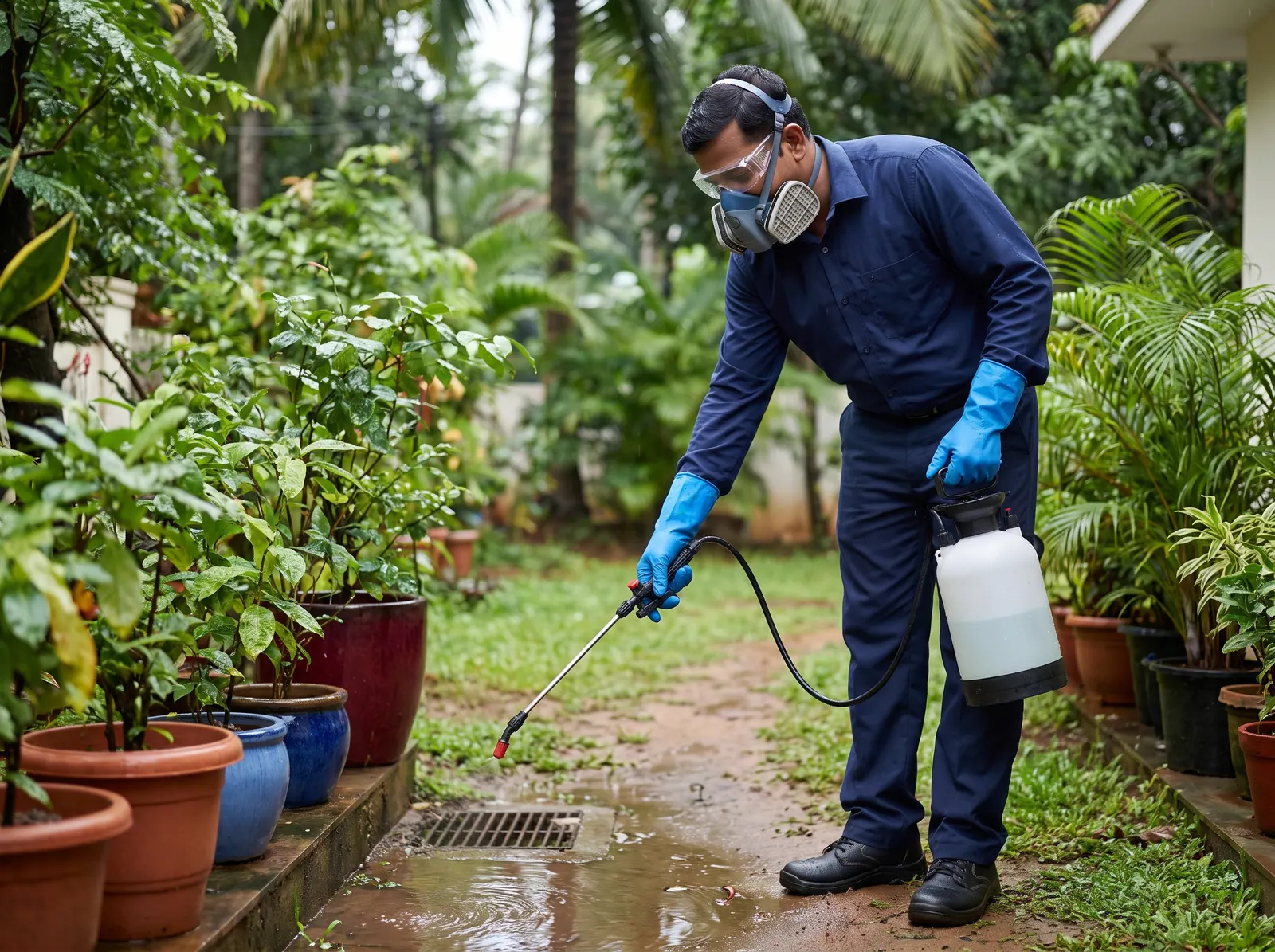
Yes, Baga is within the service area of Efficacy Pest Control's Goa branch in Chimbel. Mosquito control here starts with an inspection to find breeding water in tanks, gutters, drains, gardens and closed-season properties. This is followed by larviciding, indoor residual spraying of resting areas and, where suitable, outdoor fogging. Plans are matched to the property type and season, and a service report is shared after each visit.
Key points
- Baga is within the service area of Efficacy Pest Control's Goa branch in Chimbel.
- Mosquito control combines breeding-site reduction, larviciding, indoor residual spraying and, where suitable, fogging.
- Fogging alone gives short-lived relief; removing still water is what prevents new mosquitoes.
- Service reports are shared after visits, and food businesses can receive HACCP/FSSAI-aligned documentation.
- Products used are CIB&RC-registered, and the Goa branch is a licensed pest control operator.
Mosquito control in Baga, Goa works best when it starts with water, not with spraying. Most of the mosquitoes biting you in a villa garden, a guest-house room or an open-air restaurant grew up nearby, in a few litres of still water. Our Goa branch in Chimbel covers Baga. Every visit begins with finding those breeding spots before any treatment is chosen.
We follow an Integrated Pest Management (IPM) approach: inspection, sanitation and proofing advice, then targeted treatment. Our mosquito control service page explains the method in full. This page explains how it applies to properties in Baga.
Where do mosquitoes breed around Baga properties?
Baga has a mix of settings that suit mosquitoes. There is the busy stretch around Tito's Lane, the beach-side road, and the quieter land near the Baga creek. There are also dense clusters of guest houses, apartments and villas with gardens. All of these collect water, especially during and after Goa's heavy south-west monsoon.
Different mosquitoes prefer different water:
- Aedes mosquitoes bite mainly in the daytime. They lay eggs in small containers of fairly clean water.
- Culex mosquitoes are the night-time biters. They favour drains, sumps and polluted water.
Typical sources we look for in Baga include:
- Rooftop and overhead tanks with loose or missing lids
- Plant pots, saucers and planters in gardens and on balconies
- Blocked gutters, and flat terraces where rain sits
- Open drains, soak pits and service areas behind restaurants
- Decorative water features, unused pools and stored drums
- Stacked chairs, tarpaulins and crates left outdoors during the off-season
In warm weather, mosquitoes can go from egg to biting adult in about a week to ten days. A container left unchecked for a couple of weeks can produce a fresh generation.
What does our mosquito treatment involve?
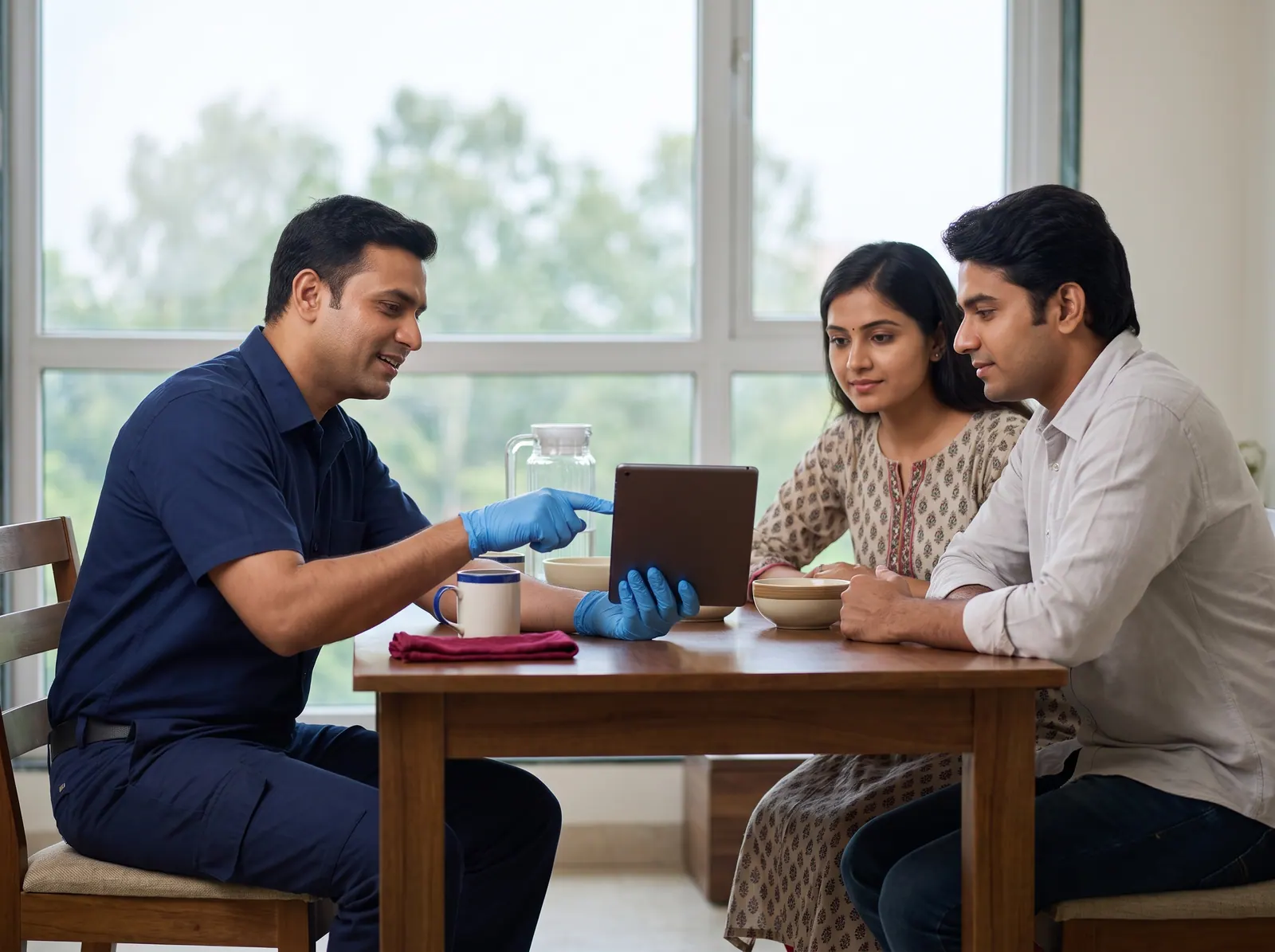
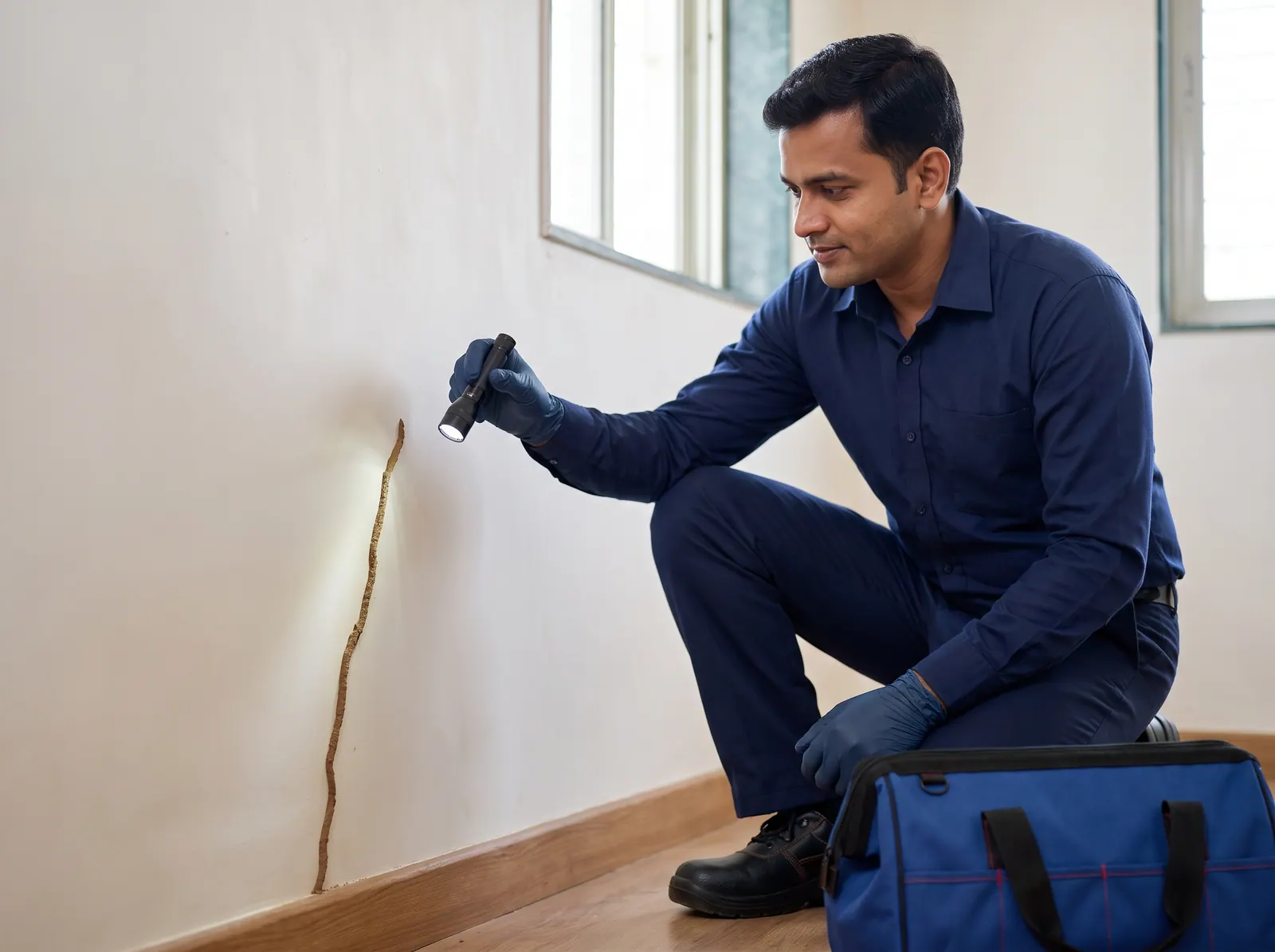
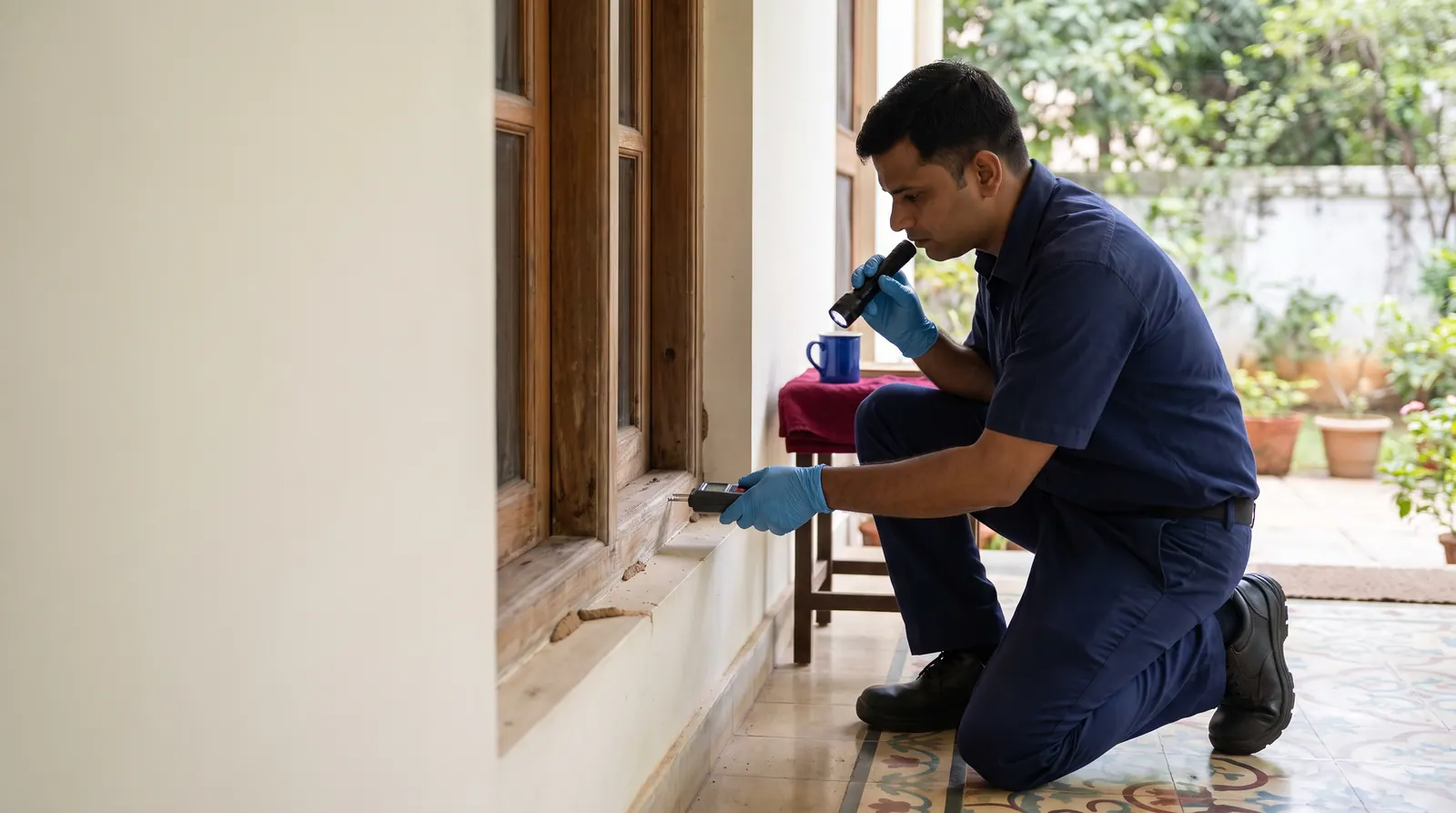
- Inspection: we check the rooms, balconies, terraces, parking, garden, drains and service areas. We also ask where and when biting is worst.
- Breeding-site reduction: we show you which water can be emptied, covered or drained, and what to change in daily routines.
- Larviciding: where water cannot be removed, such as in drains, sumps or water features, we treat it to stop larvae developing.
- Indoor residual spraying: we treat the shaded surfaces where adult mosquitoes rest, such as behind furniture, under beds and in store rooms.
- Fogging or ULV, where suitable: this is used for gardens, courtyards and outdoor seating, to knock down the adults present at the time. Our page on mosquito fogging and ULV treatment in Goa explains when this helps and when it does not.
- Service report: after the visit we share a report as proof of service, with updates over WhatsApp.
Fogging on its own gives short-lived relief. If the breeding water is still there, new adults will appear within days. That is why the inspection and source work matter more than the spray.
How do Baga's seasons change the plan?
Many Baga properties follow the tourist calendar. They are busy for much of the dry season and quieter, or partly closed, through the monsoon. Our mosquito work fits around that rhythm.
| Period (approximate) | What tends to happen | What we focus on |
|---|---|---|
| Pre-monsoon (April–May) | Properties prepare to slow down or close | Clearing gutters, covering tanks, removing items that will collect rain |
| Monsoon (June–September) | Heavy rain fills containers, terraces and drains | Checks between heavy spells, and larviciding where water stays |
| Post-monsoon (October–November) | Standing water lingers as properties reopen | Pre-season inspection, clearing closed areas, treating resting sites |
| Peak season (December–March) | Guests spend evenings outdoors | Scheduled visits for gardens, dining areas and staff quarters |
Our guide to the post-monsoon mosquito season in Goa explains why the weeks after the rains often need extra attention.
Mosquito control for hotels, guest houses and restaurants in Baga
Hospitality businesses in Baga face a particular mix of risks. These include:
- Open-air dining that runs into the evening
- Gardens and pools
- Guest rooms with balconies
- Staff accommodation that is easy to overlook
We time treatments so that guests are not in treated areas, and so that kitchens and food stay protected.
For food businesses, we provide documentation aligned with HACCP and FSSAI audit expectations. Your service records are then ready when inspectors or auditors ask for them.
Resorts with landscaped grounds may find our guide to mosquito control for resort gardens and pools useful. If you need a wider programme covering cockroaches, rodents and flies, see commercial pest control in Baga. Annual Maintenance Contracts, with scheduled visits and service reports, are available for both homes and businesses.
Is mosquito treatment safe for my family, guests and pets?
We are a licensed pest control operator (Directorate of Agriculture, Goa). We use CIB&RC-registered products, applied according to label directions, and we maintain Material Safety Data Sheets for the products we use.
- Keep children, pets and guests away from treated areas until surfaces are dry, or for as long as the technician advises.
- Cover or put away food, utensils and pet bowls before indoor treatment.
- Ventilate rooms afterwards, and wash your hands if you touch treated surfaces.
- Tell us about any fish ponds, aquariums or beehives nearby so we can plan around them.
Mosquitoes can spread illnesses such as dengue and malaria. If anyone develops a fever or feels unwell after mosquito bites, please see a doctor.
What affects the cost of mosquito control in Baga?
There is no single price, because a one-bedroom flat and a villa with a large garden need very different plans. You receive a quotation before work begins. The main factors are:
- The size of the property, including balconies, terraces and open grounds
- The number and type of breeding sources found at inspection
- Whether you need a one-time treatment or scheduled visits
- The methods required, such as larviciding, residual spraying or outdoor fogging
- Any documentation needs for commercial and food businesses
Arranging mosquito control in Baga
Tell our Goa branch in Chimbel three things:
- Where your property is in Baga
- What type of property it is
- When the mosquitoes are worst: morning, evening or night
This helps us plan the right visit. You can reach us through our contact page, or browse other pest control services in Baga.
Frequently asked questions
QDo you provide mosquito control in Baga?
Yes. Baga is within the area covered by our Goa branch in Chimbel, and mosquito control is one of that branch's confirmed services. When you get in touch, please share where your property is in Baga, what type of property it is, and when the biting is worst. That helps us plan a suitable inspection and treatment.
QIs fogging enough to keep mosquitoes away from our garden restaurant?
Usually not on its own. Fogging knocks down adult mosquitoes that are flying at the time, but it does not stop new ones emerging from nearby water. For outdoor dining areas, we combine fogging, where suitable, with checks of drains, planters, water features and service areas. Larviciding is used where water cannot be removed. Treatments are timed away from service hours.
QWe are reopening a villa after the monsoon. What should we do first?
Walk the property and empty anything holding rainwater, including pots, saucers, drums, tarpaulins and stored furniture. Clear gutters and check that tank lids fit properly. Look at flat terraces and unused pools. If mosquitoes are already a problem, an inspection before guests arrive lets us treat breeding points and resting areas while the villa is still empty.
QHow often should a guest house in Baga have mosquito treatment?
It depends on the property, its surroundings and the time of year. Some homes need only a one-time treatment followed by good water management. Guest houses, hotels and restaurants often benefit from scheduled visits through the busy season and after the rains. Annual Maintenance Contracts provide regular visits with service reports, and we suggest a frequency after the inspection.
QCan you help with mosquitoes around a construction or renovation site?
Building work often creates breeding water. Common sources include curing water, open sumps, tanks, pits and stored drums. We can inspect the site, show which sources can be covered, drained or managed, and treat water that has to stay. Tell us about the stage of work so we can plan around workers and materials.
QWill the mosquitoes disappear straight after treatment?
You may notice fewer mosquitoes soon after a visit, but full improvement can take a few days and depends on removing breeding water. Mosquitoes can also fly in from neighbouring plots, drains or open land. Our technicians explain what to expect and which prevention steps on your side make the biggest difference.
Last updated 13 October 2026. Information on this page is general guidance; your technician will advise on your specific property after inspection.