


Key points
- General pest control targets common crawling insects such as cockroaches, ants, spiders and silverfish.
- Treatment is inspection-led and targeted: gel bait and crack-and-crevice application where insects hide, plus sanitation and proofing advice.
- Termites, bed bugs, rodents, mosquitoes, flies, wood borer, lizards, bee and wasp nests, birds and fumigation are separate services.
- Visit frequency depends on the pest, the property and the level of activity, and may be weekly, monthly or quarterly.
- Pest control products in India must be CIB&RC-registered under the Insecticides Act, 1968.
General pest control is the routine, preventive treatment most homes and businesses need for everyday crawling insects. These are mainly cockroaches, ants, spiders and silverfish, which move in from drains, gaps and deliveries. This page explains what the service covers, what happens during a visit and how often it is usually repeated. It also lists the pests that fall outside it and need a dedicated treatment.
Like all our work, general pest control follows an Integrated Pest Management (IPM) approach. We inspect first, help you fix the conditions that attract pests, and then treat only where it is needed.
What does general pest control cover?
The service targets common crawling insects that live in and around buildings. Each one behaves differently. Treatment is therefore placed where that insect actually hides and travels, rather than sprayed across open surfaces.
- Cockroaches shelter in warm, dark gaps near food and moisture. Typical spots are behind kitchen cabinets, under sinks, around appliance motors, in drains and inside electrical boxes. They are mostly active at night. For heavy or recurring infestations, our dedicated cockroach control service is usually the better fit.
- Ants follow scent trails from a nest to food or water. Killing the ants you can see rarely solves the problem, so the aim is to reach the colony.
- Spiders mostly feed on other insects, so their numbers usually fall once the insects they hunt are controlled. Webs in corners, ceilings and window frames are cleared and hiding places reduced.
- Silverfish favour damp, undisturbed places. They feed on starchy material such as paper, book bindings, wallpaper paste and some fabrics. Cupboards, lofts, storerooms and bathrooms are common hiding spots.
The visit may also deal with other occasional crawling insects found during the inspection. If the inspection points to a different pest altogether, the technician will tell you and explain the appropriate treatment.
What is not included in general pest control?
General pest control is not a single treatment for every pest. Several common problems need different methods, equipment, preparation or follow-up visits. These are handled as separate services:
- Termites need inspection-led soil treatment or drill-fill-seal treatment of the building. See termite control.
- Bed bugs need room-by-room treatment of beds, furniture and seams, with follow-up visits. See bed bug treatment.
- Rats and mice are handled with bait stations, traps and proofing under rodent control.
- Mosquitoes and flies are controlled by reducing breeding sites and using targeted treatments, not crawling-insect methods.
- Wood borer, house lizards, bee and wasp nests, and birds each need their own approach.
- Fumigation of stored goods, spaces or consignments is a separate service.
Some limits also apply to the results of any treatment. In our Goa operation, a warranty applies only to specific services and to the treated area, as set out in the service agreement. It does not cover structural changes, new construction, or cases where post-service instructions were not followed.
Pests can also arrive from a neighbouring flat or from outside. Keeping them out then needs prevention on your side too, and our technicians can advise on what to do.
What happens during a general pest control visit?
- Inspection. The technician walks through the property with you. They check kitchens, bathrooms, drains, storerooms and entry points for droppings, egg cases, trails and shed skins, to judge where activity is concentrated.
- Explaining the plan. You are told which areas will be treated, which methods will be used and what precautions to take.
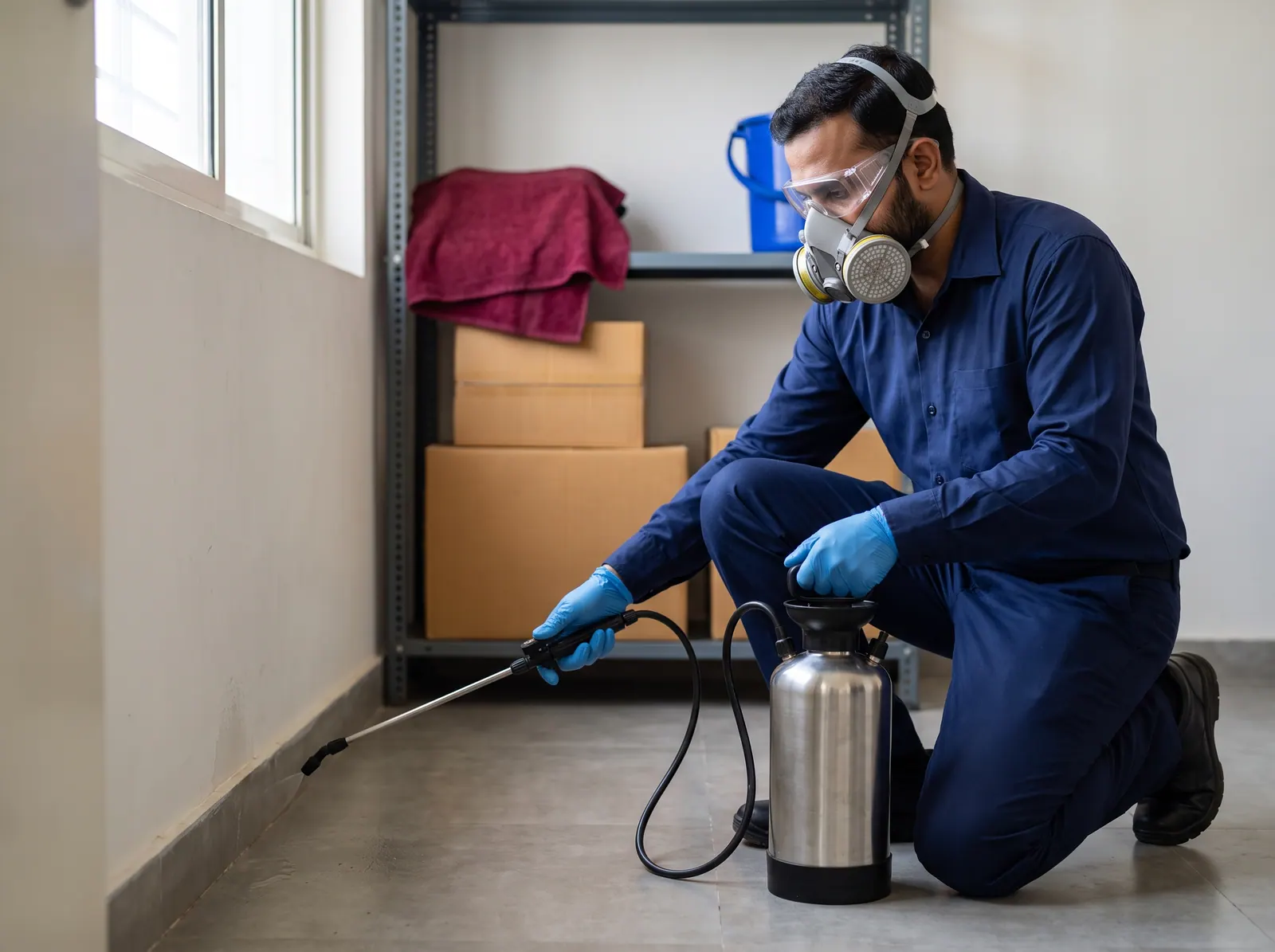
- Targeted treatment. This typically includes small spots of gel bait inside hinges, cracks and appliance gaps. It also includes crack-and-crevice application into the voids where insects shelter. Where appropriate, a targeted application is made along skirting, drain points, door thresholds and the outer perimeter. Open food-preparation surfaces are not sprayed.
- Sanitation and proofing advice. Leaks, food left out, clutter, gaps around pipes and open drains all keep insects coming back. The technician points out what to fix.
- Service record. In our Goa operation, a service report is shared after each visit and clients receive WhatsApp updates. This is useful for housing societies, landlords and businesses that need to show pest control has been carried out.
A client representative should be present while the technician works, so that questions can be answered on the spot.
How should you prepare for the treatment?
- Clear kitchen counters, and store food, utensils and crockery in closed cabinets or the fridge.
- Empty the cupboard under the sink, and any other cupboards the technician needs to reach, if asked.
- Keep children and pets away from treated areas until surfaces are dry, or for as long as the technician advises.
- Cover fish tanks if a spray is being used nearby.
- Do not wipe away gel bait spots. Avoid spraying household insecticides over them, as this can make the bait less attractive to insects.
- Ventilate rooms after the treatment and wash your hands after touching treated areas.
Many general pest control visits rely on gel baiting. Our guide on how to prepare for cockroach gel treatment is a handy checklist.
How often should general pest control be done?
There is no single right interval. It depends on the pest, how established it is, the type of property and how much food and moisture are around. A first treatment often reduces visible activity quickly. However, eggs that were protected at the time can hatch later, which is why follow-up or periodic treatment matters.
We typically recommend a regular schedule, which may be weekly, monthly or quarterly, depending on what the inspection finds. The table below shows the usual considerations.
| Property | What drives frequency | Usual approach |
|---|---|---|
| Flat or independent house with occasional sightings | Limited food exposure, a few entry points | Periodic visits, such as quarterly, plus a check if activity returns |
| Housing society common areas | Shared drains, garbage areas and ducts | Scheduled visits, ideally coordinated with treatment of individual flats |
| Office, shop or warehouse | Pantries, stored paper and cartons, deliveries | Scheduled, documented visits |
| Restaurant, hotel kitchen or food store | Constant food, moisture and heat | More frequent visits, often monthly or weekly, with records kept for hygiene audits |
Seasons matter too. In Goa's humid coastal climate, the heavy south-west monsoon pushes many insects indoors in search of dry shelter. On the Deccan plateau around Hyderabad, the hot, dry summer sends insects looking for water near kitchens and bathrooms. The monsoon then brings a fresh wave of activity.
If you would like regular visits planned across the year, an annual maintenance contract schedules them for you, with service reports after each visit.
Is general pest control safe for homes and food areas?
Much of the safety comes from where the product is placed. Gel and crack-and-crevice treatments put small amounts of product where insects hide, not where people touch. Material Safety Data Sheets are maintained for the products we use.
Pest control in India is regulated under the Insecticides Act, 1968. Products must be registered with the CIB&RC, and pest control operators are licensed by the state. Our Goa branch is a licensed pest control operator (Directorate of Agriculture, Goa) and uses CIB&RC-registered products.
For food businesses, pest control is part of the hygiene requirements in FSSAI Schedule 4 and of HACCP-based food safety systems. In our Goa operation, documentation for food businesses is prepared to align with HACCP and FSSAI audit expectations.
At home, a few precautions go a long way:
- Follow the technician's instructions and the product label directions.
- Keep children and pets out of treated areas until they are dry.
- Ventilate rooms well after treatment.
- Tell the technician in advance if anyone in the household is pregnant or has asthma or allergies, so the plan can take this into account.
If anyone feels unwell after a treatment, or has a reaction to an insect bite or sting, please see a doctor.
How to check availability for your branch
General pest control is one of our company-wide services, and availability is shown for each branch on this page. In Goa, contact our Goa branch in Chimbel with your locality and a description of what you have been seeing.
Our Shamshabad branch has recently opened. Tell us your location and the problem, and we'll confirm whether we can help. The branch brings practices developed in our established Goa operation. You can reach either branch through our contact page.
General Pest Control in Goa towns
Frequently asked questions
QWill general pest control get rid of cockroaches completely?
It should noticeably reduce cockroach activity, but no honest pest controller can promise permanent results. Cockroaches keep arriving through drains, deliveries and neighbouring homes, and eggs can hatch after treatment. Regular visits, good kitchen hygiene and sealing gaps keep numbers low. If you are seeing large numbers in daytime or the problem keeps returning, a dedicated cockroach control programme with follow-up visits is usually more effective than routine general treatment.
QDoes general pest control include termites or bed bugs?
No. Termites need inspection-led soil or drill-fill-seal treatment of the building. Bed bugs need room-by-room treatment of beds and furniture, with follow-up visits. Rodents, mosquitoes, flies, wood borer, lizards, bee and wasp nests, and bird problems are also handled as separate services. If the technician spots signs of any of these during a general visit, they will tell you and explain the appropriate treatment.
QWhy do I see more cockroaches for a few days after treatment?
This is common. Gel bait and crack-and-crevice treatments disturb insects in their hiding places, so some wander into the open before they die. Activity usually settles over the following days. Avoid wiping bait spots or spraying household insecticides over them, as this can reduce how well the bait works. If activity has not dropped after a reasonable period, let us know so the technician can review the treatment.
QDo we need to leave the house during the treatment?
It depends on the method. Gel baiting causes little disruption, and most families carry on with their day while staying out of the way of the technician. If a targeted spray is used, keep children and pets out of treated rooms until surfaces are dry, or for as long as the technician advises. Ventilate afterwards. Mention any pregnancy, asthma or allergies in the household before the visit.
QHow long does a general pest control visit take?
It depends on the size of the property and how much activity the inspection finds. Most treatments can be completed within a few hours, and a small flat usually takes less time than a large house or commercial kitchen. The technician will give you an estimated time frame during the initial assessment, so you can plan around the visit. A client representative should be present for it.
QCan I cancel or reschedule a booked visit?
Yes. Under our terms and conditions, cancellations should be made at least 48 hours before the scheduled service, and a late-cancellation fee may apply. Bookings are always subject to availability. If you need a different time, contact the relevant branch as early as possible so the schedule can be adjusted.
QIs there a warranty on general pest control?
In our Goa operation, a limited warranty applies to specific services and to the treated area, as set out in your service agreement. The terms vary by pest and treatment. They exclude structural changes, new construction and cases where post-service instructions were not followed. Pests coming in from a neighbour's home or from outside also need prevention on your side, and our technicians can advise on this.


