Quick answer
Efficacy Pest Control provides mosquito control in Panaji from our Goa branch in Chimbel. Each visit starts with an inspection to find breeding water. We then combine breeding-site reduction, larviciding, indoor residual spraying and, where suitable, fogging, matched to your property and the season. We serve homes, housing societies, offices, hotels and restaurants in areas including Altinho, Campal, Miramar, Caranzalem, Dona Paula, Taleigao, St Inez and Ribandar.
Key points
- Mosquito control in Panaji is provided from Efficacy Pest Control's Goa branch in Chimbel.
- Treatment combines breeding-site reduction, larviciding, indoor residual spraying and fogging, matched to the property and season.
- Fogging acts quickly on flying adults but is short-lived, so it is always paired with breeding control.
- Service reports are shared after visits, and food businesses receive documentation aligned with HACCP and FSSAI audit expectations.
- The Goa branch is a licensed pest control operator (Directorate of Agriculture, Goa) using CIB&RC-registered products.
If mosquitoes are keeping your family awake in Panaji, or biting guests on a hotel terrace, the lasting fix is usually found in standing water, not in the air. Our mosquito control in Panaji, Goa starts by finding where mosquitoes are breeding on and around your property. We then combine breeding-site reduction, larviciding, indoor residual spraying and, where it suits the site, fogging.
The service is run from our Goa branch in Chimbel, just outside the city. Below we explain what we look for in different parts of Panaji (also called Panjim), what happens during a visit, how the plan changes through the year and what you can do between visits. For a broader overview of our methods, see our mosquito control service.
Where do mosquitoes breed in and around Panaji?
Panaji sits where the Mandovi river meets the sea. Hill slopes, low-lying fields, creeks and a long seafront all lie within a few kilometres of each other. Add Goa's very heavy south-west monsoon and humid coastal air, and almost any container that holds water for a week can produce mosquitoes.
The places we check first differ from one neighbourhood to the next:
| Area | Typical properties | What we check first |
|---|---|---|
| Altinho and Campal | Older bungalows and apartment blocks with gardens | Blocked roof gutters, tiled-roof valleys, garden pots and saucers, unused tanks and sumps |
| Miramar, Caranzalem and Dona Paula | Seafront apartments, villas, hotels and guest houses | Terrace and rooftop water, pool surrounds, fountains, ornamental plants, AC drip trays |
| Taleigao | Housing societies and newer apartment buildings | Lift pits, basement parking puddles, stored water in drums, curing water on nearby building work |
| St Inez and Ribandar | Homes and shops near the creek and the riverside | Drains and channels next to the property, ground-floor sumps, yards that stay waterlogged |
| City-centre offices, shops and restaurants | Commercial buildings, kitchens and stores | Drain traps, overhead tank lids, cooler and AC trays, waste areas, unused utility rooms |
Some breeding sites, such as public drains or a neighbour's open plot, are outside your control. We point these out so you can raise them with your society or the local civic body, and we plan treatment of your own property with them in mind.
Which mosquitoes are we dealing with?
Three broad groups matter in a city like Panaji, and they behave differently:
- Aedes mosquitoes, which can spread dengue and chikungunya, breed in clean water in small containers such as pots, buckets, old tyres, coconut shells, vases and AC trays. They bite mainly during the day, and their eggs can survive on dry container walls for months before hatching when water returns.
- Anopheles mosquitoes, which can carry malaria, generally breed in clean, still water such as tanks, wells and rainwater pools, and bite mostly at night.
- Culex mosquitoes breed in dirty water such as drains and soak pits. They are the familiar night-time biters that buzz around your ears.
In warm weather, mosquitoes can go from egg to adult in roughly a week. That is why a weekly habit of emptying and scrubbing containers matters, and why treating only adult mosquitoes rarely gives lasting relief. If anyone in your household develops a fever, please see a doctor promptly.
What happens during a mosquito control visit?
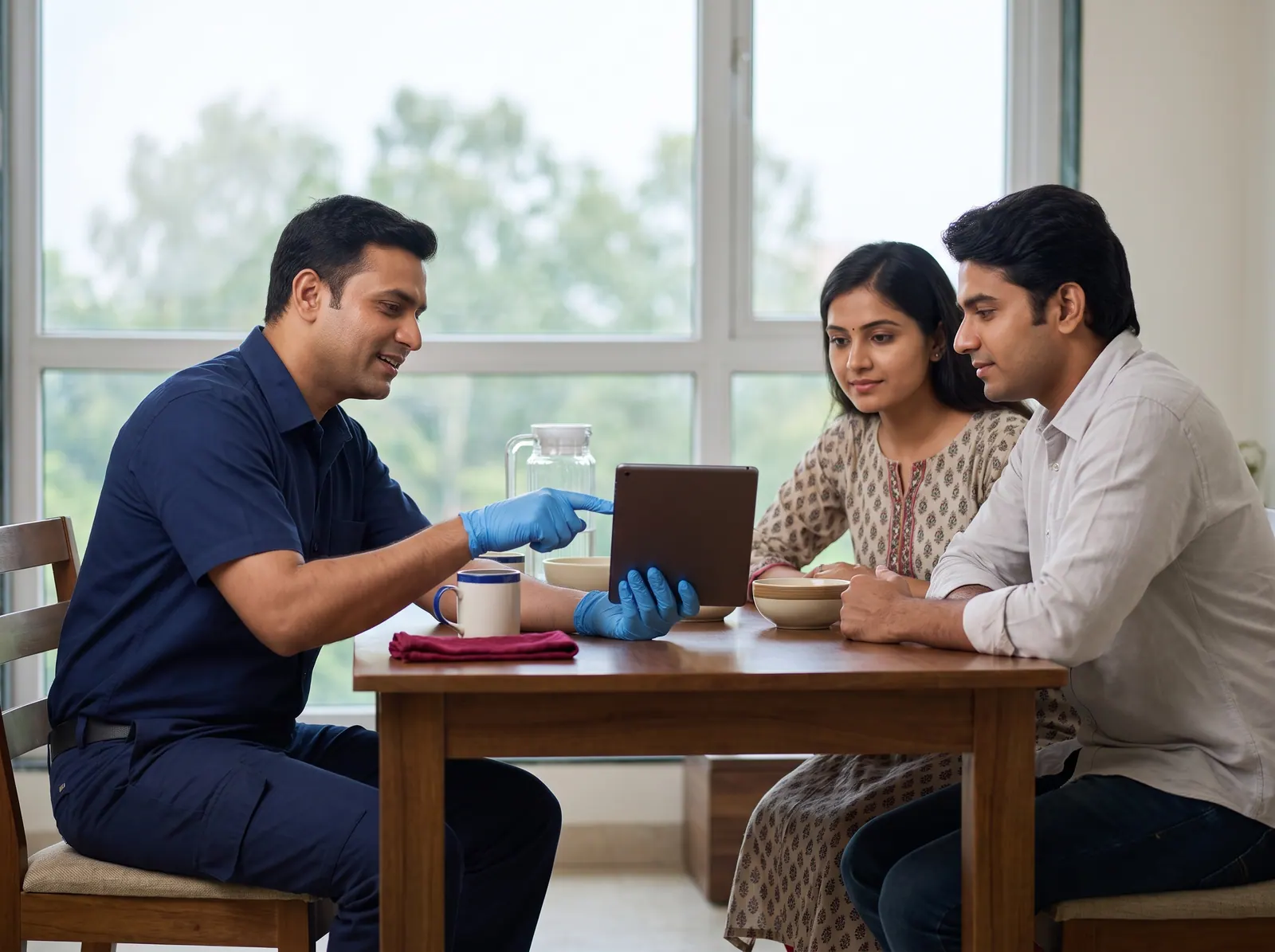
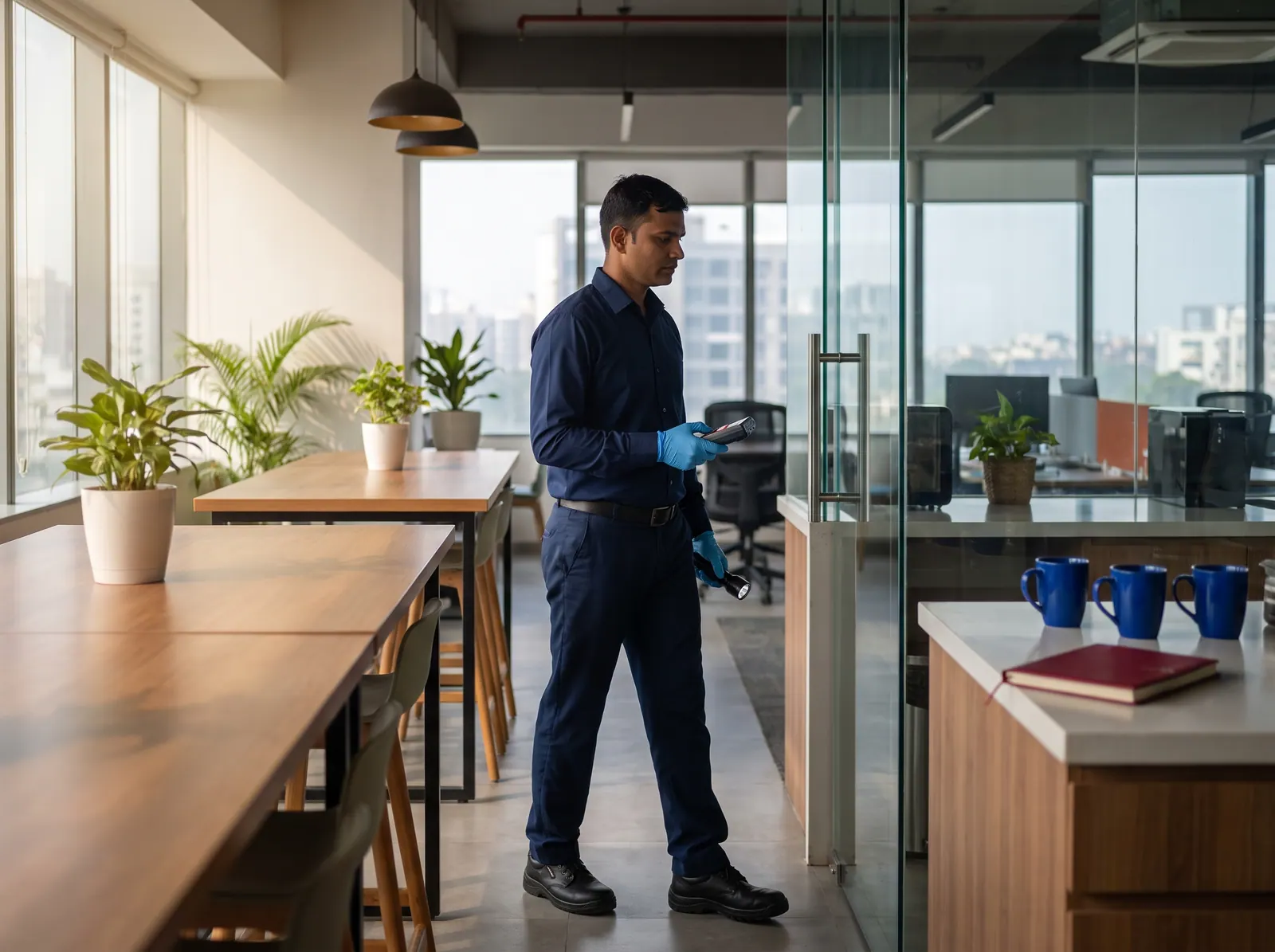
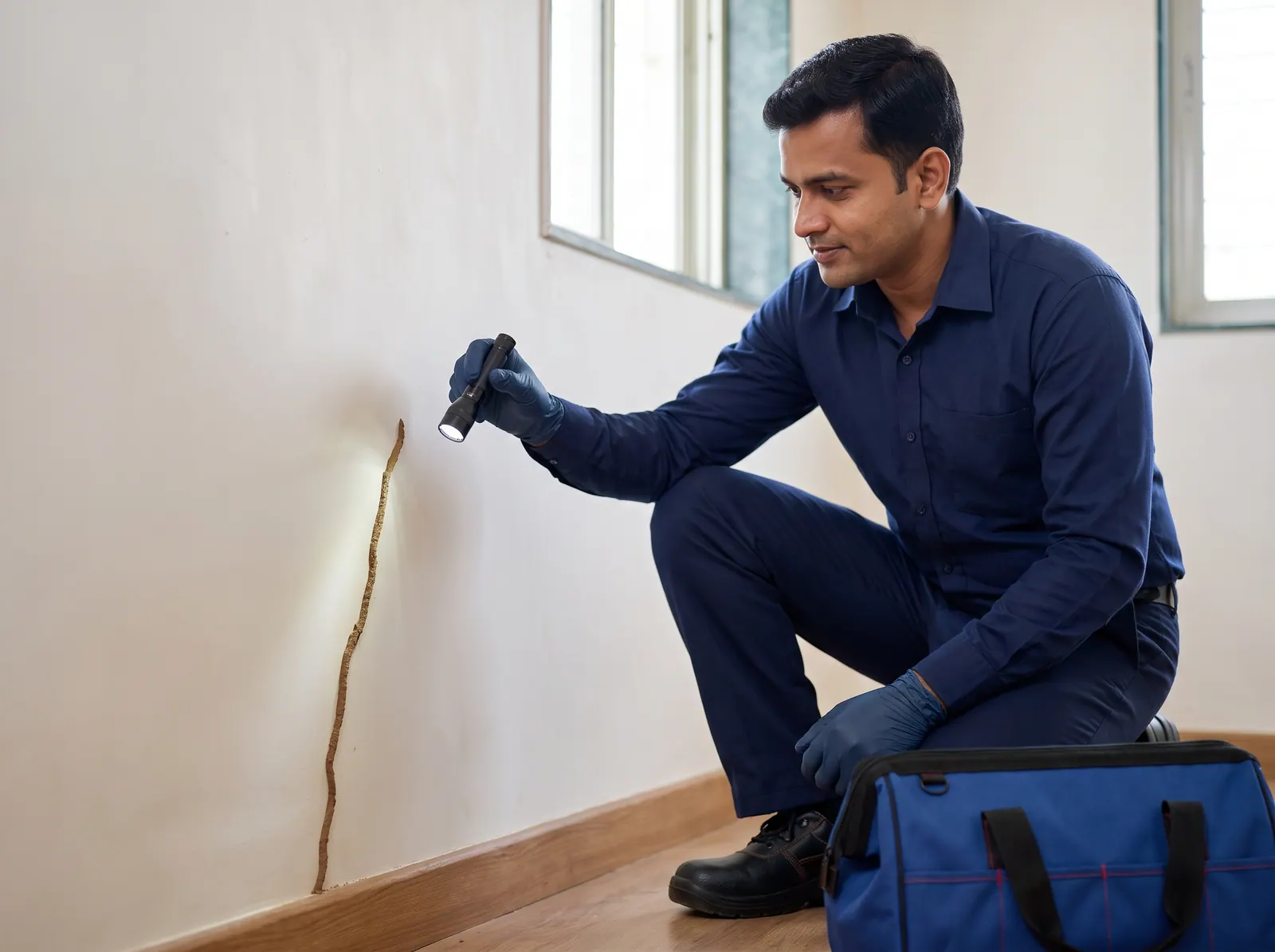
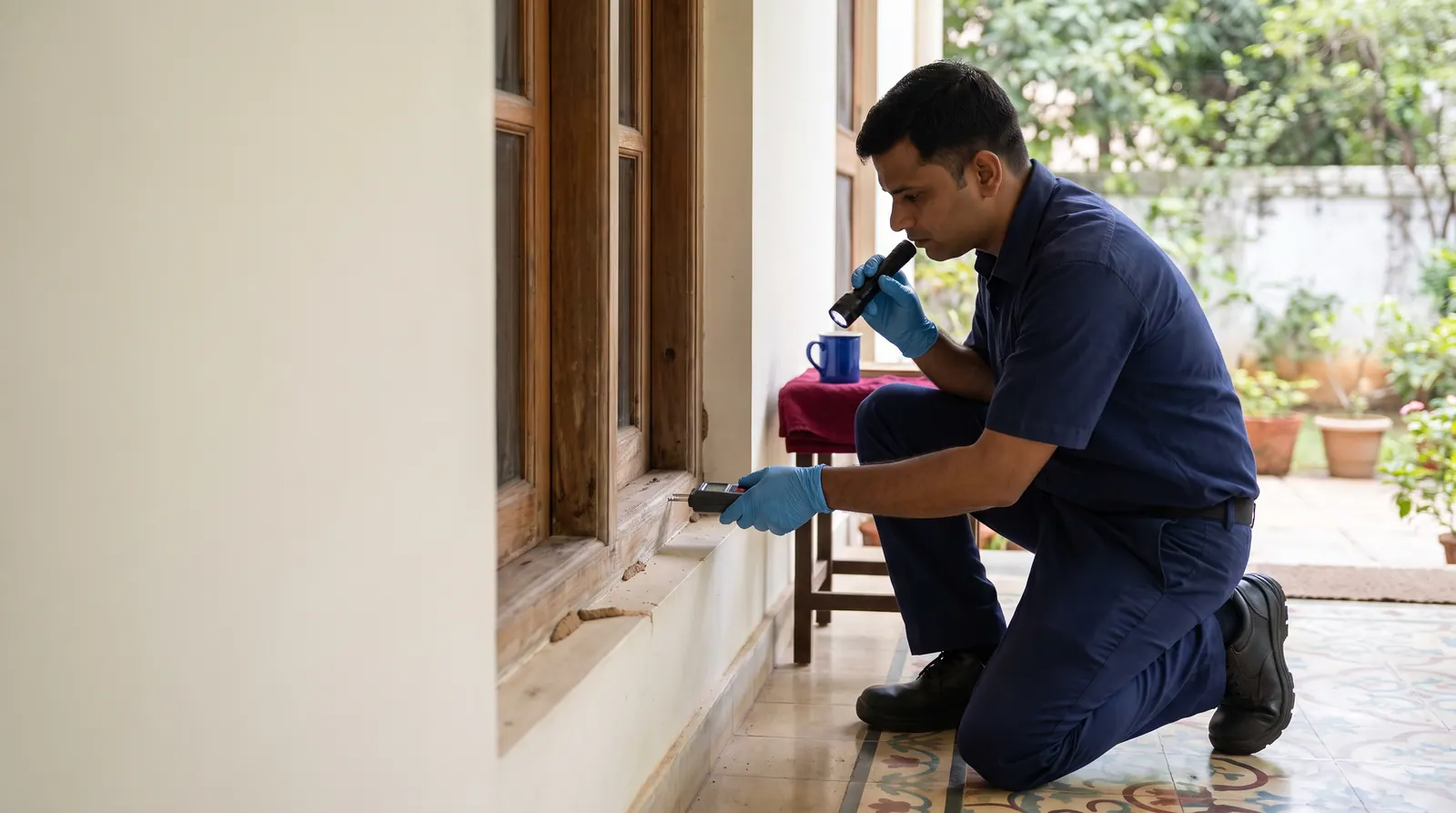
- Inspection. A technician walks the property with you, covering rooms, balconies, terraces, tanks, sumps, gardens, parking and drains, to find breeding water and the dark, sheltered spots where adult mosquitoes rest.
- Breeding-site reduction. We show you which containers to empty, cover, drain or remove, and note simple fixes such as mesh on tank overflow pipes or clearing a blocked gutter.
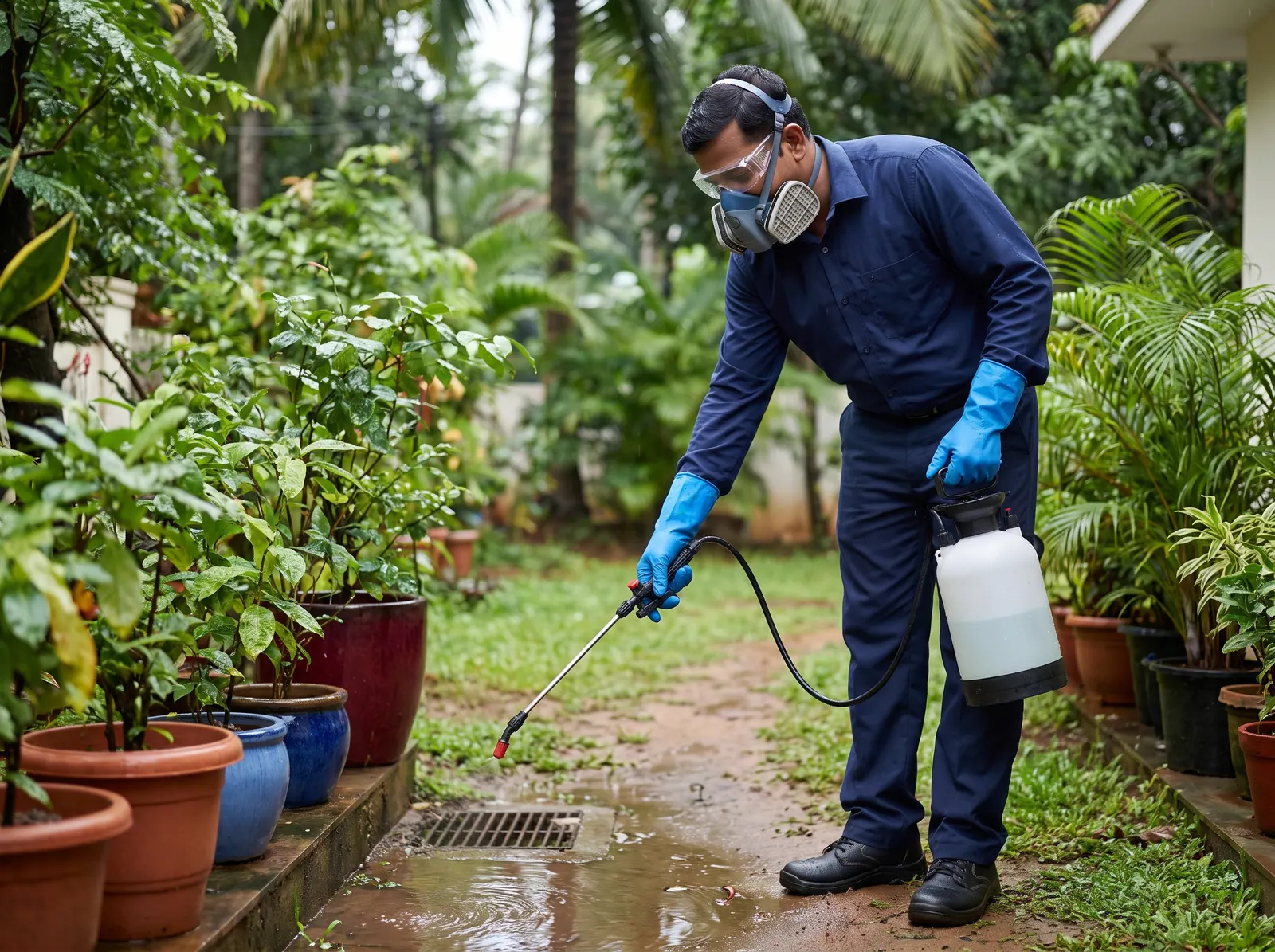
- Larviciding. Water that cannot be emptied, such as drains, sumps and construction water, is treated to stop larvae developing into adults. Drinking-water tanks are protected with tight lids and mesh rather than treated.
- Indoor residual spraying. Where suitable, a residual treatment is applied to walls and other surfaces where mosquitoes rest, such as store rooms, stairwells and the backs of bedrooms.
- Fogging, where appropriate. For gardens, compounds, parking areas and hotel grounds, fogging or ULV treatment knocks down flying adults. It works quickly but its effect is short, so we always pair it with breeding control. Read more about mosquito fogging and ULV treatment in Goa.
- Report and advice. After the visit you receive a service report as proof of service, and clients can receive updates on WhatsApp. The report records what was treated and which breeding sites still need attention.
How do plans differ for homes, societies and businesses?
Flats and independent houses
For most homes, the work is inspection, larviciding of water that cannot be emptied and indoor treatment of resting areas, with practical advice for the family. Houses with gardens, wells or tiled roofs usually need more outdoor attention than an upper-floor flat.
Housing societies
In a society, mosquitoes from one shared sump, lift pit or basement can affect every flat. Treating common areas on a schedule, alongside individual flats that request it, works better than flats acting alone. An annual maintenance contract with scheduled visits and service reports helps the managing committee keep track.
Hotels, guest houses, restaurants and offices
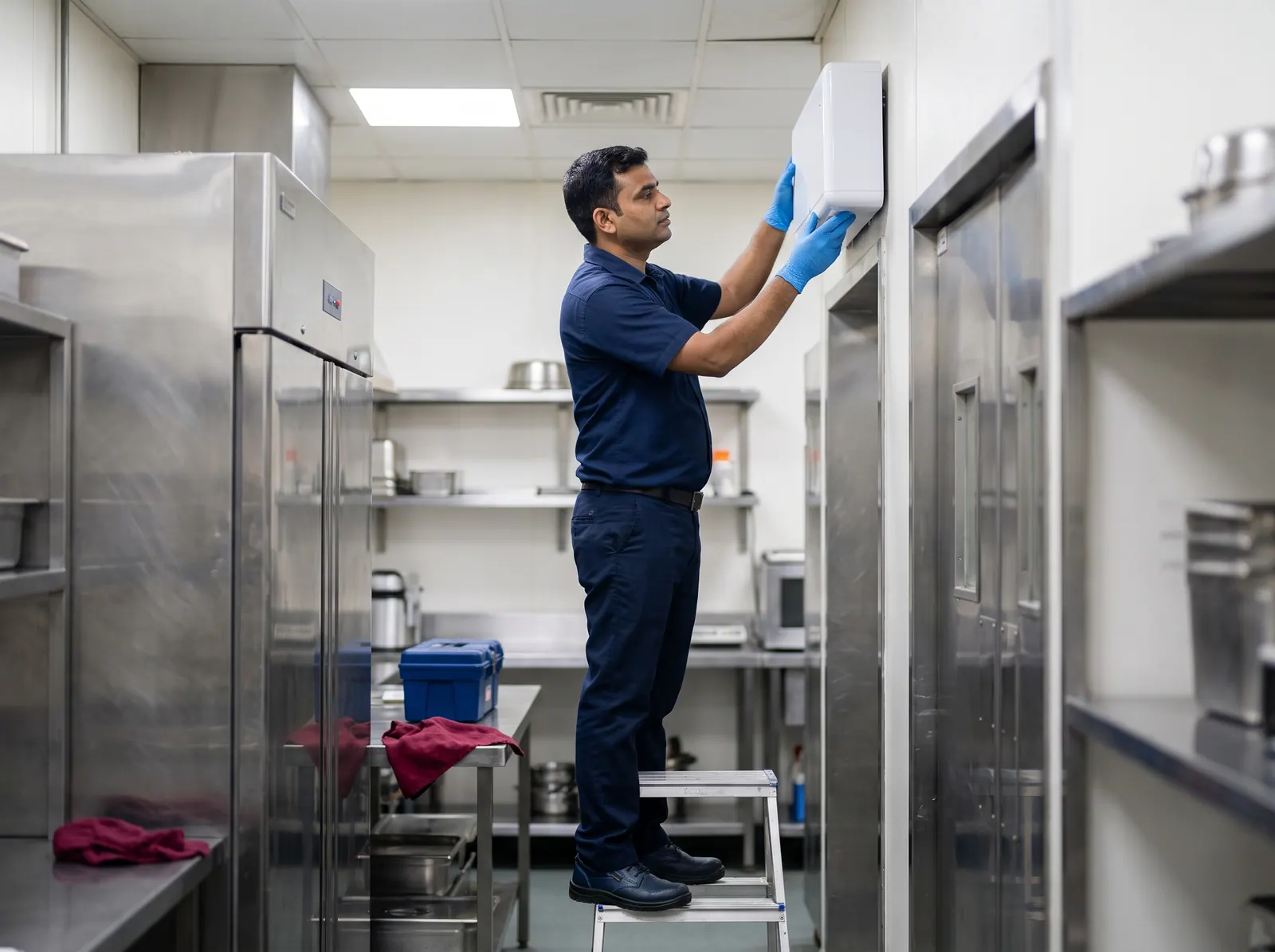
Seafront properties in Miramar, Caranzalem and Dona Paula often have gardens, pools and outdoor seating, where guests notice mosquitoes first, especially around dusk. Restaurants need treatment kept well away from food and properly recorded. For food businesses we provide documentation aligned with HACCP and FSSAI audit expectations. Our page on commercial pest control in Panaji covers scheduled programmes that include other pests.
How should mosquito control change through the year?
Goa's seasons shape where mosquitoes breed, so the plan changes with them:
| Season | What changes | Main focus |
|---|---|---|
| Pre-monsoon (April–May) | Hot and humid; roofs and yards collect debris | Clear gutters, remove junk, check tank lids before the rains |
| Monsoon (June–September) | Heavy rain fills containers and drains overflow | Closer monitoring, larviciding, drain attention, indoor resting-site treatment |
| Post-monsoon (October–November) | Pockets of water linger as the rain eases | Continued larviciding and clearing of containers |
| Dry season (December–March) | Less rain, but stored water and AC trays remain | Maintenance checks of tanks, sumps and indoor sites |
Our guide to the post-monsoon mosquito season in Goa explains why the weeks after the rains need particular care. Visit frequency is agreed after the inspection, based on your property and what we find.
Is mosquito treatment safe for children and pets?
We follow an Integrated Pest Management approach: inspection, sanitation and proofing advice come first, and treatment is applied only where it is needed. We are a licensed pest control operator (Directorate of Agriculture, Goa), use CIB&RC-registered products and maintain Material Safety Data Sheets for the products we use.
A few simple steps keep everyone safe:
- Put away food, utensils and children's toys from rooms being treated, and cover aquariums.
- Keep children and pets out of treated areas until surfaces are dry, or for as long as the technician advises.
- Open windows to ventilate once the advised time has passed.
- Wash hands after touching treated surfaces, and avoid wiping treated walls for the period the technician advises.
What can you do between visits?
Treatment works far better when breeding stops. Once a week:
- Empty and scrub buckets, pot saucers, vases and pet water bowls.
- Check AC drip trays and the tray under the refrigerator.
- Make sure tank lids fit tightly and overflow pipes have mesh.
- Clear roof gutters and turn over or remove anything that collects rain, such as tyres and tarpaulins.
- Use window screens or mosquito nets, especially in bedrooms.
Our mosquito breeding checklist for Goan gardens and terraces goes through outdoor spaces in more detail.
What affects the cost, and how do you get started?
We do not publish fixed rates because every site is different. The quotation depends on the size and type of property, how many breeding sites there are, whether indoor, outdoor or both areas need treatment, and whether you need a single visit or a scheduled plan.
To get started, tell our Goa branch in Chimbel your area in Panaji, the type of property and where you notice mosquitoes most. You can also request an inspection, and we will recommend a plan after seeing the site.
Frequently asked questions
QWhich parts of Panaji do you cover for mosquito control?
Our Goa branch in Chimbel serves Panaji, including Altinho, Campal, Miramar, Caranzalem, Dona Paula, Taleigao, St Inez and Ribandar. We work with flats, independent houses, housing societies, offices, shops, hotels, guest houses and restaurants. If your property is on the edge of the city, share your exact location when you contact us and we will confirm the arrangements.
QHow soon will I notice fewer mosquitoes?
Fogging reduces flying adults quickly, but only for a short time. Larviciding and removing breeding water take a few days to show, because adults already present need to die off before fewer new ones replace them. If there is heavy breeding nearby, such as an open plot or public drain, results depend partly on that being addressed too.
QHow often should mosquito control be done in Panaji?
It depends on your property and the season. Homes with gardens, wells or shared sumps usually need more attention during and after the monsoon than an upper-floor flat. Hotels, societies and businesses often prefer a scheduled plan or annual maintenance contract. We recommend a frequency after inspecting the site rather than applying a fixed timetable.
QWill the treatment leave a smell in my home?
Some treatments can leave a mild odour for a short while. Ventilating the room after the advised time usually clears it. If anyone in the household has asthma or is sensitive to smells, mention this when booking so the technician can plan the treatment accordingly and advise how long to stay out of the room.
QMy neighbour's plot is breeding mosquitoes. Can you still help?
Yes. We treat and advise on your own property, including resting areas where mosquitoes shelter and any water you control. We cannot treat land we have no permission to enter, so we note outside breeding sites in our report. You can raise these with the owner, your society or the local civic body.
QDo you provide records for hotels and restaurants?
Yes. After every visit we share a service report as proof of service, and clients can receive updates on WhatsApp. For food businesses, our documentation is aligned with HACCP and FSSAI audit expectations, which helps when inspectors or auditors ask how pests are being managed.
QI have a fish pond or aquarium. Is that a problem?
Tell the technician about it during the inspection. Aquariums should be covered and their air pumps switched off while nearby rooms are treated. Garden ponds are assessed on site and treatment is planned around them, because keeping water moving and well stocked with fish often limits larvae on its own.
Last updated 13 October 2026. Information on this page is general guidance; your technician will advise on your specific property after inspection.