Quick answer
Efficacy Pest Control's Goa branch in Chimbel provides mosquito control in Porvorim, including Alto Porvorim, Socorro, Sangolda and Penha de França. Every job starts with an inspection to find where mosquitoes are breeding. This is followed by source reduction, larviciding of water that cannot be removed, indoor residual spraying and, where suitable, fogging. Treatment is matched to the property and the season, and a service report is shared after each visit.
Key points
- Mosquito control in Porvorim is handled by the Goa branch in Chimbel; company records list Alto Porvorim, Socorro, Sangolda and Penha de França.
- Treatment follows an IPM approach: inspection, breeding-site reduction, larviciding, indoor residual spraying and fogging where suitable.
- Mosquito larvae need only small amounts of still water and can reach adulthood in about a week in warm weather.
- Fogging has a short-lived effect and works best alongside source reduction and larval control.
- A service report is shared after each visit; documentation for food businesses is aligned with HACCP and FSSAI audit expectations.
If mosquitoes are keeping you awake in Porvorim, the fix that lasts is to find where they are breeding and deal with it. The next step is to reduce the adults already around your home or workplace. Our Goa branch in Chimbel handles mosquito control in Porvorim, Goa, using an Integrated Pest Management (IPM) approach. That means inspection first, then sanitation and proofing advice, then targeted treatment only where it is needed.
Our company records list Porvorim as an area we cover, including Alto Porvorim, Socorro, Sangolda and Penha de França. The approach works for flats in housing societies, independent houses and villas, and offices, shops and clinics.
What does mosquito control in Porvorim include?
Spraying on its own rarely solves a mosquito problem, because new adults keep emerging from water nearby. A complete plan combines up to four parts, chosen after we have seen the property:
- Breeding-site reduction: finding and removing standing water, or showing you how to stop it collecting.
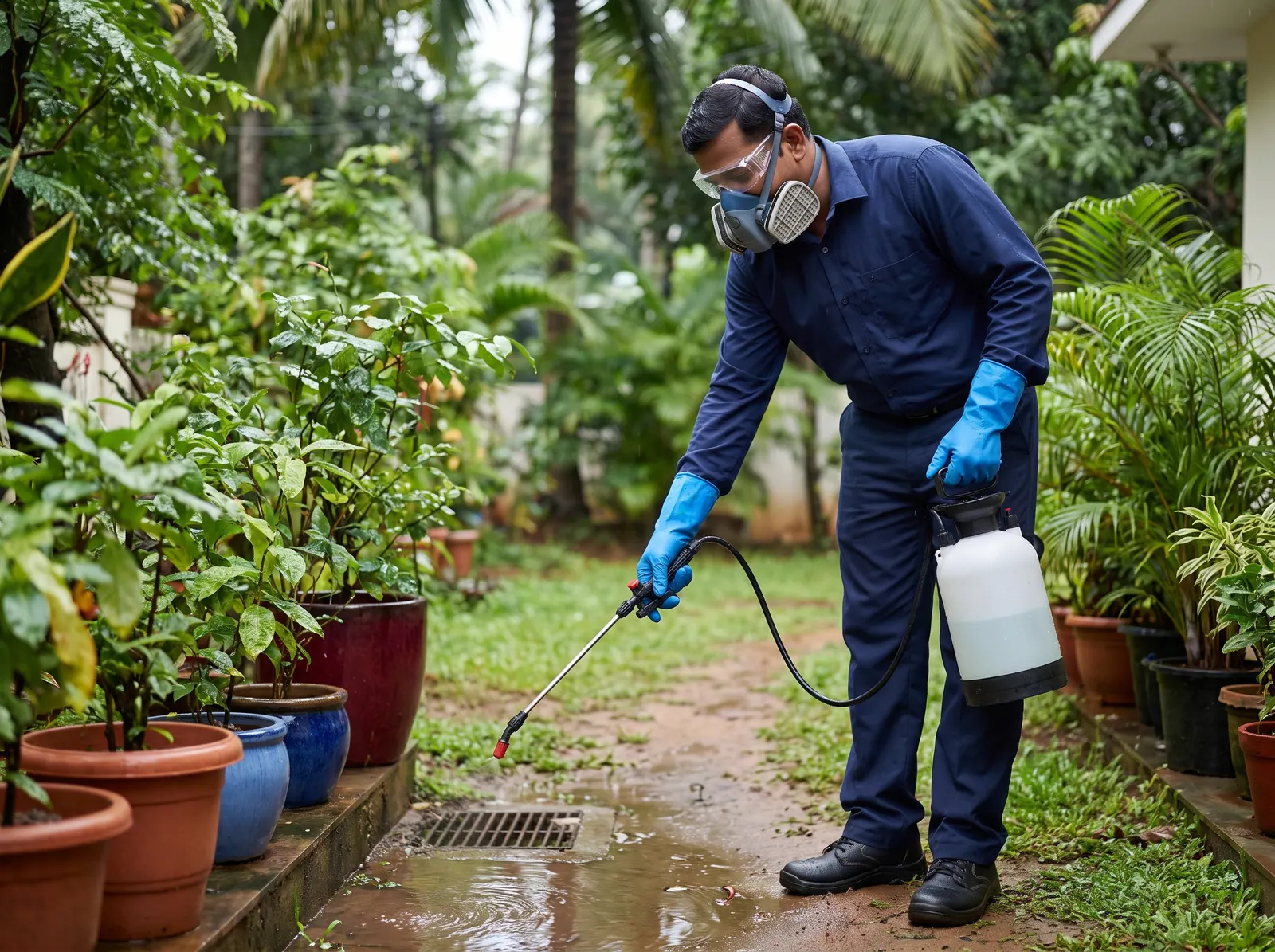
- Larviciding: treating water that cannot be emptied, such as drain chambers or sumps, so larvae do not grow into adults.
- Indoor residual spraying: treating surfaces where mosquitoes rest indoors, such as behind furniture, under beds and in dark corners.
- Fogging or ULV treatment: knocking down adult mosquitoes outdoors in gardens, compounds and common areas when activity is high.
Each method is explained in more detail on our main mosquito control service page.
Where do mosquitoes breed around Porvorim properties?
Porvorim has a mix of apartment buildings, houses with compounds, newer villas and busy commercial stretches, and each type has its own trouble spots. Mosquito larvae need only a small amount of still water. In warm weather they can develop from egg to adult in roughly a week.
When the bites happen can also give a clue. Mosquitoes that bite during the day often breed in clean stored water and containers. Those that are worst at night often come from drains and dirtier standing water.
Flats and housing societies
Common sources include balcony plant trays, AC drip water, unused buckets in utility areas, and terrace tanks with loose lids. Blocked rainwater outlets and stilt or basement parking where water pools are also frequent culprits. Shared drains and sumps need a society-level plan, because one resident clearing a balcony cannot fix a blocked common drain.
Independent houses and villas
Homes with gardens and compounds often have wells, ornamental ponds, water drums for the garden, old tyres and stored building material. Coconut shells, fallen fronds and leaf-choked roof gutters also hold water. Our mosquito breeding checklist for Goan gardens and terraces is a useful walk-round guide between visits.
Offices, shops and clinics
Check pantry areas, rooftop tanks, rarely used toilets, decorative plant containers and drains at the back of the building. Storerooms and back areas that are seldom disturbed are often where adult mosquitoes rest during the day.
Buildings under construction or newly finished
Curing water, uncovered tanks, lift pits and debris that holds rainwater can breed mosquitoes quickly. If you are finishing a house or moving into a new flat, check these spots before the monsoon arrives.
How does a mosquito control visit work?
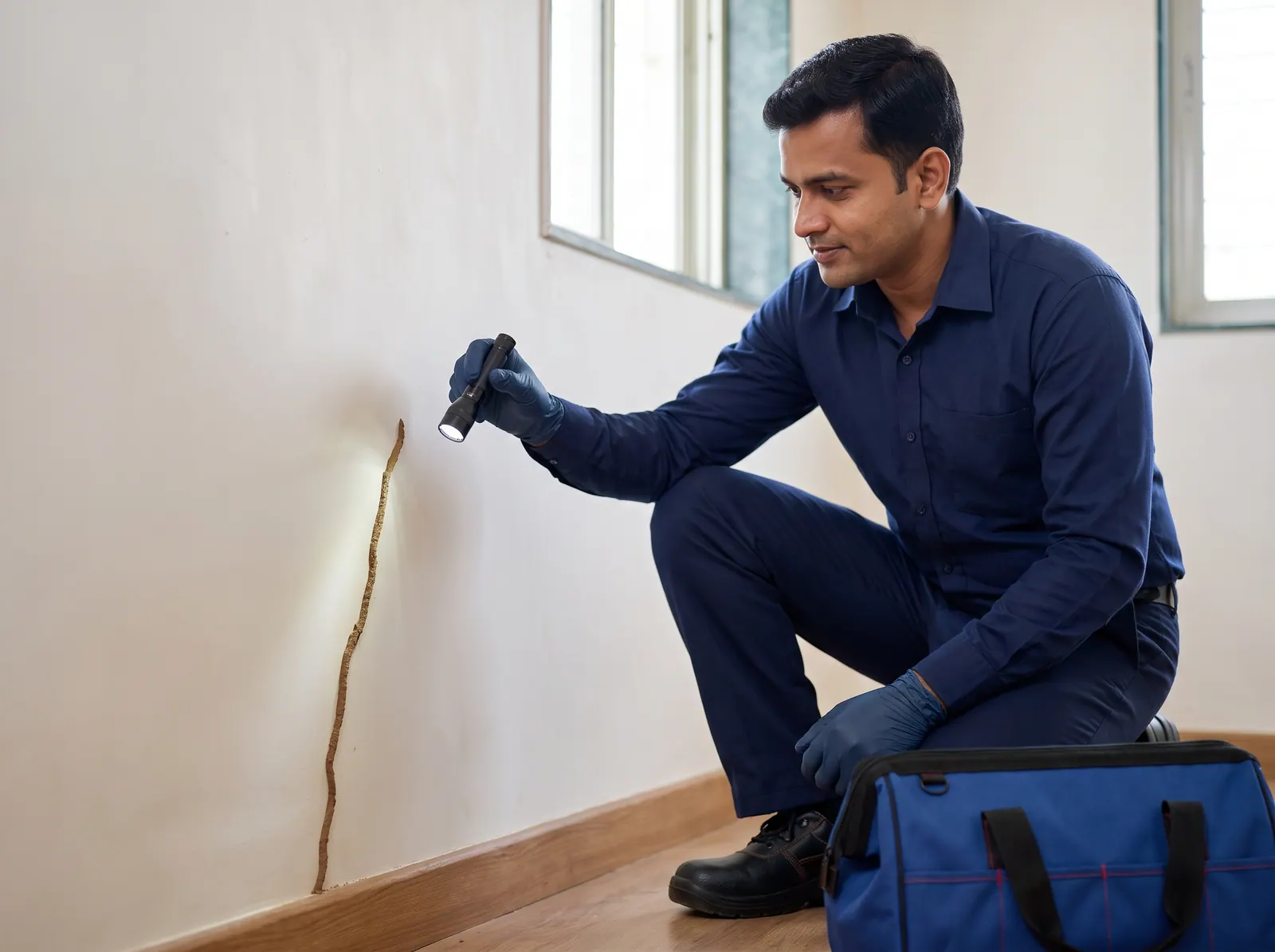
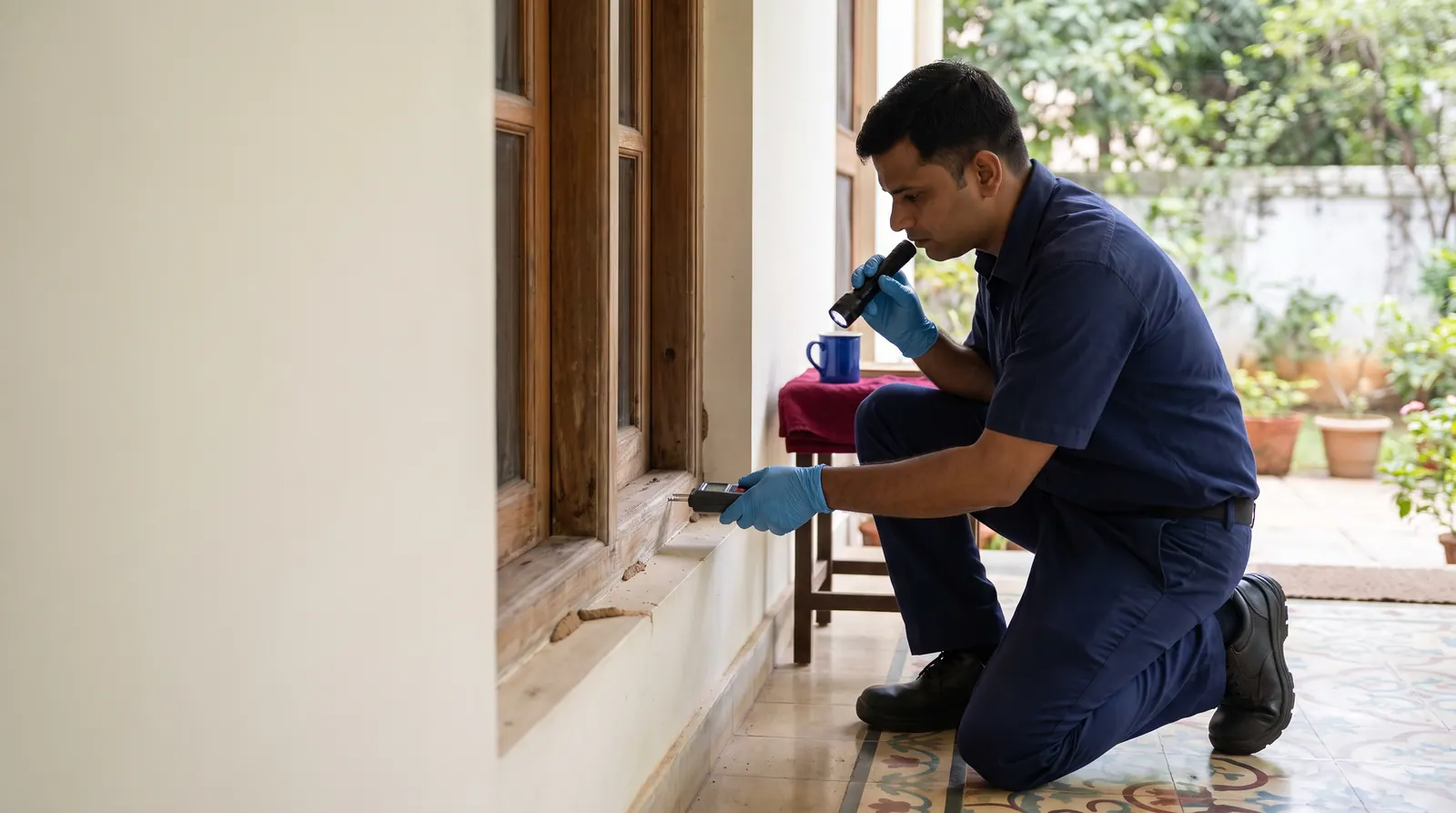
- Inspection. Our technician walks the property with you or your representative. They check tanks, drains, planters, gutters, terraces, wet corners and likely resting areas indoors. They also note open windows, gaps and torn mesh.
- Source reduction. We point out water that can be emptied, covered or drained, and explain simple fixes. This step often makes the biggest difference.
- Targeted treatment. Larvae are treated where water has to remain. Adults are treated indoors and outdoors according to what the inspection shows.
- Proofing advice. We give guidance on window mesh, door gaps, mosquito nets and tank covers to keep mosquitoes out of bedrooms and living areas.
- Service report. After the visit we share a service report as proof of service, with WhatsApp updates, so you know what was done and what to watch for.
- Follow-up. Where breeding is likely to restart, especially during the rains, we suggest a schedule for further visits.
Which treatment method suits which situation?
| Method | What it targets | Typical places | Limits to keep in mind |
|---|---|---|---|
| Source reduction | Larvae, by removing their habitat | Every property | Needs ongoing effort from residents or staff |
| Larviciding | Larvae in water that cannot be removed | Drain chambers, sumps, ornamental water, construction sites | Needs repeating as water is refreshed or diluted by rain |
| Indoor residual spraying | Adults resting indoors | Bedrooms, under stairs, storerooms | Not a substitute for mesh and nets |
| Fogging / ULV | Adults outdoors that are active at the time | Gardens, compounds, society common areas | Short-lived effect; works best alongside source reduction |
Fogging is the most visible method, but it is only one part of the plan. Our page on mosquito fogging and ULV treatment in Goa explains when it is useful and when it is not.
How should mosquito control change through the year?
Goa's south-west monsoon is very heavy, and the humid coastal climate keeps conditions favourable for mosquitoes well beyond the rains. A plan that changes with the season works better than the same treatment repeated all year.
| Season | What tends to happen | What we focus on |
|---|---|---|
| Before the monsoon | Gutters, terraces and junk collect leaves and debris | Clearing gutters, covering tanks, removing items that will hold rain |
| Monsoon | Rain fills every hollow and drains overflow | Regular larviciding, drain checks, indoor treatment |
| After the monsoon | Pockets of water remain while it is still warm and humid | Finding leftover water, outdoor adult control |
| Dry months | Fewer outdoor sources; stored water becomes the main risk | Tanks, drums, plant trays, AC trays |
For more on the weeks after the rains, read our guide to the post-monsoon mosquito season in Goa.
Is mosquito treatment safe for children and pets?
Our Goa branch is a licensed pest control operator with the Directorate of Agriculture, Goa. We use CIB&RC-registered products, applied according to their label directions. We maintain Material Safety Data Sheets for the products we use, and the technician will explain any precautions for your home.
- Keep children and pets away from treated areas until surfaces are dry, or for as long as the technician advises.
- Put away food, utensils and pet bowls before indoor treatment, and cover fish tanks.
- Ventilate rooms after treatment as advised.
- Wash your hands after touching treated surfaces.
If anyone at home develops a fever or feels unwell after mosquito bites, please see a doctor promptly.
Mosquito control for societies, offices and food businesses
Housing societies usually get the best results when the committee arranges treatment of common areas on one schedule. That covers drains, sumps, terraces, gardens and parking. Residents then look after their own balconies and utility areas.
Offices, clinics and shops often need records for management or inspections. For restaurants and other food businesses, we provide documentation aligned with HACCP and FSSAI audit expectations. Annual maintenance contracts with scheduled visits and service reports are available for both homes and businesses.
If you need help with more than mosquitoes, see residential pest control in Porvorim or commercial pest control in Porvorim.
Arranging mosquito control in Porvorim
Contact our Goa branch in Chimbel and tell us:
- where in Porvorim you are
- what kind of property it is
- when the mosquitoes are worst: daytime, evening or night
This helps us plan the inspection. The cost depends on the size of the area, the amount of breeding, whether indoor and outdoor work is needed, and how often visits are required. We will explain the recommended plan and what it includes before any work begins. For other pests in the area, visit our pest control in Porvorim page.
Frequently asked questions
QHow soon will I notice fewer mosquitoes after treatment?
Indoor spraying and outdoor fogging usually reduce adult mosquitoes quite quickly. However, new adults can keep emerging from any breeding water that was missed or that refills. That is why source reduction and larviciding matter. The overall improvement depends on how well standing water is controlled after the visit. Our technician will explain what to expect for your property and when a follow-up makes sense.
QIs fogging alone enough for a housing society in Porvorim?
Usually not. Fogging affects adult mosquitoes that are active outdoors at the time, and its effect is short-lived. If drains, sumps, terrace tanks or parking areas keep holding water, new mosquitoes will soon replace those that were killed. Societies generally do better with a combined plan: common-area drains and sumps treated on a schedule, fogging where it helps, and residents clearing their own balconies.
QDo I need to be present during the visit, and how should I prepare?
Yes. We ask that you or a representative accompany the technician, so they can reach terraces, tanks and utility areas and you can point out where bites are worst. Before the visit, keep balconies and terraces accessible. Put away food and pet bowls, and plan to keep children and pets out of treated rooms until surfaces are dry. The technician will give you any specific instructions.
QHow often should mosquito control be done?
It depends on the property and the season. During and just after the monsoon, breeding restarts quickly, so visits are usually needed more often than in the dry months. Homes and businesses that want a regular schedule can choose an annual maintenance contract. This includes planned visits and a service report after each one. We recommend a frequency after the first inspection.
QCan you help with a new building or a house under construction?
Yes. Construction sites and newly finished buildings often hold water in curing areas, uncovered tanks, lift pits and debris. These can breed mosquitoes quickly. Our inspection identifies these spots and suggests how to drain or cover them. Water that has to stay can be treated with larvicide. This is worth doing before the monsoon, when rain adds many more water pockets.
QDo you provide records for offices, clinics and restaurants?
Yes. After each visit we share a service report as proof of service, which helps with maintenance planning and internal checks. For food businesses, our documentation is aligned with HACCP and FSSAI audit expectations. Material Safety Data Sheets are maintained for the products we use and can support your own safety records.
QSomeone at home has a fever after mosquito bites. What should we do?
Please see a doctor promptly rather than waiting to see if it passes. Some mosquito-borne illnesses need a medical diagnosis, and only a doctor can advise on treatment. Meanwhile, use nets and window mesh to reduce further bites. Check your home and surroundings for standing water, and arrange an inspection so breeding sites can be dealt with.
Last updated 13 October 2026. Information on this page is general guidance; your technician will advise on your specific property after inspection.