Quick answer
Efficacy Pest Control provides mosquito control across Goa from its branch in Chimbel. Each job begins with an inspection to find where mosquitoes breed and rest. The plan then combines breeding-site reduction, larviciding of water that cannot be emptied, indoor residual spraying and, where useful, fogging. Plans change with Goa's seasons, especially around the monsoon. Every visit ends with a service report.
Key points
- Mosquito control in Goa is planned after an inspection of breeding and resting sites.
- Methods include breeding-site reduction, larviciding, indoor residual spraying and fogging.
- Fogging gives short-term relief; controlling breeding water matters most for lasting results.
- Treatment plans change with Goa's seasons, especially before, during and after the monsoon.
- Service reports are shared after visits, with HACCP/FSSAI-aligned documentation for food businesses.
Efficacy Pest Control provides pest control services for mosquitoes across Goa from our branch in Chimbel. Every job starts with an inspection to find where mosquitoes are breeding and resting on your property. We then build a plan that combines breeding-site reduction, larviciding, indoor residual spraying and fogging, depending on the property and the season.
Fogging on its own only knocks down adult mosquitoes for a short time. That is why we put most of our effort into the water where the next generation is growing.
Mosquitoes are more than an irritation. Some species can spread diseases such as dengue, malaria and chikungunya, so reducing their numbers around homes, hotels and workplaces is a sensible health measure. If anyone in your household develops a fever, see a doctor promptly.
How does our mosquito control service work?
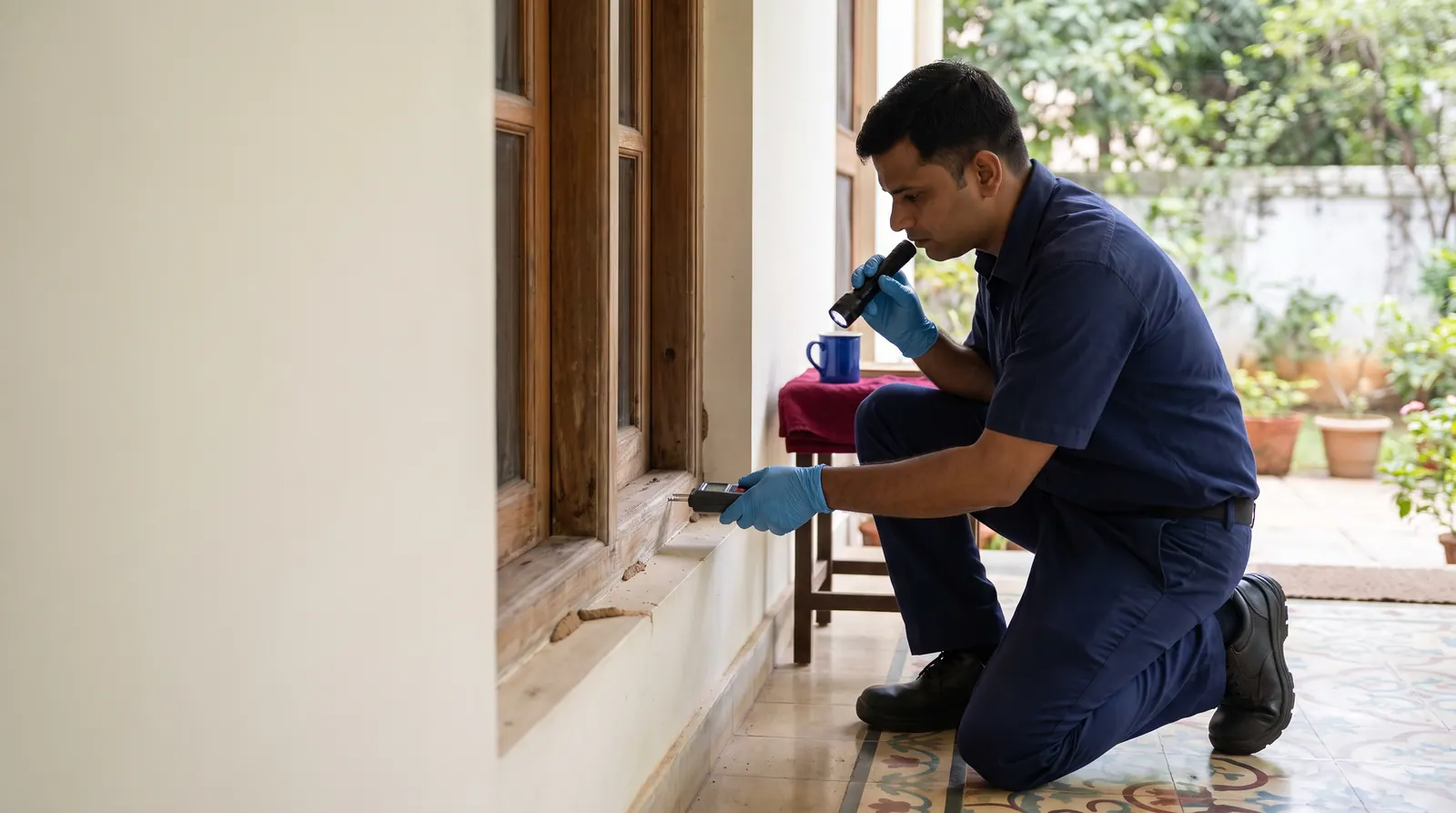
- Inspection. A technician walks the property inside and out. They look for standing water and larvae, and for the shaded spots where adult mosquitoes rest during the day.
- Source reduction advice. We point out the containers, drains, gutters, tank covers and other places that hold water. We also explain which ones you can remove or cover yourself.
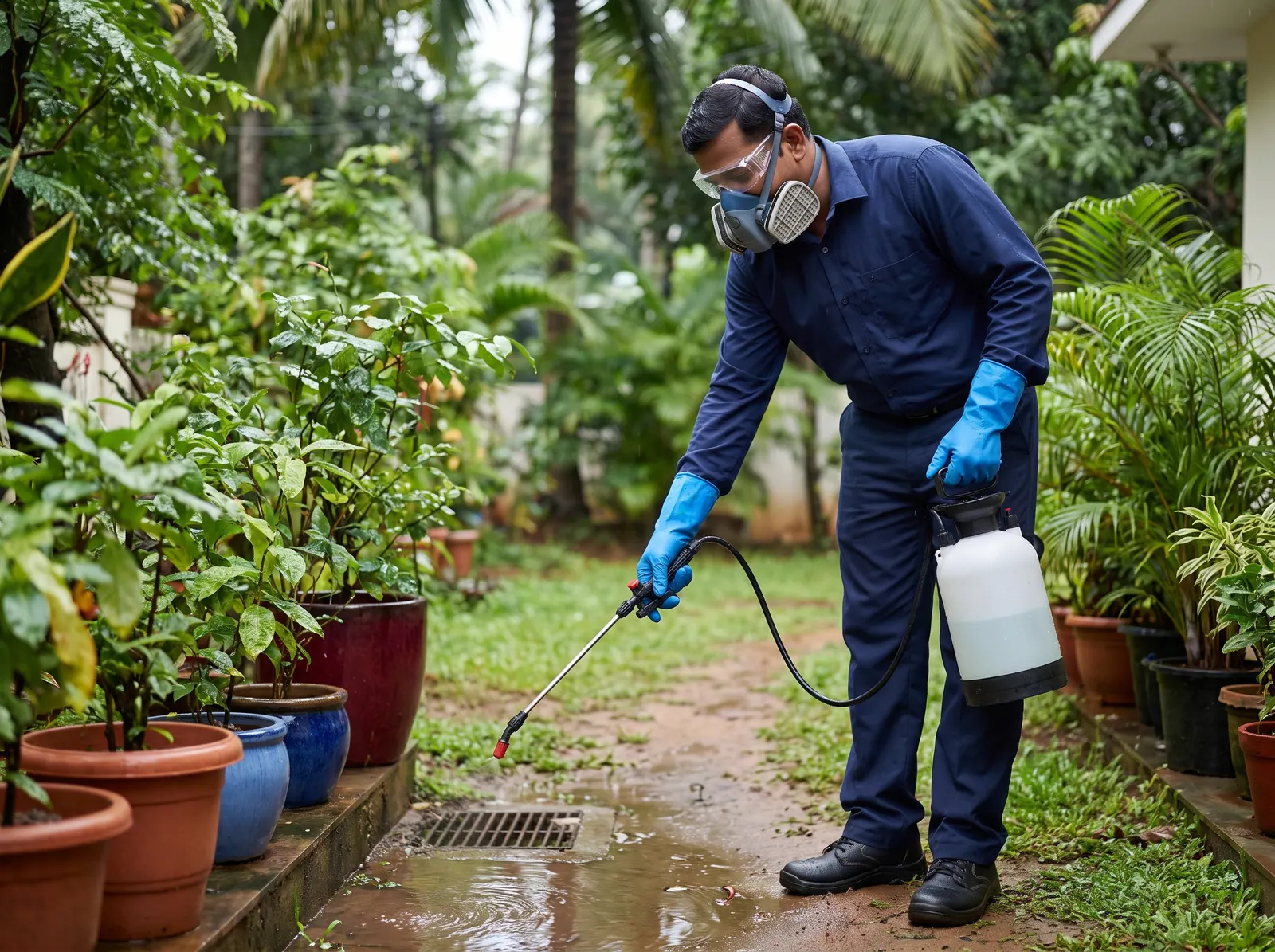
- Larviciding. Some water cannot be emptied, such as drains, sumps, ornamental ponds and construction pits. We treat this water to stop larvae developing into adults.
- Targeted adult control. Where needed, we spray indoor resting surfaces with a residual treatment and fog outdoor areas to reduce the adult population.
- Report and follow-up. After the visit you receive a service report, and WhatsApp updates are available for clients. We then recommend a schedule based on what we found.
This is the Integrated Pest Management (IPM) approach we follow for every pest. We inspect first, fix the conditions that cause the problem, and then treat in a targeted way rather than spraying everywhere.
Which mosquito control method suits which situation?
| Method | What it targets | Where it is typically used |
|---|---|---|
| Breeding-site reduction | Eggs and larvae, by removing or covering water | Every property; the foundation of any plan |
| Larviciding | Larvae in water that cannot be removed | Drains, sumps, ponds, tanks, site pits |
| Indoor residual spraying | Adults resting on walls and shaded surfaces | Homes, staff quarters, stores, back-of-house areas |
| Fogging | Flying adults in open areas, short-term | Gardens, compounds, society common areas, resort grounds |
Fogging gives a quick, visible drop in mosquito numbers. However, the effect fades fast if breeding continues nearby.
To learn how we plan and carry out this work, see our page on mosquito fogging and ULV treatment in Goa.
How does Goa's climate affect mosquito control through the year?
Goa's humid coastal climate and very heavy south-west monsoon leave plenty of standing water for much of the year. A good plan therefore changes with the season rather than repeating the same treatment at every visit.
| Season | What tends to happen | What we focus on |
|---|---|---|
| Pre-monsoon (roughly April–May) | Water is stored in tanks, drums and buckets, and drains silt up before the rains | Covering stored water, checking gutters and drains, early larviciding |
| Monsoon (roughly June–September) | Rain fills containers, tyres, tarpaulin folds, coconut shells and flat roofs, so breeding sites multiply | Regular source checks, larviciding of drains and pooled water, treating indoor resting sites |
| Post-monsoon (roughly October–November) | Water lingers in low-lying ground, blocked drains and building sites | Clearing leftover pools, follow-up larviciding, fogging of grounds where needed |
| Dry season (roughly December–March) | Breeding shifts to man-made sources such as overhead tanks, AC drip trays, plant saucers and fountains | Indoor and building-service checks, maintenance visits |
Mosquito control for different kinds of property in Goa
Flats, independent houses and villas
Most household mosquito problems start within a few metres of the home. Common sources are balcony plant saucers, loose sump covers, overhead tanks and blocked terrace drains.
Villas with gardens add ornamental ponds, water features and dense shaded planting where adult mosquitoes rest.
Housing societies
In a society, many breeding sites sit in shared spaces. These include basement parking drains, terrace tanks, pump rooms and landscaped areas.
We can work with the managing committee on a scheduled plan for the common areas, while residents look after their own balconies and flats. An Annual Maintenance Contract gives year-round scheduled visits with service reports that the committee can keep on record.
Hotels, resorts and guest houses
Guests notice mosquitoes first in gardens, pool surrounds, outdoor dining areas and rooms near planting. Staff accommodation also needs attention.
Our hotel pest management programmes cover guest rooms, kitchens, stores and staff accommodation, and mosquito work fits into the same schedule. We agree the timing for guest-facing areas with the property's team.
Restaurants, offices, warehouses and building sites
Restaurants with outdoor seating often have drains and wash areas close to diners. For food businesses, we provide documentation aligned with HACCP and FSSAI audit expectations.
Warehouses and construction sites tend to collect water in pits, curing areas, stacked tyres and covered materials. These sites usually need larviciding and regular checks rather than fogging alone.
How should you prepare, and what happens after treatment?
- Cover or put away food, drinking water, utensils and pet bowls in the areas to be treated.
- Keep children and pets away from treated areas until surfaces are dry, or for as long as the technician advises.
- Cover aquariums and switch off their air pumps during indoor treatment.
- Ventilate rooms after indoor spraying before you use them again.
- Avoid washing sprayed walls for the period the technician advises, so that the residual treatment keeps working.
- Wash your hands after touching treated surfaces.
We are a licensed pest control operator with the Directorate of Agriculture, Goa. We use CIB&RC-registered products, apply them according to label directions, and keep Material Safety Data Sheets for the products we use.
A member of your household or staff should accompany the technician during the visit. Please mention any particular concerns, such as someone with asthma, a young baby or a pregnancy in the home.
What can you do between visits?
- Empty, scrub and refill water containers at least once a week.
- Keep overhead tanks and sumps tightly covered, and fit mesh over vent and overflow pipes.
- Clear gutters and roof drains, especially before and during the monsoon.
- Remove or cover old tyres, coconut shells, discarded containers and folded tarpaulins.
- Change the water in vases and plant saucers weekly, and empty AC and fridge drip trays.
- Use window screens and bed nets, particularly in bedrooms.
Where in Goa do we provide mosquito control?
Our Goa branch in Chimbel serves the following areas:
- Panaji (also Panjim), including Miramar, Taleigao, Dona Paula and Ribandar
- Margao (also called Madgaon), including Fatorda and Navelim
- Vasco da Gama, including Dabolim and Chicalim
- Mapusa, Porvorim and Ponda
- The coastal belt of Calangute, Candolim and Baga
For town-specific details, see our pages on mosquito control in Panaji, mosquito control in Margao and mosquito control in Vasco da Gama.
If your area is not listed, ask us anyway. We will tell you plainly whether we can help.
Arranging a mosquito inspection
Tell our Goa branch in Chimbel where you are, what kind of property you have and what you are noticing. For example, you might be bitten indoors at night, see larvae in a tank or have a mosquito problem across a society compound.
You can contact our Goa team to arrange a visit. If you are dealing with other pests as well, our overview of pest control services in Goa explains what else we handle.
Frequently asked questions
QHow often should a home in Goa have mosquito treatment?
It depends on how many breeding sites the property has and how close it is to drains, fields or construction. Many homes benefit from a visit before the monsoon and another after it, with extra attention during the rains. Societies and businesses often prefer an Annual Maintenance Contract with scheduled visits. After inspecting, the technician will recommend a frequency that suits your property.
QIs mosquito treatment safe for children and pets?
We use CIB&RC-registered products and apply them according to label directions. Keep children and pets away from treated areas until surfaces are dry, or for as long as the technician advises. Cover pet bowls and aquariums, and ventilate rooms afterwards. Please tell us in advance about babies, pregnancy, asthma or pets such as birds and fish, so the treatment can be planned around them.
QCan you treat a garden or venue before a wedding or event?
Share the venue, the date and the approximate size of the area with our Goa branch. The team will advise whether a one-off treatment is suitable and how far ahead it should be done. Fogging gives short-term relief only, so it also helps to clear standing water around the venue a few days beforehand.
QWhy do mosquitoes come back a few days after fogging?
Fogging kills flying adults it reaches at the time, but it does not affect eggs or larvae in water. If containers, drains or tanks nearby are still breeding, new adults keep emerging. That is why we focus on removing and treating breeding water and on treating indoor resting surfaces, with fogging used as one part of the plan.
QThe mosquitoes are coming from a neighbour's plot or an open drain. What can you do?
Our treatment covers your property. We can treat resting sites around your home, advise on screens and sealing gaps, and larvicide drains within your premises. Water on neighbouring land or in public drains is outside our treatment area. You may want to raise it with the neighbour or with your local panchayat or municipal council.
QDo you provide service records for hotels and restaurants?
Yes. We share a service report after each visit, and WhatsApp updates are available for clients. For food businesses, we provide documentation aligned with HACCP and FSSAI audit expectations. This lets you show what was inspected and treated, and when, as part of your hygiene records.
Last updated 13 October 2026. Information on this page is general guidance; your technician will advise on your specific property after inspection.