Quick answer
Our Goa branch in Chimbel provides mosquito control in Vasco da Gama, including Dabolim, Chicalim and Bogmalo. We start by inspecting the building's tanks, drains, terraces, ducts and any construction water. We then combine breeding-site reduction and larviciding with indoor residual spraying or fogging where the property and season call for it. Fogging alone only kills the adult mosquitoes present at the time. Removing breeding water is what keeps numbers down.
Key points
- Our Goa branch in Chimbel covers Vasco da Gama, including Dabolim, Chicalim and Bogmalo.
- Many mosquitoes in apartment buildings breed in shared spaces such as tanks, terrace outlets, ducts, lift pits and drains, not just inside flats.
- Fogging only affects adult mosquitoes flying at the time; larval control and removing standing water address the source.
- The Goa branch is a licensed pest control operator (Directorate of Agriculture, Goa) using CIB&RC-registered products.
- Service reports are shared after each visit, which helps society committees track breeding points and repairs.
Mosquito control in Vasco da Gama, starting with the building
Vasco da Gama has a humid coastal climate and a heavy south-west monsoon. Much of the town lives in apartment blocks, and ongoing construction and roadside drains add to this. Together they create many small pockets of standing water where mosquitoes can breed. A flat can be spotless and still get mosquitoes, because the water they hatch from is often in a shared tank, a blocked terrace outlet or a lift pit.
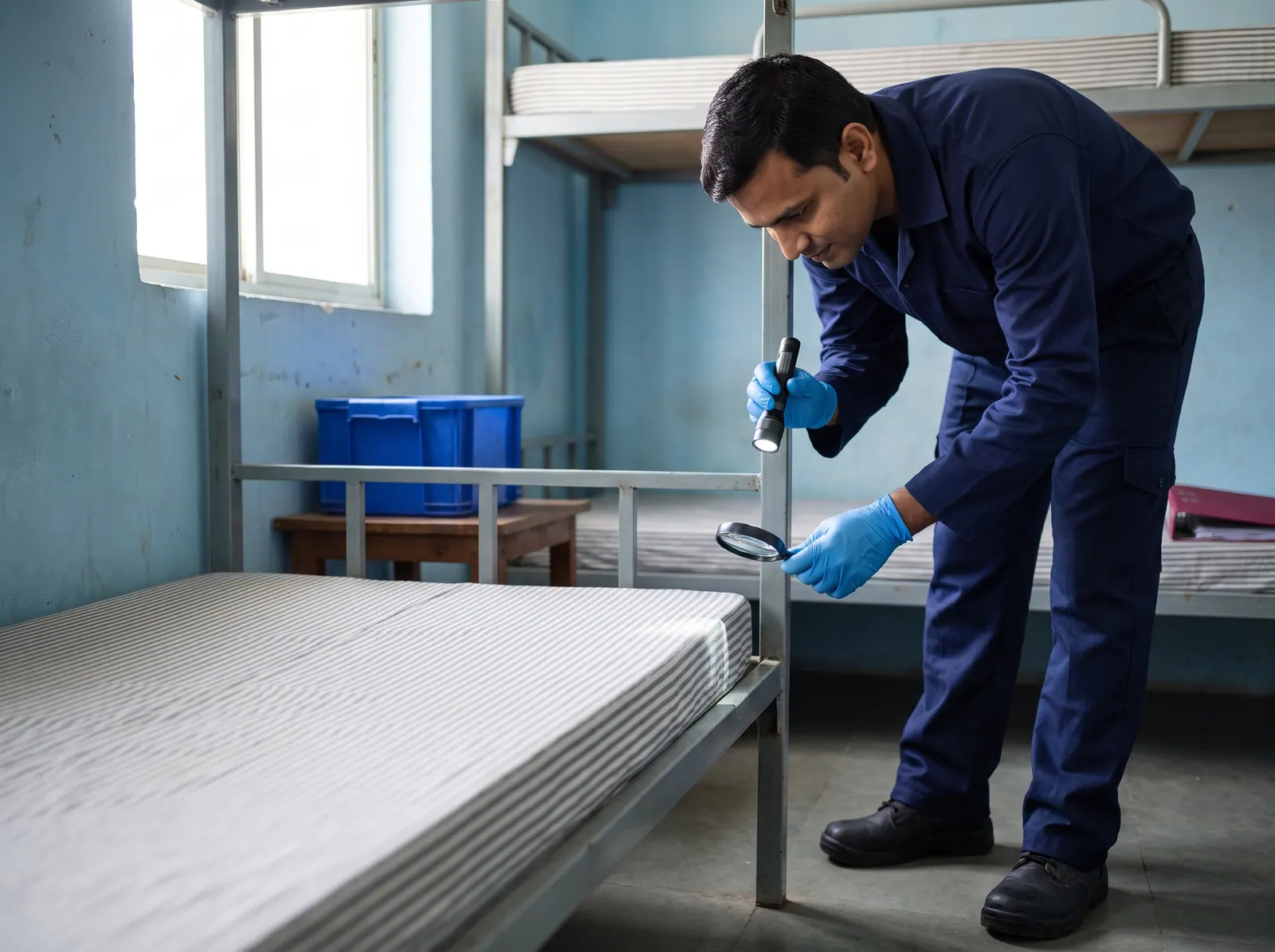
That is why our mosquito control service in Vasco begins with a check of the whole building rather than a single room. Our Goa branch in Chimbel follows an Integrated Pest Management approach. We inspect first, advise on sanitation and proofing, and then treat only where treatment is needed.
Where do mosquitoes breed in Vasco apartment buildings?
Different mosquitoes prefer different water. Aedes mosquitoes, which bite mainly during the day, breed in small amounts of fairly clean water held in containers. Their eggs can survive dry on a container wall for a long time and hatch once it fills again. Culex mosquitoes, which are the usual night-time biters, favour dirtier water in drains, gully traps and septic systems.
In warm weather, a mosquito can develop from egg to adult in about a week. A missed container can therefore produce a new batch quickly. These are the building-level points we check:
- Overhead and sump tanks with loose, cracked or missing lids, or overflow pipes left unscreened.
- Terraces where outlets are blocked by leaves or debris, and water ponds after rain.
- Lift pits, basements and stilt parking where seepage or rainwater collects unnoticed.
- Utility and plumbing ducts where leaking pipes leave puddles behind closed shaft doors.
- Septic tank vent pipes without mesh caps, and open or damaged manhole covers.
- Air-conditioner drip trays and pipes draining into buckets on balconies.
- Construction areas in or next to the society, including curing water, unused drums, tyres and flooded foundations.
- Locked or vacant flats with water in toilets, flower vases or balcony trays.
- Common-area planters and saucers, and decorative water features.
Our mosquito breeding checklist for Goan gardens and terraces goes into these points in more detail. It is useful for anyone with an independent house or a ground-floor garden.
How do we handle mosquito control for housing societies and apartments?
Mosquitoes do not respect flat boundaries. A society-wide plan works far better than individual flats treating separately. For societies, we usually work like this:
- Walk-through with the committee or manager. We cover tanks, terraces, ducts, basements, drains, the garden and the boundary, including any neighbouring construction we can see.
- A list of breeding points. We note where each one is, and whether it needs a fix (a lid, mesh, clearing a drain) or treatment.
- Larval control for water that cannot be removed, such as drains, sumps and gully traps.
- Adult control where it is justified. This may be residual treatment of resting areas like stairwells, basements and ducts, or fogging of common areas during periods of high activity.
- Resident notice. We help the committee tell residents when treatment is planned, what to keep closed and what to check inside their own flats.
- Service report. After each visit we share a report, and clients receive updates on WhatsApp. This gives the committee a record of what was done and what still needs attention.
Many societies find scheduled visits easier to manage than one-off calls, particularly through the monsoon and the weeks after it. Our guide to the post-monsoon mosquito season in Goa explains why mosquito numbers often stay high after the rains ease. Annual maintenance contracts with scheduled visits are available from our Goa branch.
Fogging or larval control: which does your building need?
Fogging is the most visible treatment, so it is often what people ask for first. But fogging works only on adult mosquitoes that are flying at the time. It leaves little lasting effect, and new adults keep emerging from any breeding water left behind. Larval control and source reduction are slower to notice but address the cause. Most buildings need a mix.
| Method | What it targets | Where it suits Vasco buildings | Limits |
|---|---|---|---|
| Breeding-site reduction | Standing water itself | Tank lids, terrace outlets, AC trays, construction debris | Needs residents and the society to keep it up |
| Larviciding | Larvae in water that cannot be removed | Drains, sumps, gully traps, lift pits | Has to be repeated; does not affect adults already flying |
| Indoor residual spraying | Adults resting on surfaces | Stairwells, basements, ducts, shaded corners | Targeted to resting areas, not a whole-building blanket |
| Fogging / ULV | Adults in the air at the time | Gardens, parking and common areas during high activity | Short-lived; works best alongside larval control |
For more on how space treatments are carried out, see our page on mosquito fogging and ULV treatment in Goa.
What happens during a visit, and how do we keep it safe?
Our Goa branch is a licensed pest control operator with the Directorate of Agriculture, Goa. We use CIB&RC-registered products and apply them according to label directions. We keep Material Safety Data Sheets for the products we use.
Before and during treatment, we will ask you to:
- Keep children and pets away from treated areas until surfaces are dry, or for as long as the technician advises.
- Close windows or doors facing the area being fogged, and ventilate afterwards as advised.
- Cover or put away food, water containers and utensils, and cover aquariums.
- Arrange for a society or household representative to accompany the technician.
Wash your hands after touching any surface that was treated recently. If anyone in the household develops a fever or feels unwell after mosquito bites, please see a doctor promptly.
What can residents do between treatments?
Treatment works much better when residents also remove breeding water. A once-a-week routine helps break the cycle before new mosquitoes emerge:
- Empty and scrub flower vases, plant saucers, pet bowls and buckets every week.
- Check AC drip trays and the fridge defrost tray.
- Keep drums and stored water tightly covered, or use a fine cloth over the opening.
- Flush unused toilets and run unused taps, and ask neighbours with vacant flats to do the same.
- Fit or repair window and door mesh, especially on lower floors and near drains.
- Report blocked terrace outlets, leaking pipes in ducts and uncovered tanks to the society office.
- Tell the committee about water collecting on nearby construction sites, so it can be raised with the builder.
If your home has other pest problems as well, our residential pest control in Vasco da Gama page explains how we handle homes and flats more broadly.
Which parts of Vasco da Gama do we cover?
Our Goa branch in Chimbel covers Vasco da Gama, including Dabolim, Chicalim and Bogmalo. We serve flats, independent houses and housing societies. You can see the other services available in the town on our pest control in Vasco da Gama page.
To get started, tell us about your building, where you notice mosquitoes, and whether the problem is in one flat or across the society. You can request an inspection, and our Goa branch team will arrange a visit and suggest a plan suited to your property and the season.
Frequently asked questions
QHow often should a housing society in Vasco schedule mosquito treatment?
It depends on how many breeding points the building has and the time of year. Activity is usually higher during and after the monsoon, so societies often need more frequent visits then and fewer in drier months. After the first inspection, we suggest a schedule that may be weekly, monthly or quarterly. Many societies choose an annual maintenance contract so visits and reports happen on a fixed plan.
QCan you treat just my flat if the society is not taking part?
Yes. We can inspect your flat, treat resting areas inside it and advise on mesh and on removing water from balconies and bathrooms. Please be aware that if tanks, drains or terraces in common areas keep breeding mosquitoes, some will continue to reach your flat. Sharing our inspection findings with your committee often helps bring the rest of the building on board.
QWill mosquitoes disappear straight after fogging?
Fogging quickly reduces adult mosquitoes in the treated area. However, it has little lasting effect. Within days, new adults can emerge from any water where larvae are still developing. That is why we pair fogging with larval control and breeding-site removal. You will notice the most lasting improvement once the water sources in and around the building are dealt with.
QIs mosquito treatment safe for children, pets and fish?
We use CIB&RC-registered products applied according to label directions, and we keep safety data sheets for them. Keep children and pets away from treated areas until surfaces are dry or for as long as the technician advises. Cover food and aquariums, close windows facing fogged areas, ventilate afterwards and wash your hands after touching treated surfaces.
QDo you give a written record of each visit?
Yes. Our Goa branch shares a service report after each visit, and clients receive updates on WhatsApp. For housing societies, this gives the committee a clear record of which areas were inspected and treated. It also lists the breeding points that still need repairs, such as a missing tank lid or a blocked terrace outlet.
QDo you cover Dabolim, Chicalim and Bogmalo?
Yes. Our company records list Dabolim, Chicalim and Bogmalo within our Vasco da Gama coverage, served from our Goa branch in Chimbel. When you contact us, mention your building type and the areas where mosquitoes are a problem. This helps us plan the inspection properly.
QWhat should we do if someone at home develops a fever?
Please see a doctor promptly. Fever after mosquito bites should be checked by a medical professional, and we cannot give medical advice. Mosquito control in the building is still worthwhile alongside medical care. Removing breeding water and treating resting areas can help reduce bites for everyone living there.
Last updated 13 October 2026. Information on this page is general guidance; your technician will advise on your specific property after inspection.