Key points
- Ants seen on a trail are foragers; the queen and young stay in a hidden nest.
- Slow-acting baits are carried back and shared, so they can reduce the whole colony.
- Spraying some ant species can make the colony split into several new nests.
- Flying ants have a pinched waist and elbowed antennae; termite swarmers have a straight waist and equal-length wings.
- Removing food, fixing leaks and sealing gaps reduces the chance of ants returning.
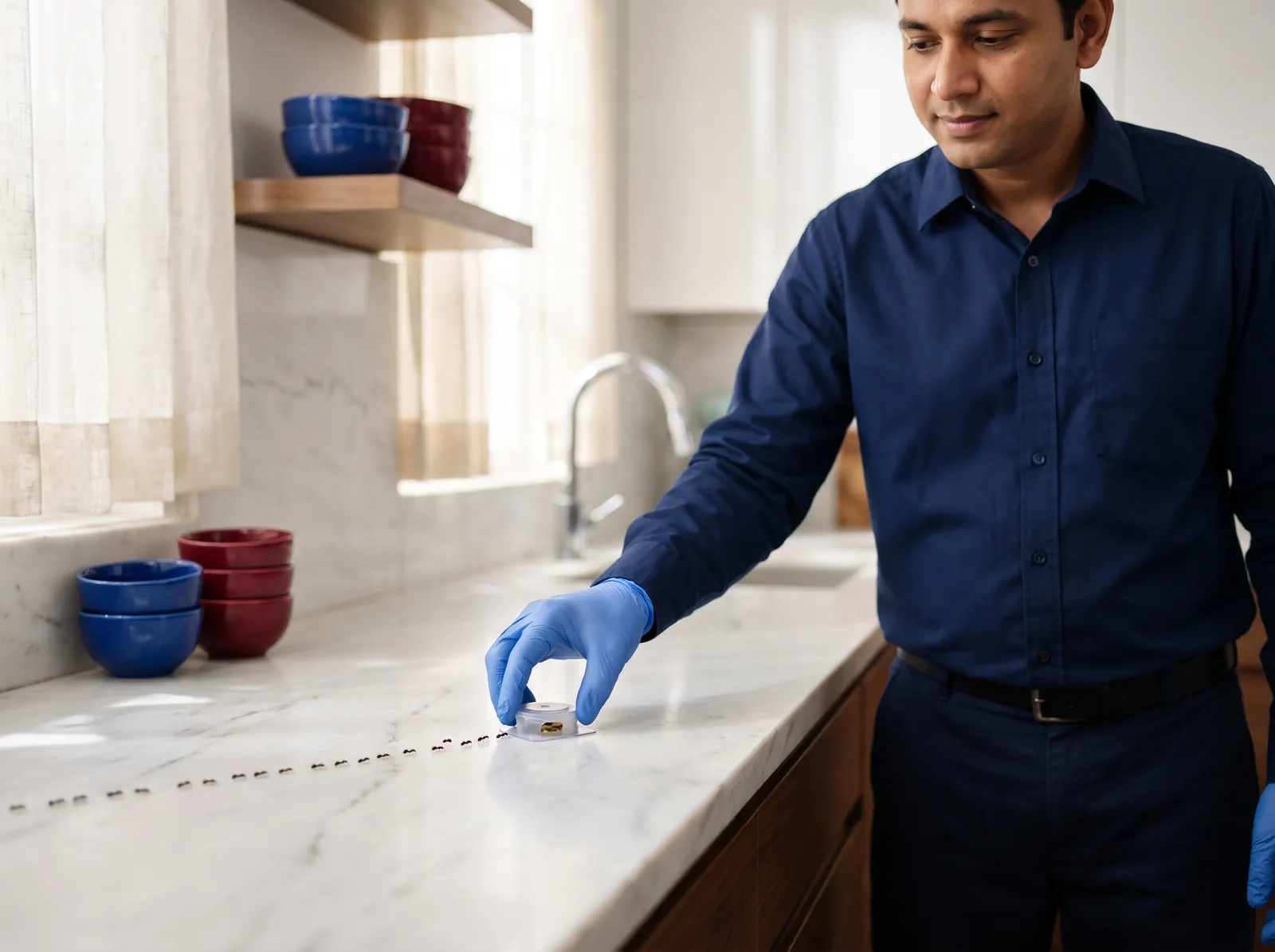
Ant control works best when it targets the colony, not just the ants you can see. A line of ants across a kitchen counter is usually a small share of the foraging workers from a hidden nest. That nest may be in a wall void, under floor tiles, in a planter or outside in the soil.
Ant control is currently a confirmed service at our Goa branch only. There, the technician follows those trails back towards the nest and identifies the type of ant, then uses baits and focused spot treatment aimed at reducing the colony itself. This page explains how ant problems are approached in homes and businesses, and why baits often work better than sprays. It also covers how to prepare and how to keep ants from coming back. Our Shamshabad branch has recently opened and is confirming its services area by area.
Which ants are you dealing with?
Identification matters because ant species eat different foods and nest in different places. They also respond differently to treatment. A bait that one species takes readily may be ignored by another. Some ants also react badly to the wrong approach.
The table below is a practical guide to ants commonly seen in Indian homes and premises. It is not a full scientific key, and a technician will confirm the species during inspection.
| What you see | What you might notice | Where they tend to nest |
|---|---|---|
| Small black or dark brown ants | Steady trails to sugar, food scraps and pet food | Cracks in walls and floors, under tiles, in soil outdoors |
| Tiny ants with a dark head and pale body | Trails near sinks, bathrooms and sweet foods | Wall voids, behind skirting, potted plants |
| Very small yellowish-brown ants | Ants in kitchens and bathrooms and near warm pipes, often hard to trace | Hidden voids indoors; colonies can split into new nests if disturbed |
| Large black ants, often active at night | Fine wood debris near damp or damaged timber | Damp wood, hollow doors, frames and other cavities |
| Reddish ants that bite or sting | Painful bites in gardens and lawns | Soil mounds, under stones and garden beds; some build leaf nests in trees |
Flying ants or termites?
Winged insects swarming near lights after rain can be ants or termites, and the difference matters. Flying ants have a narrow, pinched waist and bent (elbowed) antennae. Their front wings are longer than their back wings.
Termite swarmers have a thick, straight waist and straight, bead-like antennae. Their four wings are roughly equal in length. If you find discarded wings and suspect termites, read about our termite control inspection and treatment and ask for an inspection.
Baits or sprays: which works better for ants?
Spraying a trail feels satisfying because the ants you can see disappear. But the workers on a trail are only the foragers. The queen, eggs and young stay safely in the nest, and new workers soon replace those that were killed.
Baits work the other way round. Worker ants carry a slow-acting bait back to the nest and share it with other ants, including the queen. This reduces the colony over time.
| Baits | Sprays | |
|---|---|---|
| How it works | Ants feed on it and carry it back to the nest | Kills ants that come into contact with it |
| Effect on the colony | Reaches the nest and queen over time | Usually affects only foragers; the nest survives |
| Speed | Gradual, over several days | Visible effect quickly |
| Risk of scattering the colony | Low | Some species split into several new nests when stressed |
| Best use | Indoor trails, hidden or unreachable nests | Targeted spot treatment of accessible nests, entry points and perimeters |
Sprays still have a place in ant control. They are used as precise spot treatments where a nest or entry point can be reached directly. They are not meant for broad spraying across rooms. Household aerosols used near bait points can also repel ants from the bait, which undoes the treatment.
How does our Goa branch treat an ant problem?
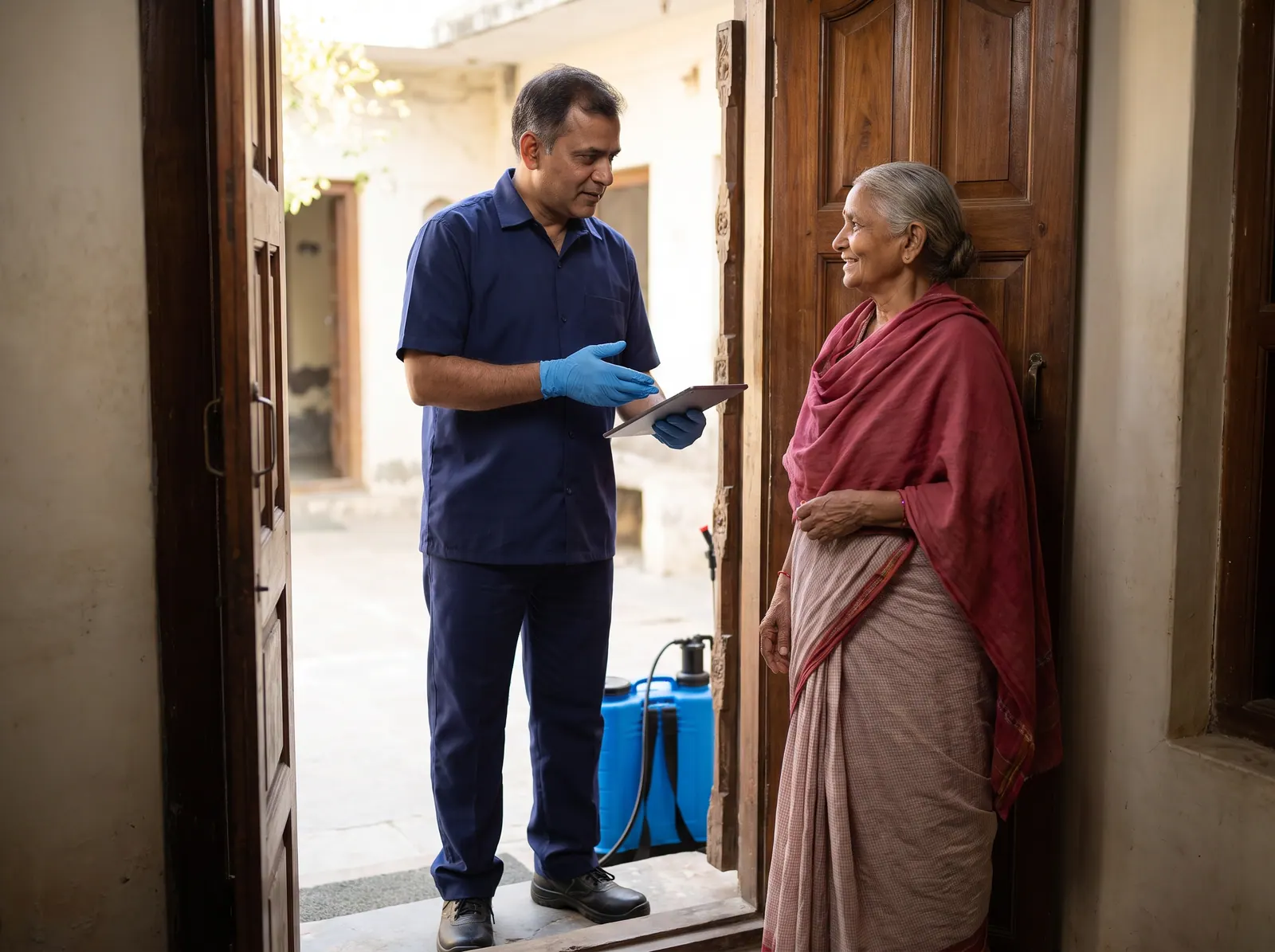
We follow an Integrated Pest Management (IPM) approach. That means inspection first, then sanitation and proofing advice, and then targeted treatment where it is needed. A typical ant treatment from our Goa branch follows these steps:
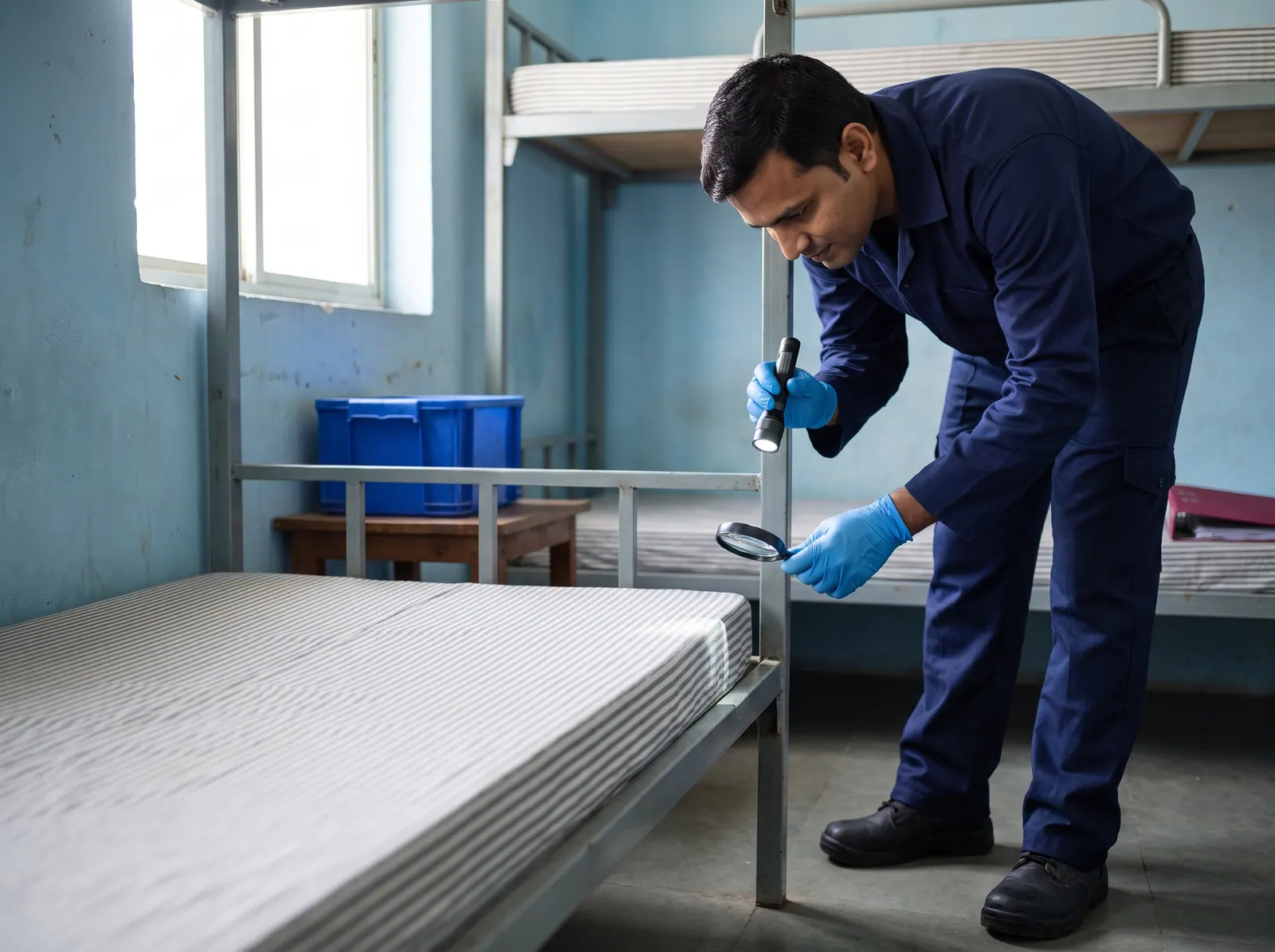
- Conversation and inspection. We ask where and when you see ants, what they are feeding on and whether anyone has sprayed recently. We then inspect kitchens, bathrooms, utility areas, balconies and the outside of the building.
- Trail tracing. The technician follows active trails to find where ants enter and, where possible, where they nest. Common places include gaps along skirting, tile joints, electrical points, pipe entries, window frames and garden edges.
- Identification. Knowing the species tells us which bait the ants are likely to accept. Some prefer sugary food, others prefer protein or grease. It also tells us whether spot spraying is appropriate.
- Bait placement. Gel or granular baits are placed in small amounts along trails and near entry points. They go into cracks, behind appliances and in other places out of reach of children and pets.
- Nest-focused spot treatment. Accessible nests outdoors, in planters or at entry points are treated directly. Cracks and crevices used as runways may also be treated, rather than open surfaces.
- Prevention advice. We point out food sources, moisture and gaps that are drawing ants in, and suggest practical fixes.
- Review. Larger or stubborn infestations may need a follow-up visit, as agreed in your quotation.
Our Goa branch shares service reports after visits, so you have a record of what was done and where.
Homes and businesses need different plans
In flats, independent houses and villas, the focus is usually the kitchen, bathrooms and garden edges. Ants in one flat can come from shared walls or ducts, so in housing societies it often helps to treat common areas too.
In restaurants, hotel kitchens, food stores and warehouses, baits are kept away from food-contact surfaces and record-keeping matters. For food businesses, our Goa branch provides documentation aligned with HACCP and FSSAI audit expectations.
How should you prepare for ant treatment?
Good preparation makes baits work faster. Please try to do the following:
- Leave the trails alone for a day or two before the visit. Do not spray, mop with strong cleaners or chalk over them, because the technician needs active trails to follow.
- Note where and when you see ants, including rooms, times of day and what they gather on.
- Store food in sealed containers and put away fruit, sweets and pet food.
- Clear access under the sink, along counters and around appliances.
- Tell us about children, pets, aquariums and anyone at home with allergies or breathing problems.
- Arrange for someone to be present during the service to show the technician around.
After treatment, do not wipe away or disturb the bait points. Avoid using cleaning chemicals or insect sprays directly on them. You may see more ants around the bait for a day or two. That is normal and means they are feeding and carrying it back to the nest. Keeping other food out of reach encourages them to take the bait.
Is ant treatment safe for children and pets?
Bait-led ant control uses small amounts of product placed in cracks and out-of-reach spots, rather than spraying across open floors. Our Goa branch is a licensed pest control operator (Directorate of Agriculture, Goa) using CIB&RC-registered products. Material Safety Data Sheets are maintained for the products we use.
- Keep children and pets away from any treated areas until they are dry, or for as long as the technician advises.
- Do not let children or pets touch or lick bait points.
- Ventilate rooms after any spray treatment.
- Wash your hands after handling anything near treated areas.
- If you use any product yourself, follow the label directions exactly.
Some ants bite or sting. If you or a family member has a strong reaction, such as spreading swelling, dizziness or difficulty breathing, see a doctor promptly.
Why do ants keep coming back, and how can you prevent it?
Ant activity often changes with the seasons. In Goa's humid coastal climate, heavy south-west monsoon rain can flood outdoor nests and push ants indoors. On the Deccan plateau around Hyderabad, ants may come indoors looking for water during the hot, dry summer, and again when monsoon rain arrives. Our guide to seasonal pests and how to prepare covers what to expect through the year.
These everyday habits make your home or premises far less attractive to ants:
- Wipe up crumbs, spills and sticky residue promptly, especially around stoves and dining areas.
- Keep sugar, jaggery, honey and snacks in airtight containers.
- Do not leave pet food out for long periods.
- Rinse bottles and tins before putting them in recycling, and keep bin lids closed.
- Fix dripping taps and leaks under sinks, since many ants need moisture.
- Seal gaps along skirting, around pipe entries, window frames and electrical points.
- Trim plants that touch walls or windows, and keep mulch, firewood and stacked material away from the building.
- Check potted plants before bringing them indoors.
For more practical habits, see our dos and don'ts of pest control. If ants return season after season, or you run a food business, scheduled visits under an annual maintenance contract from our Goa branch can keep ant activity in check alongside other pests.
Ants can also return from neighbouring properties or from outdoors. For specific services handled by our Goa branch, a warranty applies to the treated area, as set out in the service agreement. Preventing re-entry from outside depends partly on the steps above.
Where is ant control available?
Our Goa branch in Chimbel is our established office, and ant control is a confirmed service there for homes and businesses. Ant control is not yet confirmed at our Shamshabad branch, which has recently opened. Tell us your location and the problem, and we'll confirm whether we can help.
To see what happens from your first enquiry to the final report, read how we work.
Ant Control in Goa towns
Frequently asked questions
QWhy am I seeing more ants after the bait was placed?
This is common and usually a good sign. Baits attract foraging workers, which feed and carry the bait back to the nest to share with the colony. For a day or two you may see busy activity around bait points. Do not spray or wipe them away, because that interrupts the process. Activity normally drops over the following days as the colony declines. Tell the technician if it does not.
QHow long does ant treatment take to work?
The visit itself usually takes a few hours or less, depending on the size of the property and how many trails need tracing. Results are gradual because baits work through the colony rather than killing on contact. How quickly activity drops varies with the species, the number of nests and conditions at the property. Large, multiple or hidden nests can take longer, and some cases need a follow-up visit as agreed in your quotation.
QCan I just use a household spray on the ant trail?
A spray will kill the ants it touches, but the nest, queen and young usually survive, so ants soon return. With some species, spraying can stress the colony into splitting into several new nests, which makes the problem harder to control. If you have booked a bait treatment, avoid spraying near the bait points, because the residue can put ants off feeding.
QAre the ants on my balcony coming from my neighbour's flat?
They may be. Ants travel along shared walls, ducts, pipe runs and balcony ledges, so a nest in one flat or a common area can supply several homes. During inspection, the technician traces trails to see where ants are entering. In housing societies, treating common areas as well as individual flats often gives better and longer-lasting results.
QDo ant treatments affect plants and gardens?
Outdoor work focuses on specific nests, entry points and building edges rather than spraying whole gardens. Let us know about vegetable patches, ornamental plants, ponds or bird feeders before treatment so the technician can plan around them. Keep children and pets off treated soil or surfaces until dry or as advised, and wash your hands after gardening near treated areas.
QIs ant control included in general pest control?
Ants are among the common crawling insects covered by routine general pest control, alongside cockroaches, spiders and silverfish. A persistent ant problem may still need dedicated trail tracing and baiting. If you are arranging an annual maintenance contract, ask for ants to be listed in the scope so they are checked at each scheduled visit.