


Key points
- Fumigation uses a gas inside a sealed space to reach pests hidden deep in stored goods, packaging and timber.
- It suits sealable stores, godowns, containers and removable infested items, not occupied homes or offices.
- Fumigants are highly toxic: the space must be sealed, vacated, signposted, aired and cleared before re-entry.
- Fumigation gives no lasting protection; cleaning and good storage practice prevent reinfestation.
- Clients must prepare the site, inform people nearby, keep the area clear and provide a representative during service.
People often ask for fumigation services when what they actually need is a spray or fogging. This page explains what fumigation is and when it is the appropriate method. It also covers the safety controls fumigation demands and what you, as the client, need to do before, during and after a job.
What is fumigation?
Fumigation is a pest treatment that uses a fumigant inside a sealed space. A fumigant is a substance that acts as a gas. Because a gas spreads into every gap, it can reach insects deep inside sacks of grain, packed cartons, timber and stacked goods. That includes eggs and larvae that a surface spray would never touch.
The trade-off is that fumigants are highly toxic to people and animals as well as to pests. That is why fumigation is only carried out in a space that can be properly sealed and completely vacated. It is also why only trained, licensed operators should do it.
Fumigation is not the same as fogging. Fogging releases a fine mist of insecticide droplets, mainly to knock down flying insects such as mosquitoes. Many people use the word "fumigation" for fogging or spraying a home. When you contact us, it helps to describe the pest problem rather than name a method, and we will recommend what fits.
When is fumigation the right method?
Fumigation is appropriate when two things are true. First, pests are spread through goods or a space that cannot be treated thoroughly any other way. Second, that space can be sealed. Typical situations include:
- Stored food commodities: grain, rice, pulses, flour, spices, dry fruit and similar goods infested with beetles, weevils or moths.
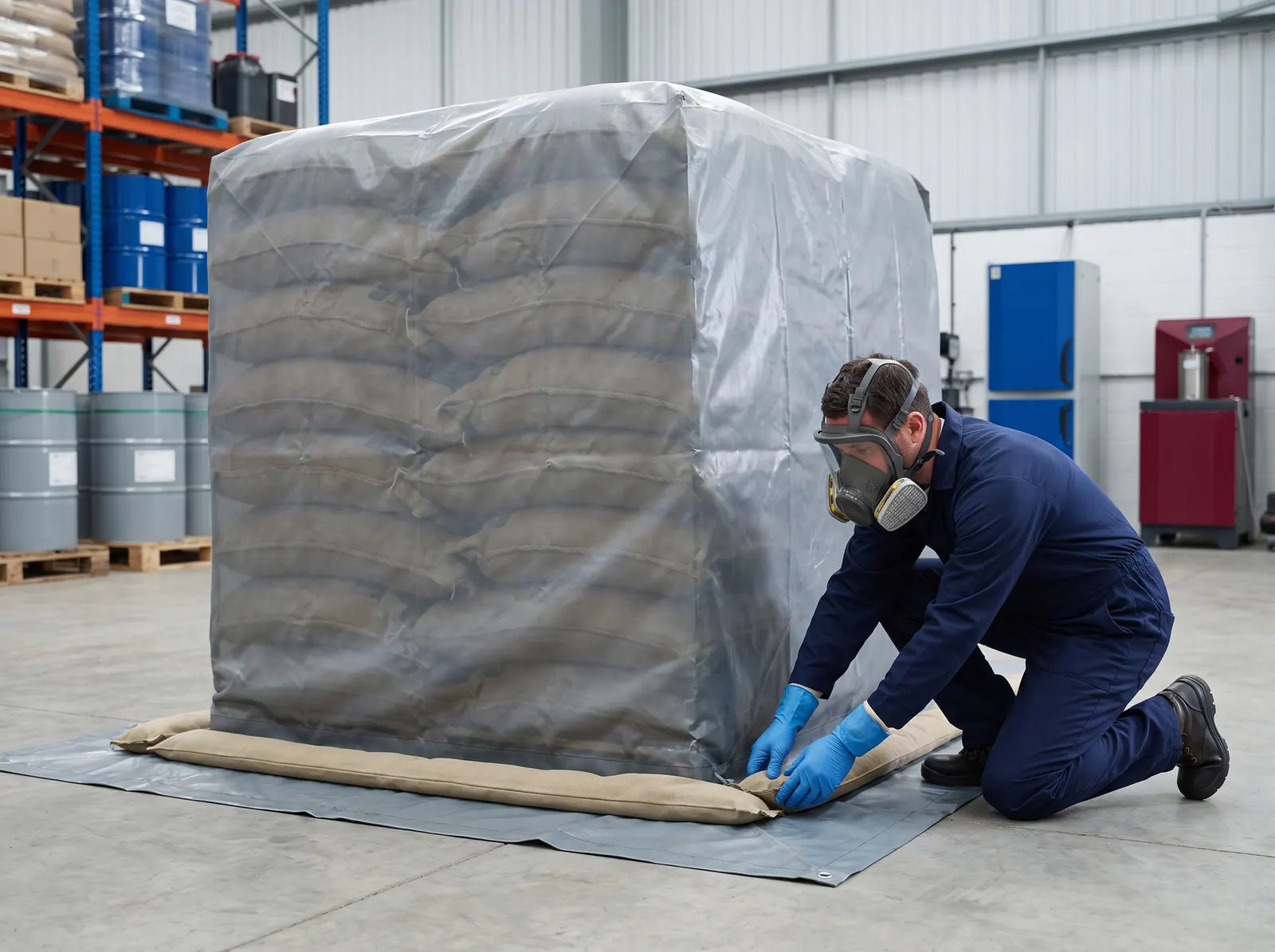
- Godowns and warehouses: stacks of bagged or boxed goods covered with gas-proof sheets, or whole stores that can be fully closed.
- Shipping containers and consignments: goods that need treating before storage, before dispatch or on arrival.
- Wooden packaging and removable wooden items: pallets, crates, and loose furniture or artefacts with active borer infestation that can be treated in a sealed enclosure.
- Other sealable spaces: a store room, record room or processing area that can be closed off and kept empty for the whole treatment period.
Warm, damp conditions favour stored-product insects and mould. Goa's humid coastal climate is one example, and so is the monsoon season in both Goa and the Deccan plateau around Hyderabad. Stock held for long periods in these conditions is worth inspecting regularly, so that a small problem is caught before it spreads through a whole store.
When is fumigation not the answer?
Fumigation is not a routine treatment for occupied flats, houses or offices. It cannot be done safely where people live, sleep or work, or where the space cannot be sealed off from neighbours. It also gives no lasting protection: once the gas has been aired out, pests can come back in from outside.
For most household and workplace pests, targeted methods are safer and more effective:
| Problem | Usually the better approach |
|---|---|
| Bed bugs in homes, hotels or hostels | Room-by-room inspection and treatment with follow-up visits (see bed bug treatment) |
| Cockroaches in kitchens and bathrooms | Gel baiting and targeted crack-and-crevice treatment |
| Termites in a building | Pre-construction soil treatment or post-construction drill-fill-seal (see termite control) |
| Borers in fitted doors, frames or structural timber | Targeted wood borer treatment. Fumigation is considered only for removable items that can be sealed in an enclosure. |
| Mosquitoes | Breeding-site reduction, larviciding, indoor residual spraying or fogging |
| Insects spread through stored grain or packed goods | Fumigation, together with cleaning the store and improving storage practice |
How does a fumigation job work?
Every job follows our Integrated Pest Management approach: inspect first, then choose the method, then treat only what needs treating. A typical fumigation runs like this:
- Inspection. We identify the pest, how far it has spread and what goods are involved. We also check whether the space can be sealed and how close it is to occupied areas.
- Method decision. We confirm whether fumigation is genuinely the right method. If it is not, we explain the alternative.
- Planning. We agree the date, the area that must be kept clear and who needs to be informed. We also agree roughly how long the space will be out of use.
- Sealing. The stack, container or room is made gas-tight using sheets, tape and closure of vents, doors and gaps.
- Application and exposure. Trained operators wearing protective equipment apply the fumigant. The space is then closed and left for the required exposure period, with warning signs in place.
- Aeration. The seals are opened in a controlled way so the gas can disperse into open air.
- Clearance. The operator checks that the space is safe before anyone is allowed back in.
- Advice. We advise on cleaning, storage, stock rotation and proofing to reduce the chance of reinfestation.
What safety controls does fumigation require?
Safety is the main reason fumigation must be planned carefully and never improvised. These controls apply to every job:
- Trained, licensed operators only. Fumigants should never be handled by untrained staff or used as a do-it-yourself treatment.
- Registered products used as labelled. Products should be registered with CIB&RC and applied strictly according to label directions.
- A properly sealed space. If the space cannot be sealed, it should not be fumigated.
- Complete vacation. No people, pets or livestock may stay in the treated space. Adjoining areas may also need to be kept clear, as the operator advises.
- Warning signs and controlled access. Entry points are closed off and marked so that no one walks in by mistake.
- Protective equipment. Operators use suitable respiratory and body protection while applying the fumigant and during aeration.
- Aeration and clearance before re-entry. The space is opened only under the operator's control and handed back only once it has been cleared.
- Safety information on file. We maintain Material Safety Data Sheets for the products we use.
If anyone feels unwell after possible exposure, move them to fresh air at once and see a doctor immediately. Tell the doctor that fumigation was carried out nearby.
What are the client's responsibilities?
A safe fumigation depends as much on the client as on the operator. We will give you specific instructions for your site, but expect the following.
Before the treatment
- Tell us accurately what is to be treated, roughly how much, where it is kept and what is next to it.
- Get any permissions you need from your landlord, building management or housing society. For consignments, check with your shipping or clearing agent.
- Remove anything from the space that should not be exposed, such as food not being treated, plants and personal belongings.
- Inform staff, tenants and neighbours of the date and the areas that must be kept clear.
- Clear access so the space can be sealed properly.
During the treatment
- Nominate a responsible representative to accompany our technicians, as our terms require.
- Keep everyone out of the treated and restricted areas for the whole exposure period.
- Never lift sheets, break seals, remove warning signs or open doors yourself.
After the treatment
- Do not re-enter, move stock or resume work until the operator has cleared the space.
- Follow the post-service instructions you are given, including any advice on handling treated goods.
- Clean the store and keep up good storage practice so the problem does not return.
If you need to reschedule, please give at least 48 hours' notice. Cancellation and warranty terms are set out in our terms and conditions.
Regulation, records and food businesses
In India, pest control operators are licensed at state level. The products they use must be registered with CIB&RC under the Insecticides Act, 1968. Our Goa operation is a licensed pest control operator with the Directorate of Agriculture, Goa, and uses CIB&RC-registered products. In Goa, we share service reports after visits. We can also provide documentation for food businesses that is aligned with HACCP and FSSAI audit expectations.
Fumigating export or import consignments may have to meet specific quarantine rules and certificate requirements. These can be set by the authorities or by your buyer. If your consignment has such requirements, tell us exactly what is needed before booking, so we can confirm whether we can meet them.
Fumigation is a one-off treatment. Warehouses and food stores usually benefit from ongoing scheduled monitoring as well, which is covered by commercial pest control programmes.
How do I arrange fumigation?
Start by telling us what needs treating, where it is, roughly how much there is and which pests you have seen. Photos of the infested goods or the space help a great deal. Availability differs by branch, so check availability for your branch on this page, then contact us with the details.
If fumigation turns out not to be the right method, we will say so and recommend a safer alternative. You can read more about our inspection-first approach on how we work.
Frequently asked questions
QCan you fumigate my flat or house?
In most cases, no. True fumigation needs a space that can be sealed and completely vacated, and that is rarely practical or safe in a lived-in home that shares walls with neighbours. For household pests such as cockroaches, bed bugs, termites or ants, targeted treatments work better and carry less risk. If you have infested stored goods or removable wooden items, tell us and we will advise whether a sealed enclosure treatment is possible.
QHow long will the space be out of use?
It depends on what is being treated, how much of it there is, the pest involved and conditions such as temperature. Time is needed for sealing, the exposure period, aeration and clearance, so the space is usually unavailable for longer than people expect. We give you an estimated time frame at the assessment, so you can plan around stock movements, staff and deliveries.
QIs fumigated food stock safe to use afterwards?
Fumigants registered for stored commodities are applied and aired according to their label directions. Do not use, move, repack or sell treated stock until the operator has cleared the space. Follow any handling instructions you are given. If your stock has food-safety, buyer or export requirements, tell us before the treatment so these can be considered at the planning stage.
QWill fumigation stop pests coming back?
No. Fumigation kills pests present in the sealed space at the time of treatment, but it leaves no lasting barrier once the gas has been aired out. New infestations can arrive with fresh stock, packaging or insects from outside. Cleaning the store, inspecting incoming goods, rotating stock and keeping storage dry are what reduce the chance of a repeat problem.
QDo neighbours or other staff need to leave during fumigation?
Everyone must stay out of the treated space. Depending on the site, adjoining rooms or a zone around the sealed area may also need to be kept clear. The operator decides this during planning, based on how the space is built and what surrounds it. It is the client's responsibility to inform staff, tenants and neighbours, and to make sure the restrictions are respected.
QCan you fumigate shipping containers or consignments for export?
Consignment fumigation for export or import often has to follow specific quarantine rules and come with a particular certificate. Requirements vary with the destination, the goods and the buyer. Share the exact requirements with us before booking, including any document your buyer or agent has asked for. We will then confirm whether we can carry out and document the treatment as required.
QWhat should I do if someone feels unwell after a fumigation nearby?
Move the person to fresh air straight away and see a doctor immediately. Tell the doctor that fumigation was carried out nearby so they have the right information. Do not go into the treated or restricted area to collect belongings or check on the treatment. Contact us so the operator can check the site.



