Key points
- Bird netting is a physical barrier that removes roosting and nesting space rather than scaring birds away.
- Common netting areas are balconies, utility areas, AC ducts and shafts, ledges and larger spaces such as courtyards or loading bays.
- Mesh size should match the birds involved; smaller birds need a finer mesh than pigeons.
- Before installation, areas should be checked so no birds, eggs or chicks are trapped behind the net.
- A bird net is not a fall-protection net and should never be climbed, leaned on or used to hang items.
Bird netting is a physical barrier that stops pigeons and other birds from landing, roosting and nesting where you want the space kept clear: balconies, utility areas, AC ducts, lift and plumbing shafts, and building ledges. Unlike repellents, a well-fitted net does not depend on birds changing their habits. It simply takes the space away from them.
This page explains why bird netting works, the main options, how installation is carried out, how to prepare, and how to look after a net once it is up.
Why choose netting over other bird deterrents?
Birds return to a spot because it offers shelter, a flat surface to perch on and protection from predators. Shooing them away, reflective tape or plastic owls may help for a short while, but pigeons in particular soon get used to them and come back.
Netting removes the roosting and nesting space itself, so it tends to keep working long after birds have learned to ignore other deterrents. It also deals with the problems that come with regular bird visits:
- Droppings that stain floors, railings, washing and building facades, and can damage some surfaces over time.
- Nesting material that blocks drains, AC outdoor units, exhaust vents and duct openings.
- Hygiene concerns near kitchens, food stores and guest areas, where feathers and dried droppings are unwelcome.
- Bird mites and insects that can live in old nests and wander indoors once birds leave.
- Noise and smell from roosting birds close to bedrooms or work areas.
Bird droppings can carry bacteria and fungi. When cleaning a fouled area, avoid dry sweeping, which raises dust; dampen the area first, wear gloves and a mask, and wash your hands afterwards. If anyone develops a persistent cough, breathlessness or fever after exposure to droppings, they should see a doctor.
Netting fits naturally into our Integrated Pest Management approach, which puts inspection, sanitation and proofing ahead of chemical treatment. You can read more about that approach on our how we work page, and about the everyday advantages for households in five benefits of installing bird netting at your home.
Which areas can be netted?
Most bird problems in buildings fall into a few familiar places. Each needs a slightly different approach.
| Area | Typical problem | What the netting needs to allow for |
|---|---|---|
| Balconies and utility areas | Pigeons roosting on railings, nesting behind AC units or in stored items, droppings on clothes | A full-face net across the opening; access for AC servicing, window cleaning or drying clothes |
| AC ducts, lift and plumbing shafts | Nests inside the shaft, blocked vents, smell spreading into flats | Netting across the shaft opening, with access for maintenance staff who need to reach pipes or units |
| Ledges, parapets and window shades | Rows of roosting pigeons, droppings streaking down the facade | Enclosing the recess or ledge so birds cannot reach the flat surface |
| Courtyards, atriums, warehouse roofs and loading bays | Birds entering stock, food or production areas | Larger spans need support cables; vehicle, forklift and people movement must not be obstructed |
For offices, warehouses and industrial sites, netting is often planned together with scheduled pest management under commercial pest control. Hotels and resorts usually need it around service areas, kitchens and staff blocks as part of hotel pest management.
What netting options are there?
Mesh size
The mesh must be small enough that the target birds cannot push through. Pigeons need a smaller gap than many people expect, and smaller birds such as sparrows need a finer mesh still. A finer mesh blocks more species but is slightly more visible, so the choice depends on which birds are actually using the area.
Material and colour
Bird nets for buildings are usually made from UV-stabilised polymer twine, chosen to withstand sun, rain and humidity. Black or dark nets tend to be the least noticeable from a distance against a building, while lighter colours may suit some interiors. Material choice matters most on sun-facing and exposed elevations.
Fixing method
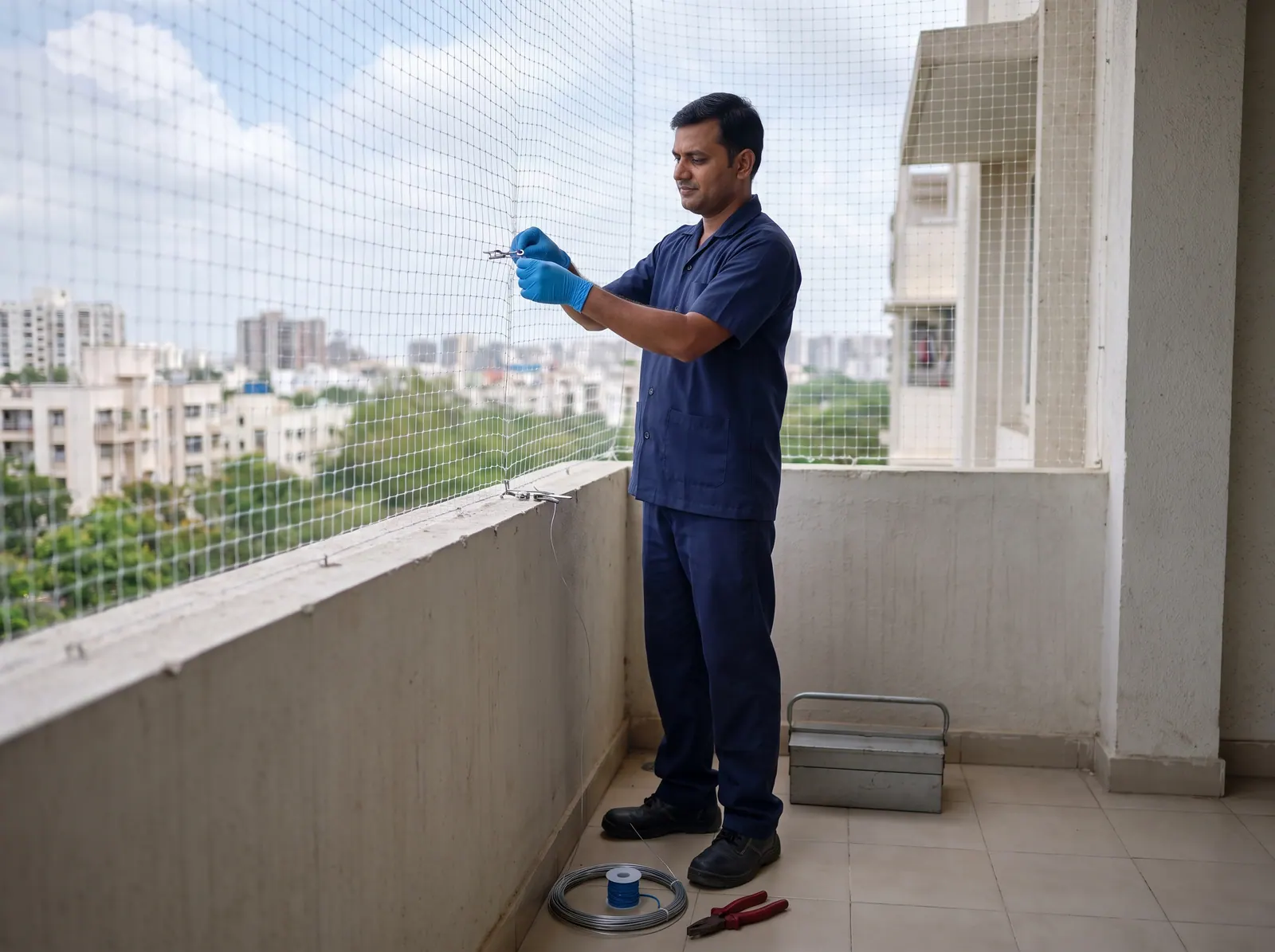
Most installations use anchors fixed around the edge of the opening, a tensioned wire rope along the perimeter, and the net attached to that wire. A taut net looks neater and gives birds nothing to grip. Where you need regular access, for example to an AC unit, a section can be planned so it opens and closes again securely.
The right combination is decided after looking at the site. If netting is not the most suitable answer for a particular spot, the inspection is the time to say so.
How is bird netting installed?
- Inspection and measurement. The technician looks at where birds land, roost and nest, measures each opening and notes fixing surfaces, access needs and working height.
- Checking for birds and nests. Before any net goes up, the area is checked so that no birds, eggs or chicks are left trapped behind it.
- Clearing and cleaning. Old nests and loose debris are removed so the net is not fitted over a source of mites, smell or blocked drainage.
- Fixing anchors. Anchors are fixed at intervals around the perimeter, into a surface strong enough to hold the net under wind load.
- Tensioning the perimeter wire. A wire rope is run between the anchors and tightened so the net will sit flat.
- Fitting the net. The net is attached along the wire and trimmed, with any access sections built in.
- Final check. Edges and corners are checked for gaps, since birds quickly find any opening that is left.
How should you prepare for installation?
- Clear the balcony or utility area of plants, stored items, clothes lines and furniture near the opening.
- Check your housing society or building management rules on balcony and facade work, and get any permission needed beforehand.
- Make sure there is safe access to shafts, terraces or ledges, and let neighbours know if shared areas are involved.
- Keep children and pets indoors and away from the work area until the installation is finished.
- Tell the technician about anything that needs regular access, such as AC units, geysers, meters or windows you clean from outside.
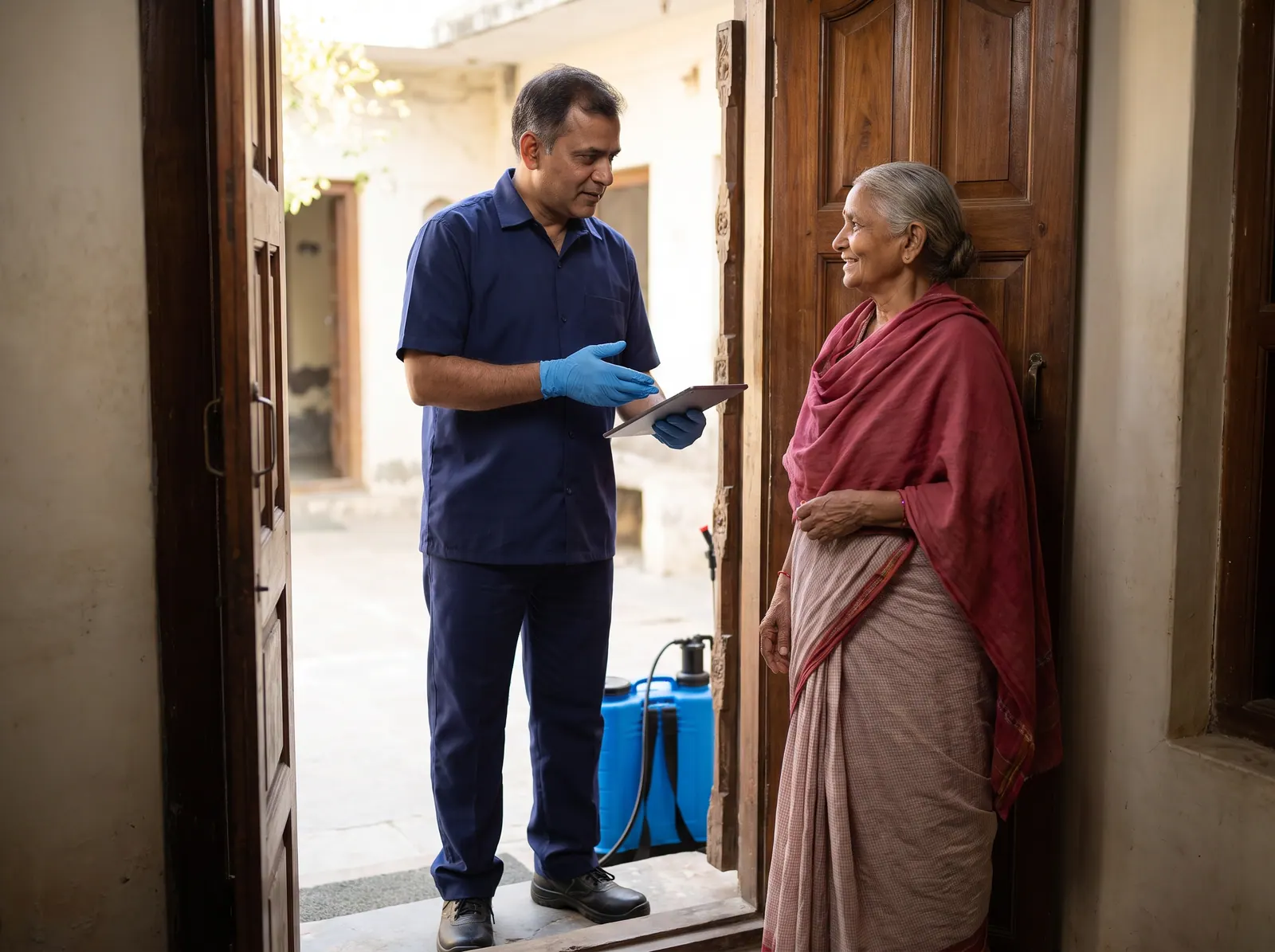
- Have a responsible adult present during the visit, as our terms ask clients to accompany technicians during service.
Is bird netting safe for children, pets and birds?
Netting is a physical method, so in most cases no chemicals are involved. The main safety points are practical ones.
A bird net is not a safety or fall-protection net. It is not designed to hold the weight of a child, adult or pet, so nobody should lean on it, climb it or hang items from it. Keep furniture that children could climb away from a netted opening.
A properly tensioned net keeps birds out rather than catching them. If you ever see a bird trapped inside or tangled in the net, do not cut the net yourself; contact us so the opening can be found and fixed properly.
How do you look after a bird net?
Netting needs little attention, but a few simple checks keep it working:
- Look for sagging or loose edges every few months. A slack net gives birds something to perch on and can open gaps at the corners.
- Check for tears or holes, especially near AC units, where heat and vibration can wear the net.
- Watch the birds. If pigeons keep landing in one place, there is usually a gap nearby.
- Clean gently with plain water if dust or leaves build up. Avoid harsh chemicals and pressure washers on the net.
- Do not hang clothes, pots or decorations on the net or its wire.
- Report damage early. A small repair is simpler than replacing a large section.
Season matters. In Goa, the heavy south-west monsoon brings strong winds, driving rain and constant humidity, so a check before and after the monsoon is sensible. On the Deccan plateau around Hyderabad, the hot, dry summer means strong sun on exposed elevations, which is hard on any outdoor material. Our guide to seasonal pests and how to prepare covers other changes to expect through the year.
Bird netting alongside other pest control
Birds rarely come alone. Old nests can harbour mites, and bird activity near kitchens and stores often goes together with flies, cockroaches or rodents. If you are planning netting for a flat, villa or housing society, it can be worth reviewing the whole property at the same time through residential pest control.
Check availability for your branch
Bird netting is part of our company-wide service catalogue, but availability differs between branches. Please check availability for your branch on this page.
When you contact us, it helps to share your location, photos of the area, rough measurements of the opening, the floor or height involved, and what the birds are doing there. Our Shamshabad branch has recently opened: if you are in the Hyderabad region, tell us your location and the problem, and we will confirm whether we can help.
Frequently asked questions
QWill bird netting block light and air on my balcony?
A bird net is an open mesh, so most light and airflow pass through. A finer mesh, needed for smaller birds such as sparrows, is slightly more visible and reduces light a little more than a larger mesh suited to pigeons. Dark-coloured nets are usually the least noticeable from inside and from the street. The mesh choice is discussed at inspection, based on which birds are actually using the space.
QCan I still reach my AC unit or clean my windows after netting?
Yes, this can usually be planned for. Tell the technician about anything you or a service engineer need to reach, such as an AC outdoor unit, geyser, meter or window. A section of the net can be arranged so it opens and then closes securely again. Always close it fully afterwards, because birds are quick to find even a small gap.
QDo I need permission from my housing society for bird netting?
Many housing societies and building managements have rules about changes to balconies and the external face of the building, including nets and fixings. It is best to check those rules and get any written permission before the installation date. For shafts, terraces or shared ledges, the society's consent and access arrangements are normally needed anyway, as these are common areas.
QWhat happens if pigeons are already nesting on my balcony?
Before any net is fitted, the area is checked for birds, eggs and chicks so that none are trapped behind the netting. Where there is an active nest, the timing of the work may need to be planned around it. Old, abandoned nests and debris are cleared before installation, as they can hold mites and block drains. Avoid handling nests or droppings with bare hands.
QHow long does a bird net last?
It depends on the net material, how much direct sun and wind the elevation gets, and how well the net is looked after. Sun-facing, exposed sides of a building are hardest on any outdoor material. Regular checks for sagging, loose edges and small tears, especially around the monsoon, help a net last longer. Repairing small damage early is simpler than replacing whole sections.
QDoes netting clean up droppings already on the building?
Netting stops new droppings by keeping birds out, but it does not remove what is already there. Existing fouling inside the netted area should be cleaned before the net goes up. When cleaning, dampen droppings rather than dry sweeping, wear gloves and a mask, and wash your hands afterwards. If anyone feels unwell after exposure to droppings, they should see a doctor.