Quick answer
Pests follow the weather. In Goa and Hyderabad, the hot pre-monsoon months bring ants, flies and nest-building wasps. The monsoon brings termite swarmers, mosquitoes, and cockroaches and rodents moving indoors. The weeks after the rains leave damp corners and leftover breeding water. Winter is quieter outdoors, but indoor pests carry on. To prepare, clear standing water, seal gaps, fix leaks, and book inspections before the rains arrive.
Key points
- Indian seasons are better described as hot dry months, monsoon, post-monsoon and winter than as spring, summer, autumn and winter.
- Termite swarmers commonly appear soon after the first heavy monsoon rains.
- Mosquitoes can breed in small amounts of still water, so emptying containers weekly breaks the cycle.
- Flooded drains and burrows push cockroaches and rodents indoors during heavy rain.
- Bed bugs spread through travel and furniture rather than following the weather.
Most people notice pests only when they suddenly appear: a trail of ants in May, winged insects around the tube light after the first rain, or cockroaches coming up the bathroom drain in July. These surges are not random. Seasonal pests follow heat, rain and humidity, so knowing what to expect in each season lets you prepare before a problem starts.
Many guides are written for four temperate seasons, with spring, autumn, firewood and basements. That does not fit India. This guide follows the seasons as they actually play out in Goa's humid coastal climate and on Hyderabad's Deccan plateau: hot dry months, monsoon, after the rains, and winter.
Why do pests change with the seasons?
Insects and rodents respond to three things: temperature, moisture and food. Warmth speeds up insect breeding. Rain creates standing water for mosquitoes and softens soil for termites. Flooded drains and burrows push cockroaches and rats towards dry shelter, often inside buildings.
Goa has a very heavy south-west monsoon and stays humid for much of the year, so damp-loving pests and timber pests are a long-running concern. Hyderabad has a hotter, drier summer, a monsoon and a mild winter. The same pests turn up in both places, but the timing and intensity differ.
A season-by-season pest calendar
| Season (approximate) | Pests to watch for | What to do |
|---|---|---|
| Hot, dry months (roughly March to May) | Ants, house flies, wasps and bees building nests, cockroaches in warm kitchens | Store food sealed, manage waste daily, check eaves and balconies for new nests, book a pre-monsoon inspection |
| Monsoon (roughly June to September) | Termite swarmers, mosquitoes, cockroaches from drains, rats seeking shelter, ants moving indoors, flies | Remove standing water weekly, cover drains, fix leaks, watch wooden fittings for mud tubes |
| After the rains (October to November) | Mosquitoes in leftover water, damp-loving insects, wood borer signs in furniture | Dry out damp areas, clear blocked gutters and containers, inspect timber for fine powder |
| Winter (December to February) | Indoor cockroaches and rodents, bed bugs spread through travel | Deep-clean kitchens and stores, check luggage after trips, seal gaps around pipes and doors |
Treat these months as a rough guide. The monsoon arrives and leaves at different times each year, and conditions inside a building, such as a leaking pipe or a busy kitchen, can matter more than the weather outside.
Hot, dry months: before the rains
As temperatures rise, ants forage further for food and water, and you may see trails across counters, sinks and pet bowls. House flies multiply quickly where kitchen waste and garbage sit in the heat. Wasps and bees often start nests under eaves, in window frames and on balcony ceilings.
In Hyderabad's hot, dry summer, pests are drawn to anywhere that stays cool and moist: under sinks, around water tanks and near AC drain lines. In Goa, the humidity rises steadily ahead of the monsoon.
This is the most useful time to prepare for the rains. Clear gutters and terrace drains, repair cracked plaster and gaps around pipes, and move stored cartons and old wood away from walls. If you have had termites before, or you are building, the dry weeks before the monsoon are a sensible time for an inspection. Our termite control page explains how pre-construction and post-construction treatments differ.
Monsoon: the busiest season for pests
Termites: watch for winged swarmers
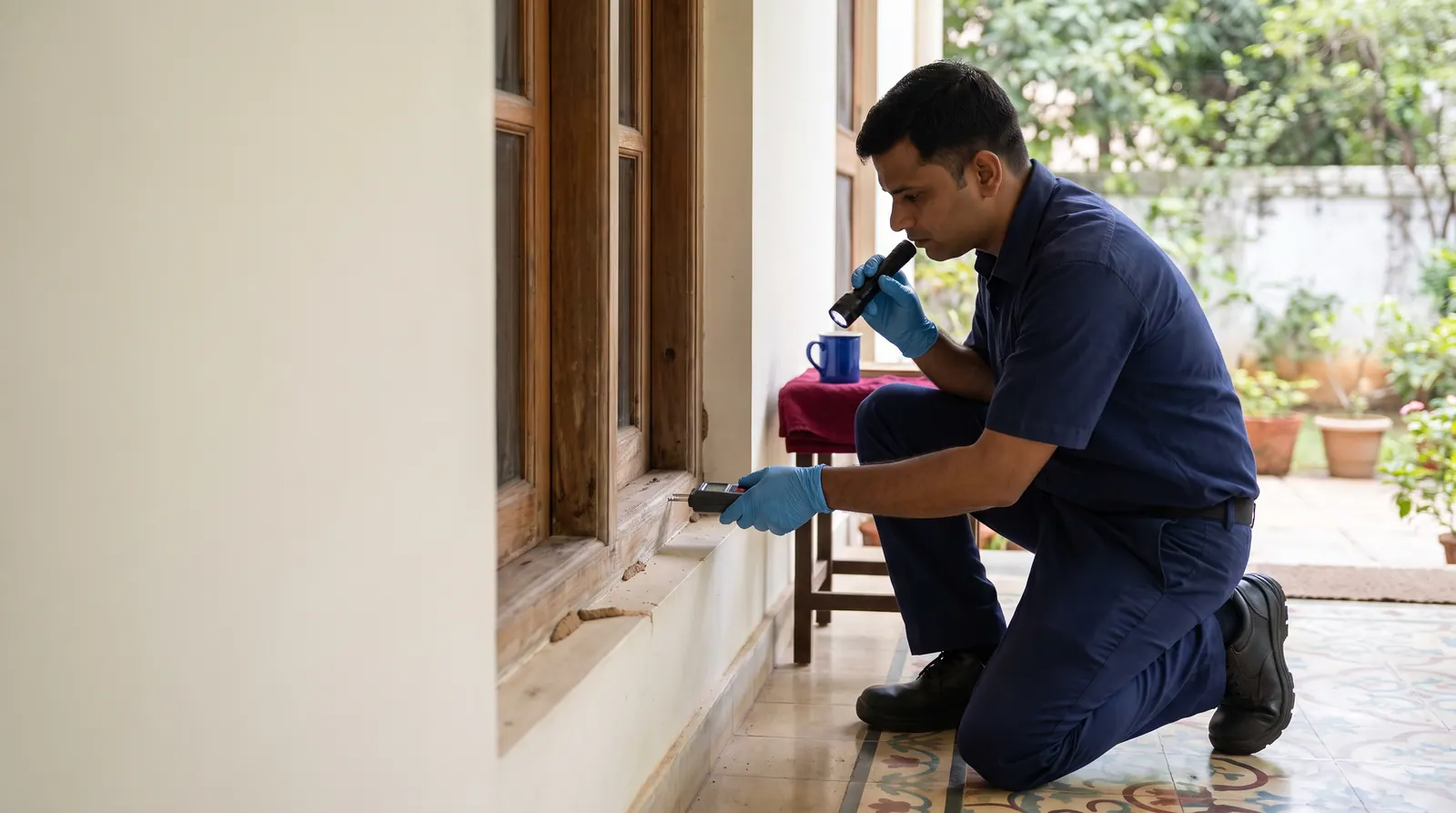
Soon after the first heavy rains, many homes see swarms of small winged insects around lights, followed by piles of shed wings on window sills. These are usually termite swarmers leaving an established colony to start new ones. Seeing them indoors is a sign worth taking seriously, because a colony may be nearby or already inside the building.
Also look for pencil-thin mud tubes on walls, hollow-sounding door frames and skirting, and wood that crumbles when pressed. If you are planning a treatment for an occupied home, our guide on preparing your home for termite drilling treatment explains what to move and expect.
Mosquitoes and standing water
Mosquitoes need only a small amount of still water to breed. In the monsoon that includes flower-pot trays, discarded tyres, coconut shells, blocked gutters, construction sites, uncovered water drums and the trays under fridges and coolers. Emptying and scrubbing these containers once a week breaks the breeding cycle before adults emerge.
Housing societies and larger properties often need a coordinated approach covering common areas, terraces and drains. Our mosquito control page explains how breeding-site reduction, larviciding and spraying are matched to a property and season. If anyone in the household has fever or a reaction after mosquito bites, see a doctor promptly.
Cockroaches, rodents and ants moving indoors
Heavy rain floods sewers and drains, and cockroaches often come up through bathroom and kitchen outlets. Rats and mice leave waterlogged burrows and look for dry shelter in stores, false ceilings and car parks. Ants also move indoors to escape wet soil.
Keep drain covers in place and close floor traps at night. Store grain and pet food in sealed containers and do not leave garbage open overnight. Look for droppings, gnaw marks and grease smears along walls, which are typical rodent signs.
After the rains: damp corners and timber
Once the heavy rain eases, water lingers in tyres, construction pits, blocked gutters and terrace corners, so mosquitoes can stay active for weeks. Damp walls and stored clothes can attract silverfish and other moisture-loving insects.
This is also a good time to look closely at wooden furniture, doors and frames, especially in Goa's humid climate. Small round holes with fine powder beneath them can point to wood borers rather than termites, and the two need different treatment. Air out cupboards, fix any leaks that appeared during the monsoon, and dry out stored items before packing them away.
Winter: quieter outside, not inside
Hyderabad's mild winter and Goa's dry, pleasant winter months slow down many outdoor insects. Pests that live indoors, however, carry on all year. Cockroaches stay in warm kitchens, behind appliances and in electrical fittings, and rodents remain where food is available.
Winter is also a travel and holiday season. Bed bugs are not seasonal, but they spread through luggage, used furniture and shared accommodation. Check bags and seams after trips, and inspect second-hand beds and sofas before bringing them home. For hotels, hostels and staff accommodation, regular room checks matter more than the time of year.
How to prepare: a year-round checklist
- Every week: empty and scrub water-holding containers, take out kitchen waste, and wipe down cooking areas.
- Every month: check under sinks, behind fridges and inside lower cupboards for droppings, egg cases or live insects.
- Before the monsoon: clear gutters and drains, seal gaps around pipes and doors, repair leaks, and move stored wood and cartons off the floor.
- During the monsoon: keep drain covers in place, watch walls and wooden fittings for mud tubes, and dry wet areas quickly.
- After the monsoon: inspect timber for holes and powder, and air out damp cupboards and stores.
- Throughout the year: store food in airtight containers and limit clutter where pests can hide.
If you have a treatment booked, simple preparation makes it work better. For example, our guide on how to prepare for cockroach gel treatment explains why you should avoid spraying cleaners over gel spots. Our dos and don'ts of pest control covers common mistakes. After any treatment, follow the label directions and your technician's advice, ventilate the area, wash your hands, and keep children and pets away from treated surfaces until they are dry or as advised.
Planning pest control around the seasons
Our approach follows Integrated Pest Management: inspect first, deal with the conditions that attract pests through sanitation and proofing advice, then apply targeted treatment where it is needed. Seasonal timing fits naturally into this. Inspections before the monsoon, mosquito work during and after the rains, and regular indoor checks through the year usually do more than one-off treatments after a problem has grown.
In Goa, homes and businesses that want a year-round schedule can look at our Goa branch in Chimbel, which offers annual maintenance contracts with scheduled visits and service reports. In the Hyderabad region, our Shamshabad branch has recently opened. Tell us your location and the problem, and we'll confirm whether we can help.
Frequently asked questions
QWhat are the small winged insects that appear after the first monsoon rain?
In many cases they are termite swarmers, which leave an established colony to start new ones when the rains begin. A few near outdoor lights may come from outside, but swarmers or piles of shed wings inside a room are worth investigating. Check nearby walls, door frames and skirting for mud tubes or hollow-sounding wood, and arrange an inspection if you find signs.
QIs it better to arrange pest control before or after the monsoon?
For termites and general proofing, the dry weeks before the monsoon are usually more practical, because drains, gaps and timber are easier to inspect and repair. Mosquito work is most useful during and just after the rains, when breeding sites are active. Many households and businesses use both: a pre-monsoon inspection and follow-up attention as the season changes.
QWhy do I see more cockroaches in the bathroom during the rains?
Heavy rain floods sewers and drain lines, and cockroaches living there move upwards towards dry spaces, often through floor traps and sink outlets. Keeping drain covers in place, closing floor traps at night and fixing leaking joints helps. If cockroaches are also breeding in the kitchen, a targeted treatment such as gel baiting deals with the population indoors.
QDo I need pest control every season?
Not every home needs a treatment every season. It depends on the pest, the building and any history of problems. A housing society with gardens and drains, or a restaurant kitchen, usually benefits from regular scheduled visits. A small flat with good hygiene may only need checks before the monsoon and attention when problems appear. An inspection helps decide the right frequency.
QAre bed bugs worse in a particular season?
Bed bugs live indoors and are not driven by the weather in the way mosquitoes or termites are. They spread mainly through travel, luggage, second-hand furniture and shared rooms, so they often surface after holidays or busy guest periods. Checking bags after trips and inspecting used beds and sofas before bringing them home are the most useful precautions.
QWhat should I do if someone in the family falls ill after mosquito bites?
See a doctor promptly, especially if there is fever, body ache or any unusual reaction. Do not try to treat the illness yourself. Meanwhile, reduce mosquito breeding around the home by emptying and scrubbing containers, covering water storage and clearing blocked drains. These steps protect everyone in the household and your neighbours.
Last updated 13 October 2026. Information on this page is general guidance; your technician will advise on your specific property after inspection.