Key points
- A hotel programme is planned zone by zone: guest rooms, kitchens, stores, gardens, staff accommodation and waste areas.
- The method follows Integrated Pest Management: inspection, sanitation and proofing advice, then targeted treatment.
- Visits are scheduled around occupancy and coordinated with housekeeping to keep servicing discreet.
- At the Goa branch, service reports are shared after visits, and food-area documentation is aligned with HACCP and FSSAI audit expectations.
- Material Safety Data Sheets are maintained for the products used.
What does hotel pest management involve?
Hotel pest management is a structured programme rather than a one-off spray. A hotel has very different spaces under one roof, from a quiet guest corridor to a busy kitchen, a dry store, a laundry, landscaped gardens and staff quarters. Each of these attracts different pests for different reasons.
A good programme treats the property as a connected system. Pests rarely stay in one place. Cockroaches move along drain and service lines, rodents travel between waste areas and stores, and bed bugs can spread from staff rooms to guest rooms on linen trolleys.
Our approach follows Integrated Pest Management (IPM). That means inspection first, then sanitation and proofing advice, and then targeted treatment only where it is needed.
Which zones does a hotel programme cover?
Every property is different, so the zone plan is drawn up after an inspection. The table below shows the typical starting point.
| Zone | Pests commonly involved | Typical approach |
|---|---|---|
| Guest rooms and corridors | Bed bugs, cockroaches in bathrooms, ants, mosquitoes | Room-by-room inspection, targeted crack-and-crevice work, bed bug treatment with follow-up |
| Kitchens, pantries and bars | Cockroaches, rodents, house flies, fruit flies, drain flies | Gel baiting, bait stations outside food zones, drain and sanitation checks |
| Stores and receiving areas | Rodents, stored-product insects, cockroaches | Monitoring, proofing advice, stock-rotation checks, fumigation only where appropriate |
| Gardens, pools and grounds | Mosquitoes, ants, termites, bee and wasp nests, birds | Breeding-site reduction, perimeter treatment, nest handling, bird-proofing |
| Staff accommodation and laundry | Bed bugs, cockroaches, rodents | Scheduled inspection and treatment, with housekeeping guidance |
| Waste and service areas | Rodents, flies, cockroaches | Bait stations, bin-area hygiene, sealing gaps around pipes and doors |
Guest rooms and staff accommodation
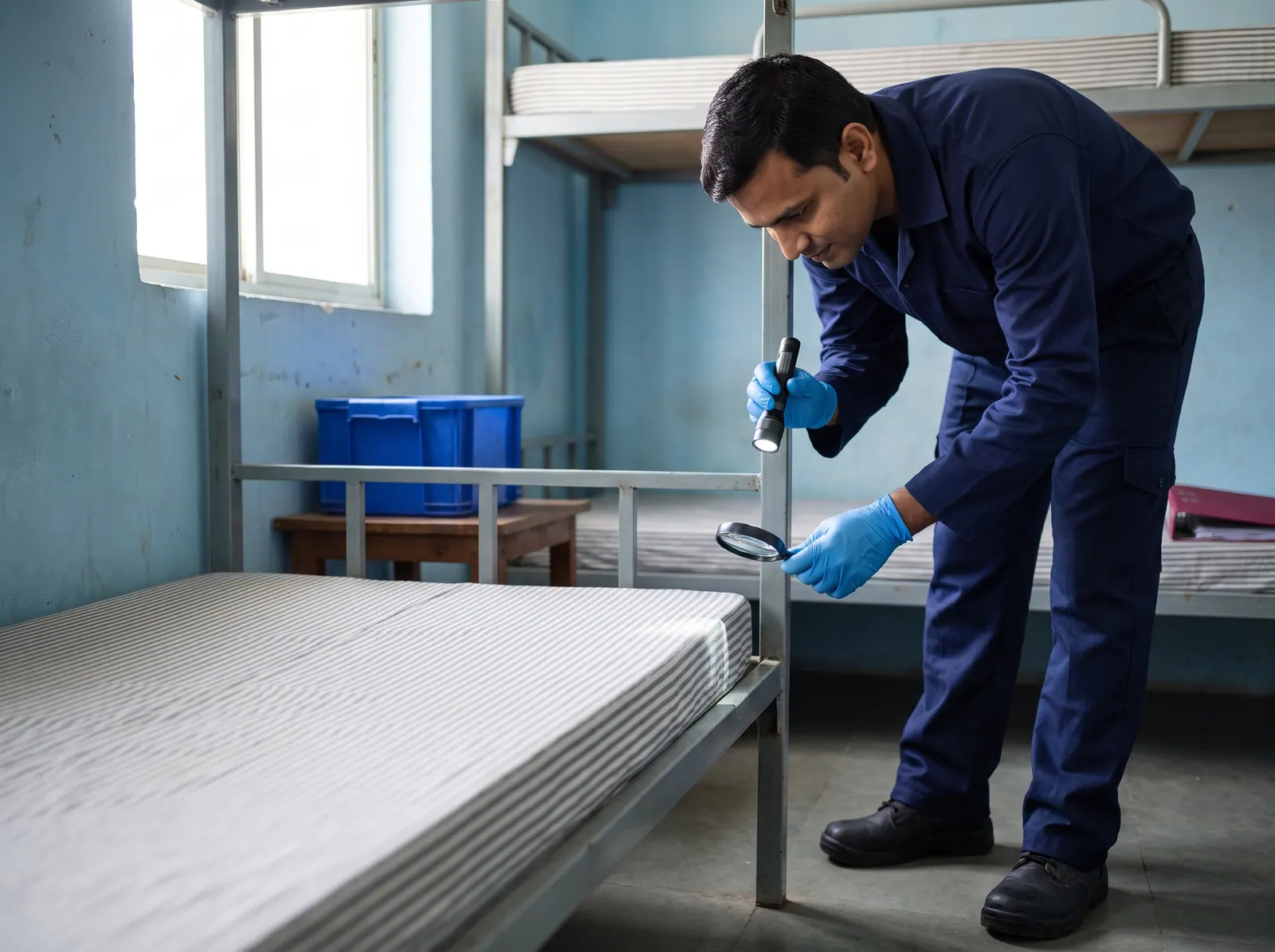
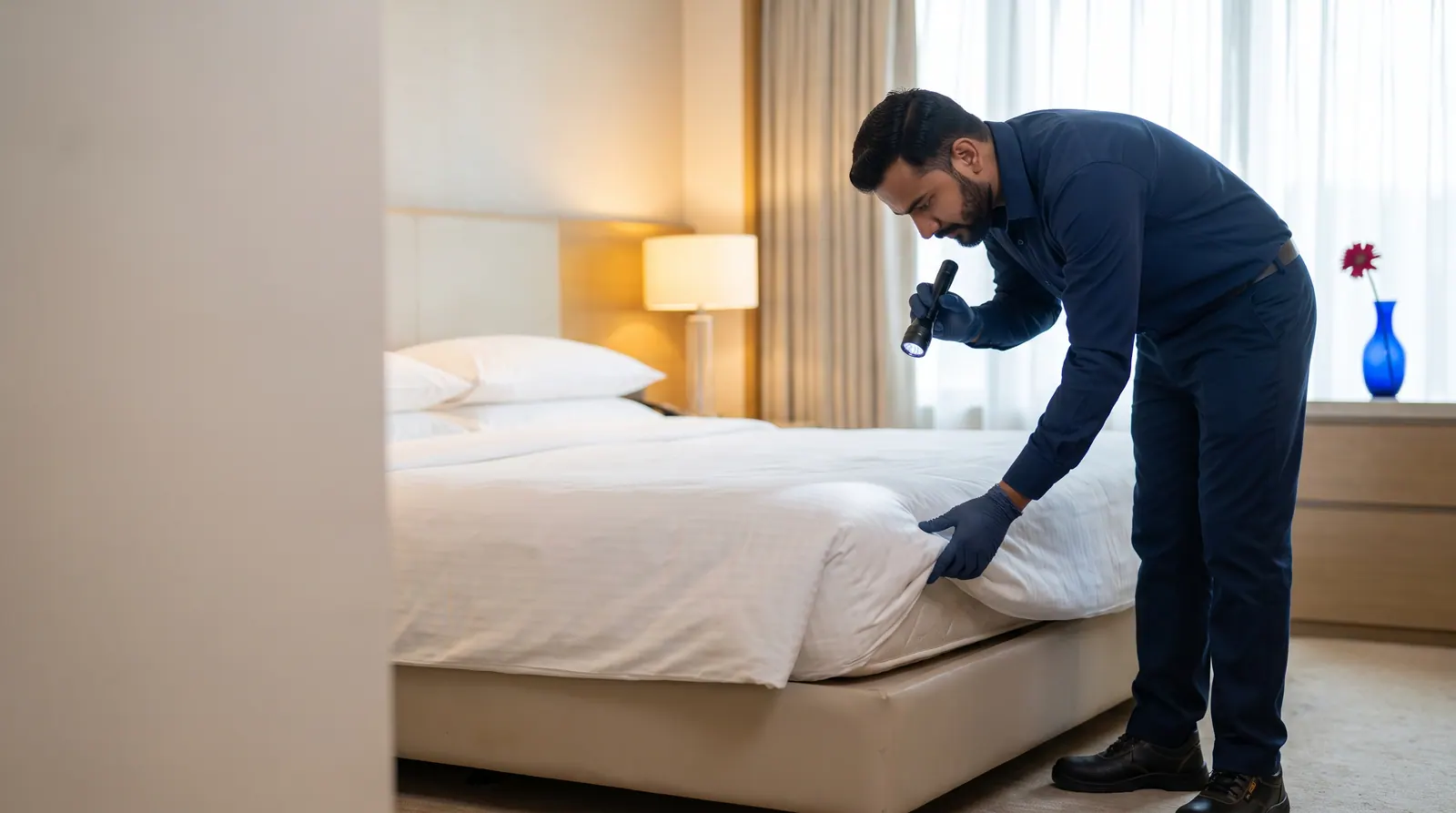
Bed bugs arrive in luggage and clothing, so even a well-run hotel can be affected. Prevention depends on early detection, through housekeeping checks of mattress seams, headboards and furniture joints, and on fast isolation of affected rooms. Our bed bug treatment works room by room, with follow-up visits, because a single visit seldom reaches every stage of the life cycle.
Staff accommodation deserves the same care as guest rooms. Problems there can easily travel into the hotel. One purchase manager in Goa wrote in a published testimonial that bed bugs in their staff accommodation were resolved within the first three months, alongside cockroach, lizard and rodent treatment.
Kitchens and food stores
Hotel kitchens face the same pressures as any commercial kitchen: warmth, moisture, food residue and constant deliveries. Our restaurant pest management page explains kitchen-focused cockroach, rodent and fly control in more detail. For stores, the focus is on keeping rodents out with rodent control measures such as tamper-resistant bait stations and proofing advice.
Gardens and grounds
Ornamental ponds, planters, blocked gutters and pool surrounds can all hold standing water. Reducing these breeding sites is the foundation of mosquito control, with larviciding, residual spraying or fogging added as the property and season require. Wooden decks, pergolas and garden furniture are also checked for termite and wood borer activity.
How is servicing kept discreet around guests?
Guests should never feel they are staying in a property that is being treated. Discretion is planned into the schedule from the start.
- Timing: visits are arranged around occupancy, check-out patterns and kitchen downtime, agreed with the front office and the executive chef.
- Vacant rooms first: guest-room work is coordinated with housekeeping so rooms are treated when empty and released only when ready.
- Low-visibility methods: gel baits and crack-and-crevice treatment are applied into gaps and voids rather than sprayed over open surfaces.
- Back-of-house routes: technicians use service corridors and staff lifts wherever possible.
- Accompanied visits: a hotel representative accompanies the technician, so access is controlled and findings are shared on the spot.
How does the programme run, step by step?
- Site survey: a walk-through of every zone to identify pests, entry points, and the conditions that attract them.
- Zone plan: treatment methods, visit frequency and monitoring points are set for each area.
- Initial treatment: targeted treatment where activity is found, with sanitation and proofing recommendations for the maintenance team.
- Scheduled visits: regular inspection and treatment, often run as part of an annual maintenance contract.
- Review: recurring findings are discussed with management so structural or hygiene causes can be fixed, not just treated.
What documentation does a hotel receive?
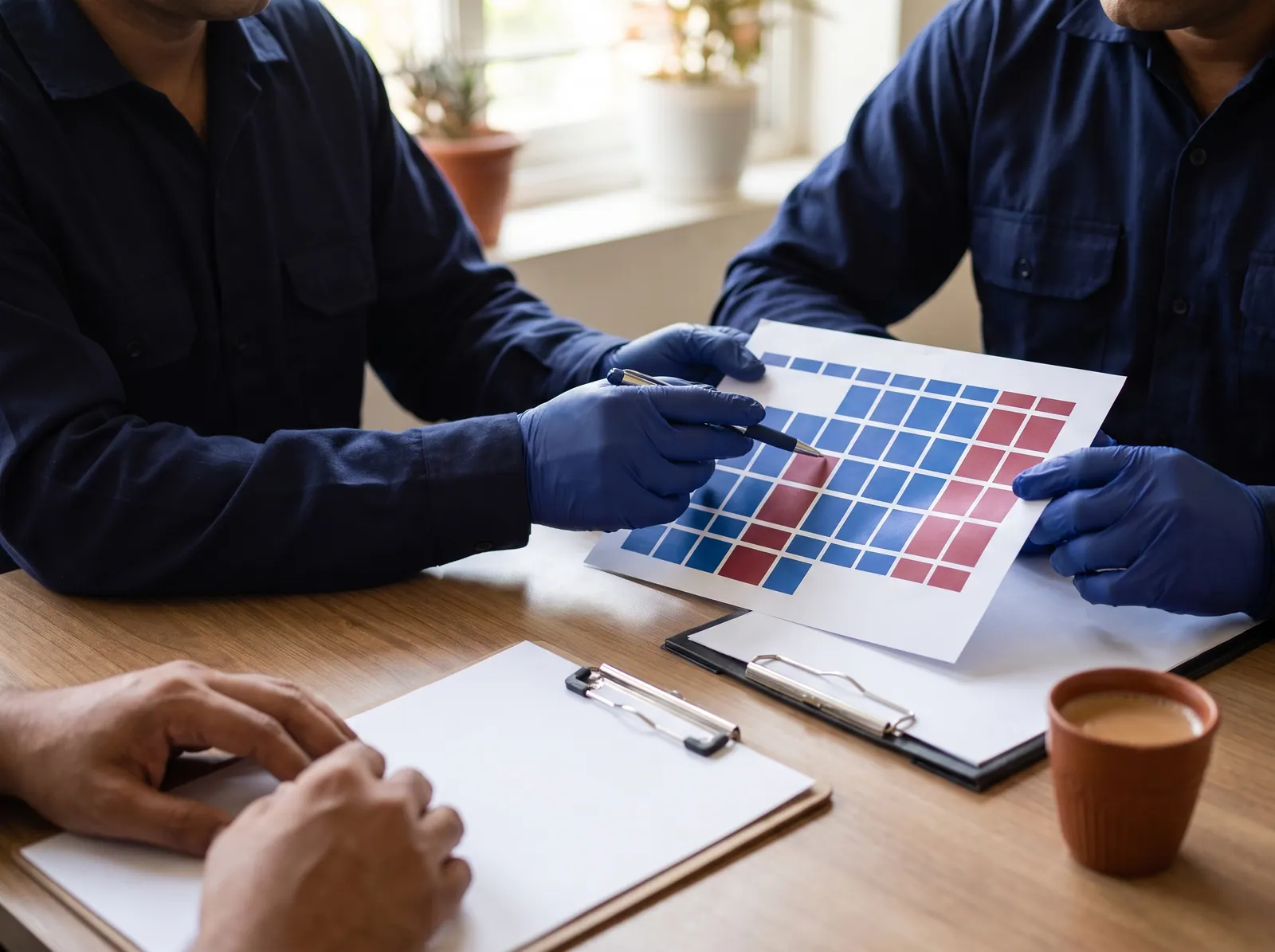
Records matter for hotels. They show what was done, where and when, and they help managers spot patterns before guests do.
- At our Goa branch, service reports or proof of service are shared after visits, and clients receive updates on WhatsApp.
- For food areas, our Goa operation provides documentation aligned with HACCP and FSSAI audit expectations. Under FSSAI Schedule 4, food businesses are expected to maintain hygiene and pest control measures.
- Material Safety Data Sheets are maintained for the products we use.
- In Goa we are a licensed pest control operator (Directorate of Agriculture, Goa) and use CIB&RC-registered products.
What should staff do when a guest reports a pest?
A clear internal protocol protects the guest, the room and the hotel's reputation. We recommend agreeing these steps with your team in advance:
- Respond calmly and privately. Thank the guest, apologise, and offer a room away from the affected one. For bed bugs, avoid the rooms directly beside, above and below it.
- Take the room out of service. Do not re-let it until it has been inspected and cleared.
- Contain, do not spread. Bag linen and soft items in the room before moving them. Do not carry them through other rooms or onto shared trolleys.
- Keep evidence. Photograph the pest or keep a specimen in a sealed bag. Log the room number, time and location.
- Avoid do-it-yourself chemicals. Household sprays can scatter some pests, such as bed bugs and cockroaches, and make treatment harder.
- Inform your pest management provider. Share the log and photos so the inspection can be planned properly.
- Look after the guest. If a guest has bites or a reaction, suggest they see a doctor.
How should the hotel prepare, and what safety steps apply?
- Cover or remove exposed food, utensils and guest amenities in areas being treated.
- Clear access to skirting, under-sink areas, drains and store shelving.
- Keep guests, staff, children and any animals away from treated areas until they are dry, or for as long as the technician advises.
- Ventilate treated rooms before re-use, and make sure staff wash their hands after handling treated items.
- All products are applied according to their label directions.
How do seasons affect a hotel programme?
In Goa, the heavy south-west monsoon and humid coastal climate favour cockroaches, mosquitoes, termites and wood borers, and damp stores need closer watching. On the Deccan plateau around Hyderabad, the hot dry summer pushes pests indoors towards water and shade, and the monsoon brings a rise in mosquito breeding. The visit schedule can be adjusted ahead of each season rather than after problems appear.
Contracts, warranty and next steps
For specific services at our Goa branch, a warranty applies to the treated area as set out in the service agreement. Its terms vary by pest and treatment.
Check availability for your branch on this page. Tell us where your property is, its size, and the problems you are seeing. Our Goa branch in Chimbel or our Shamshabad office will confirm whether and how we can help. You can reach either team through our contact page.
Frequently asked questions
QHow often should a hotel have pest control visits?
It depends on the size of the property, the zones involved and the activity found during the survey. Kitchens and waste areas usually need more frequent attention than guest corridors, and gardens may need more work in the monsoon. The schedule is set after inspection and reviewed as findings change, so you are not paying for visits that are not needed or missing ones that are.
QCan guest rooms be treated while the hotel is occupied?
Yes, in most cases. Work is coordinated with housekeeping so rooms are treated when vacant. Low-visibility methods such as gel baiting are used where suitable, and rooms are released only once they are ready to use. Rooms with bed bug activity are taken out of service and are not re-let until they have been inspected after treatment.
QWill the service records help with food safety audits?
At our Goa branch, we provide documentation for food areas that is aligned with HACCP and FSSAI audit expectations, and service reports are shared after visits. These records show what was inspected and treated, and when. Your own team remains responsible for the wider hygiene practices that auditors will also look at.
QDo you cover resorts with large gardens and pools?
The hotel programme includes gardens and grounds. Typical work covers mosquito breeding sites, ants, termites around wooden structures, and bee or wasp nests near guest areas, with bird-proofing where needed. Please check availability for your branch on this page and describe your property, so the team can confirm what applies to you.
QWhat happens if pests return after treatment?
At our Goa branch, a warranty applies to the treated area for specific services, as set out in the service agreement. Its terms vary by pest and treatment. Pests can also come back from neighbouring properties or from outside the treated area, so we recommend following the proofing and housekeeping advice given after each visit.
QIs our staff accommodation included in a hotel programme?
It can be, and we recommend including it. Staff quarters and laundries are often where bed bugs and cockroaches settle unnoticed, and from there they can travel into guest areas on linen and uniforms. Treating staff areas on the same schedule as the hotel helps stop problems moving back and forth.