Quick answer
Efficacy Pest Control's Goa branch provides mosquito control in Ponda, including Farmagudi, Kundaim, Shiroda and Usgao. Each job starts with an inspection of breeding sites such as wells, tanks, gutters, plantation debris and garden containers. We then combine breeding-site reduction, larviciding where appropriate, indoor residual spraying and fogging, matched to the property and the season. A service report is shared after the visit.
Key points
- Mosquito control in Ponda is handled by the Goa branch in Chimbel, covering Ponda including Farmagudi, Kundaim, Shiroda and Usgao.
- Treatment combines breeding-site reduction, larviciding, indoor residual spraying and fogging, matched to the property and season.
- Fogging only affects mosquitoes flying at the time it is done; breeding sites must also be dealt with.
- The Goa branch is a licensed pest control operator using CIB&RC-registered products, with Material Safety Data Sheets maintained.
- A service report is shared after each visit.
If mosquitoes are spoiling evenings on your verandah or keeping the household awake, the solution in Ponda usually starts outdoors. Our mosquito control in Ponda, Goa is run from our Goa branch in Chimbel. It follows an Integrated Pest Management (IPM) approach: find where mosquitoes breed and rest, remove or treat those sources, and then use targeted treatment to bring adult numbers down.
We work with flats, independent houses, homes set among gardens and plantations, shops, offices, restaurants and industrial units. Our mosquito control service page explains the methods in general. This page focuses on what matters for properties in and around Ponda.
Why do mosquito problems in Ponda look different?
Ponda lies inland in central Goa, away from the beach belt. Many properties here sit among areca, coconut and cashew trees on sloping ground, with open wells, overhead tanks and stored garden water. That mix gives mosquitoes plenty of shaded resting spots and small pockets of still water.
During Goa's heavy south-west monsoon, rain collects in places people rarely check. Examples include fallen areca spathes, coconut shells and plastic sheets thrown over firewood or stored materials. After the rains ease, many of these pockets stay wet for weeks. New housing and construction add curing water, uncovered sumps and drums.
Common breeding spots we check on Ponda properties
- Open or loosely covered wells, sumps and overhead tanks
- Fallen coconut shells, areca spathes, tree holes and cut bamboo stumps in gardens and plantations
- Tarpaulins and plastic sheets over firewood, vehicles or stored materials
- Blocked roof gutters, flat terraces and sunshades that hold water
- Flower-pot trays, planters, ornamental ponds and pet bowls
- Drums, tyres, scrap and pallets at workshops, godowns and industrial units
- Open drains, soak pits, and septic tank vent pipes without mesh
Different mosquitoes favour different water. Aedes mosquitoes bite mainly during the day and lay eggs in small containers of fairly clean water. Their eggs can survive dry spells stuck to container walls. Anopheles mosquitoes can breed in clean water bodies such as wells and tanks. Culex mosquitoes prefer dirty water in drains and soak pits.
Knowing which sources are on your property tells us what to treat. Our mosquito breeding checklist for Goan gardens and terraces gives you a list to work through yourself.
What happens during a mosquito control visit?
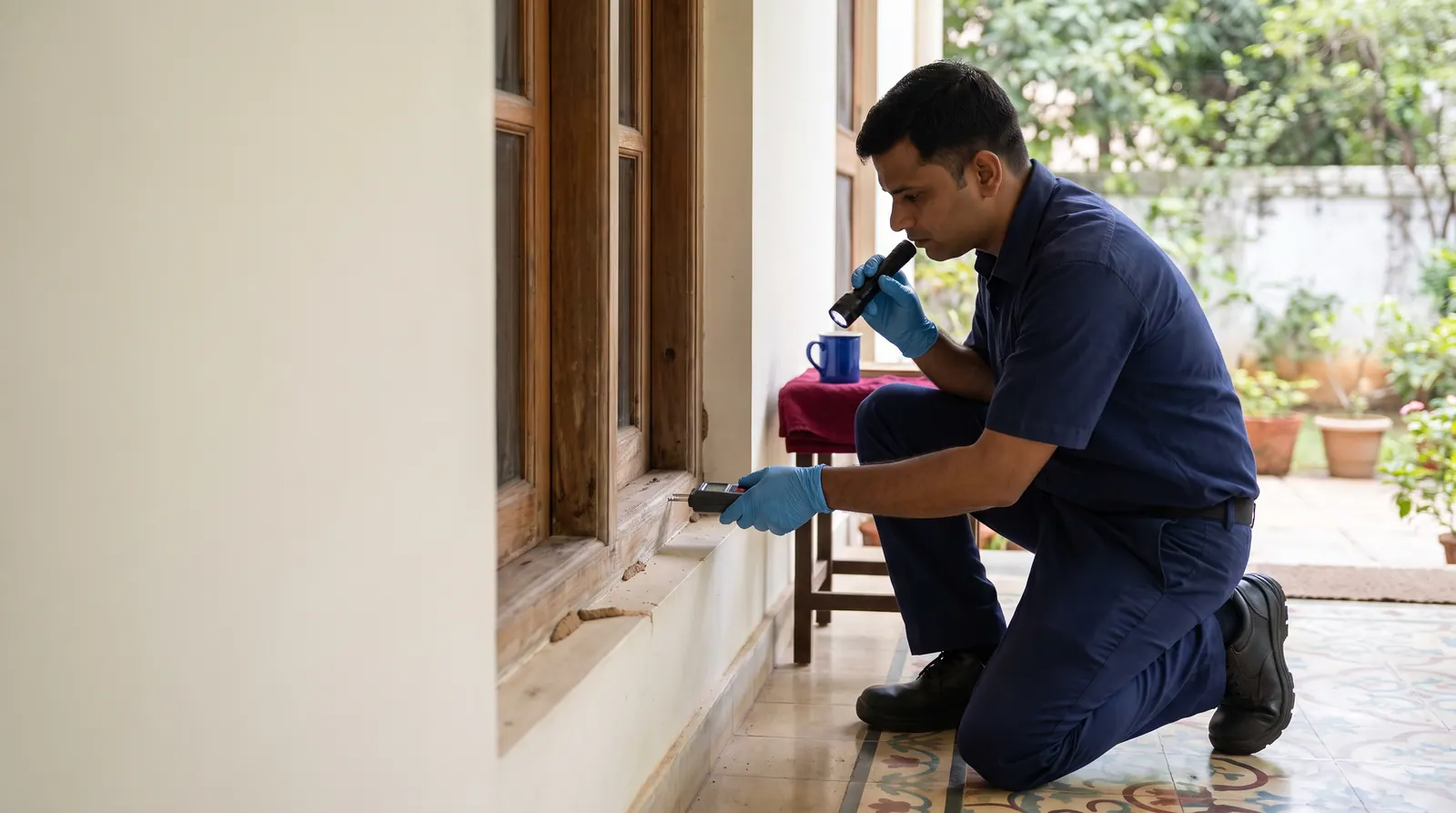
- Inspection. The technician walks the whole property: garden, compound, terrace, wells and tanks, drains and indoor rooms. They note breeding sites and the places where adult mosquitoes rest, such as under furniture, behind curtains and in dense shrubs.
- Source reduction. We point out what can be emptied, covered, drained or removed. We then agree with you which jobs you will handle and what needs treatment.
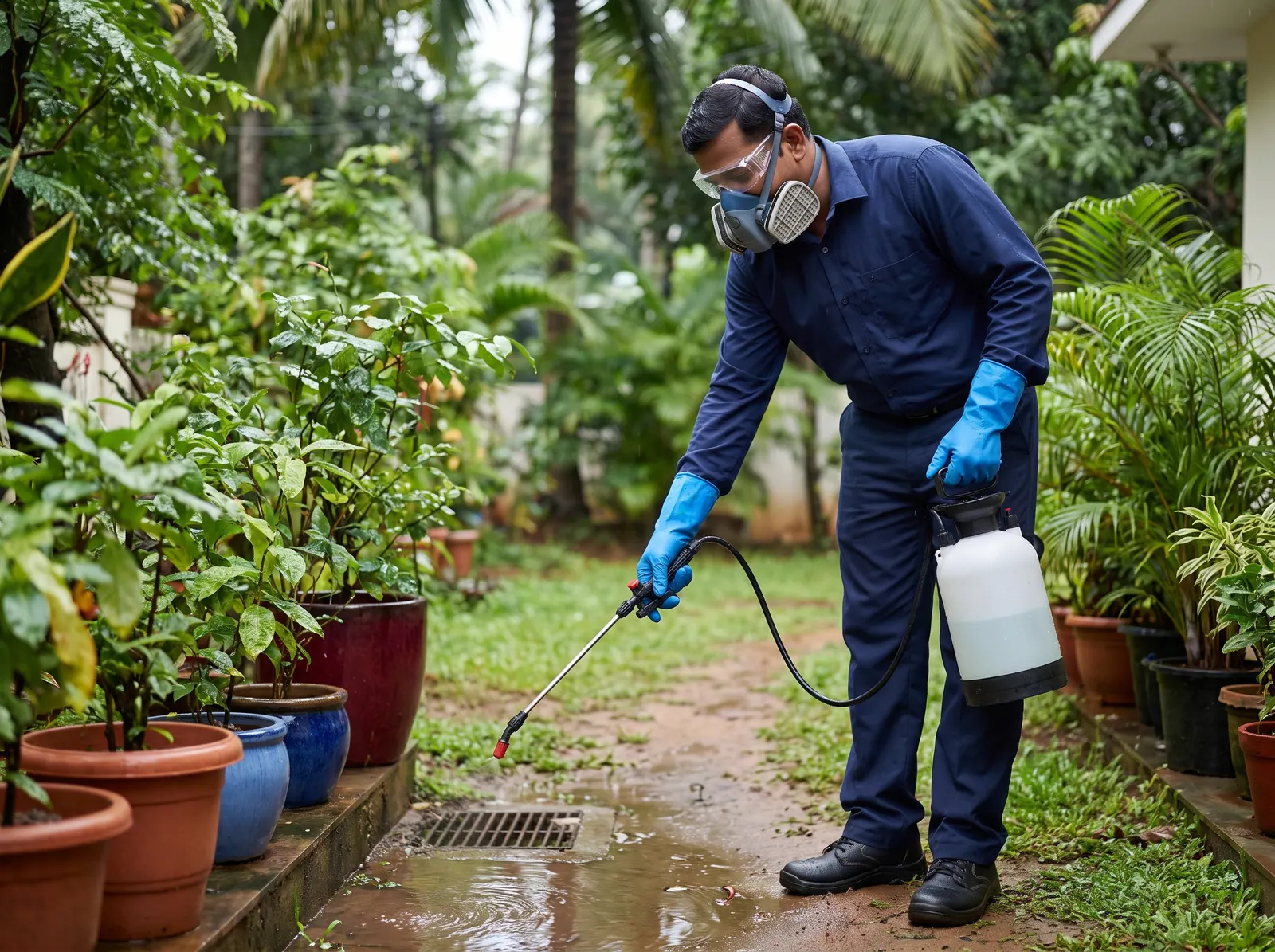
- Larviciding where appropriate. Some water cannot be removed, such as non-drinking sumps, drains or ornamental features. This water may be treated to stop larvae developing into adults. Drinking water should never be treated.
- Indoor residual spraying. Where the situation calls for it, we apply a targeted residual treatment to the indoor surfaces where mosquitoes rest.
- Fogging or ULV outdoors. Gardens and compounds with heavy adult activity may need fogging or ULV treatment to knock down flying mosquitoes. You can read more about mosquito fogging and ULV treatment in Goa.
- Entry-point advice. We suggest practical fixes. These include mesh on windows, ventilators and septic vent pipes, sealing gaps, and keeping doors closed at dusk.
- Service report. After the visit you receive a report of the work done, along with updates on WhatsApp.
Fogging on its own only affects mosquitoes that are flying at that moment. If the breeding sites are left alone, new adults keep emerging. That is why we treat fogging as one part of the plan, not the whole plan.
Which approach suits your property?
| Property type | Where we usually focus | Typical approach |
|---|---|---|
| Flat or apartment | Balcony planters, AC drip trays, bathroom ducts, indoor resting spots | Source-reduction advice, indoor residual spraying where needed, mesh advice |
| Independent house with garden | Wells, tanks, gutters, garden containers, shrubs | Breeding-site reduction, larviciding of non-drinking water, outdoor fogging, indoor treatment |
| Home or farmhouse among plantations | Coconut shells, areca spathes, tree holes, tarpaulins, open wells | Clearing and covering sources, larviciding, perimeter fogging during active periods |
| Shops, offices and restaurants | Drains, storerooms, rear yards, water storage | Scheduled visits with service records; for food businesses, documentation aligned with HACCP and FSSAI audit expectations |
| Industrial units and godowns, such as those around Kundaim | Drums, scrap, pallets, roof gutters, open sumps | Site survey, source-control plan, larviciding and scheduled treatments |
Businesses that need pest management beyond mosquitoes can see our page on commercial pest control in Ponda.
When should you plan mosquito treatment in Ponda?
| Season | What tends to happen | What helps |
|---|---|---|
| Pre-monsoon (April–May) | Households store more water in the dry heat, and tanks and containers are often left open | Clean gutters, cover tanks and wells, and clear garden debris before the rains |
| Monsoon (June–September) | Heavy rain fills containers, gutters and plantation debris | Empty containers weekly after rain, and treat sources that cannot be cleared |
| Post-monsoon (October–November) | The rain eases but pools and containers stay wet, and mosquito activity commonly stays high | Do a thorough breeding-site check with treatment; this is often a good time to plan a visit |
| Dry months (December–March) | There are fewer outdoor sources, but tanks, sumps, drains and AC trays can still breed mosquitoes | Keep checking stored water and drains; businesses can continue maintenance visits |
Our guide to the post-monsoon mosquito season in Goa explains why the months after the rains need extra attention.
Is mosquito treatment safe for family, pets and wells?
We plan safety before any treatment starts. Our Goa branch is a licensed pest control operator with the Directorate of Agriculture, Goa. We use CIB&RC-registered products applied according to label directions, and we maintain Material Safety Data Sheets for the products we use.
- Before the visit, cover or put away food, utensils and drinking water.
- Cover aquariums and switch off their pumps if the technician advises it.
- Tell us about every well on the property, and which ones are used for drinking, so they can be protected.
- Move pets, their bedding and their bowls away from areas to be treated.
- Keep children and pets out of treated areas until surfaces are dry, or for as long as the technician advises.
- Ventilate rooms after indoor treatment, and wash your hands after touching treated surfaces.
Mosquito control reduces bites but does not replace medical care. If anyone at home develops a fever, please see a doctor.
Which areas around Ponda do we cover?
Our Goa branch covers Ponda town and nearby localities including Farmagudi, Kundaim, Shiroda and Usgao. If you live elsewhere in Ponda taluka, tell us your village or a nearby landmark and we will confirm whether we can reach you. For other pest problems in the area, see our page on pest control in Ponda.
One visit or a maintenance plan?
A single visit, combined with clearing the breeding sites, can bring noticeable relief for many homes. Some properties have wells, large gardens or plantation land next door, and mosquitoes keep returning to them. Businesses may also need regular records. For these, an Annual Maintenance Contract gives scheduled visits through the year, with a service report after each one.
Cost depends on the area to be treated, the number of breeding sources and the type of property. We share a quotation once we understand the site.
How do you arrange mosquito control in Ponda?
Contact our Goa branch in Chimbel with your locality, the type of property and what you are noticing. That could be bites during the day, swarms at dusk or larvae wriggling in a tank. We will arrange an inspection and recommend a plan that suits your property. You can reach us through our contact page.
Frequently asked questions
QWill fogging alone get rid of mosquitoes at my Ponda home?
Usually not. Fogging knocks down the adult mosquitoes that are flying when it is done, but it does not reach eggs and larvae in wells, tanks, gutters or garden debris. Within days, new adults can emerge from those sources. For lasting improvement, fogging needs to go together with clearing or treating breeding sites and, where needed, indoor residual treatment.
QCan you treat the well on my property?
Drinking-water wells should never be treated with insecticide. For these, the practical step is a well-fitted mesh or cover that stops mosquitoes from reaching the water. Please tell the technician which wells, sumps or tanks are used for drinking and which are not. That way any treatment is limited to suitable non-drinking water, following label directions.
QHow soon will I notice fewer mosquitoes?
Adult numbers often drop soon after fogging or indoor treatment. Breeding-site control takes a little longer to show its full effect, because it stops new mosquitoes from developing. In plantation areas, some mosquitoes may still fly in from neighbouring land. Your technician will explain what to expect for your property and what you can do to help.
QDo you handle mosquito control for industrial units in Kundaim?
Yes, Kundaim is among the localities our Goa branch covers. For industrial units and godowns, we start with a site survey of drums, scrap, roof gutters, sumps and drains. We then agree a source-control and treatment plan, with scheduled visits if needed. Service reports are shared after each visit for your records.
QDo we need to leave the house during treatment?
Not always. It depends on which treatment is used and where. For indoor residual spraying and fogging, the technician will tell you which rooms or areas to keep clear. Keep children and pets out of treated areas until surfaces are dry or for as long as advised, and ventilate the rooms before using them again.
QHow often should mosquito treatment be repeated?
It depends on the property, the number of breeding sources and the season. Some homes manage with a visit before or after the monsoon plus good habits at home. Properties near plantations, or businesses that need records, often do better with regular weekly, monthly or quarterly visits under a maintenance plan. The technician will suggest a schedule after the inspection.
QWhat should I do before the technician arrives?
Clear the areas to be treated where you can, and put away or cover food, utensils and drinking water. Keep pets secured away from the work area. It also helps to note where you see mosquitoes most and when, and to tell us about wells, tanks and ornamental ponds. A family member should be present during the visit.
Last updated 13 October 2026. Information on this page is general guidance; your technician will advise on your specific property after inspection.