Quick answer
Mosquito control in Mapusa starts with finding where mosquitoes breed on and around your property, such as tanks, drains, plant saucers and compound clutter. We then treat both larvae and adults. Our Goa branch in Chimbel covers Mapusa (also called Mapsa). We combine breeding-site reduction, larviciding, indoor residual treatment and outdoor fogging where it suits, and plan each visit around the building and the season.
Key points
- Lasting mosquito control depends on removing or treating breeding water, not just fogging adult mosquitoes.
- Aedes mosquitoes breed in small containers near homes and bite mainly by day; Culex prefer dirtier water such as drains and bite mostly at night.
- Common breeding sites around Mapusa properties include uncovered tanks, wells, plant saucers, blocked gutters and stored crates or tyres.
- Keep children and pets away from treated areas until surfaces are dry or as advised, and see a doctor for any fever after mosquito bites.
Mosquito control in Mapusa works best when it deals with where mosquitoes are breeding, not just the ones biting tonight. Our Goa branch in Chimbel covers Mapusa (also called Mapsa). We plan each mosquito control visit around your building, its surroundings and the time of year, rather than relying on fogging alone.
We follow an Integrated Pest Management (IPM) approach. That means inspection first, then advice on sanitation and proofing, then targeted treatment only where it is needed.
Where do mosquitoes breed around Mapusa properties?
Mapusa is the main town of Bardez taluka. It mixes older Goan houses with compounds and wells, newer apartment buildings, and a busy market area full of shops and storerooms. Each type of property gives mosquitoes different places to breed.
- Overhead tanks, sumps and wells without tight-fitting lids or mesh
- Flower-pot saucers, coconut shells, buckets and discarded containers in compounds
- Blocked roof gutters, balcony drains and terrace corners where rainwater lies
- Crates, tyres and packaging stored behind shops and in godown yards
- AC drip trays, ornamental ponds and water features
- Open pits and curing water on construction sites nearby
The species matters too. Aedes mosquitoes breed in small, fairly clean containers close to homes and bite mainly during the day. Culex mosquitoes prefer dirtier water such as drains and bite mostly at night. Knowing which one you have helps us decide where to focus. Our mosquito breeding checklist for Goan gardens and terraces lets you check your own property between visits.
How do we treat a property in Mapusa?
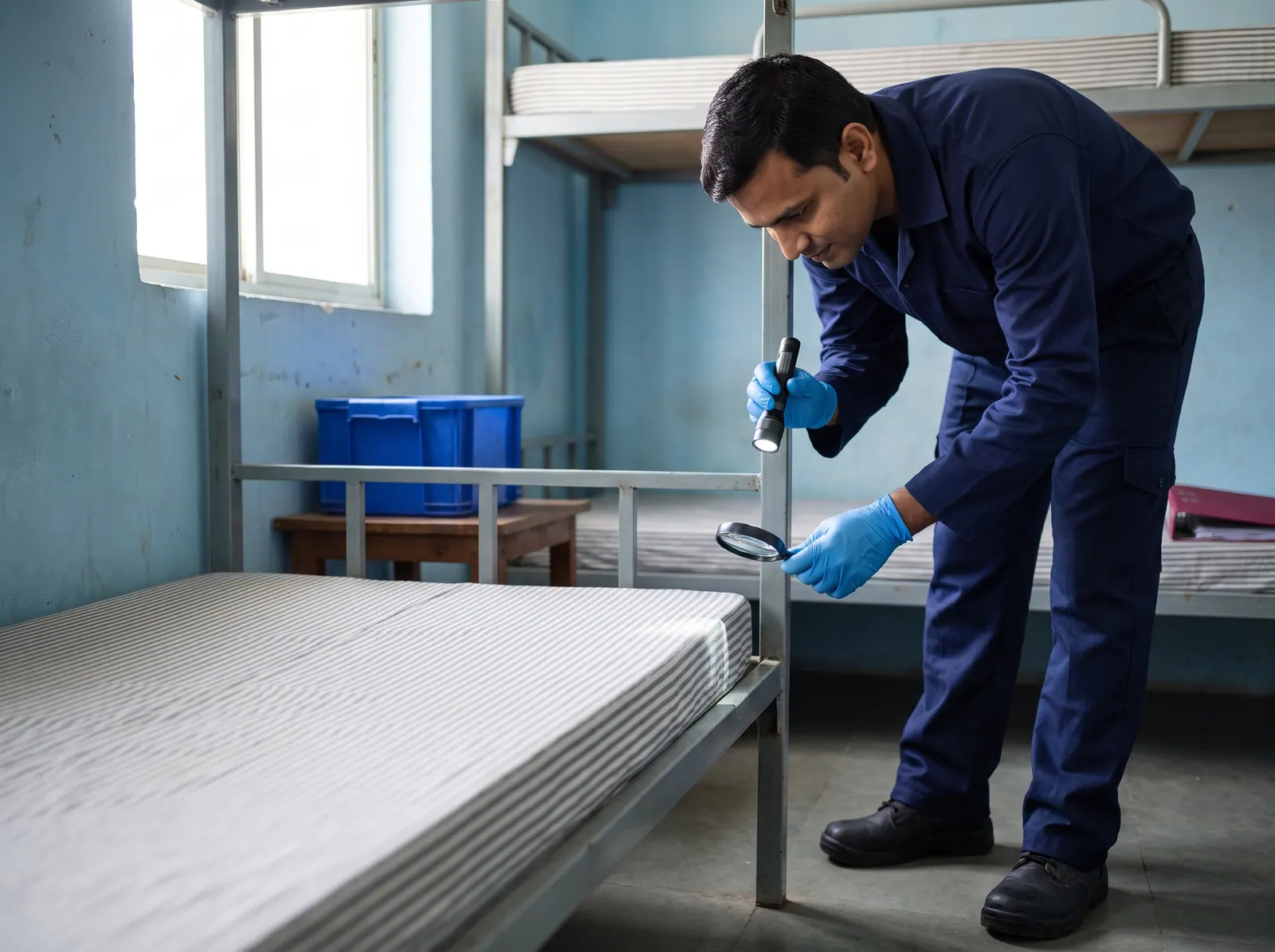
- Inspection: We check the compound, terrace, tanks, drains, parking and storage areas, as well as the rooms where people are being bitten.
- Breeding-site reduction: We point out containers to empty, cover or remove, and agree with you what each side will take care of.
- Larviciding: Where water cannot be removed, such as drains, sumps or some water features, we treat it to stop larvae developing.
- Indoor residual treatment: Where appropriate, we treat surfaces where mosquitoes rest, such as dark corners, under furniture and stairwells.
- Outdoor fogging or ULV: This gives quick, short-term knockdown of adult mosquitoes in gardens and open areas. It does not stop breeding by itself. Read more about mosquito fogging and ULV treatment.
- Report and next steps: We share a service report after the visit and keep you updated on WhatsApp about any follow-up plan.
How does the season change the plan?
| Period | What we focus on |
|---|---|
| Before the monsoon | Clearing gutters and drains, fixing tank lids, removing junk from compounds and terraces |
| South-west monsoon | Rechecking after heavy rain and larviciding water that cannot be drained |
| After the monsoon | Drying puddles and containers that still hold water; see our post-monsoon mosquito season guide |
| Dry months | Tanks, AC trays, plant saucers and indoor water features |
Homes, societies, shops and food businesses
Houses and villas: Compounds, wells and garden corners usually need the most attention, along with the bedrooms where bites happen.
Apartments and housing societies: Common sumps, basement parking and shared drains often matter more than individual flats. We coordinate the plan with the society committee.
Shops, offices and godowns: Rear yards, stored crates and rarely used storerooms are common breeding spots, especially around the market area. See our commercial pest control in Mapusa page for scheduled programmes.
Restaurants, cafes, schools and clinics: We choose methods suited to food and occupied areas and time visits around opening hours. For food businesses, we can provide documentation aligned with HACCP and FSSAI audit expectations.
Is mosquito treatment safe for children and pets?
We are a licensed pest control operator with the Directorate of Agriculture, Goa, and use CIB&RC-registered products. We keep Material Safety Data Sheets for the products we use, and we explain what we are applying and where before we start.
- Keep children, elders and pets away from treated areas until surfaces are dry, or for as long as the technician advises.
- Cover aquariums and move pet food and water bowls before treatment.
- Ventilate rooms afterwards and wash your hands after touching treated surfaces.
If anyone develops a fever or feels unwell after mosquito bites, please see a doctor promptly.
What affects the cost?
We explain the quotation before any work starts. The main factors are:
- Size of the property, from a small flat to a large villa or compound
- Whether indoor areas, outdoor areas or both need treatment
- How many breeding sites there are, such as drains, tanks and garden water
- A one-time visit or a planned series of visits through the season
Arranging a visit in Mapusa
Tell our Goa branch in Chimbel where in Mapusa your property is, what type of building it is, and when the mosquitoes are worst. We will suggest a suitable plan. You can also see the other services we provide in town on our pest control in Mapusa page.
Frequently asked questions
QIs fogging alone enough to control mosquitoes at my house in Mapusa?
Usually not. Fogging knocks down adult mosquitoes flying at the time, but new ones keep emerging from tanks, drains and containers that still hold water. Lasting reduction comes from removing or treating breeding water and treating the places where mosquitoes rest. Fogging then helps as a short-term step, for example before an event or during peak season.
QHow often should mosquito treatment be done during the monsoon?
It depends on how much water collects around your property and how close it is to open drains or vacant plots. After the inspection, we suggest a schedule. During heavy rain, breeding sites refill quickly, so planned repeat visits combined with your own weekly checks of containers usually work better than a single treatment.
QDo we need to leave the flat while you treat it?
For most mosquito treatments you do not need to move out. You will be asked to keep children, elders and pets out of treated rooms until surfaces are dry or for as long as the technician advises. Cover food, aquariums and pet bowls, and ventilate the rooms afterwards. The technician will explain the precautions for your specific treatment.
QCan our housing society book treatment only for common areas?
Yes. Common areas are often where breeding starts, such as sumps, basement parking, shared drains and terrace tanks. We can plan the work with the society committee and share a service report after each visit. Individual flat owners can arrange indoor treatment separately if bites continue inside their homes.
QCan you provide service records for our restaurant or cafe in Mapusa?
Yes. For food businesses, we can provide documentation aligned with HACCP and FSSAI audit expectations, and we share service reports after each visit. We also choose methods suited to food-handling areas and time visits to avoid disrupting service. Mosquito work is often combined with fly and cockroach management in kitchens.
QWhy do mosquitoes keep coming from my neighbour's plot?
Mosquitoes can fly in from nearby breeding sites that we are not able to treat, such as a neighbour's compound, an open drain or a construction site. We focus on your property and suggest practical steps such as window mesh and keeping your own compound dry. Raising the issue with neighbours or the local authority can also help.
Last updated 13 October 2026. Information on this page is general guidance; your technician will advise on your specific property after inspection.