Key points
- Rodent control starts with an inspection to identify the rodent, map activity and find entry points.
- Bait is kept inside tamper-resistant stations; traps are often preferred indoors and in food areas.
- Proofing gaps, sealing food and managing waste are what prevent rodents from returning.
- Rats are wary of new objects, so it can take several days for them to start feeding from stations.
- Never handle dead rodents or droppings bare-handed, and see a doctor after any bite or illness.
Rats and mice contaminate food, chew through packaging, wiring and pipes, and can spread disease through their urine and droppings. Good rodent control is not just about putting down bait. It means finding out where rodents are coming from, why they are staying, and closing those doors so the problem does not keep returning.
This page explains how our rodent control service works across homes, housing societies, restaurant kitchens, hotels, shops and warehouses: the signs to look for, what happens during an inspection, the methods we use, how to rodent-proof a building and how we monitor activity afterwards.
What are the signs of rats or mice?
Rodents are mostly active at night and tend to stay out of sight, so you often notice what they leave behind before you see an animal. Look for:
- Droppings along walls, behind appliances, in cupboards, store rooms and false ceilings.
- Gnaw marks on food packets, plastic containers, doors, skirting, cables and pipes.
- Grease or rub marks – dark smudges along walls, beams and pipes where rodents travel the same route repeatedly.
- Noises at night – scratching or scurrying in ceilings, ducts, wall cavities or under kitchen counters.
- Nests made of shredded paper, cloth or packing material in quiet, undisturbed corners.
- Burrows in garden soil, along compound walls, near drains or under paved areas.
- A stale, musky smell in enclosed spaces with heavy activity.
Droppings give a useful first clue about which rodent you are dealing with, although an inspection confirms it.
| Sign | Mice | Rats |
|---|---|---|
| Droppings | Small, roughly the size of a grain of rice | Noticeably larger and thicker |
| Entry gaps | Can squeeze through very small openings, around the width of a pencil | Need a somewhat larger gap, but still smaller than most people expect |
| Typical activity | Inside cupboards, stores, furniture and appliances | Drains, roofs, ducts, gardens, burrows and ground-floor areas |
What happens during a rodent inspection?
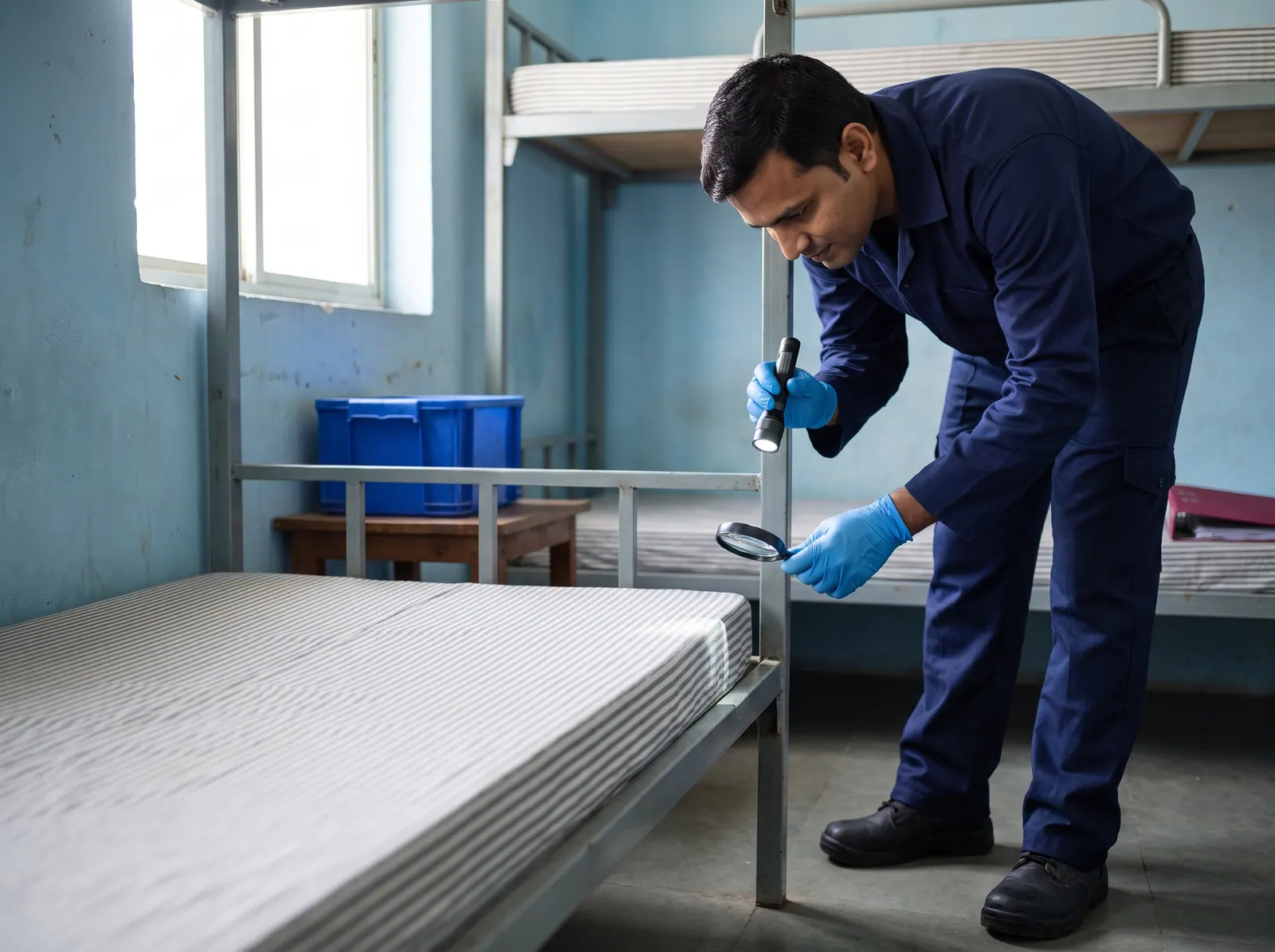
Every treatment we plan follows our Integrated Pest Management (IPM) approach: inspect first, advise on sanitation and proofing, then treat in a targeted way. You can read more about this on our how we work page. A typical rodent inspection covers:
- Identifying the rodent – mice, rats, or both – from droppings, damage and activity patterns.
- Mapping activity – where droppings, runways and gnawing are concentrated, inside and outside the building.
- Finding entry points – gaps around pipes and cables, drain openings, broken vents, gaps under doors, roof edges and openings in false ceilings.
- Checking food, water and shelter – open food, waste bins, spilled grain, leaking taps, cluttered stores and dense vegetation close to walls.
- Noting sensitive areas – food preparation zones, children’s rooms, places pets can reach and stock that must not be contaminated.
At the end, we explain what we found and recommend a plan matched to the property – a flat with mice in the kitchen needs a very different approach from a warehouse with rats coming in from a drain line.
How do we control rats and mice?
We combine methods rather than relying on one. The mix depends on the rodent, the level of activity and how the space is used.
Tamper-resistant bait stations
Bait is placed inside lockable, tamper-resistant stations rather than left loose. This keeps it away from children, pets and non-target animals, protects it from moisture and dust, and prevents rodents from carrying it off and scattering it. Stations are usually placed along walls and known runways, often around the outside of a building to intercept rodents before they get in.
Rats in particular are wary of new objects in their surroundings, so it can take a few days before they start feeding from a new station. That is normal and is one reason follow-up checks matter.
Traps
Traps are useful inside homes, kitchens and food stores, where we want to avoid a rodent dying out of reach in a wall or ceiling. They also give clear evidence of what has been caught and where, which helps confirm that activity is falling.
Matching the method to the property
- Homes and housing societies – indoor trapping where needed, secured bait stations outdoors, and attention to shared areas such as drains, garbage points and parking.
- Restaurant and hotel kitchens – a careful approach that keeps treatment well away from food and food-contact surfaces. See our restaurant pest management service for kitchen-focused programmes.
- Warehouses, shops and offices – a numbered network of stations around the perimeter and stock areas, checked on a schedule. Our commercial pest control page explains how scheduled, documented programmes work.
Is rodent control safe for children, pets and food areas?
Safety is built into how the service is planned. Bait is kept inside secured stations, placed where children and pets cannot easily reach, and food areas are treated with extra care. Material Safety Data Sheets are maintained for the products we use. In Goa, we operate as a licensed pest control operator (Directorate of Agriculture, Goa) using CIB&RC-registered products, applied according to label directions.
There are also a few simple things you can do:
- Do not open, move or shake bait stations, and keep children and pets away from them.
- Tell the technician about pets, young children or anyone unwell in the home before treatment begins.
- Never handle dead rodents or droppings with bare hands. Use gloves, seal them in a bag, and wash your hands afterwards.
- When cleaning droppings, dampen the area with a disinfectant first rather than sweeping dry, to avoid raising dust.
- If anyone is bitten, or feels unwell after contact with rodents or their urine – especially after flooding – see a doctor.
How can you rodent-proof your property?
Proofing is what turns a short-term result into a lasting one. During the inspection we point out where rodents are getting in and what is attracting them, and advise on how to fix it. Common recommendations include:
- Sealing gaps around pipes, cables and AC lines with materials rodents cannot easily chew through, such as cement or metal mesh.
- Fitting door sweeps or brush strips to the bottom of external and store-room doors.
- Covering drain openings, floor traps and vents with sturdy grilles or mesh.
- Repairing broken false-ceiling panels and openings in roof edges.
- Storing food, grain and pet food in sealed, hard containers, and keeping stock off the floor and away from walls.
- Using bins with tight lids, clearing waste daily and fixing leaking taps.
- Trimming vegetation and removing clutter, debris and old materials stacked against compound walls.
Heavy monsoon rain and overflowing drains can push rodents to look for drier shelter indoors, so it helps to check proofing before the rains. Our guide to seasonal pests and how to prepare covers this in more detail, and the dos and don’ts of pest control article has more everyday prevention tips.
How is rodent activity monitored after treatment?
Rodent control is a process, not a single visit. Follow-up checks let us see whether bait is being eaten, what traps have caught, and whether new signs are appearing. Stations can then be moved, added or removed as activity changes.
For businesses and homes that want ongoing protection, rodent monitoring can form part of an annual maintenance contract with scheduled visits and service reports. In Goa, we share service reports after visits and provide WhatsApp updates, and for food businesses we provide documentation aligned with HACCP and FSSAI audit expectations.
One of our clients in Goa, a purchase manager, wrote about the range of treatments we handle for them:
“Also Cockroach treatment, lizard treatment, rodent treatment we are happy with Efficacy Pest Control.” – Mr. Sunil Ambokar, Purchase Manager, Goa
How should you prepare for a rodent control visit?
- Clear access to areas under sinks, behind appliances, store rooms, lofts and false-ceiling access points.
- Put food away in sealed containers and cover food-contact surfaces.
- Keep pets in a separate room or secured during the visit.
- Make a note of where and when you have seen rodents or droppings.
- Arrange for someone to accompany the technician during the service, as set out in our terms.
Check availability for your branch
Rodent control is part of our company-wide service catalogue, and availability is shown for each branch on this page. Our Goa branch in Chimbel is our established operation. Our Shamshabad branch has recently opened — tell us your location and the problem, and we’ll confirm whether we can help.
To get started, contact us with your location, the type of property and what you have noticed, and we will explain the next steps.
Rodent Control in Goa towns
Frequently asked questions
QHow long does it take for rodent control to work?
It depends on the rodent, how established the activity is and how quickly entry points are closed. Mice often respond sooner, while rats are cautious of new objects and may take several days before they feed from bait stations. Expect a gradual drop in signs rather than an overnight change, which is why follow-up checks are part of the process.
QWill there be a smell of dead rats after treatment?
There can be if a rodent dies somewhere out of reach, such as inside a wall cavity or false ceiling. To reduce this risk, we often use traps indoors and place bait stations around the outside of the building. If you notice a persistent smell, let us know so the area can be checked and the plan adjusted.
QAre bait stations safe if I have pets or small children?
Bait is kept inside lockable, tamper-resistant stations designed to stop children and pets reaching it, and stations are placed in low-risk spots. Even so, do not open or move them, and keep children and pets away from them. Tell the technician about pets before treatment so placement can be planned around them.
QDo I still need to seal entry points if the rodents are gone?
Yes. If gaps around pipes, drains, doors and vents stay open, new rodents can move in from drains, neighbouring buildings or open land. Proofing, sealed food storage and good waste management are what keep a property rodent-free after treatment. We point out entry points during the inspection and advise on how to close them.
QShould I use glue boards or poison from the shop myself?
Do-it-yourself baits left loose can be reached by children and pets, and can leave rodents dying in inaccessible places. Glue boards and traps placed randomly often miss the real runways. If you do use any product, follow the label directions carefully. A proper inspection helps place control measures where they will actually work.
QHow often should a restaurant or warehouse have rodent checks?
Food businesses and warehouses usually benefit from scheduled visits rather than one-off treatments, because activity can return from drains, deliveries and surrounding areas. The right frequency depends on the site, the level of activity and audit requirements. We recommend a schedule after the inspection, often as part of an annual maintenance contract.