Quick answer
Efficacy Pest Control provides rodent control in Goa from its branch in Chimbel. Each job starts with an inspection to find where rats or mice enter, nest and feed. We then use tamper-resistant bait stations and traps where suitable, and give practical proofing advice. The service covers homes, housing societies, hotels, restaurants, shops and warehouses in Panaji, Margao, Vasco da Gama, Mapusa, Ponda, Porvorim, Calangute, Candolim and Baga.
Key points
- Rodent control in Goa is provided from the company's branch in Chimbel, North Goa.
- Each job starts with an inspection of entry points, nesting sites, runways and food sources.
- Bait is placed in secured, tamper-resistant stations; traps are used where baiting is unsuitable, such as food areas.
- The Goa branch is a licensed pest control operator (Directorate of Agriculture, Goa) using CIB&RC-registered products.
- Food businesses receive documentation aligned with HACCP and FSSAI audit expectations.
Rats and mice in a Goan home or business rarely leave on their own. Our rodent control service in Goa, run from our branch in Chimbel, starts with a proper inspection. We find where rodents are getting in, where they shelter and what they are feeding on. We then place tamper-resistant bait stations and traps where they will work, and give you clear proofing advice so the problem is less likely to return.
The service is for flats, independent houses, villas and housing societies, as well as hotels, restaurants, shops and warehouses. For an overview of our approach to rats and mice, see our main rodent control service page.
Why do rodent problems build up in Goa?
Goa's warm, humid coastal climate suits rats and mice for much of the year. During the heavy south-west monsoon, flooded drains, burrows and open ground push rodents towards dry shelter. They often end up in store rooms, false ceilings, garages and kitchens.
Many Goan properties also have features that rodents exploit. These include tiled or sloping roofs with gaps under the eaves, coconut palms and trees close to the building, gardens, and drains that open near the house. Roof rats are agile climbers and use branches, cables and pipes to reach upper floors. In busy tourist areas, restaurants and hotels handle a lot of food and waste, which needs careful storage and regular removal.
Signs of rats and mice to watch for
- Droppings near food, along walls or behind appliances. Fresh droppings are dark and soft; older ones are dry and crumble.
- Gnaw marks on doors, wooden frames, plastic pipes, food packaging and electrical cables. Rodents gnaw constantly because their front teeth keep growing.
- Sounds at night, such as scratching or running in false ceilings, roof spaces or wall cavities.
- Greasy smear marks along regular routes, where fur rubs against walls and edges.
- Nests of shredded paper, cloth or packing material in quiet corners, cupboards or store rooms.
- Burrows in garden soil, along compound walls or beside drains.
Rodent urine and droppings can contaminate food and surfaces, and rats are associated with diseases such as leptospirosis, especially where there is standing water. If anyone in your household or staff feels unwell after possible contact, please see a doctor.
How does our rodent control service work?
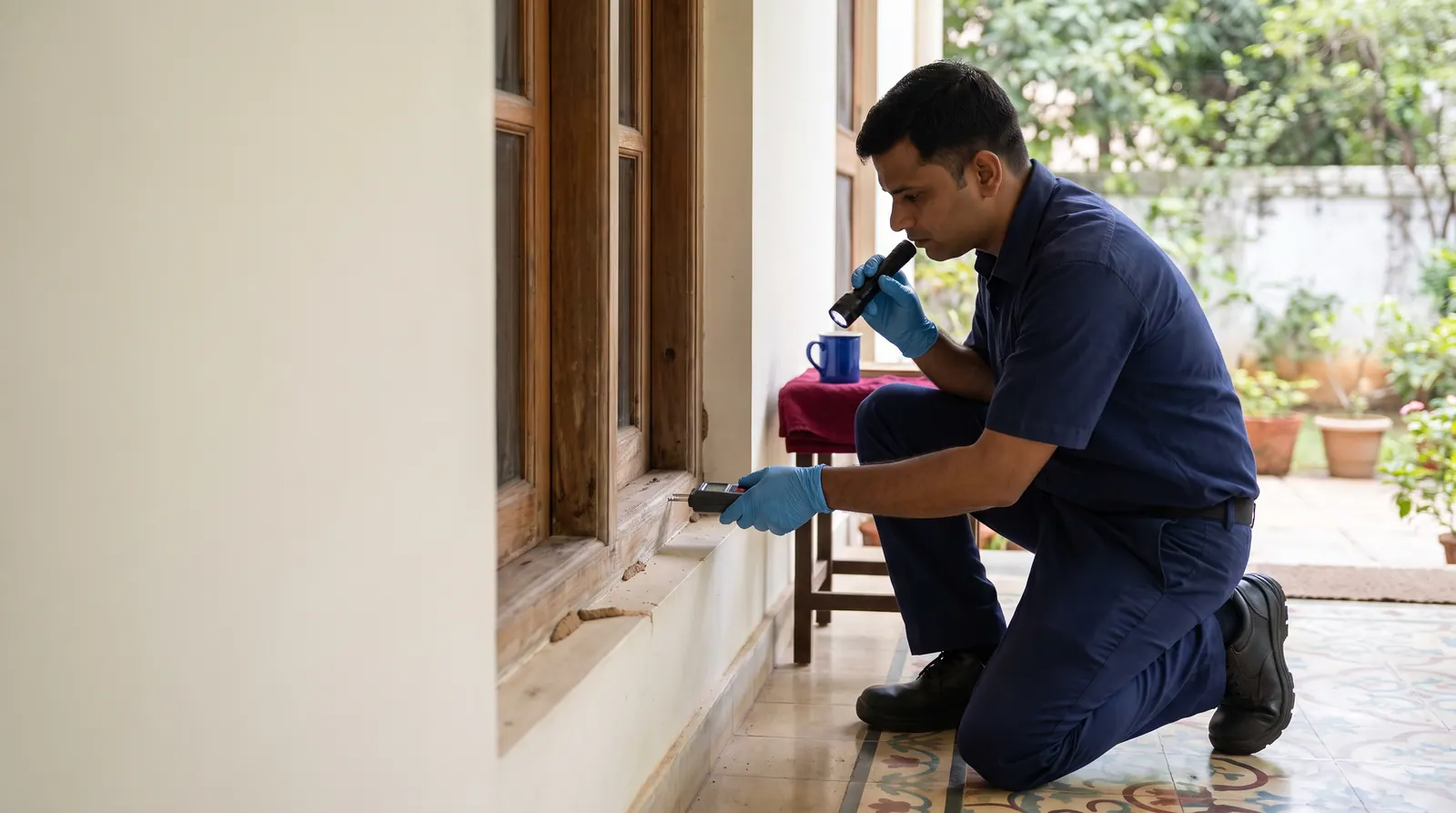
- Inspection. A technician checks inside and outside the property for activity, runways, nesting sites, food sources and entry points.
- A plan for your property. We explain what we found and what we recommend, including where bait stations or traps should go and which gaps need sealing.
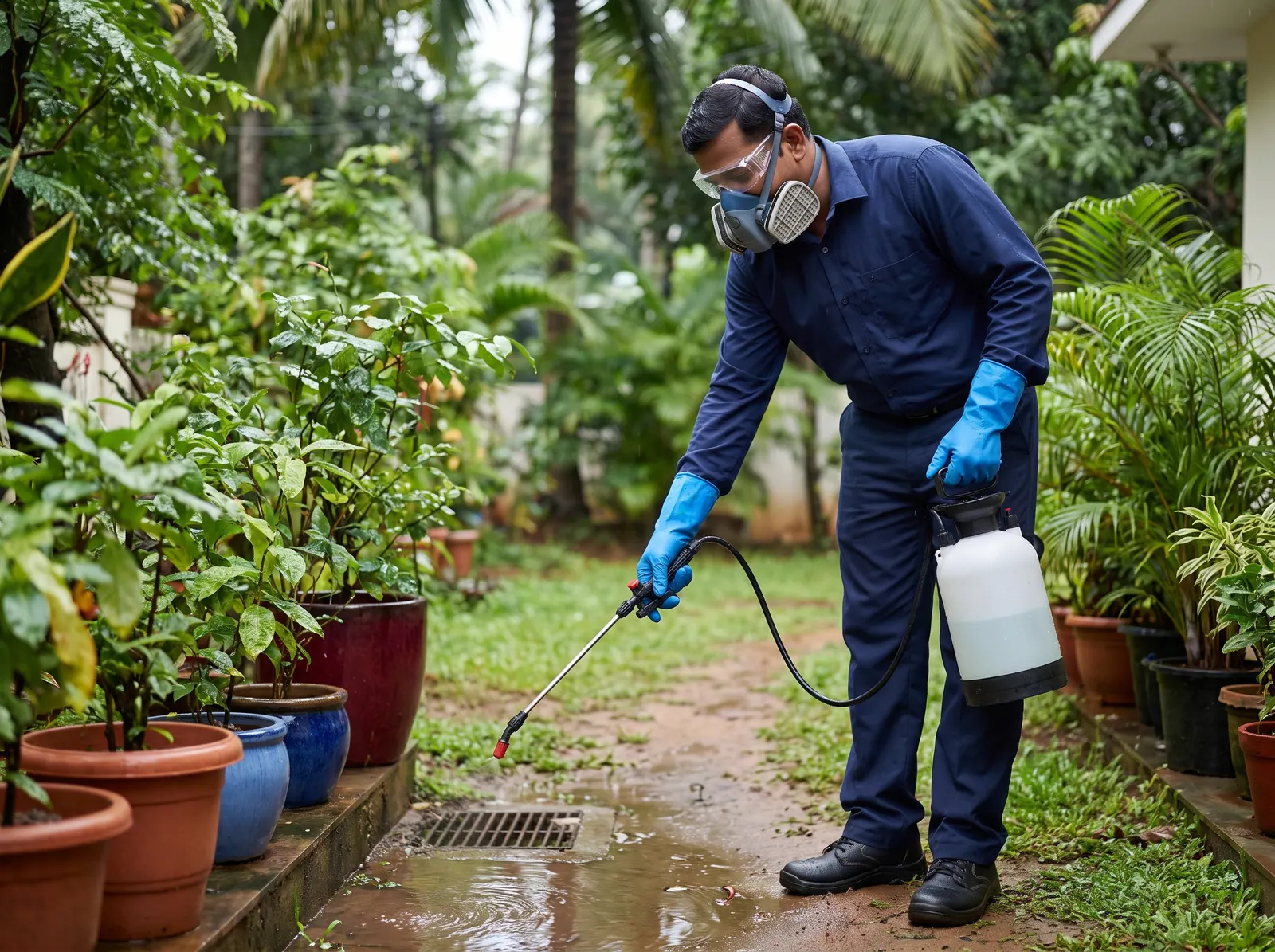
- Targeted treatment. Bait is placed only inside secured, tamper-resistant stations, positioned along runways and away from children, pets and food. Traps are used where baiting is not suitable, for example near food preparation areas.
- Proofing advice. We point out gaps around pipes, drains, doors, vents and roof edges, and suggest practical ways to close them. Sealing entry points is what makes results last.
- Reports and monitoring. A service report is shared after each visit, with WhatsApp updates for our clients. Where your plan or annual maintenance contract includes scheduled visits, stations are checked and serviced on each one.
This follows our Integrated Pest Management (IPM) approach: inspection, sanitation and proofing advice first, then targeted treatment where it is actually needed. Our guide to rodent-proofing coastal properties in Goa covers the proofing side in more detail.
What we focus on in different properties
| Property type | Where rodents usually cause trouble | What the plan focuses on |
|---|---|---|
| Flats and housing societies | Shafts, ducts, garbage areas, parking levels, kitchens | Common-area bait stations, duct and drain proofing, working with the society committee |
| Independent houses and villas | Roof eaves, store rooms, gardens, compound walls | Exterior stations, cutting off access from trees and cables, sealing roof and pipe gaps |
| Restaurants and hotel kitchens | Dry stores, under counters, drains, waste areas | Traps in food zones, stations outside, service records for audits |
| Hotels and resorts | Back-of-house areas, staff accommodation, landscaped grounds | Separate approaches for guest areas and back-of-house |
| Warehouses and shops | Stacked goods, loading bays, pallets | Perimeter stations, regular monitoring, stacking and housekeeping advice |
Food businesses are expected to keep premises free of pests under FSSAI Schedule 4 hygiene requirements. Our documentation for food businesses is aligned with HACCP and FSSAI audit expectations. Hotels have their own challenges, which we explain in rodent control in hotels: guest areas vs back of house.
“Also Cockroach treatment, lizard treatment, rodent treatment we are happy with Efficacy Pest Control.” — Mr. Sunil Ambokar, Purchase Manager, Goa
Is rodent control safe for children and pets?
Safety shapes how we place everything. We are a licensed pest control operator (Directorate of Agriculture, Goa), we use CIB&RC-registered products, and we maintain Material Safety Data Sheets for the products we use. Bait stays inside secured stations rather than being left loose.
You can help by keeping children and pets away from stations and traps, not moving or opening them, and washing your hands after cleaning areas rodents have used. If a child or pet may have eaten bait, contact a doctor or vet straight away and share the details from your service report.
Where in Goa do we provide rodent control?
Our Goa branch in Chimbel provides rodent control in Panaji (Panjim), Margao, Vasco da Gama, Mapusa, Porvorim, Ponda, Calangute, Candolim and Baga, along with the surrounding localities in our records. Our town pages carry local detail, for example rodent control in Panaji and rodent control in Margao.
If your area is not listed, tell us where you are and we will confirm whether we can help.
Booking rodent control with our Goa branch
When you contact us, tell us the type of property, where you have seen signs and how long it has been going on. Before the visit, clear access to store rooms, kitchen cabinets and ceiling or roof access points, and keep food in sealed containers. A member of the household or staff should accompany the technician.
For specific services, a warranty applies to the treated area as set out in your service agreement. Rodents can still move in from neighbouring buildings or open land, which is why proofing and good housekeeping matter. Annual maintenance contracts are available for homes and businesses that want year-round scheduled visits. Visit our Goa branch page in Chimbel to get in touch.
Frequently asked questions
QHow many visits does rodent control usually take?
It depends on the size of the property, how established the rodents are and how many entry points need sealing. The technician will suggest a plan after the inspection. Activity often drops as bait is taken and gaps are closed, but homes with ongoing exposure to gardens or drains, and food businesses, usually benefit from scheduled visits under an annual maintenance contract.
QWill there be a smell if a rat dies inside the house?
It can happen. A rodent that has eaten bait may die in a wall cavity, false ceiling or other spot that is hard to reach, and the odour can last for some days. Where this is a particular concern, such as bedrooms or food areas, tell the technician, who can rely more on traps in those zones.
QCan I seal the holes myself instead of calling a professional?
Sealing entry points is very worthwhile, and we encourage it. Use materials rodents cannot easily gnaw, such as metal mesh or cement, rather than foam or plastic alone. The catch is timing: sealing gaps while rodents are still inside can trap them in. An inspection first helps you seal the right gaps at the right stage.
QDo I need to leave the house during rodent control?
Rodent control with bait stations and traps does not usually involve spraying, so most households can stay at home. Your technician will explain any precautions, such as keeping children and pets away from stations. If your visit also includes other pest treatments, follow the specific instructions you are given for those areas.
QCan you provide records for restaurant and hotel audits?
Yes. Our Goa branch shares a service report after each visit, and our documentation for food businesses is aligned with HACCP and FSSAI audit expectations. This helps kitchens, hotels and food stores show inspectors and auditors that pest control is planned, carried out and recorded regularly.
QWhat if rats come back after treatment?
For specific services, a warranty covers the treated area as set out in your service agreement. Rodents can still arrive from neighbouring homes, drains or open plots, so the warranty does not cover new entry from outside or structural changes. Ask your technician how to prevent rodents coming in from outside, and keep up with the proofing advice.
Last updated 13 October 2026. Information on this page is general guidance; your technician will advise on your specific property after inspection.