Quick answer
Efficacy Pest Control's Goa branch in Chimbel provides rodent control in Ponda, including Farmagudi, Kundaim, Shiroda and Usgao. Each job starts with an inspection to identify rats or mice, their entry points and nesting areas. We then advise on sealing gaps and storage, place tamper-resistant bait stations and traps where suitable, and share a service report after visits. Further visits are planned according to the activity found.
Key points
- Rodent control in Ponda is handled by Efficacy Pest Control's Goa branch in Chimbel, covering Ponda town, Farmagudi, Kundaim, Shiroda and Usgao.
- Every job starts with an inspection to identify rats or mice, entry points and nesting areas.
- Baits, where used, are kept in lockable, tamper-resistant stations; traps are used in food-handling areas.
- Service reports are shared after visits, and food businesses receive documentation aligned with HACCP/FSSAI audit expectations.
- Sealing gaps and improving storage before the monsoon reduces rodent entry.
If rats or mice are getting into your home, shop, godown or kitchen in Ponda, the lasting fix is to find out how they get in and what keeps them there, then deal with both. Our rodent control in Ponda, Goa is run from our Goa branch in Chimbel. It follows an Integrated Pest Management (IPM) approach: inspection first, then proofing and hygiene advice, then targeted use of traps and tamper-resistant bait stations.
This page covers what we look for in Ponda properties, how a typical job runs, and what you can do between visits. For a general overview of the service, see our rodent control service page.
Is it rats or mice? Signs worth checking
Rats and mice behave differently, so the first task is working out which one you have. A short note of what you have noticed, and where, helps our technician a great deal.
| Sign | What it often points to | Where to look |
|---|---|---|
| Small, rice-grain sized droppings | Usually mice | Kitchen drawers, cupboards, behind appliances |
| Larger, capsule-shaped droppings | Usually rats | Along walls, store rooms, near drains |
| Scratching or running sounds at night | Climbing rats in the roof, or mice inside walls | Roof space, lofts, false ceilings |
| Burrows or loose soil near foundations | Burrowing rats | Garden edges, compound walls, drain lines |
| Gnawed wires, pipes or door edges | Either; rats can chew tougher materials | Electrical panels, behind the fridge, ceiling voids |
| Greasy smear marks on a route | A regular runway | Wall bases, pipe entries, beams |
| Torn sacks or cartons, strong musky smell | Feeding or established activity | Godowns, store rooms, under staircases |
Why rodent problems in Ponda change with the seasons
Ponda sits inland in central Goa, and many homes and businesses here are close to plantations, open land, nallahs or fields. That gives rodents cover and food outdoors for much of the year, and a short trip to a nearby kitchen or store room.
During Goa's heavy south-west monsoon, burrows and drains flood and rodents look for dry shelter, often in store rooms, roof spaces, under staircases and even in parked vehicles. When produce such as coconut, cashew or areca nut, grain or animal feed is stored at home or in a godown, those stores become an obvious target. Planning proofing work before the monsoon, and checking stores when stocks build up, usually saves trouble later.
How we handle a rodent problem, step by step
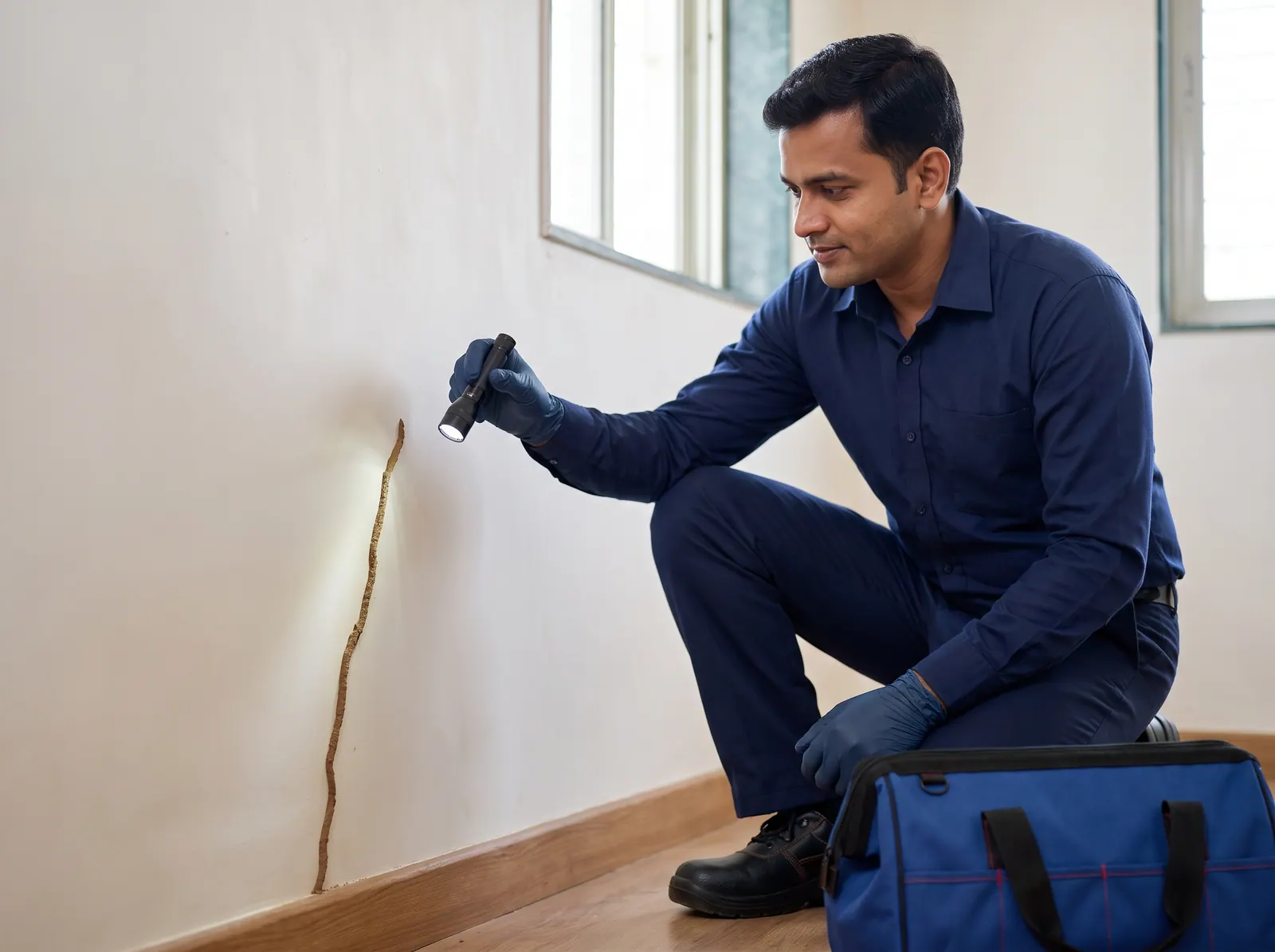
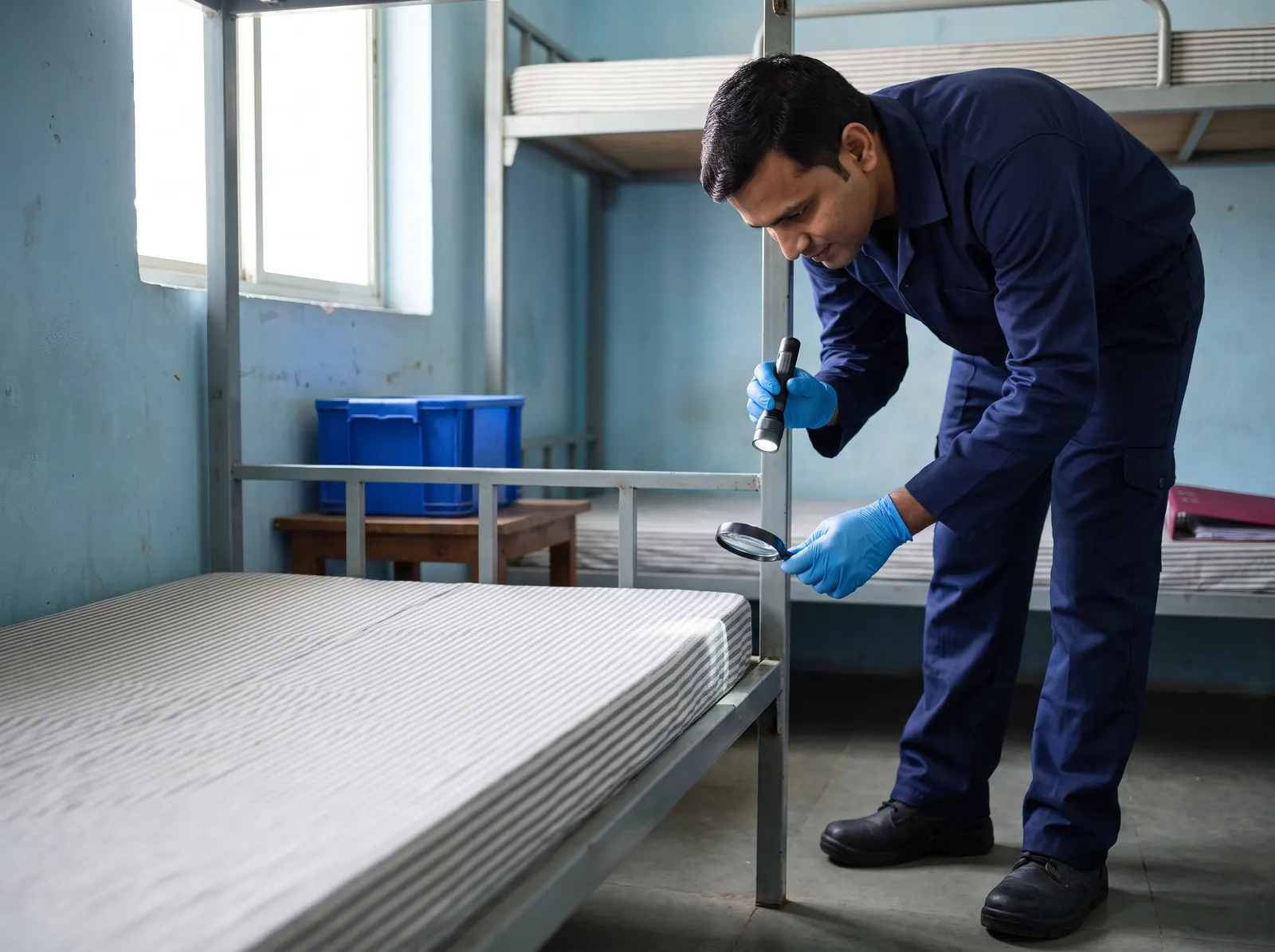
- Inspection. We walk the property inside and out to find droppings, runways, gnaw marks, burrows and nesting areas, and judge whether rats, mice or both are involved.
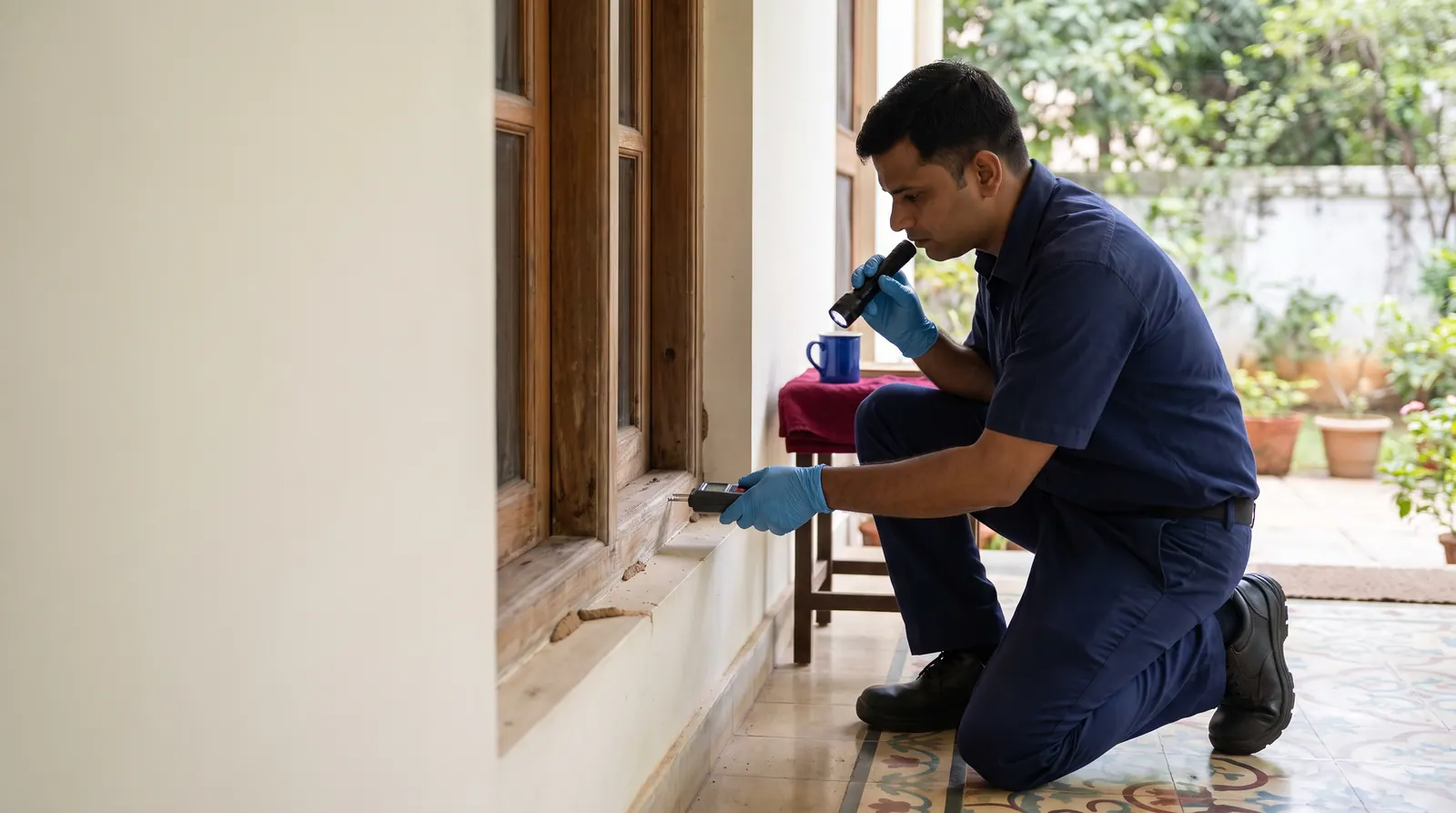
- Entry-point mapping. We note gaps around pipes and cables, open drains, gaps under doors and shutters, broken vents, roof edges and openings into false ceilings.
- A plan for your site. We decide where traps, bait stations and monitoring points should go, based on the activity found and who uses each area: children, pets, staff or customers.
- Proofing and hygiene advice. We explain which gaps need sealing and what to change in storage and waste handling. Without this step, new rodents simply replace the ones removed.
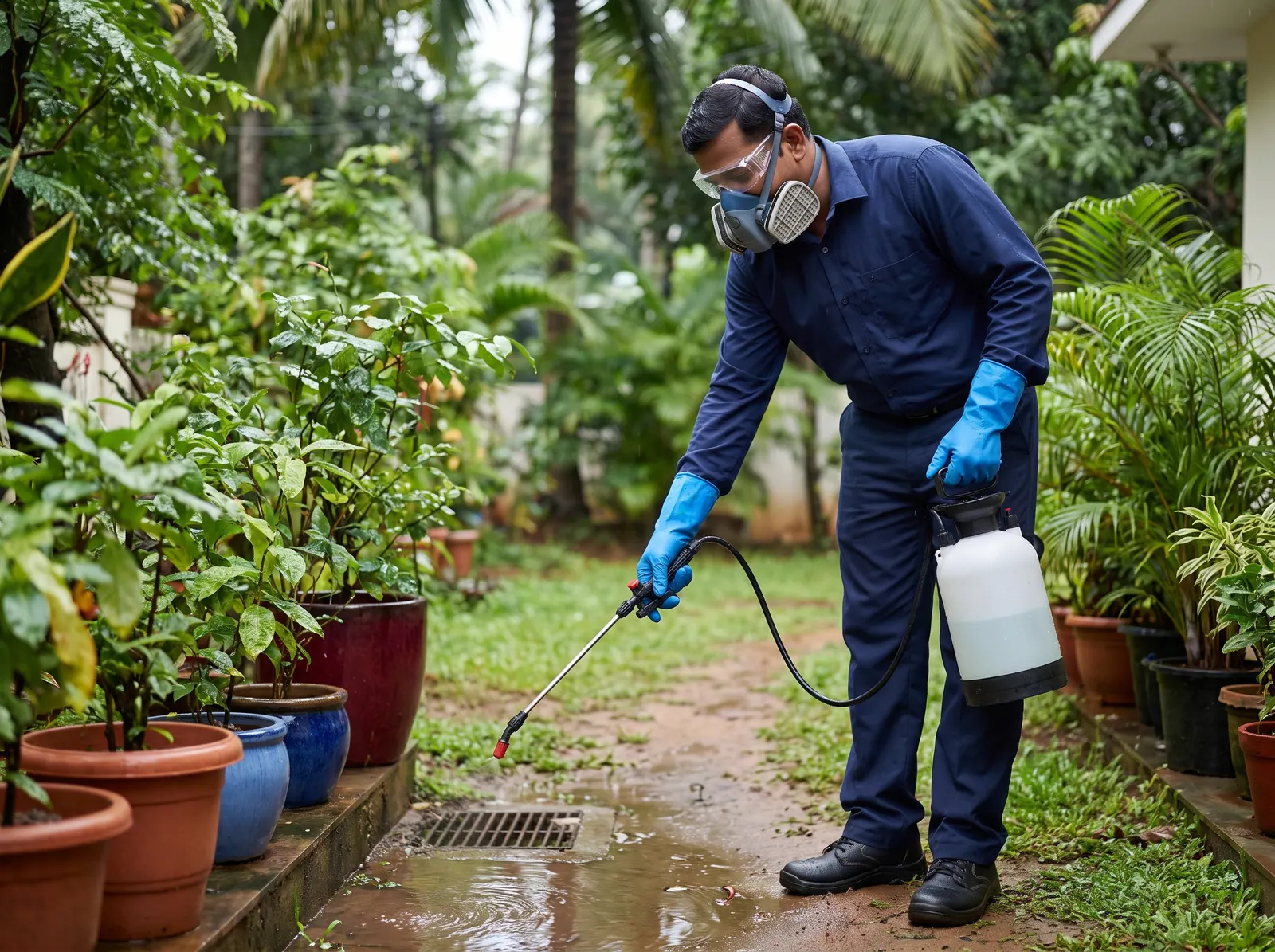
- Targeted treatment. Baits, where used, go inside lockable, tamper-resistant stations placed away from food and out of reach of children and pets. Traps are used where baiting is not suitable, such as inside food-handling areas.
- Monitoring and reporting. After visits we share a service report with placement points and observations, along with WhatsApp updates, so you can see how activity is changing.
We are a licensed pest control operator with the Directorate of Agriculture, Goa, we use CIB&RC-registered products, and we maintain Material Safety Data Sheets for the products we use. You can read more about our approach on how we work.
How plans differ across Ponda properties
Homes and housing societies
In flats, rodents usually travel along drain lines, service shafts and the gaps around kitchen plumbing. In independent houses with a compound, we also look at garden edges, firewood or coconut husk piles, cattle sheds or poultry areas, and roof tiles. If rodents are only part of the problem, our page on residential pest control in Ponda covers whole-home options.
Shops, godowns and stores
Shops and godowns around Ponda town hold sacks, cartons and packaging that rodents gnaw and nest in. Keeping stock on pallets, off the floor and slightly away from walls, rotating stock regularly and leaving a clear inspection strip along walls all make bait stations and traps far more effective.
Factories and warehouses, such as those in Kundaim
Larger sites, including units in the Kundaim industrial estate, usually need numbered bait stations around the perimeter and at loading bays, with records for every visit. Scheduled visits under an Annual Maintenance Contract suit sites where pressure from surrounding land is ongoing. Our commercial pest control page for Ponda describes documented programmes for businesses.
Restaurants, bakeries and food businesses
Inside food areas we rely on traps and monitoring, keeping any baiting to the outside and perimeter. For food businesses we provide documentation aligned with HACCP and FSSAI audit expectations, which helps when you are meeting the hygiene requirements of FSSAI Schedule 4. Rodents and cockroaches often turn up together in kitchens, so see also cockroach treatment in Ponda.
Keeping children, pets and livestock safe
- Bait stations are lockable and placed out of reach. Please do not open, move or shake them.
- Keep children, pets and farm animals away from treated areas as the technician advises.
- Do not handle dead rodents or droppings with bare hands. Use gloves, and wash your hands afterwards.
- Rodents can spread disease, including leptospirosis, which is a particular concern in the monsoon. If anyone falls ill after contact with rodents or flood water, or is bitten, see a doctor.
Before work starts, our technician explains the precautions that apply to the methods being used at your property.
What you can do between visits
- Store grain, feed and dry produce in sealed metal or hard plastic containers.
- Keep lids on bins and clear food waste daily, especially near kitchens.
- Trim plants and branches that touch walls or the roof.
- Keep firewood, husks and stacked materials off the ground and away from house walls.
- Fit covers or mesh on drain openings and close gaps under doors.
- Do not leave pet food or animal feed out overnight.
- Tell us promptly if you notice fresh droppings or new damage.
Which parts of Ponda do we cover?
Our company records list Ponda town along with Farmagudi, Kundaim, Shiroda and Usgao. If your property is in another village or ward of Ponda taluka, share the location when you get in touch and we will confirm whether we can help. Other services in the area are listed on our Ponda pest control page.
What affects the cost and number of visits?
The scope depends on the size and layout of the property, whether you have rats, mice or both, how established the activity is, and how many bait stations or traps are needed. How quickly proofing work is done also matters, because open gaps keep letting new rodents in.
We set out the scope and the number of visits in the quotation before work starts. Where a service carries a warranty, it applies to the treated area as set out in the service agreement. Rodents coming from neighbouring land or buildings can only be kept out if proofing and housekeeping are maintained.
Arranging a rodent inspection in Ponda
To arrange a visit, contact our Goa branch in Chimbel through our contact page. Tell us where in Ponda the property is, what type of property it is and what you have noticed. Photos of droppings or damage help us plan the first visit.
Frequently asked questions
QHow long does it take to get rats or mice under control?
It depends on how established the activity is and how quickly entry points are sealed. Some activity drops soon after the first visit, but a property with several routes in, or one next to plantations or open land, usually needs monitoring over a few weeks. Our technician will explain what to expect after the inspection and record changes in activity in the service reports.
QAre bait stations safe to have around children and pets?
Baits, where used, are placed inside lockable, tamper-resistant stations positioned out of reach and away from food. Please do not open or move them, and keep children, pets and farm animals away from treated areas as advised. If a child or animal may have come into contact with bait, see a doctor or vet straight away and tell them what was used.
QWhat should I do before the technician arrives?
Clear access to kitchens, store rooms, lofts and areas where you have seen signs. Store food in closed containers and make a note of where you have found droppings, gnaw marks or heard noises. A family member or staff representative should accompany the technician during the visit so they can point out problem spots and hear the proofing advice.
QCan a restaurant or food unit in Ponda get records for FSSAI audits?
Yes. For food businesses we provide documentation aligned with HACCP and FSSAI audit expectations, including service reports with placement points and observations after visits. Inside food-handling areas we rely on traps and monitoring, keeping baiting to the outside and perimeter. Your own hygiene and storage practices still matter greatly for passing an audit.
QWhy do rats come into the house during the monsoon?
Heavy monsoon rain floods burrows and drains, so rodents look for dry, sheltered places with food nearby. Store rooms, roof spaces, the area under staircases and kitchens are typical targets. Sealing gaps around pipes and drains before the rains, and keeping stored produce in sealed containers, makes your property much less attractive.
QIs a one-time visit enough?
For a small, recent problem with clear entry points, a short programme may be enough once gaps are sealed. Where activity is regular, such as godowns, factories, food businesses or houses beside open land, scheduled visits under an Annual Maintenance Contract usually work better, because new rodents keep arriving from outside. We recommend a schedule after the inspection.
Last updated 13 October 2026. Information on this page is general guidance; your technician will advise on your specific property after inspection.