Quick answer
Efficacy Pest Control's Goa branch in Chimbel provides rodent control in Baga for homes, villas, homestays, hotels, restaurants, beach shacks and shops. Each job starts with an inspection to find how rats or mice get in, where they nest and what feeds them. We then place tamper-resistant bait stations and traps, give proofing advice and return to monitor activity, sharing a service report after visits.
Key points
- Rodent control in Baga is handled by Efficacy Pest Control's Goa branch in Chimbel.
- Treatment follows an IPM approach: inspection, sanitation and proofing advice, tamper-resistant bait stations and traps.
- The Goa operation is a licensed pest control operator (Directorate of Agriculture, Goa) using CIB&RC-registered products, with MSDS maintained.
- Service reports are shared after visits, and food businesses can receive HACCP/FSSAI-aligned documentation.
- Where a warranty applies, it covers the treated area as set out in the service agreement.
If rats or mice are getting into your home, restaurant, guesthouse or shop in Baga, the most reliable fix combines three things: finding how they get in, removing what attracts them, and controlling the animals already inside. That is how our Goa branch in Chimbel approaches rodent control in Baga. We use tamper-resistant bait stations, traps and practical proofing advice, followed by monitoring visits.
This page explains what we look for in Baga properties, what a visit involves, and how to plan around the tourist season and the monsoon. For a general overview of the service, see our rodent control service page.
Why do rats and mice settle in Baga properties?
Baga packs a lot of food and shelter into a small area. Beach shacks, restaurants and cafés produce kitchen waste late into the night, and bins along busy lanes are easy pickings. Homestays and villas often have gardens, store rooms and outbuildings where rodents can nest undisturbed.
The landscape adds to this. Coconut palms and trees growing close to buildings, along with overhead cables, give climbing rats a route onto roofs and into false ceilings. Burrowing rats favour drains, soft soil and the low-lying land along the Baga river. During Goa's heavy south-west monsoon, waterlogged ground can push burrowing rodents towards drier buildings.
Seasonal closures matter too. Many beach businesses close or scale down during the monsoon, and a shuttered kitchen or store room gives rodents months of quiet in which to nest.
Rat or mouse? Signs worth checking
- Droppings: rat droppings are larger and capsule-shaped; mouse droppings are small, like grains of rice.
- Noises at night: scratching or running in false ceilings, roof spaces or behind kitchen units.
- Gnawing: chewed food packets, plastic, wooden doors, pipes or electrical cables.
- Runways and rub marks: greasy smudges along walls, beams and pipes that rodents use repeatedly.
- Burrows and holes: openings near drains, foundations, garden beds and compound walls.
- Smell: a stale, ammonia-like odour in store rooms or enclosed spaces.
Telling rats and mice apart matters because they behave differently. Mice explore new objects readily and travel short distances, while rats are more cautious and range further, so stations and traps are placed differently for each.
What happens during a rodent control visit?
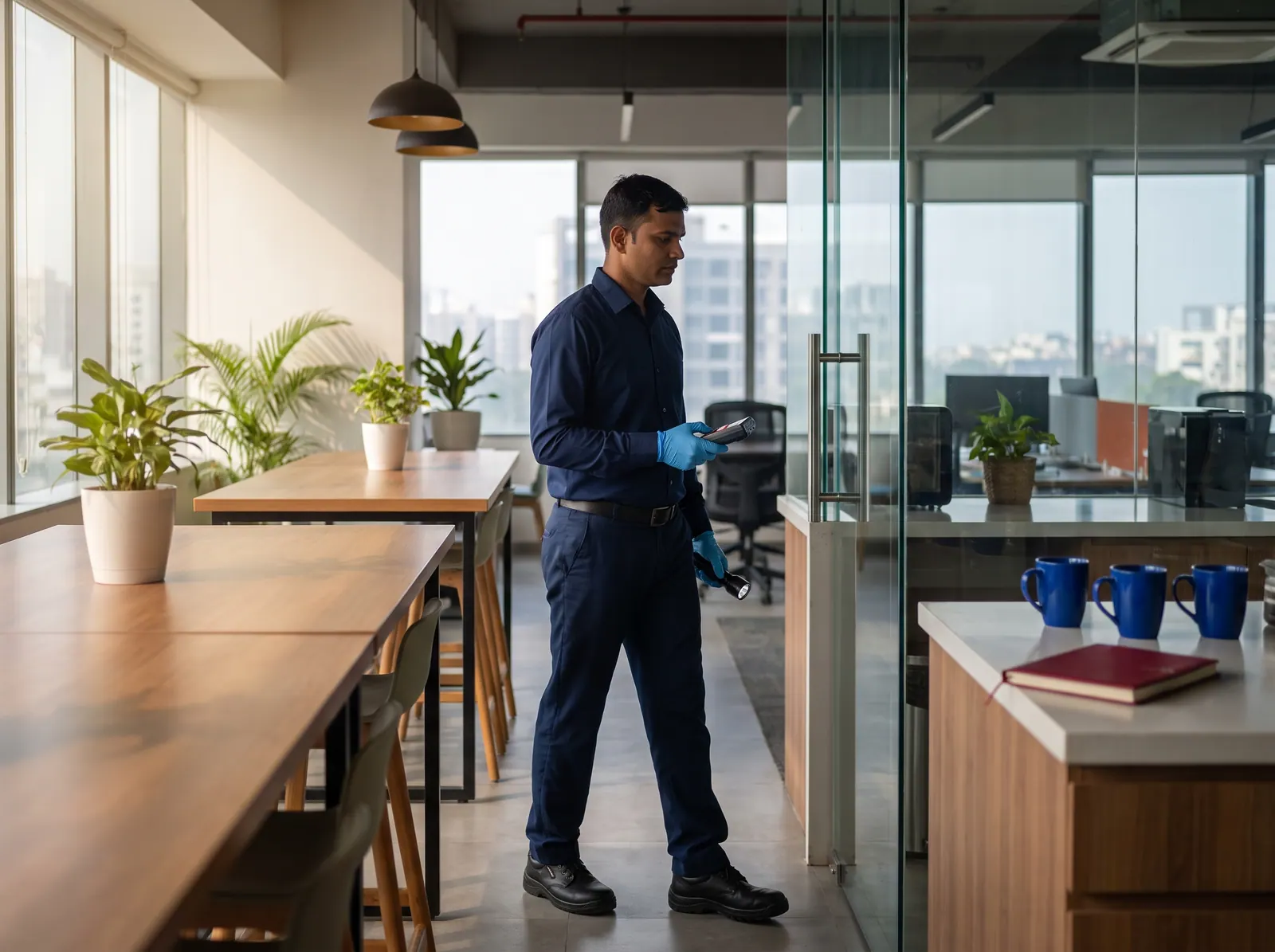
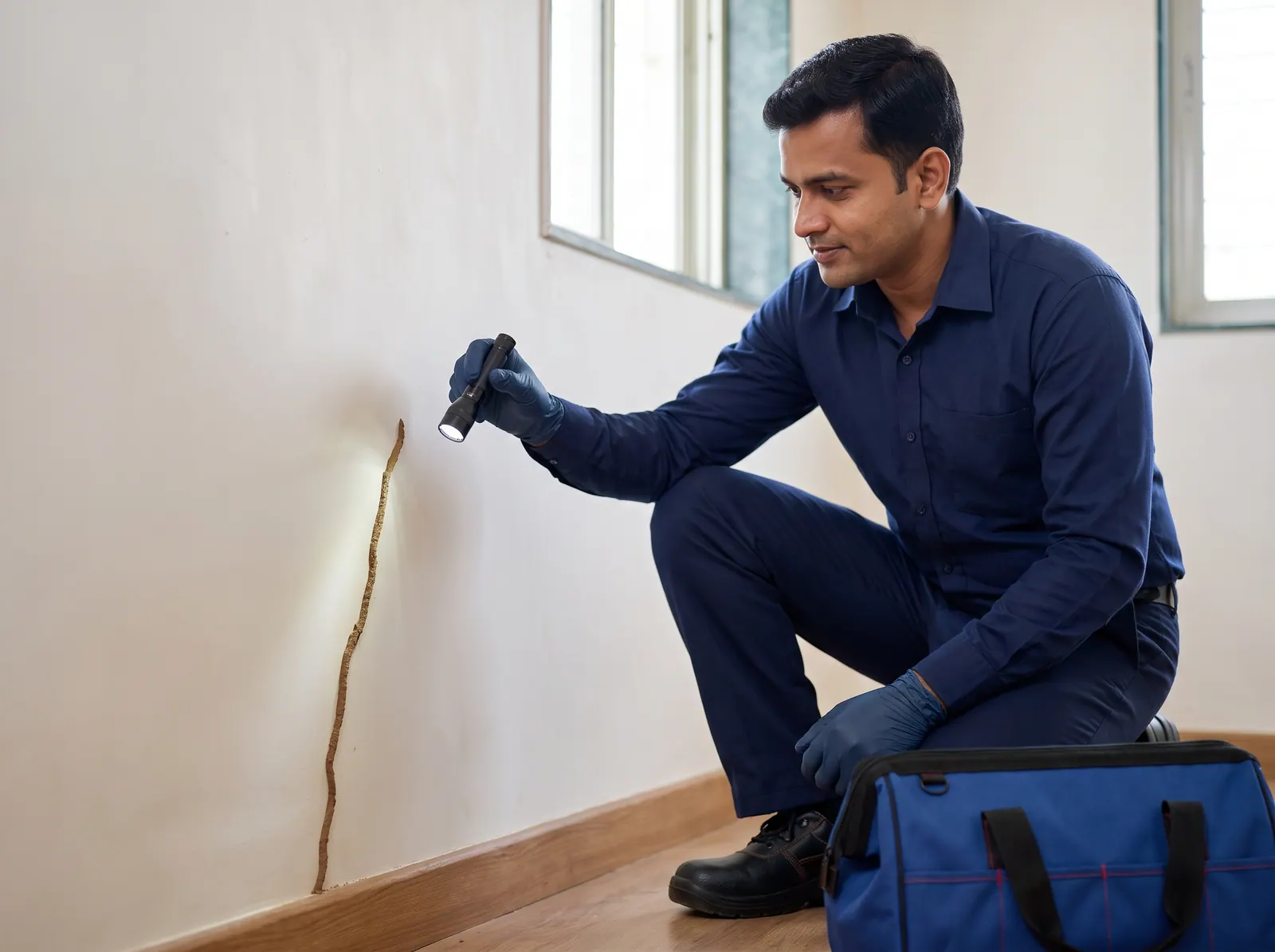
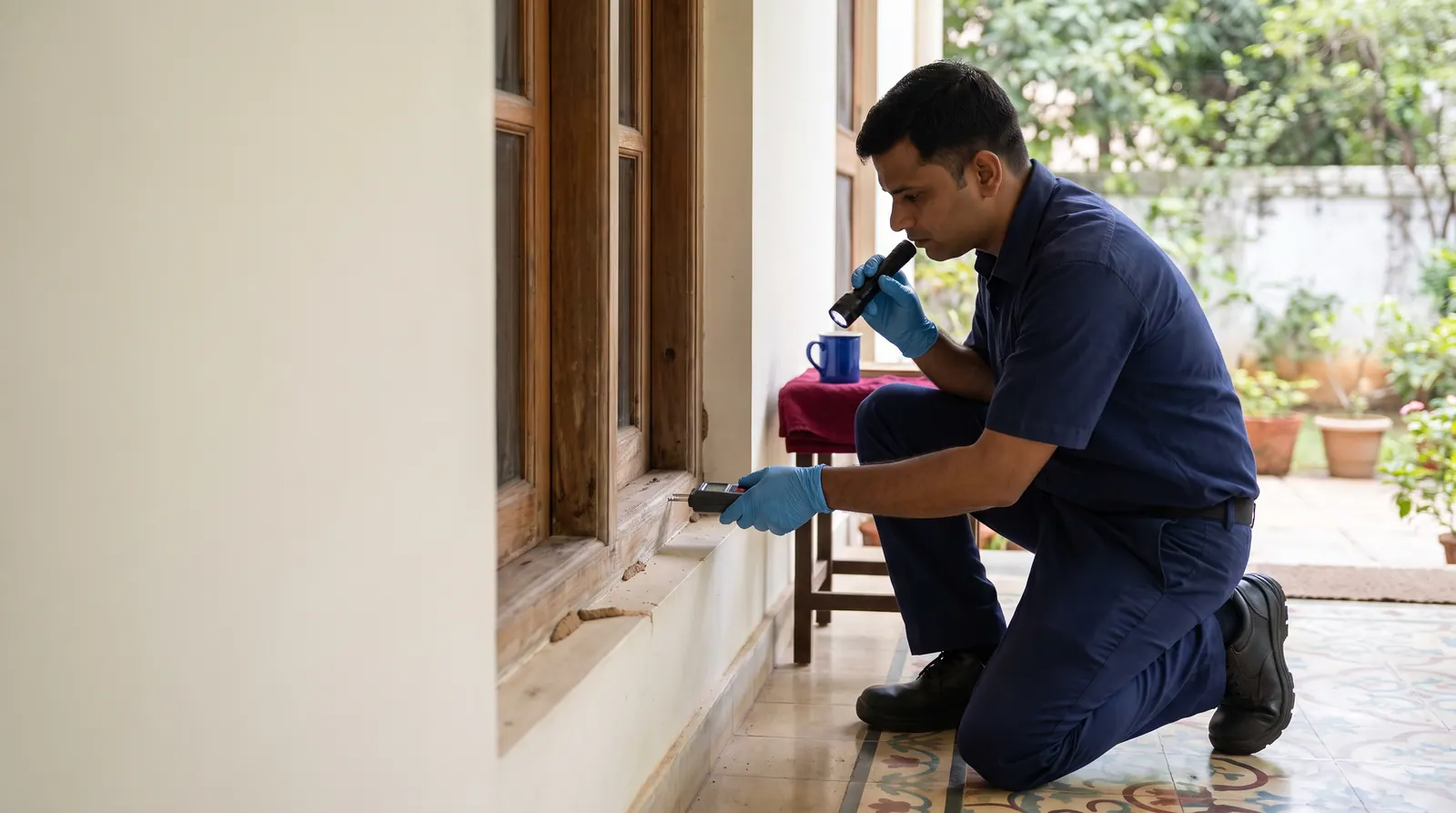
- Inspection. Our technician checks kitchens, stores, false ceilings, roof edges, gardens, drains and compound walls for droppings, gnaw marks, runways and burrows.
- Identifying the cause. We note likely entry points, such as gaps around pipes and cables, broken vents, open drain lines and gaps under doors, along with the food and water sources keeping rodents on the property.
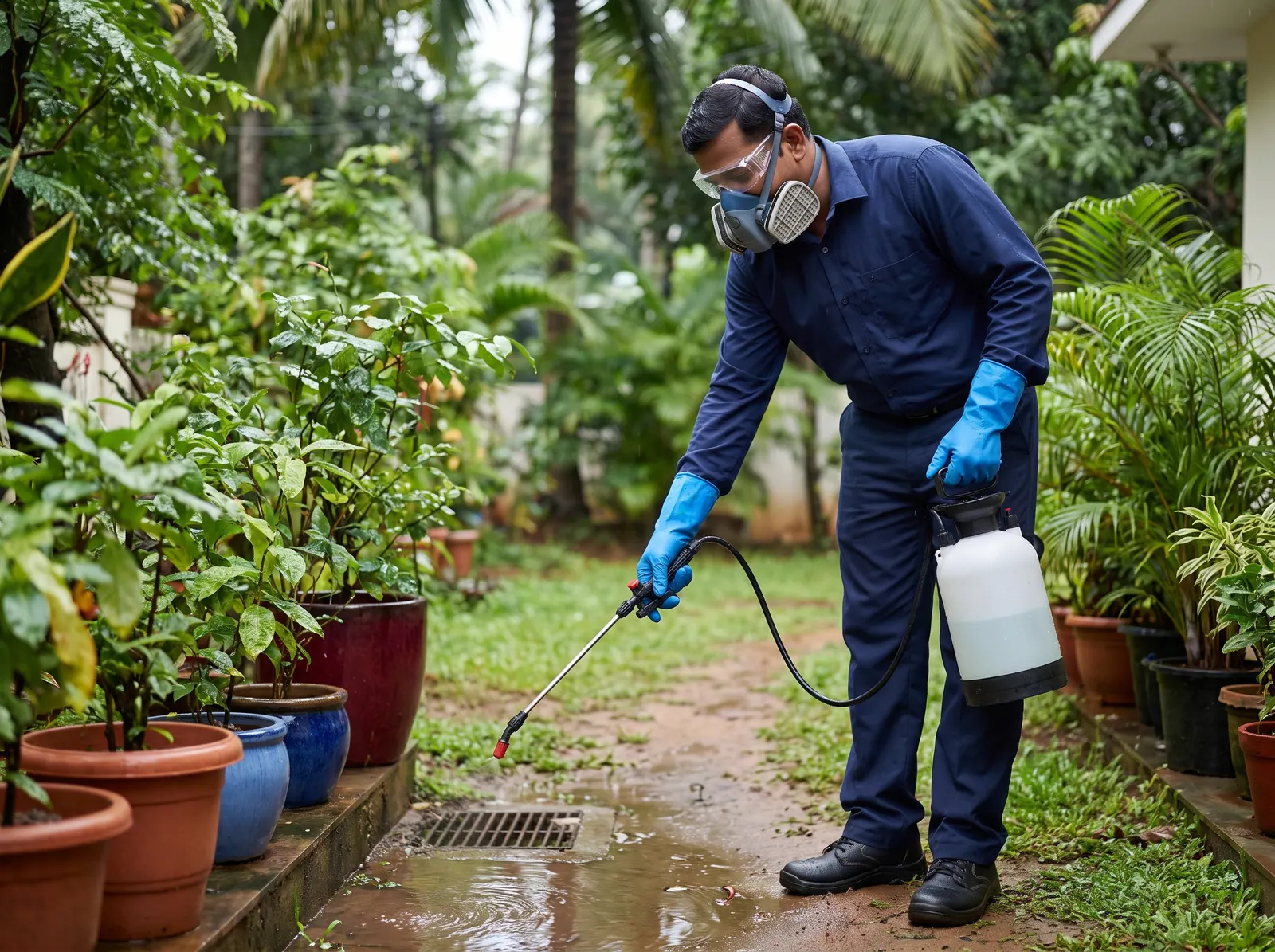
- Placing control measures. Depending on the site, we use tamper-resistant bait stations, traps or a combination, placed along active runways and away from food preparation surfaces.
- Proofing advice. We explain which gaps to close and how, and which housekeeping changes will make the biggest difference.
- Monitoring and follow-up. On return visits we check activity, move or add points where needed, and adjust the plan.
- Service report. After visits we share a service report, and clients can receive updates on WhatsApp.
This is the Integrated Pest Management (IPM) approach: inspection, sanitation and proofing advice, and targeted treatment rather than blanket use of chemicals.
Planning rodent control around Baga's seasons
Because activity in Baga rises and falls with the tourist season, timing your rodent control helps. The table below is a general guide; your own plan will depend on what the inspection finds.
| Period | What tends to happen | Sensible steps |
|---|---|---|
| Before reopening after the monsoon | Premises that stood closed may have nests, droppings and chewed stock or wiring. | Arrange an inspection before restocking kitchens and stores; clean thoroughly and fix gaps. |
| Tourist season | More food waste, deliveries and late-night service create steady food sources. | Keep up regular monitoring, empty bins daily and check deliveries for rodent signs. |
| Monsoon | Heavy rain and waterlogging can drive rodents indoors; closed premises are left undisturbed. | Seal drains and gaps before the rains, remove food before closing, and plan checks if the property stays occupied. |
Rodent control for different Baga properties
Restaurants, cafés and beach shacks
Kitchens need control measures that never put food or prep areas at risk. We focus on stores, drains, waste points and the spaces behind kitchen equipment. For food businesses, our Goa operation provides documentation aligned with HACCP and FSSAI audit expectations, so your records are in order when an inspector or auditor asks. Our commercial pest control in Baga page covers scheduled programmes for businesses.
Hotels, guesthouses and homestays
Guest areas call for discreet, low-visibility measures, while kitchens, laundries, stores and staff quarters usually need the closest attention. Our guide to rodent control in hotel guest areas versus back of house explains how the two zones are handled differently.
Villas, flats and family homes
In homes, we pay particular attention to false ceilings, kitchen cabinets, utility areas and garden edges, and we place stations where children and pets cannot reach the bait. Wider home pest care is covered on our residential pest control in Baga page.
Shops and storage units
Stockrooms full of cartons and sacks give rodents both food and nesting material. Keeping stock off the floor and slightly away from walls makes inspection easier and helps control measures work.
How do we keep rodent control safe?
Our Goa operation is a licensed pest control operator (Directorate of Agriculture, Goa) and uses CIB&RC-registered products. Material Safety Data Sheets are maintained for the products we use, and products are applied according to their label directions.
- Bait is kept inside tamper-resistant stations, placed out of reach of children, pets and guests.
- We show you where each station and trap has been placed, so staff and family know not to disturb them.
- Please do not open or move stations yourself; let us know if one has been disturbed.
- Wear gloves when cleaning up droppings or nesting material, avoid dry sweeping, and wash your hands afterwards.
- If anyone feels unwell after contact with rodents, their droppings or floodwater, or is bitten, see a doctor promptly.
What can you do between visits?
- Store food, grain and pet food in sealed containers.
- Use bins with tight lids and clear kitchen waste every night.
- Trim branches and palm fronds that touch the roof or walls.
- Fit mesh or covers on drains and vents, and close gaps around pipes and cables.
- Clear clutter from store rooms, terraces and gardens.
- Fix leaking taps and pipes so rodents have no easy water source.
For more on sealing buildings near the sea, read our guide to rodent-proofing coastal properties in Goa.
What affects the cost of rodent control in Baga?
We quote after understanding the site. The main factors are:
- the size and type of property, from a single flat to a hotel or restaurant
- how much rodent activity the inspection finds
- the number of bait stations and traps needed
- how many follow-up visits are required
- whether you need documentation for audits
Your quotation sets out the scope of work. Where a warranty applies to a specific service, it covers the treated area, and its terms are given in the service agreement.
Arrange rodent control in Baga
Baga is one of the localities served by our Goa branch in Chimbel. Tell us what you are seeing, such as droppings, noises or damage, and the type of property, and we will arrange an inspection and recommend a plan. You can see other services available locally on our pest control in Baga page.
Frequently asked questions
QDo you deal with both rats and mice in Baga?
Yes. The inspection tells us whether you have rats, mice or both, and that shapes the plan. Mice tend to stay close to food and investigate new objects quickly, so points are set closer together. Rats are warier and travel further, so stations and traps go along their regular runways, often near drains, roof edges and compound walls. Many Baga properties with gardens and kitchens see both.
QWill one visit be enough to get rid of rodents?
Usually not. The first visit sets up stations and traps and identifies entry points, but rodents already inside take time to be brought under control. Follow-up visits let us check which points show activity, move or add them, and confirm that proofing work is holding. How many visits you need depends on the size of the property and the level of activity found.
QIs rodent control safe around children, pets and hotel guests?
Bait is kept inside tamper-resistant stations placed out of reach, and our technicians show you where every point is. Products are CIB&RC-registered and applied according to label directions, and Material Safety Data Sheets are maintained. Keep children and pets away from stations, do not open them, and tell us if one is disturbed. If anyone feels unwell after contact with rodents, see a doctor.
QHow should we prepare for the inspection and treatment?
Seal or put away loose food, clear clutter from store rooms, and make sure false-ceiling hatches, terraces and garden areas are accessible. Note where you have seen droppings, damage or heard noises, as this saves time. A responsible person from your side should accompany the technician during the visit. If you need to reschedule, please let us know at least 48 hours before the booked time.
QCan you help a Baga restaurant or shack with FSSAI and HACCP records?
Yes. For food businesses, our Goa operation provides documentation aligned with HACCP and FSSAI audit expectations, and we share a service report after visits. These records show what was checked, where control points are placed and what actions were taken. It is a good idea to arrange an inspection before the season starts, so records are in place before inspections and busy months.
QWhat happens if rodents come back after treatment?
For specific services, a warranty applies to the treated area as set out in your service agreement. It does not cover changes such as structural alterations, new construction, or cases where post-service instructions were not followed. Rodents can also enter from neighbouring properties or open land, so closing gaps, trimming branches and managing waste are important. Ask our technician what proofing your property needs.
Last updated 13 October 2026. Information on this page is general guidance; your technician will advise on your specific property after inspection.