Quick answer
Our Goa branch in Chimbel provides rodent control in Mapusa for homes, apartments, shops, godowns, restaurants and hotels. Each job starts with an inspection to find entry points, nesting areas and food sources. We then place tamper-resistant bait stations and traps, advise on proofing gaps, drains and roof spaces, and share service reports after visits. Most sites need follow-up visits until activity stops.
Key points
- Rodent control in Mapusa is covered by the Goa branch in Chimbel.
- Every job starts with an inspection of entry points, nesting areas and food sources.
- Bait is placed in tamper-resistant stations; traps are preferred inside living and food areas.
- Service reports are shared after visits, and documentation for food businesses is aligned with HACCP/FSSAI audit expectations.
- Proofing gaps, drains and roof spaces is key to stopping rodents returning, especially during the monsoon.
Rodent control in Mapusa (also called Mapsa) is handled by our Goa branch in Chimbel. We deal with rats and mice in flats, independent houses, market shops, godowns, bakeries, restaurants and hotels across the town. The approach is the same in every case. We find out how rodents are getting in and what is feeding them, then control them with bait stations and traps.
This page explains what attracts rodents to Mapusa properties, the signs to watch for, and what a visit involves. It also covers how to keep children and pets safe during treatment. For a broader overview of the service, see our rodent control service page.
Why do rats and mice move into Mapusa properties?
Mapusa is a busy market town in North Goa. Its weekly market and many shops trading in grain, dry goods, fish, vegetables and packaged food mean there is plenty for rodents to feed on. Godowns and storerooms behind shops give them quiet places to nest. Once they are established in one building, they move easily along shared walls, drains and roof lines into neighbouring homes and offices.
Housing in and around Mapusa is a mix of older Goan houses and newer apartment buildings. Older houses often have tiled roofs, wooden lofts and gaps where walls meet roof timbers, which roof rats can use to get in. Apartment buildings tend to have different weak points: shafts, duct openings, gaps around pipes and sliding doors at ground level.
Goa's heavy south-west monsoon also plays a part. When drains run full and outdoor burrows flood, rats look for dry shelter indoors. Many households notice new activity in their kitchens, stores and false ceilings during and just after the rains.
Which rodent are you dealing with?
Knowing the type of rodent helps decide where to place stations and traps. The table below is a general guide; our inspection confirms what is actually present.
| Rodent | Where it is usually found | Typical signs |
|---|---|---|
| Roof rat (house rat) | Roof spaces, lofts, false ceilings, upper shelves, trees and creepers touching the building | Scratching overhead at night, droppings on shelves and beams, chewed fruit or packets |
| Brown rat and bandicoot rat | Drains, ground floors, gardens, compound walls, under stores and godown floors | Burrows near foundations, holes beside drains, gnawed doors and sacks, larger droppings |
| House mouse | Inside cupboards, kitchen units, behind appliances, in stored cartons | Very small droppings, shredded paper or cloth, nibbled food packets |
What signs mean you need rodent control?
- Droppings near cupboards, along walls or on top of shelves
- Chewed wires, cartons, plastic containers, sacks or wooden door edges
- Scratching or running sounds in the ceiling or walls, mostly at night
- Dark greasy rub marks along skirting, beams or pipes they travel along
- A stale, musky smell in a store or cupboard
- Holes or burrows near drains, foundations or the compound wall
Rats and mice breed quickly, so a small problem can grow within weeks. Acting on the first signs is usually simpler and needs fewer visits than dealing with an established population.
What happens during a rodent control visit?
We follow an Integrated Pest Management (IPM) approach. That means inspection, sanitation and proofing advice come first, and treatment is targeted to where rodents are actually active.
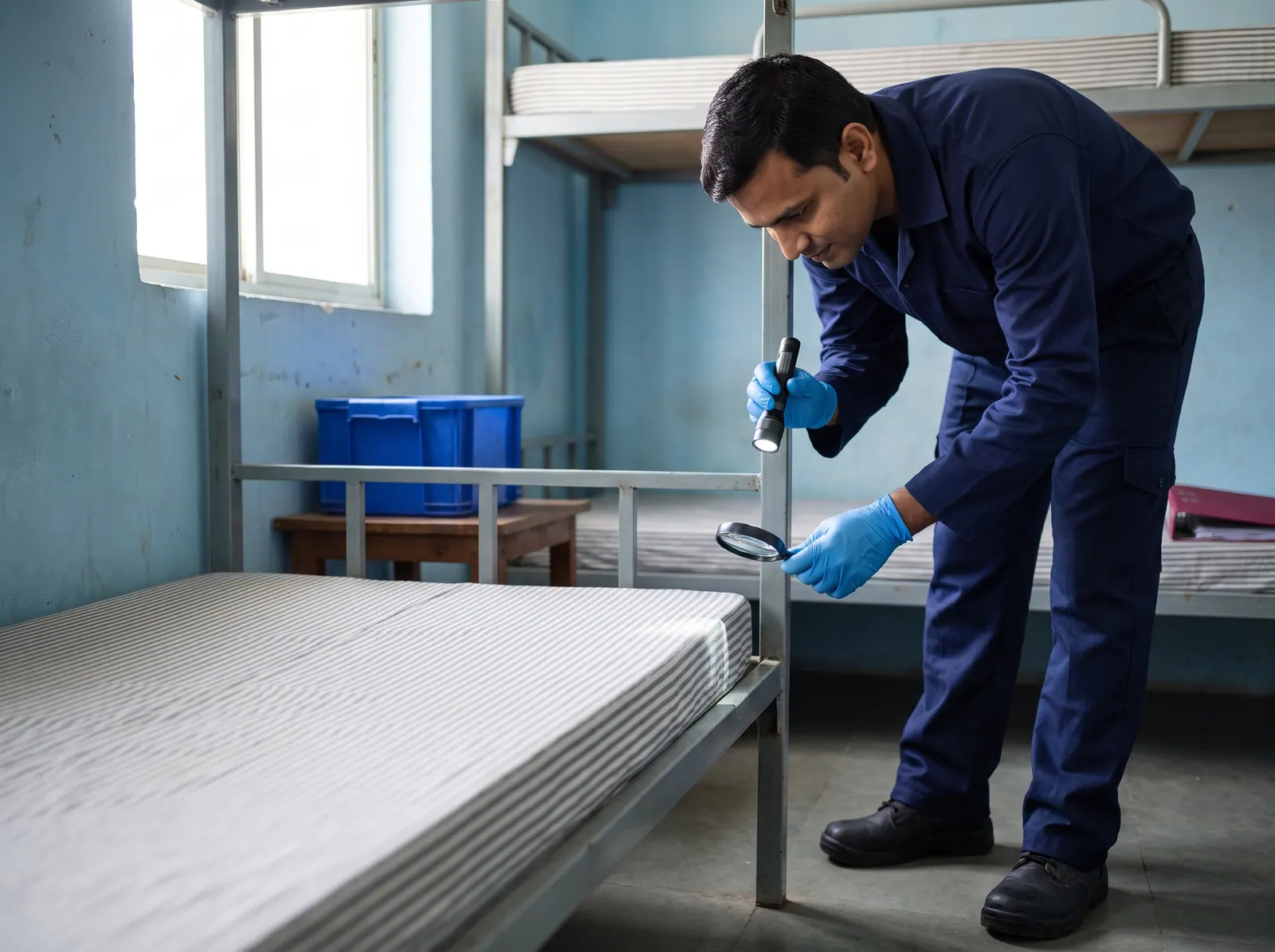
- Inspection: The technician checks the kitchen, stores, roof or ceiling spaces, drains and the outside of the building to find entry points, runways, nesting areas and food sources.
- Plan: We decide how many bait stations and traps are needed, where they go, and which entry points need proofing.
- Placement: Tamper-resistant bait stations are placed along runways and near entry points, usually outside or in areas away from food. Traps are used inside living and food areas.
- Proofing advice: We show you which gaps, drain openings, pipe entries and roof gaps should be sealed or meshed, and why.
- Service report: After the visit you receive a service report as proof of service, with updates on WhatsApp.
- Follow-up: We check stations and traps, record activity and adjust placement until rodent activity stops.
A representative from your home or business should be present during the visit so the technician can walk you through what was done.
Why bait stations and traps instead of loose poison?
Loose bait scattered in a house can be picked up by children or pets, or carried by rodents into places where it causes harm. Tamper-resistant stations keep the bait enclosed and only accessible to rodents. Inside occupied rooms we generally prefer traps. A rodent that eats bait may die inside a wall or false ceiling and cause a smell, so placement is planned with this in mind.
Rodent control for Mapusa shops, godowns and eateries
Businesses face higher stakes than homes. Damaged stock, contaminated food and gnawed wiring all cost money, and food businesses must show they are managing pests. For these sites we usually recommend scheduled visits with a station map and activity records.
For restaurants, bakeries and other food businesses, our documentation is aligned with HACCP and FSSAI audit expectations. That makes it easier to show an inspector or auditor what has been done and when. If you also have cockroach activity in the kitchen, our cockroach treatment in Mapusa can be combined with rodent visits. For offices, warehouses and larger sites, see commercial pest control in Mapusa.
How do we keep your family, staff and pets safe?
We are a licensed pest control operator with the Directorate of Agriculture, Goa, and we use CIB&RC-registered products. Material Safety Data Sheets are maintained for the products we use.
- Bait is kept inside tamper-resistant stations, not left loose.
- Keep children and pets away from stations and traps, and do not open or move them.
- Do not handle droppings, nesting material or dead rodents with bare hands; wear gloves and wash your hands afterwards.
- Ventilate stores and cupboards where there has been heavy activity before cleaning.
- If anyone is bitten, or feels unwell after contact with rodent urine or droppings, see a doctor.
Rodent urine and droppings can spread diseases such as leptospirosis. This is one more reason to keep food covered and clean up carefully.
What affects the cost and number of visits?
There is no fixed price for every property, because sites differ a great deal. A one-bedroom flat with mice in the kitchen is a very different job from a godown with rats coming in from a drain. Cost depends mainly on:
- The size and type of property (flat, house, shop, godown, restaurant)
- How heavy the activity is and how long it has been going on
- The number of entry points, drains and roof gaps involved
- How many bait stations and traps are needed
- How often follow-up visits and reports are required
The quotation sets out what is included. Payment is accepted by cash, UPI, card, net banking or bank transfer. Where a warranty applies to a service, it covers the treated area as set out in the service agreement.
What can you do to stop rodents coming back?
Treatment removes the current rodents, but the building has to stop inviting new ones. Store food, grain and pet food in closed containers. Clear clutter from stores and lofts, and keep garbage in lidded bins. Trim creepers and branches that touch the roof. Have gaps around pipes, drain openings and doors sealed or meshed. Our guide to rodent-proofing coastal properties in Goa covers these steps in more detail.
If rodents are only one of several pest problems at home, our pest control in Mapusa page lists the other services available in the town.
How to arrange rodent control in Mapusa
Contact our Goa branch in Chimbel and tell us where in Mapusa you are, the type of property, and what you have noticed: droppings, sounds, damage or sightings. We will arrange an inspection and explain the plan and quotation before any treatment begins.
Frequently asked questions
QDo you provide rodent control in Mapusa?
Yes. Mapusa is one of the towns covered by our Goa branch in Chimbel, according to company records. We handle rats and mice in flats, independent houses, housing societies, shops, godowns, restaurants, bakeries and hotels. Share your exact location and what you are seeing, and we will arrange an inspection and explain the plan before any treatment begins.
QWill you seal the holes rodents are using?
During the inspection we identify the gaps, drain openings, pipe entries and roof spaces rodents are using. We then explain which ones should be sealed or meshed. Proofing advice is part of every rodent control job. If you want the proofing work itself done, ask us at the inspection whether it can be included in your quotation.
QHow many visits does rodent control usually take?
It depends on how heavy the activity is, the size of the property and how many entry points remain open. A small problem in a flat may settle with a few visits. Godowns, shops and food businesses usually need regular monitoring visits. Rodents can keep coming in from neighbouring buildings or drains, so follow-ups continue until activity stops.
QIs rodent bait safe to use in a home with children and pets?
We keep bait inside tamper-resistant stations so it is not left loose, and we use traps inside living and food areas. Keep children and pets away from stations and traps, and never open or move them. Follow the technician's instructions after the visit. If a child or pet may have touched bait, contact a doctor or vet straight away.
QCan rodents come back after treatment?
Yes, if entry points stay open or food remains easy to reach. This is common in Mapusa's market area, where shops and godowns share walls and drains. Sealing gaps, storing food in closed containers and keeping garbage covered make a real difference. Where a warranty applies to a service, it covers the treated area as set out in your service agreement.
QDo you provide reports for restaurants and food businesses?
Yes. After each visit we share a service report as proof of service, along with WhatsApp updates. For restaurants, bakeries and other food businesses, our documentation is aligned with HACCP and FSSAI audit expectations. This helps you show an inspector or auditor what pest management has been carried out and when.
QHow should I prepare for a rodent control visit?
Clear access to kitchen cupboards, storerooms, lofts and the areas around drains so the technician can inspect them properly. Put food away in closed containers and secure pets. A family member or staff representative should be present during the visit. If you need to reschedule, let us know at least 48 hours in advance, as a late-cancellation fee may apply.
Last updated 13 October 2026. Information on this page is general guidance; your technician will advise on your specific property after inspection.