Quick answer
Efficacy Pest Control's Goa branch in Chimbel provides rodent control in Calangute for restaurants, guesthouses, hotels, villas and homes. Each job starts with an inspection of kitchens, waste points, gardens and entry gaps. We then use tamper-resistant bait stations, traps where baiting is unsuitable, and practical proofing advice. Rats move between neighbouring properties, especially when places close for the monsoon, so we also help owners plan closures and coordinate with neighbours.
Key points
- Calangute is covered by Efficacy Pest Control's Goa branch in Chimbel.
- Rodent control combines inspection, tamper-resistant bait stations, traps and proofing advice.
- Rodents often move into closed shacks, villas and guesthouses during the monsoon, so close-up and reopening checks matter.
- Treating shared walls, drains and waste points together with neighbours reduces re-infestation.
- The Goa branch is licensed by the Directorate of Agriculture, Goa, uses CIB&RC-registered products and shares service reports after visits.
Rodent control in Calangute: what we do
Rats and mice follow food, water and shelter, and a busy beach town offers all three. Our Goa branch in Chimbel provides rodent control in Calangute, Goa, for restaurants, guesthouses, hotels, villas, flats and independent homes.
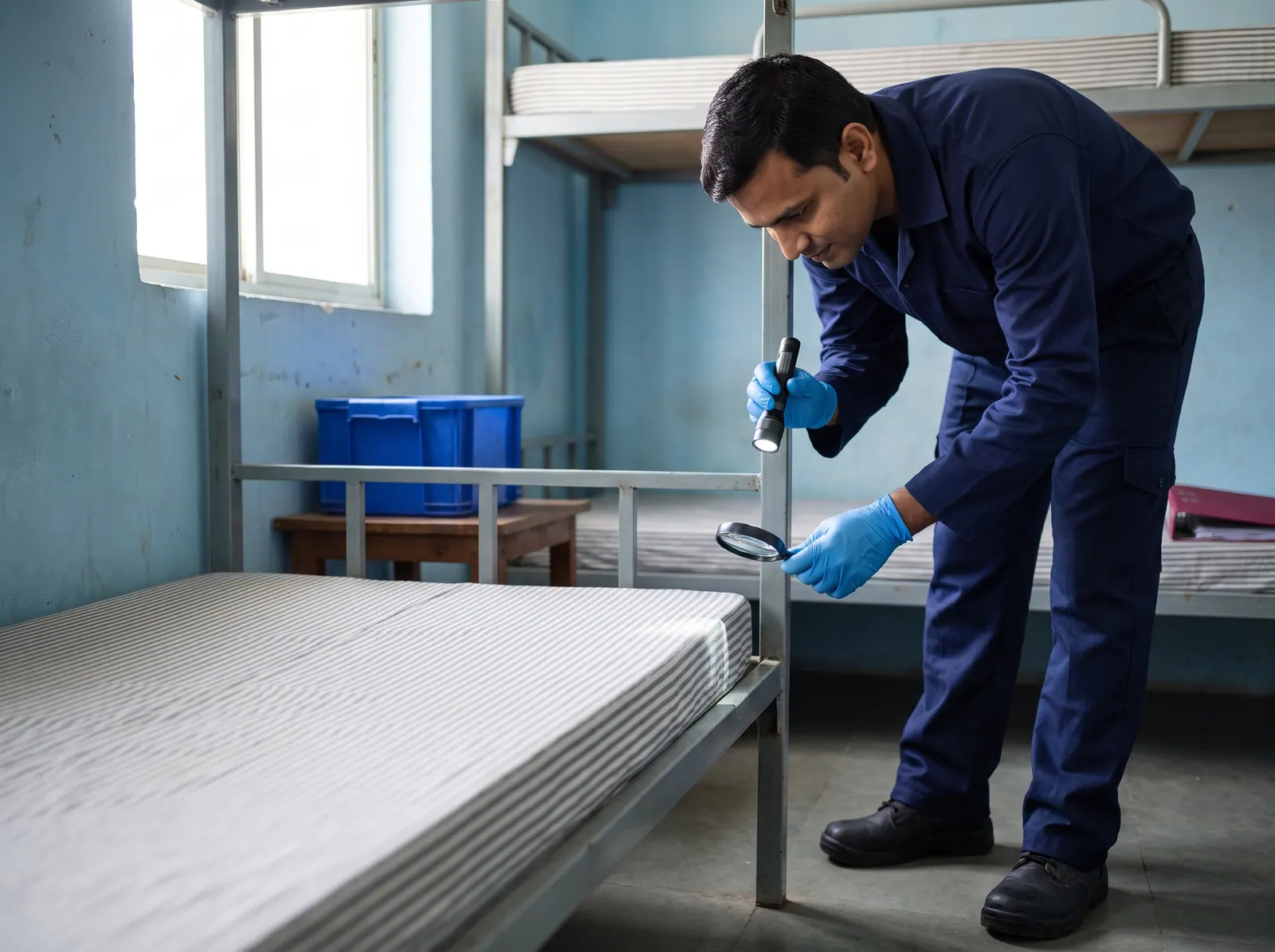
The work is inspection-led. We find where rodents are feeding, nesting and getting in. We then combine tamper-resistant bait stations, traps and proofing advice into a plan that fits the property. You can read how the service works in general on our rodent control service page.
This page covers what is particular to Calangute. That means kitchens and waste points along the beach strip, gardens and palms close to buildings, and the way rodents shift between properties when the season ends. For other pest services in the area, see our pest control in Calangute overview.
Why do rats gather around restaurants and waste points near the beach?
Restaurant kitchens produce food waste late into the night. During the tourist season, bins at shared collection points can fill faster than they are cleared. Grease in drains, sacks of rice, flour and onions in back storerooms, and fallen fruit in gardens all add to the supply.
Rats are cautious animals. They travel along walls and edges and use the same routes night after night. Roof rats are good climbers, so palms, creepers, cables and overhanging branches can carry them straight onto roofs and into upper floors.
When we inspect a kitchen or waste area, we look at:
- Back doors, service gates and gaps under doors
- Drain openings, grease traps and gully covers
- Gaps around water, gas and air-conditioning pipes
- False ceilings, roof spaces and the tops of walls
- Dry stores, cold rooms and the area behind kitchen equipment
- Bin storage, compost heaps and the lane-side collection point
- Trees, palms and creepers touching the building
Signs we look for include droppings, gnaw marks on wood, plastic or wiring, dark rub marks along walls, burrows near compound walls, and nibbled produce. Waste points that attract rats often attract flies too. If that is part of your problem, see our page on fly control in Calangute.
What happens to rodents when properties close for the monsoon?
When the south-west monsoon arrives, many beach shacks come down and some seasonal restaurants close. A number of villas, holiday homes and guesthouses are also locked up for weeks or months. The food that kept rodents nearby disappears, and heavy rain floods burrows and drains.
Rodents then look for dry, quiet shelter. A closed building with nobody disturbing it suits them well. Owners often find the damage only on reopening: gnawed wiring, chewed upholstery and mattresses, soiled linen, and droppings across kitchen counters.
A checklist before you close up
- Remove all food, including dry goods, spices, pet food and anything in open packets.
- Clean and degrease the kitchen, including behind and under equipment.
- Empty every bin and clear waste, garden cuttings and fallen fruit from the compound.
- Seal gaps, fit door sweeps and make sure drain covers and vent mesh are in place.
- Trim branches and creepers that touch the roof or walls.
- Store linen, cushions and mattresses covered or in sealed containers.
- Ask us to inspect before you shut. We will discuss whether bait stations or traps should stay in place, because devices that nobody checks can cause their own problems, such as odour.
When you reopen
Walk through before staff restock the kitchen or guests arrive. Look for droppings, fresh gnawing and a musty smell. Do not sweep droppings dry, as this raises dust. Wear gloves, dampen the area with a disinfectant, wipe it up, and wash your hands well afterwards. If there is clear activity, call us before you restock so the source can be dealt with first.
How do bait stations, traps and proofing work together?
We follow an Integrated Pest Management (IPM) approach: inspection, sanitation and proofing advice, then targeted treatment. No single method works alone for rodents.
Tamper-resistant bait stations
These are lockable boxes. The bait is held securely inside, so children, pets and other animals cannot reach it. Outdoors, stations sit along perimeter walls, at bin areas and along garden edges where we have found activity. Each station is placed where it can be checked and recorded on later visits.
Traps
Indoors, especially in kitchens, food stores and guest areas, traps are often the better choice. Baiting close to food is not appropriate. Traps also avoid the risk of a rodent dying inside a wall void or false ceiling, where it can cause a lingering smell.
Proofing advice
Proofing is the part that keeps working after the treatment. A rat can get through a gap about the width of a thumb, and a mouse through a smaller one. Gaps should be sealed with materials rodents cannot easily gnaw, such as metal mesh or cement. Foam or plastic on its own is often chewed through.
Common fixes include:
- Door sweeps on kitchen and store doors
- Mesh on drains and vents
- Sealing around pipe entries
- Closing gaps under traditional tiled roofs
Our guide to rodent-proofing coastal properties in Goa goes into more detail.
Why does neighbour coordination matter?
In Calangute, restaurants, guesthouses and homes often share walls, lanes, drains and waste collection points. Treating one property clears rodents there. But if the building next door has open bins or an untreated storeroom, new rodents keep arriving.
Where a warranty applies, it covers the treated area as set out in the service agreement. It cannot cover rodents coming in from untreated neighbouring properties or from outside. That is why we encourage:
- Agreeing with neighbours on lidded bins and regular clearing of shared collection points
- Housing societies treating common areas, drains and compounds together, not flat by flat
- Adjoining businesses scheduling their service visits close together
- Sharing sightings, so everyone knows where activity is moving
If several neighbouring owners each engage us, we can plan visits so the properties are covered at the same time. For shops, offices and other businesses, see our page on commercial pest control in Calangute. Hotels and resorts may find our guide on rodent control in guest areas versus back of house useful.
A year-round plan for Calangute properties
Rodent pressure here follows the tourist season and the monsoon. This calendar is a practical starting point. Many businesses choose an Annual Maintenance Contract so the visits happen on schedule.
| Period | What is happening | What to do |
|---|---|---|
| After the monsoon, before the season opens | Properties reopen and restock | Inspect, repair proofing, set up or refresh bait stations |
| Peak tourist season | High footfall and more food waste | Regular station checks, strict bin routine, clear waste every night |
| Before the monsoon | Shacks, restaurants and holiday homes close | Work through the closing checklist and arrange a final inspection |
| Monsoon | Heavy rain and quiet, closed buildings | Keep drains covered and arrange checks of closed premises if agreed |
Safety, records and what to expect on the visit
Our Goa branch is a licensed pest control operator under the Directorate of Agriculture, Goa. We use CIB&RC-registered products and maintain Material Safety Data Sheets for the products we use.
After each visit, we share a service report, and clients receive updates on WhatsApp. FSSAI Schedule 4 hygiene requirements expect food businesses to keep pests out. For restaurants and hotel kitchens, we provide documentation aligned with HACCP and FSSAI audit expectations.
A few simple safety points:
- Do not open, move or shake bait stations.
- Keep children and pets away from stations and traps, and tell us about any pets before the visit.
- Wash your hands after cleaning areas where rodents have been.
- If anyone is bitten, or feels unwell after contact with rodents or their droppings, see a doctor.
Please give our technician clear access to storerooms, under sinks and roof spaces. A representative of the property should accompany the technician during the service.
One of our Goa clients, a purchase manager, wrote about the range of work we handled for his organisation:
Also Cockroach treatment, lizard treatment, rodent treatment we are happy with Efficacy Pest Control. — Mr. Sunil Ambokar, Purchase Manager, Goa
Talk to our Goa branch about rodents in Calangute
If you are seeing droppings, hearing movement in the ceiling at night, or preparing to close or reopen a property, contact our Goa branch in Chimbel. Tell us:
- The type of property
- Where it is in Calangute
- What you have noticed
- Whether neighbouring properties have the same problem
We will arrange an inspection and explain the plan before any treatment begins.
Frequently asked questions
QDo you provide rodent control for restaurants and beach shacks in Calangute?
Yes. Calangute is covered by our Goa branch in Chimbel, and restaurant pest management is one of its services. For food businesses, we focus on kitchens, dry stores, drains and waste points. We provide documentation aligned with HACCP and FSSAI audit expectations. For seasonal kitchens, we can plan an inspection before you open and another before you close for the monsoon.
QAre bait stations safe around guests, children and pets?
We use lockable, tamper-resistant bait stations, with the bait secured inside so that children, pets and other animals cannot reach it. Indoors, especially near food or in guest rooms, we usually rely on traps instead. Please tell us about any pets before the visit. Ask staff and family not to open or move the stations, and wash hands after cleaning areas where rodents have been.
QCan you help with a villa or guesthouse that stays closed during the monsoon?
Yes. Tell us your closing and reopening dates. We can inspect before you lock up, advise on proofing and food removal, and agree whether any devices should stay in place while the property is empty. If you would like checks during the closure, we can discuss whether scheduled visits, for example under an Annual Maintenance Contract, suit your property.
QHow long does it take to get rid of rats?
It depends on the size of the problem, how much food is available and how easily rodents can get in. Some activity drops within days. A well-established problem, or one fed by a neighbouring property, can take several weeks of monitoring. Sealing entry points and tightening waste routines are what stop rodents from simply being replaced.
QWhy do rats keep coming back after treatment?
Usually because the conditions that attracted them are still there. Common causes are open bins at a shared collection point, gaps under doors or around pipes, or an untreated building next door. Our warranty, where it applies, covers the treated area set out in the service agreement. Proofing and coordinating with neighbours make the biggest difference to whether rodents return.
QWill I get a record of each visit?
Yes. After each visit, our Goa branch shares a service report, and clients receive updates on WhatsApp. The report notes what was inspected and what was done. For restaurants and hotels, these records support your own hygiene documentation and are prepared with HACCP and FSSAI audit expectations in mind.
Last updated 13 October 2026. Information on this page is general guidance; your technician will advise on your specific property after inspection.