Quick answer
Efficacy Pest Control's Goa branch provides rodent control in Porvorim, including Alto Porvorim, Socorro, Sangolda and Penha de França. Each job starts with an inspection to find how rats or mice are getting in and what is feeding them. We then use tamper-resistant bait stations, traps where they suit better, and practical proofing advice. We work with flats, housing societies, independent houses, shops and food businesses, and share a service report after each visit.
Key points
- Our Goa branch in Chimbel provides rodent control in Porvorim, including Alto Porvorim, Socorro, Sangolda and Penha de França.
- Treatment follows an IPM approach: inspection, sanitation and proofing advice, then tamper-resistant bait stations and traps.
- We are a licensed pest control operator (Directorate of Agriculture, Goa) using CIB&RC-registered products.
- A service report is shared after each visit; food businesses receive documentation aligned with HACCP/FSSAI audit expectations.
- For specific services, a warranty covers the treated area as set out in the service agreement.
Scratching in the false ceiling at night, droppings behind the fridge or a rat running along the compound wall all raise the same two questions. How are the rodents getting in, and how do you keep them out? Rodent control in Porvorim, Goa is about answering both, not just putting down bait.
Our Goa branch in Chimbel provides rodent control across Porvorim, including Alto Porvorim, Socorro, Sangolda and Penha de França. This page explains what we look for in Porvorim properties, how a treatment works and what you can do between visits. For a general overview of the service, see our rodent control service page.
Why do rats and mice get into Porvorim homes and buildings?
Porvorim sits on the plateau just north of the Mandovi, across the river from Panaji, and has grown steadily along the highway. Within a short distance you find newer apartment blocks with basement parking, older Goan houses with tiled roofs and gardens, and rows of shops, offices and eateries. Each type of property gives rodents something different.
Rodents need three things: food, water and shelter. During Goa's very heavy south-west monsoon, burrows and drains flood and rodents look for dry places such as store rooms, roof spaces, duct shafts and kitchens. In the drier months they tend to follow food: open garbage, pet food, bird feed, fallen fruit and kitchen waste.
Which rodents are we likely to deal with?
Identifying the rodent matters, because it decides where bait stations and traps should go.
- Roof rats (house rats): agile climbers that nest in roofs, lofts, false ceilings and trees. They often enter along overhanging branches, cables and pipes.
- Brown rats: heavier rats that burrow in soil near drains, compound walls and garden beds. They usually come in at ground level, through drains or gaps under doors.
- House mice: small rodents that nest inside cupboards, appliances and stored cartons, and can squeeze through gaps roughly the width of a pencil.
- Larger burrowing rats (often called bandicoots): found near drains, open plots and fields, and can undermine paving and garden areas.
What are the signs of rodents to look for?
| Sign | What it usually means | Where to check |
|---|---|---|
| Droppings | Active feeding or travel route | Behind appliances, kitchen cabinets, store rooms, lofts |
| Gnaw marks | Rodents testing or widening an entry point | Door edges, wooden frames, plastic pipes, wiring |
| Dark greasy rub marks | A regular runway | Along walls, beams and pipe runs |
| Scratching or running sounds at night | Nesting or movement overhead | False ceilings, roof spaces, duct shafts |
| Shredded paper, cloth or packaging | Nest material nearby | Cartons, unused cupboards, behind stored items |
| Fresh burrows | Ground-dwelling rats | Compound walls, garden beds, near drains |
How does rodent activity differ across Porvorim properties?
Flats and housing societies
In apartment buildings, rodents move through shared utility shafts, basement parking, garbage collection points and gaps where pipes enter each flat. Treating a single flat can help, but if the common areas are untreated, rodents often return from the shared spaces. Where possible, we suggest the society committee arranges treatment of common areas alongside individual flats. Our page on residential pest control in Porvorim covers wider home and society programmes.
Independent houses in Socorro, Sangolda and Penha de França
Older houses with tiled roofs, trees close to the roofline, outdoor kitchens and garden store rooms suit roof rats, while compound walls and garden beds can hide burrows. Here, the inspection pays close attention to the roof, the tree canopy and the ground perimeter.
Shops, offices and eateries along the highway
Commercial premises tend to have stock rooms, back lanes, waste bins and drains that rodents use. For restaurants and other food businesses, we provide documentation aligned with HACCP and FSSAI audit expectations. See commercial pest control in Porvorim for scheduled business programmes.
How do we carry out rodent control in Porvorim?
We follow an Integrated Pest Management (IPM) approach: inspection first, then sanitation and proofing advice, then targeted treatment.
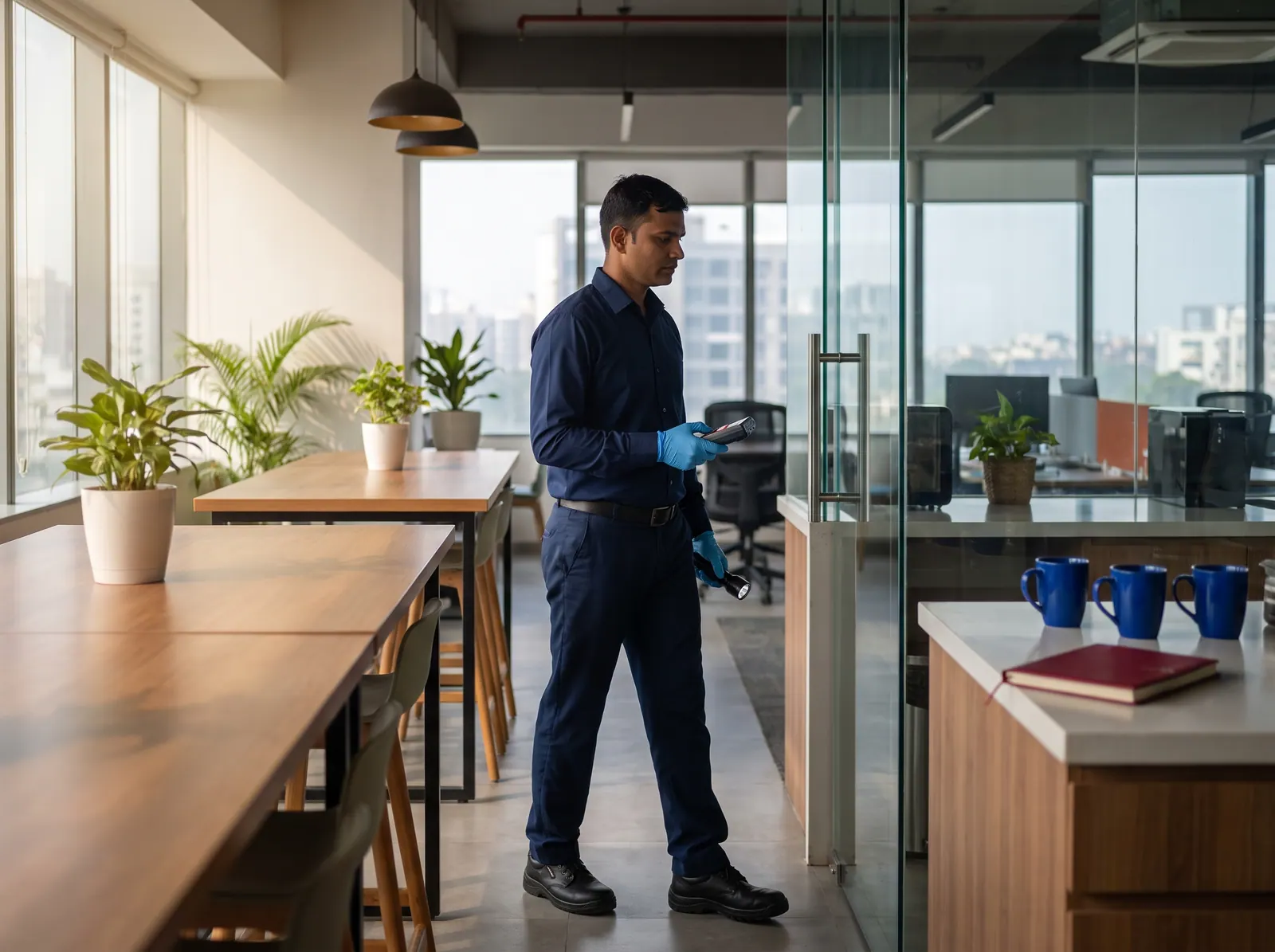
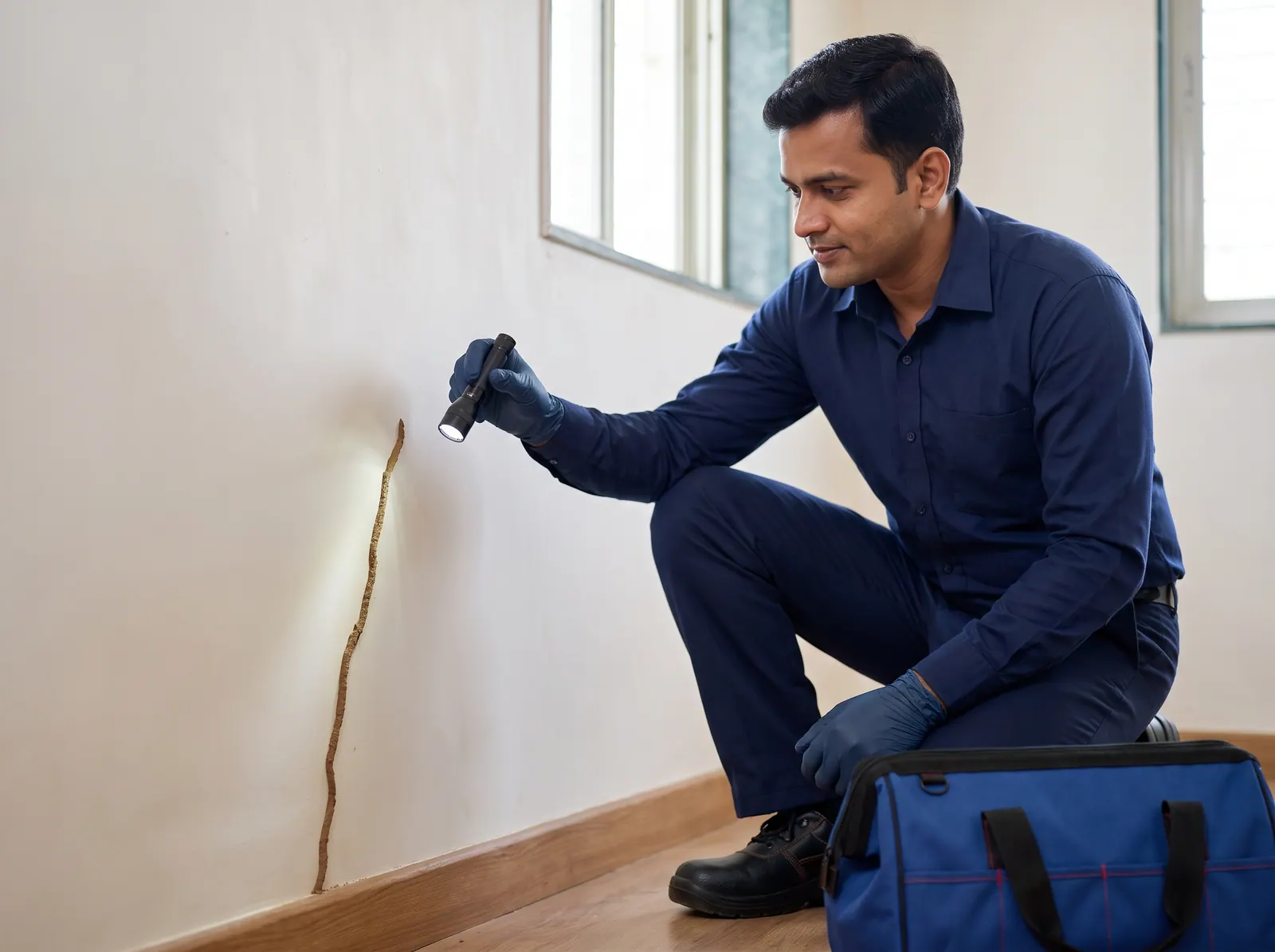
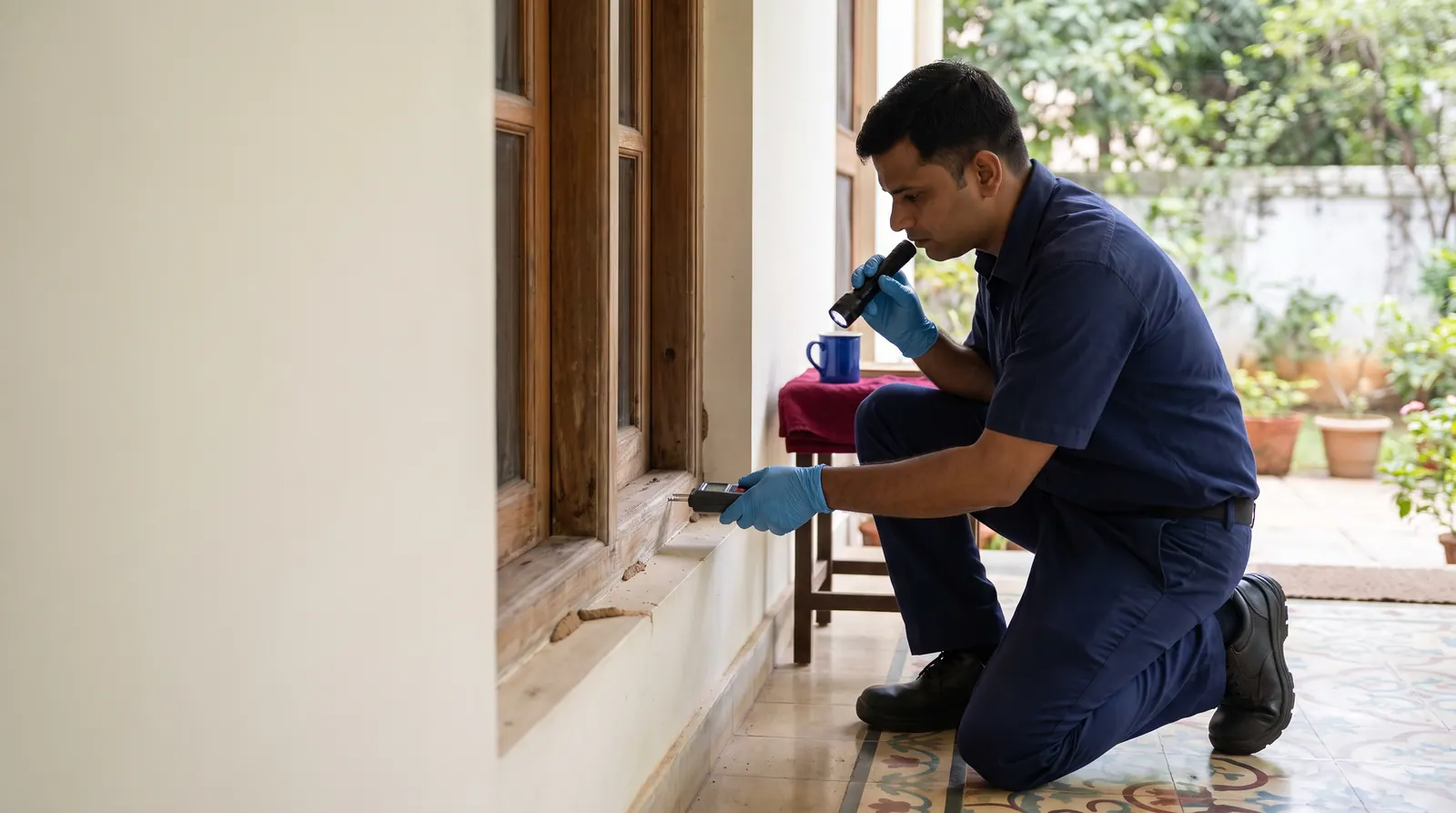
- Inspection: we check inside and outside, including kitchens, store rooms, roof spaces, ducts, drains and the compound. We note entry points, runways, nesting sites and food sources.
- A clear plan: we explain what we found, where devices will go and what follow-up is likely to be needed.
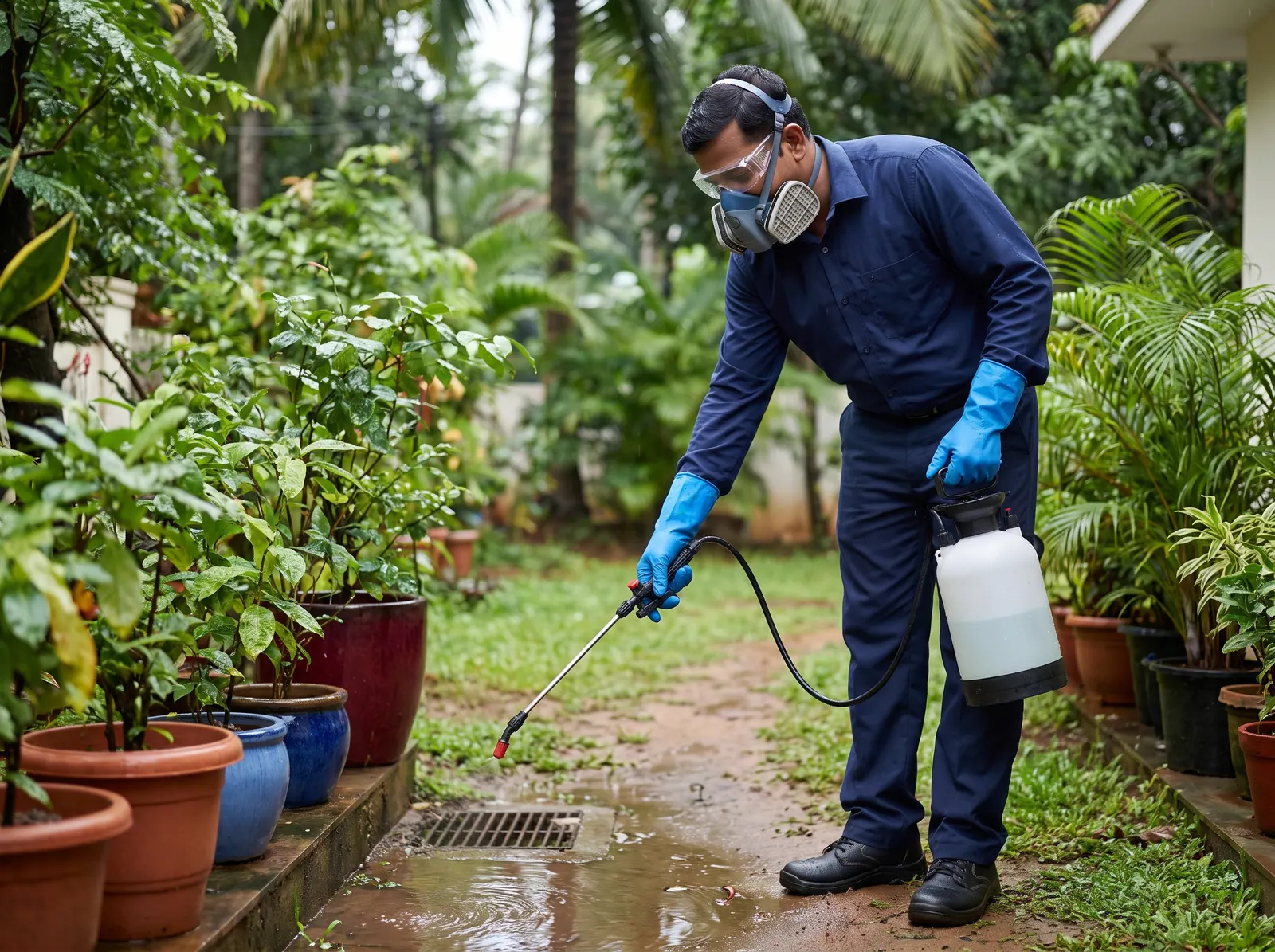
- Tamper-resistant bait stations: locked stations are placed along rodent runways, usually around the perimeter and in areas away from food preparation, children and pets.
- Traps: used indoors where baiting is less suitable, such as kitchens and food stores, or where a rodent dying in an inaccessible space would cause problems.
- Proofing advice: we point out which gaps to seal, where door sweeps or mesh would help, and which branches or clutter give rodents access.
- Follow-up and reports: stations and traps are checked and adjusted on follow-up visits. We share a service report after each visit, with WhatsApp updates for clients.
We are a licensed pest control operator with the Directorate of Agriculture, Goa, and we use CIB&RC-registered products. Rodent control usually takes more than one visit, because the aim is to reduce the population and close off the routes it uses.
Is rodent control safe around children and pets?
Locked bait stations are designed to reduce the chance of accidental contact, and they are placed with your household in mind. We maintain Material Safety Data Sheets for the products we use. A few simple precautions help:
- Do not open, move or shake bait stations, and keep children and pets away from them.
- Follow the technician's instructions on any treated areas.
- If you find a dead rodent, use gloves or a plastic bag to pick it up, and wash your hands afterwards. Let us know where you found it.
- Do not sweep dry droppings. Dampen them with a household disinfectant first, wipe them up wearing gloves, then wash your hands.
Rodents and their urine can spread diseases such as leptospirosis. If anyone is bitten, or feels unwell after contact with rodents, their droppings or floodwater, please see a doctor.
What can you do to keep rats and mice out?
- Keep garbage in bins with tight lids, and ask your society to keep collection points clean and covered.
- Store rice, grain, pulses and pet food in hard, sealed containers.
- Seal gaps around pipes, AC lines and cables where they enter walls.
- Fit door sweeps on kitchen and store-room doors, and cover drain outlets with mesh or grilles.
- Trim branches that touch the roof, and check roof tiles before the monsoon.
- Clear clutter from balconies, store rooms and parking areas.
- Do not leave pet food or kitchen scraps out overnight.
For more detail on sealing a building, read our guide to rodent-proofing coastal properties in Goa.
One-off treatment or annual maintenance contract?
A one-off treatment, with its follow-up visits, often suits a recent problem in a single home. Food businesses, housing societies and properties with recurring rodent activity usually benefit from an annual maintenance contract, with scheduled visits and a service report each time.
For specific services, a warranty applies to the treated area as set out in your service agreement. It does not cover rodents coming in from neighbouring or untreated properties, structural changes or new construction, or cases where post-service instructions are not followed.
How do I arrange rodent control in Porvorim?
Get in touch with our Goa branch in Chimbel through our contact page. Tell us your area, such as Alto Porvorim, Socorro, Sangolda or Penha de França, the type of property, what you have noticed and how long it has been going on. We will advise you on the next step.
On the day, please make kitchens, lofts and store rooms accessible, and have someone from the household or business accompany the technician. If you need to cancel, let us know at least 48 hours before the scheduled visit. You can also see other pest control services in Porvorim or read about our Goa branch.
Frequently asked questions
QDo you provide rodent control in Socorro, Sangolda and Alto Porvorim?
Yes. Our Goa branch in Chimbel covers Porvorim, and our records include Alto Porvorim, Socorro, Sangolda and Penha de França. When you contact us, tell us your exact area, the type of property and what you have seen, whether that is droppings, gnaw marks or noises at night, so we can plan the inspection properly.
QHow many visits does rodent control usually take?
It depends on the size of the property, how established the rodents are and how easily entry points can be sealed. Most jobs need more than one visit. The first visit covers inspection and setting up bait stations and traps, and follow-up visits check activity and adjust placement. We explain the expected plan after the inspection.
QWill a rat die inside my wall or ceiling and cause a smell?
It can happen with baiting, which is one reason we think carefully about placement. In kitchens, food stores and places where a hidden carcass would be a problem, we often use traps instead. If you notice a smell after treatment, let us know so we can help locate the source and advise on what to do next.
QCan our housing society get common areas treated, not just individual flats?
Yes, and we recommend it. Rodents in apartment buildings often travel through basement parking, utility shafts and garbage areas, so treating only one flat may give a short break before they return. A society can arrange common-area treatment, either as a one-off programme or through an annual maintenance contract with scheduled visits and reports.
QWe run a restaurant in Porvorim. Do you provide records for food safety audits?
Yes. For food businesses, we provide documentation aligned with HACCP and FSSAI audit expectations, along with a service report after each visit. Kitchen rodent control relies on careful device placement, traps near food areas and proofing of drains, doors and service entries, so we inspect the kitchen, stores and back areas closely.
QDoes the warranty cover rats coming from my neighbour's property?
For specific services, the warranty applies to the treated area as set out in your service agreement. If rodents come in from a neighbouring building or an untreated area, that falls outside it. Our technicians can advise on proofing your boundary, sealing gaps and storing waste so that rodents from outside find it harder to get in.
QWhat should I do if someone is bitten by a rat?
Please see a doctor promptly, even if the bite looks minor. You should also seek medical advice if anyone becomes unwell after contact with rodents, their droppings or floodwater, because rodents can spread diseases such as leptospirosis. Once that is taken care of, contact us so we can inspect and deal with the source.
Last updated 13 October 2026. Information on this page is general guidance; your technician will advise on your specific property after inspection.