Quick answer
Our Goa branch in Chimbel provides inspection-led ant control for flats, villas, housing societies, restaurants and hotels across Goa. A technician identifies the ant species and traces trails back to nests and entry points. We then use targeted baits and spot treatment so the colony is dealt with, not just the ants you can see. We also give proofing and housekeeping advice and share a service report after each visit.
Key points
- Baiting targets the whole colony, while spraying visible trails often leaves the nest and queen alive.
- Some ant species split into new colonies when they are disturbed by repellent sprays.
- Waterlogged soil during Goa's monsoon often drives ant colonies indoors.
- Carpenter ants nest in damp or softened wood but do not eat it.
- Our Goa operation is a licensed pest control operator (Directorate of Agriculture, Goa) using CIB&RC-registered products.
If ants are marching across your kitchen counter, nesting in a wall void or stinging children in the garden, our Goa branch in Chimbel offers inspection-led ant control for homes and businesses across Goa. We do not spray every visible trail. Instead, we find out which ant you have, where the colony is living and why it has moved indoors. We then use targeted baiting and spot treatment so the nest itself is dealt with.
Why do house ants keep coming back in Goa?
Goa's warm, humid coastal climate suits ants for most of the year. During the heavy south-west monsoon, waterlogged soil and flooded garden beds push many colonies indoors in search of dry nesting spots and food. In the drier months, ants follow moisture instead, heading for leaking pipes, bathroom corners and kitchen sinks.
Older Goan houses with timber rafters, tiled roofs and garden walls offer plenty of crevices. Newer flats have their own routes, through electrical conduits, plumbing shafts and gaps around kitchen platforms. Mango and cashew trees close to the house can also bring tree-nesting ants onto balconies and window sills. Our guide to weaver ants on mango and cashew trees covers those separately.
Usually, though, ants come back because the queen survived. Killing the workers you can see does little if the nest is untouched.
Which ants do we usually deal with in Goan homes?
| Ant | How to recognise it | Where you'll see it | What we focus on |
|---|---|---|---|
| Small black ants | Tiny dark ants moving in long, steady trails | Kitchens, dining tables, sugar and oily food | Following trails to the nest; placing bait along active routes |
| Ghost ants | Very small, with pale legs and abdomen; hard to spot | Sinks, bathrooms, potted plants, damp corners | Baiting; avoiding repellent sprays that can scatter the colony |
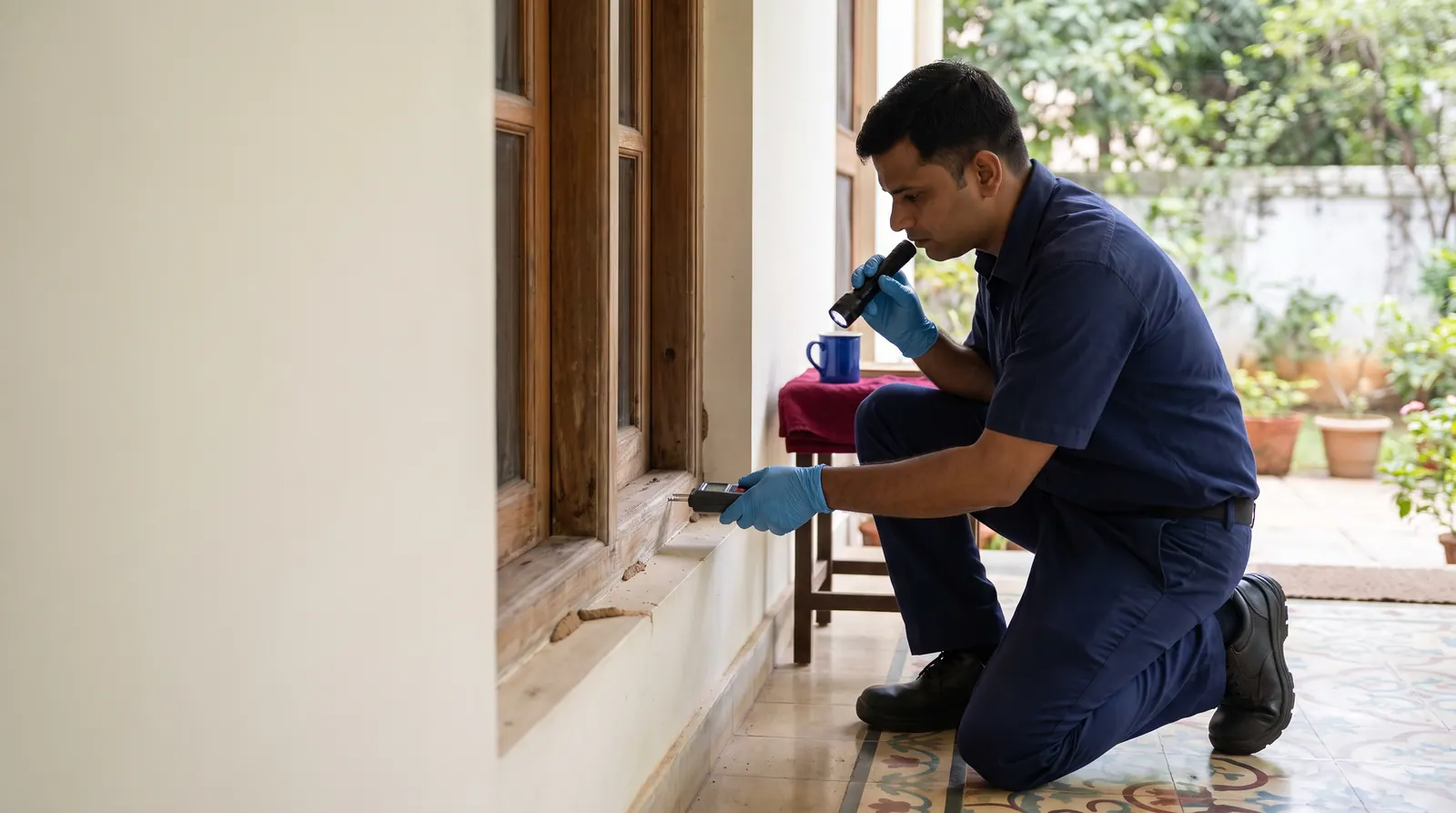
| Carpenter ants | Larger, black or reddish-black | Damp or decaying wood, window frames, roof timbers | Locating the nest in the wood; fixing the moisture source |
| Red stinging ants (often called fire ants) | Reddish and aggressive, with a painful sting | Lawns, garden beds, and mounds near paths and compound walls | Outdoor nest treatment; keeping children and pets away |
Carpenter ants hollow out wood to nest in it but do not eat it. They prefer timber that is already damp or softened. Fine, sawdust-like debris near woodwork can also point to wood borers or termites, so correct identification matters. If you have seen winged insects indoors, our guide to telling flying ants from flying termites will help.
How does our ant control service work?
We follow an Integrated Pest Management (IPM) approach. That means inspection first, then sanitation and proofing advice, then targeted treatment.
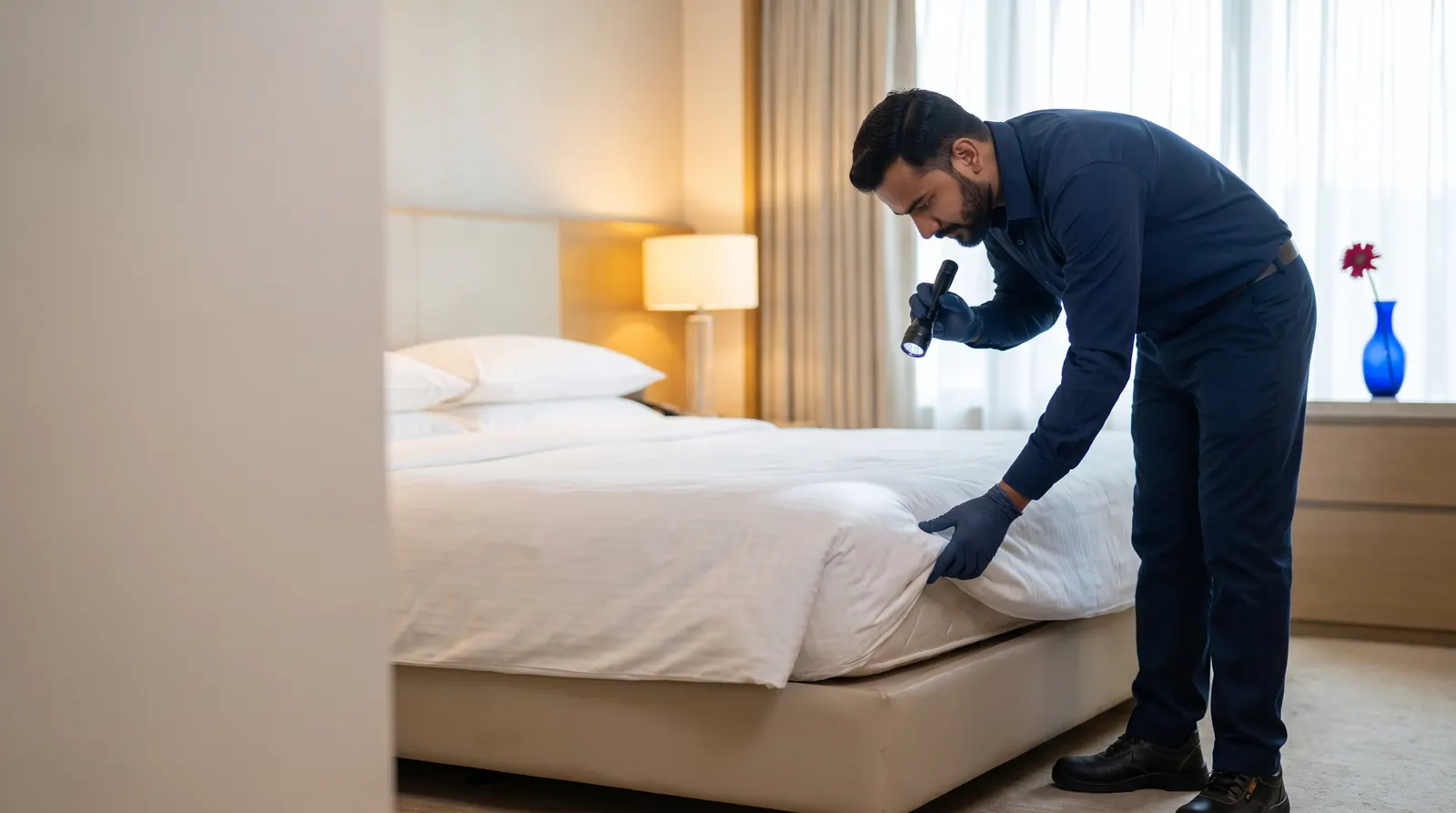
- Inspection. A technician follows the trails and checks wet areas, kitchen platforms, skirting, window frames, garden edges and compound walls for nest sites and entry points.
- Identification. The species decides the method. Sweet-feeding and protein-feeding ants accept different baits, and some colonies split if they are disturbed by sprays.
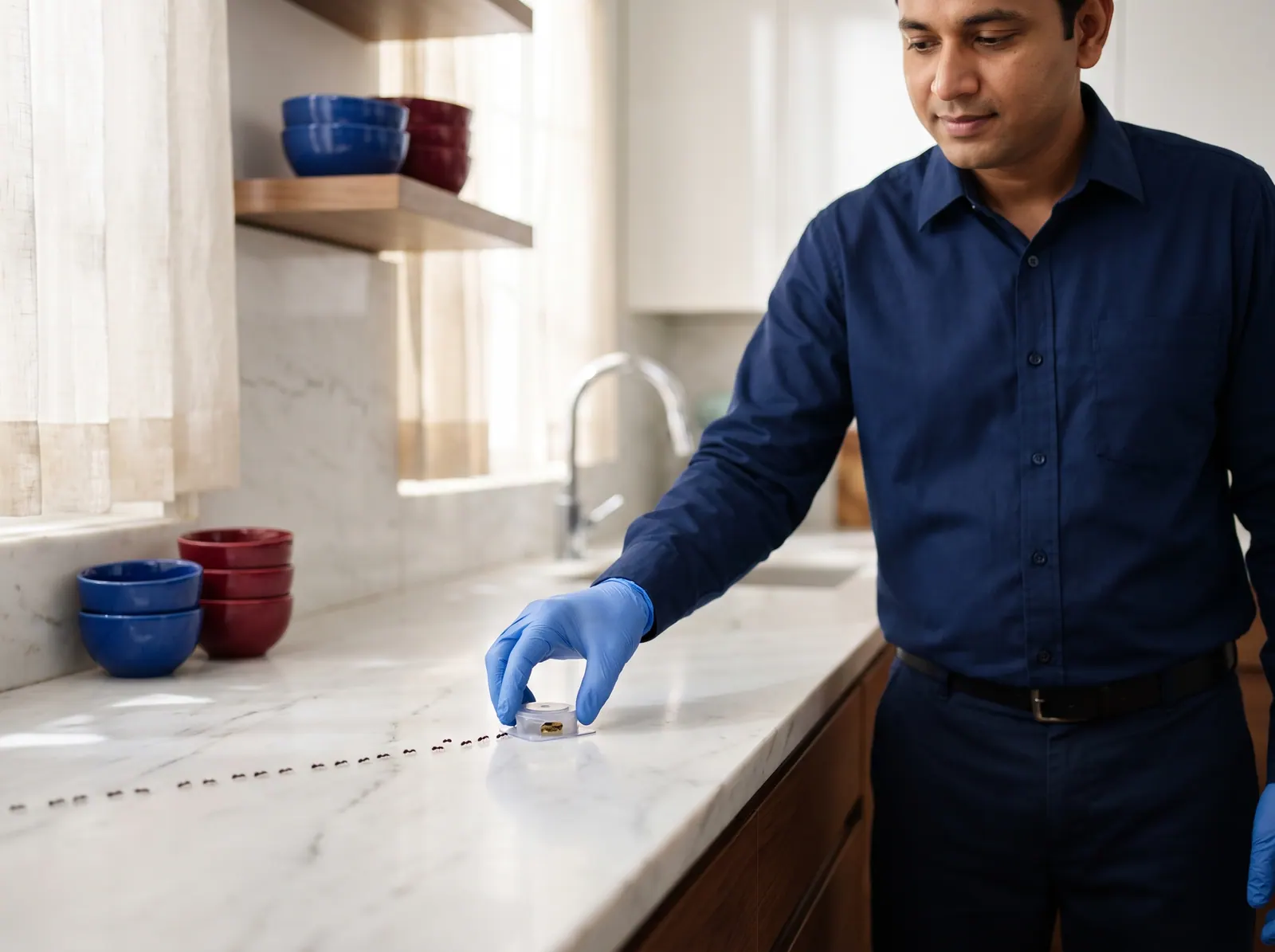
- Targeted treatment. We place baits along active routes so that workers carry them back to the nest. Where appropriate, we also spot-treat nests and entry points. Outdoor nests in lawns or beds are treated separately from indoor work.
- Proofing and housekeeping advice. We point out the gaps, leaks and food sources that are feeding the problem.
- Service report. After the visit, you receive a service report and WhatsApp updates. Our guide explains how to read a pest control service report.
Our Goa operation is a licensed pest control operator with the Directorate of Agriculture, Goa, and uses CIB&RC-registered products. We maintain Material Safety Data Sheets for the products we use.
What should you expect after baiting?
Bait is meant to work slowly. For the first few days, you may see more ants around bait points as workers collect the bait and carry it back. Activity normally drops once it reaches the colony.
- Do not wipe away bait or spray household insecticide over it. Repellents stop ants from feeding on the bait.
- Avoid mopping bait spots with strong cleaners until the technician says it is fine.
- Keep children and pets away from bait points and treated outdoor areas until they are dry, or for as long as the technician advises.
- Remove competing food such as crumbs, open sugar tins and pet bowls left out overnight.
If anyone has a strong reaction to an ant sting, such as swelling beyond the sting site, difficulty breathing or dizziness, see a doctor promptly.
Ant control for flats, villas, restaurants and hotels
In housing societies, ants often travel between flats through shared shafts. Results tend to be better when neighbours or the society treat common areas at the same time. Independent houses and villas with gardens usually need both indoor baiting and outdoor nest treatment.
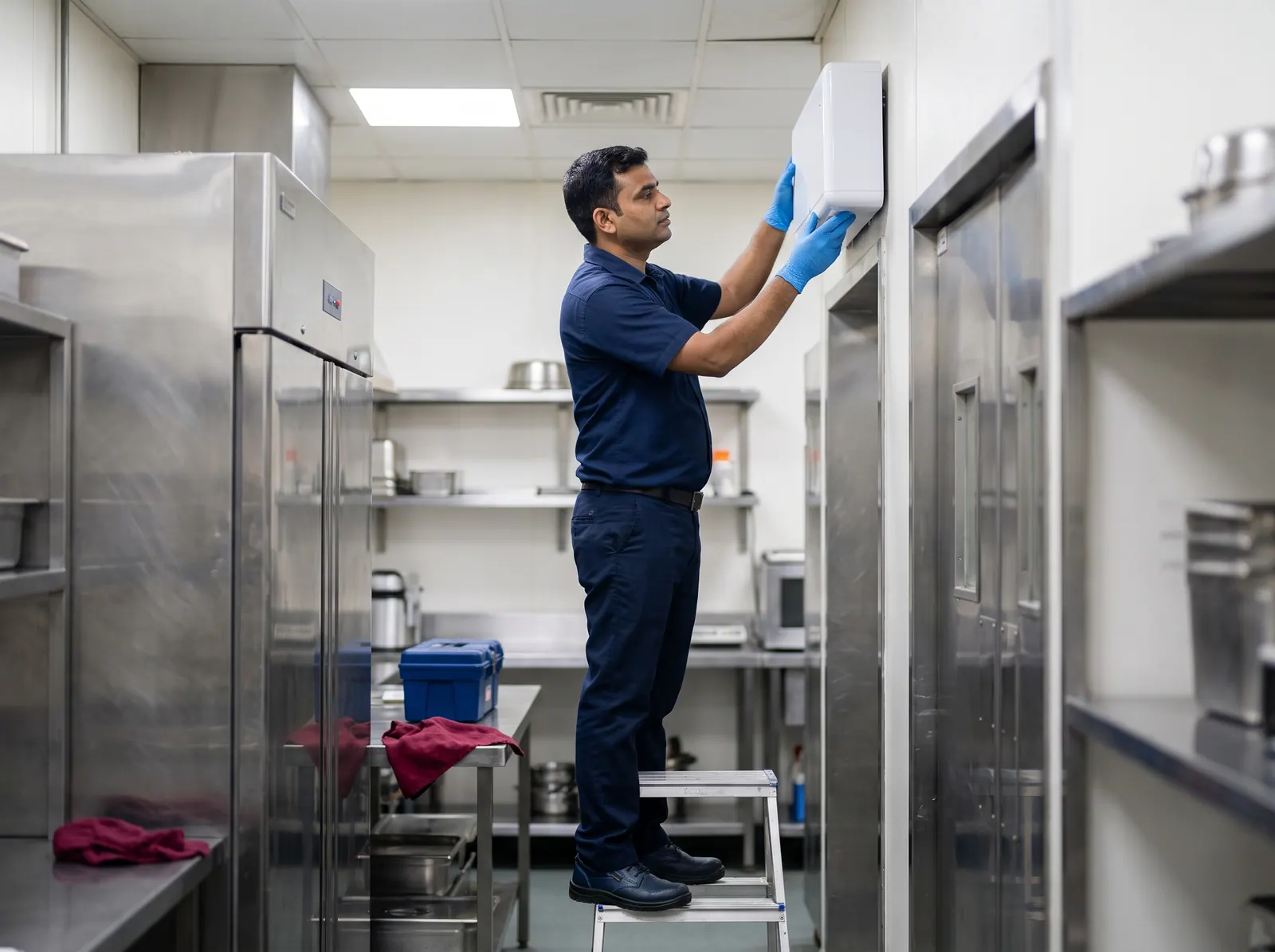
For restaurants, hotels and other food businesses, ant control is one part of a wider programme that includes cockroach, rodent and fly management. Our Goa branch provides documentation aligned with HACCP and FSSAI audit expectations. Ant control can also be included in an Annual Maintenance Contract with scheduled visits.
Simple habits that keep ants out
- Store sugar, jaggery, sweets and biscuits in airtight containers.
- Wipe kitchen platforms at night, and rinse sticky bottles and tins before putting them in the bin.
- Fix dripping taps and leaking pipes, and dry out damp wood and window frames.
- Trim branches and creepers that touch walls, windows or the roof.
- Seal gaps around pipes, conduits and skirting.
For advice specific to the rainy season, read our guide to ants in Goa kitchens during the monsoon.
Where in Goa do we provide ant control?
Our Goa branch covers Panaji, Margao, Vasco da Gama, Mapusa, Calangute, Candolim, Baga, Ponda and Porvorim, along with a number of surrounding localities. See the areas we serve for the full list, or visit our Goa branch page.
To arrange an inspection, contact our Goa branch in Chimbel. Tell us where you are, which rooms are affected, and whether you have seen ants indoors, outdoors or both. We will then suggest the right next step.
Frequently asked questions
QHow long does it take for ants to disappear after treatment?
It depends on the species and the size of the colony. Bait is designed to act slowly so that workers have time to carry it back and share it inside the nest. You may notice more ants near bait points for a few days before activity falls. Your technician will tell you what to expect for your particular infestation and whether a further visit is part of the plan.
QIs ant treatment suitable for a home with small children and pets?
Our technicians place baits in cracks, crevices and other spots that are hard to reach, and they treat only the areas that need it. Keep children and pets away from bait points and treated outdoor areas until they are dry or for as long as advised. Follow any specific instructions the technician gives you. We maintain Material Safety Data Sheets for the products we use.
QDo I need to empty my kitchen before an ant treatment?
Usually you only need to clear the areas being treated, put away open food and keep pets secured during the visit. Baiting is less disruptive than a full spray, so you rarely need to empty every cupboard. When you book, we will tell you exactly what to prepare for your property.
QWhat happens if ants come in again from a neighbour's flat or the garden?
For specific services, a warranty applies to the treated area as set out in your service agreement. Ants that arrive from a neighbouring property or from outside need preventive steps on your side, such as sealing gaps and removing food sources. Ask your technician how to stop ants getting in from outside your premises.
QCan you deal with ant nests in the garden or compound as well?
Yes. Outdoor nests in lawns, flower beds, paving joints and along compound walls are often the source of indoor trails, especially after heavy rain. We inspect these areas and treat them separately from indoor work. If ants are nesting in mango or cashew trees, the approach is different, and we will explain your options during the inspection.
QHow often should I get ant control done?
It depends on the species, how established the colony is, and how easily ants can reach your property. Some homes need only one treatment plus good housekeeping. Others, particularly restaurants, hotels and homes with large gardens, benefit from scheduled visits under an Annual Maintenance Contract. We recommend a frequency after the inspection.
Last updated 13 October 2026. Information on this page is general guidance; your technician will advise on your specific property after inspection.