Quick answer
Efficacy Pest Control's Goa branch provides ant control in Candolim, including Sinquerim and Nerul. We start with an inspection to find trails, entry points and nests. Then we place baits that worker ants carry back to the colony, and spot-treat cracks and outdoor nest areas where needed. You also get practical proofing and hygiene advice, plus a service report after the visit. Treatment is matched to the property, whether a flat, villa, guest house, hotel or restaurant.
Key points
- Our Goa branch in Chimbel covers Candolim, including Sinquerim and Nerul.
- Ant control starts with an inspection to find trails, entry points and nests.
- Baits carried back to the colony usually work better than sprays that kill only visible ants.
- Flying ants have a pinched waist and unequal wings; termite swarmers have a straight waist and equal wings.
- Food businesses receive service documentation aligned with HACCP and FSSAI audit expectations.
Ants may be marching across your kitchen counter, nesting in your villa garden or turning up in guest rooms. Our ant control service in Candolim aims to deal with the colony, not just the ants you can see. Our Goa branch in Chimbel covers Candolim, including Sinquerim and Nerul, for homes as well as hospitality and commercial premises.
We follow an Integrated Pest Management (IPM) approach. We inspect first, work out why ants are getting in, treat precisely where it matters, and give you clear advice to keep them out. You can read more about the method on our ant control service page.
Why do ants get into Candolim homes, villas and guest houses?
Ants come indoors for food, water and shelter. Candolim's setting on the North Goa coast gives them plenty of all three: sandy soil that is easy to nest in, gardens and coconut palms around many houses, and a long, humid monsoon.
A few situations are typical of coastal properties like those in Candolim:
- Monsoon moves. When heavy rain soaks the ground, soil-nesting ants often shift into homes, wall voids, plant pots and stored items.
- Homes left shut. Holiday homes and rental villas that stand empty for weeks can be quietly colonised, especially if sweets, snacks or pet food were left behind.
- Busy kitchens. Café, restaurant and guest-house kitchens offer a steady supply of crumbs, sugar and grease, plus warm spaces behind equipment.
- Garden edges. Paving, pool surrounds, compound walls and branches touching the house give ants easy routes to doors and windows.
Indoors, ants usually enter through small gaps around door and window frames, plumbing and cable lines, skirting and cracks in plaster. A neat line of ants is almost always a trail between a food source and the nest.
Which ants are we usually dealing with?
Different ants feed and nest in different ways, so identifying them is part of every inspection. The table below is a general guide, not a complete list.
| Type of ant | Where you tend to see them | Usual approach |
|---|---|---|
| Tiny red or black house ants | Kitchen counters, sugar jars, sinks, bathrooms | Slow-acting bait on the trail so workers carry it back to the nest; repellent sprays are avoided because they can scatter the colony |
| Larger black ants | Along walls, around doors, in garden soil | Bait plus spot treatment at entry points and outdoor nest sites |
| Red weaver ants | Leaf nests in garden trees and shrubs; painful bites | Targeted treatment of nests near paths, doors and seating, and trimming branches away from the house |
| Ants nesting in timber or wall voids | Damp frames, wooden fixtures, roof spaces | Find the nest and the damp source, treat the void and advise on fixing the moisture |
Is it flying ants or termites?
After the first monsoon showers, winged insects often swarm around lights. Flying ants have a narrow, pinched waist, elbowed antennae and front wings longer than the back wings. Termite swarmers have a thick, straight waist, straight antennae and wings of equal length that they shed quickly. If you find shed wings on window sills or mud tubes on walls, ask about our termite control in Candolim instead, because the treatment is completely different.
How do we treat ants, step by step?
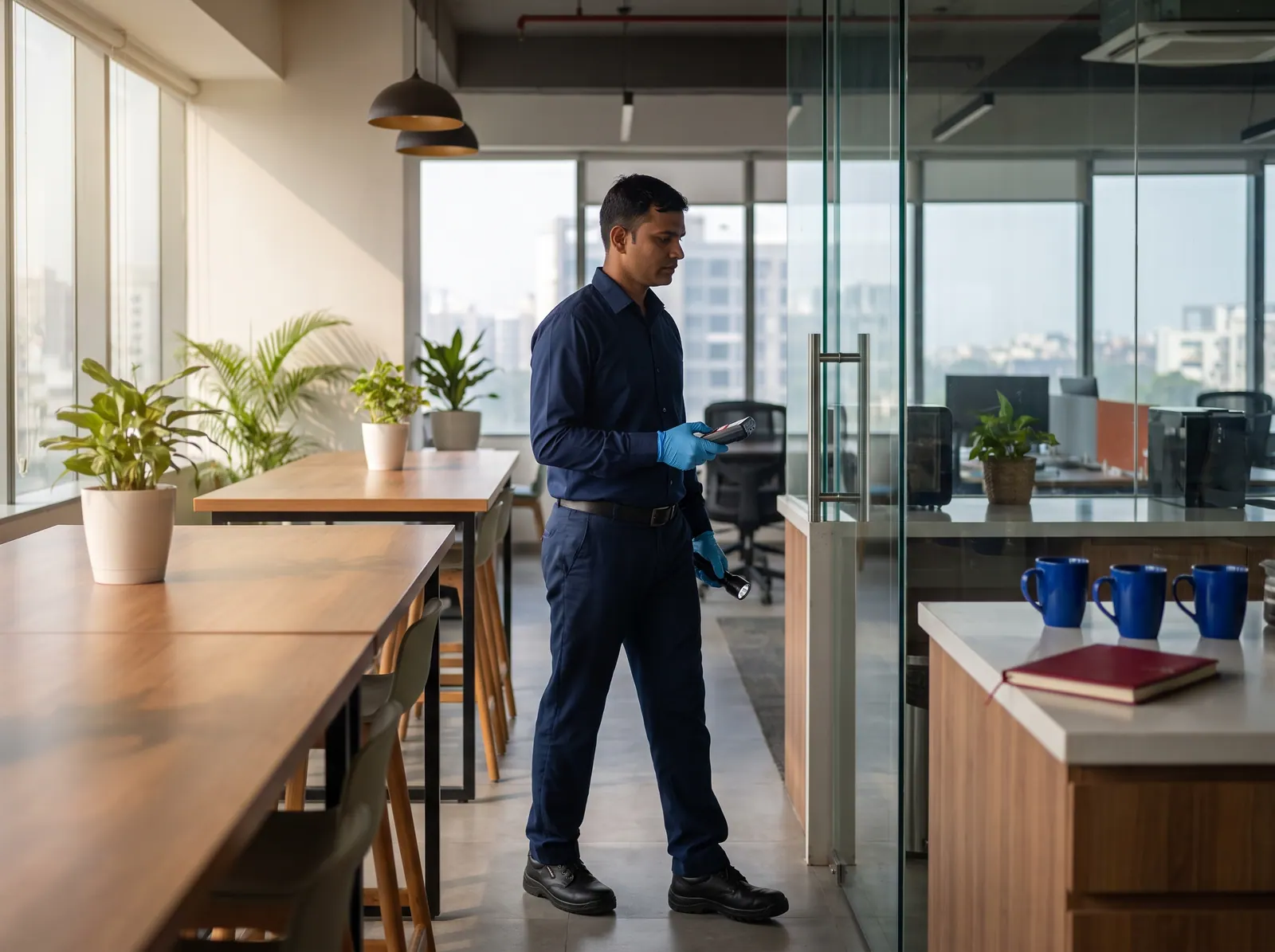
- Inspection. Our technician follows trails back towards entry points and, where possible, the nest. We check kitchen shelves, bin areas, sinks, bathrooms, window frames, garden beds and plant pots, and note damp spots that attract ants.
- Identification and plan. Based on the type of ant and where it nests, we choose baiting, crack-and-crevice spot treatment, outdoor nest treatment or a combination, and explain the plan before we start.
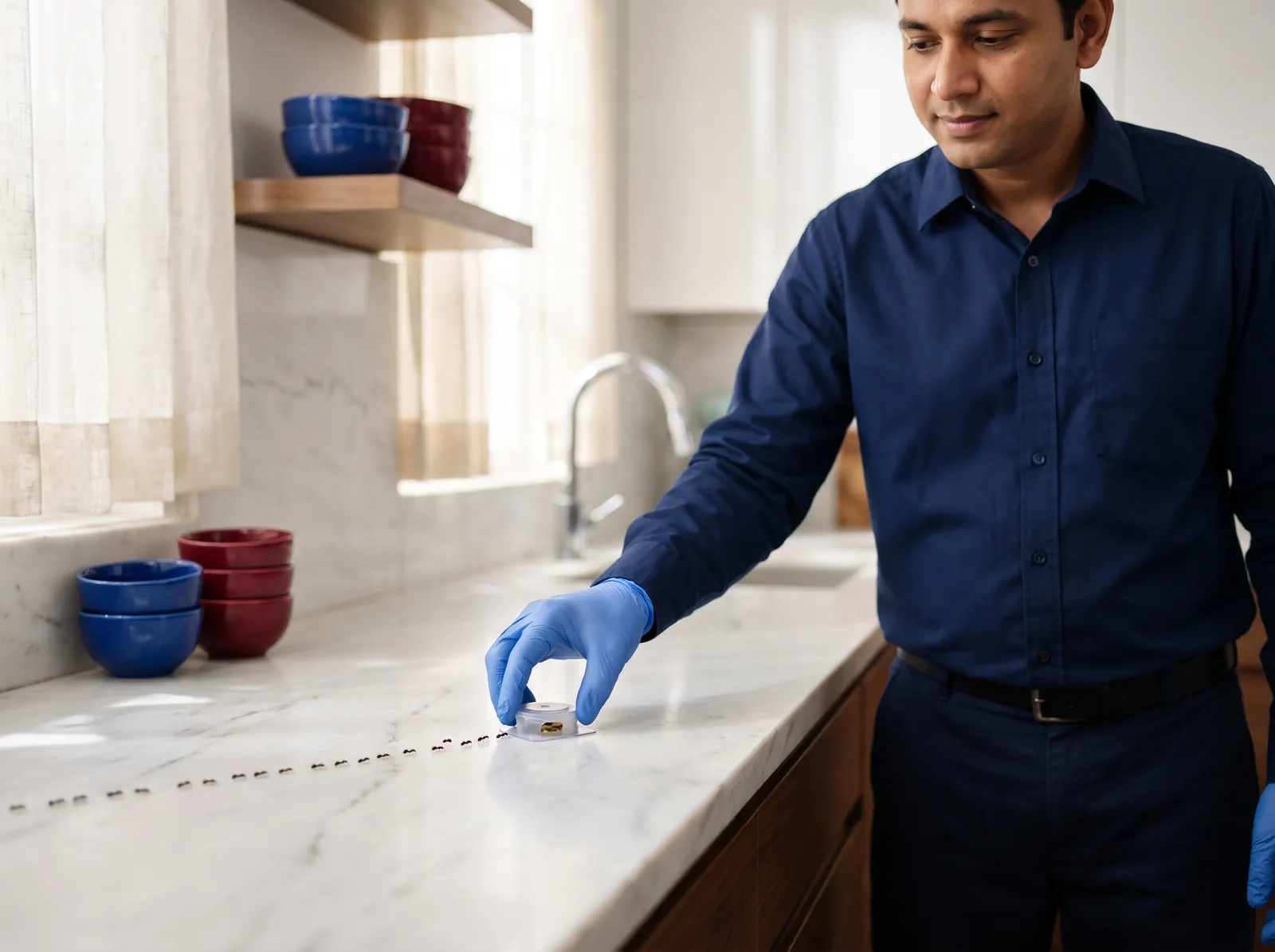
- Targeted application. Baits go on or beside active trails, out of reach of children and pets. Spot treatments go into cracks, gaps and nest areas rather than being sprayed over open surfaces. Our Goa operation is a licensed pest control operator with the Directorate of Agriculture, Goa, using CIB&RC-registered products, and we maintain Material Safety Data Sheets for the products we use.
- Prevention advice. We point out the gaps worth sealing, the food-storage changes to make and any moisture problems that keep drawing ants back.
- Report and review. You receive a service report after the visit, with updates on WhatsApp. If activity continues, we discuss whether a further visit is needed.
Baits work through the colony, so you may see more ants feeding at a bait point for a short while before numbers fall. That is expected. Avoid spraying or wiping them away.
Ant control for Candolim hotels, restaurants and guest houses
For a hospitality business, ants in a guest room, on a breakfast spread or near a dessert counter quickly become a complaint. We cover kitchens, stores, guest rooms, staff areas and outdoor seating, using methods suited to food-handling spaces.
For food businesses, our Goa branch provides service documentation aligned with HACCP and FSSAI audit expectations. That gives you a record of each visit, the areas treated and our recommendations. Ant control can also be part of a wider scheduled programme; see commercial pest control in Candolim. Where ants share a kitchen with cockroaches, our cockroach treatment in Candolim can be planned alongside.
What should you do before and after the visit?
Before
- Note where you see trails and at what time of day. Photos help.
- Clear kitchen counters and store open food in sealed containers.
- Do not spray insecticide or strong cleaners on trails for a day or two beforehand. It scatters the ants and hides the trail.
- Keep pets and their food bowls away from the work area.
After
- Leave bait points undisturbed, and avoid washing treated cracks for the time the technician advises.
- Keep children and pets away from treated areas until they are dry or as advised. Ventilate rooms, and wash your hands after touching treated surfaces.
- Fix dripping taps and wipe up sugary spills promptly.
- Trim branches and creepers touching walls, and keep plant pots from touching window sills.
Ant bites are usually just painful. If anyone has swelling, difficulty breathing or any other unusual reaction, see a doctor. For more on keeping food areas ant-free through the rains, read our guide to ants in Goa kitchens during the monsoon.
What affects the cost of ant control?
We give a quote once we understand the property and the problem. The main factors are:
- Size and type of property: a flat, an independent house, a villa with a garden, a shop or a hotel
- How widespread the activity is, and whether nests are indoors, outdoors or both
- The type of ant and the method it needs
- Whether you need a one-time treatment or regular visits under an annual maintenance contract
- Documentation needs for commercial and food businesses
For specific services, a warranty applies to the treated area, as set out in your service agreement. Ants can still arrive from neighbouring properties or from outdoors, so we will explain what you can do on your side to limit that.
Where around Candolim do we work?
Company records list Candolim, including Sinquerim and Nerul, within our Goa branch's coverage. That includes flats and housing societies, independent houses and villas, guest houses, hotels, restaurants, cafés, bars, shops and offices. For other pests in the same area, see our page on pest control in Candolim.
Tell our Goa branch in Chimbel where your property is, what the ants look like and where you see them, and we will suggest the next step. You can reach us through our contact page.
Frequently asked questions
QDo you cover Sinquerim and Nerul as well as Candolim?
Yes. Our company records list Candolim, including Sinquerim and Nerul, within the coverage of our Goa branch in Chimbel. When you get in touch, share the exact location and type of property, such as a flat, villa, guest house or restaurant. That helps us plan the inspection and bring what is needed for the visit.
QOur villa stays empty for part of the year. Can you treat ants before we arrive?
We can inspect and treat a holiday home or rental villa, but a client representative needs to be present during the service, such as a caretaker or property manager. Before you leave the property for a long period, remove sweets, snacks and pet food, empty bins and close drains. That removes much of what attracts ants while the house is shut.
QWhy do ants come back after I spray them?
A household spray kills the ants it touches, but those are only the foragers. The nest, with its queens and young, stays untouched and simply sends out more workers. With some small house ants, sprays can also make the colony split and spread. Baits work differently: workers carry them back and share them inside the nest.
QHow many visits will ant control need?
It depends on the type of ant, where it nests and how large the property is. A single kitchen trail often settles after one well-placed baiting visit. Ants nesting outdoors around a large villa garden, or across several buildings, may need a follow-up or regular visits. The technician will advise after the inspection, and you will receive a service report each time.
QAre ant baits a risk to children and pets?
Baits are used in small amounts and placed out of reach, usually in cracks, behind appliances or in enclosed stations. Follow the technician's advice and keep children and pets away from treated areas until they are dry or as advised. If a child or pet swallows anything from a treated area, see a doctor or vet promptly.
QCan you deal with red ant nests in our garden trees?
Yes. Ant control covers outdoor problems as well as indoor ones. Red weaver ants build leaf nests in trees and shrubs, and their bites are painful. We focus on nests close to doors, paths, play areas and seating, and suggest trimming branches that touch the house. Anyone who has a strong reaction to a bite should see a doctor.
QCan you provide records for our restaurant's FSSAI and HACCP checks?
Our Goa branch provides service documentation aligned with HACCP and FSSAI audit expectations. You receive a service report after each visit showing what was done and our recommendations, with updates on WhatsApp. These records support your own hygiene system. Keeping the kitchen clean and food properly stored remains part of what auditors look for.
Last updated 13 October 2026. Information on this page is general guidance; your technician will advise on your specific property after inspection.