Quick answer
Termites usually come from the soil and leave mud tubes, mud-packed tunnels and wood that sounds hollow, often near floors and walls. Wood borers are beetles whose larvae live inside the timber; they leave small round exit holes and heaps of fine powder, often on furniture, on any floor. Because termites live in a colony in the soil and borers live in the wood itself, termite treatment targets the building and soil, while borer treatment targets the affected timber.
Key points
- Termites usually come from the soil and leave mud tubes and mud-packed, hollow-sounding wood.
- Wood borers are beetles whose larvae live inside timber, leaving small round exit holes and fine powder.
- Termite treatment for occupied buildings focuses on a soil barrier using drill-fill-seal, as described in IS 6313 (Part 3).
- Wood borer treatment is applied to the affected timber itself; a soil barrier does not address borers.
- Avoid spraying household insecticide into mud tubes or holes, as it can hide evidence needed for inspection.
Finding damaged wood at home raises one quick question: is it termites or wood borer? The two are often confused, but they are very different pests. Knowing the difference between termite and wood borer damage matters, because the right treatment for one does very little for the other.
This guide explains the signs of each, where they usually turn up, why the treatment is different, and what to do next.
What is the basic difference between termites and wood borers?
Termites are social insects that live in large colonies. The termites that damage most buildings in India live in the soil and travel into homes looking for wood and other cellulose, such as paper, cardboard and the backing boards of cupboards. They need moisture and dislike open air, so they move inside mud tunnels they build themselves.
Wood borer is a general name for several kinds of beetle, commonly powder-post beetles and furniture beetles. The adult beetle lays eggs in cracks, joints or pores of the wood. The larvae then tunnel inside the timber, sometimes for months or longer, before emerging as adults through a small hole. The damage is done inside the wood by larvae you will rarely see.
In short: termites come to the wood from outside, while wood borers live in the wood.
Signs compared: termite vs wood borer
| Sign | Termites | Wood borers |
|---|---|---|
| Main visible clue | Mud tubes (pencil-thin or wider earthy tunnels) on walls, floors, skirting or wood | Small, round exit holes on the wood surface |
| Debris | Soil or mud packed into tunnels and cracks | Fine, flour-like or slightly gritty powder falling from holes, often in small heaps below |
| Damage pattern | Wood eaten from inside, leaving a thin outer layer; tunnels often lined with mud | Network of narrow tunnels packed with powder; surface pitted with holes |
| Sound and feel | Wood may sound hollow when tapped or give way under pressure | Wood may crumble at edges; heavily affected pieces feel weak |
| Insects you may see | Winged termites or shed wings near lights and windows, often after rain | Small beetles near windows or lights; usually you see only holes and powder |
| Other materials | Paper, books, cardboard boxes, plywood backing, stored cloth | Mainly timber, plywood, cane and bamboo |
| Link to the ground | Usually connected to soil, often entering at ground level | No connection to soil needed; can appear on any floor |
A note on drywood termites
Some termites live entirely inside dry wood and push out tiny hard pellets. These can be mistaken for borer powder. Termite pellets usually feel granular, like fine sand, while borer powder is more often soft and flour-like. Because some borers leave grittier dust too, it is worth having a trained inspector look if you are unsure.
Where does each pest usually appear?
Termites
- Wall and floor junctions, skirting and corners on the ground floor
- Door and window frames, especially where they touch the floor or a damp wall
- Behind wardrobes, kitchen cabinets and built-in furniture fixed to walls
- Under staircases and inside wooden flooring or false ceilings
- Stored cardboard boxes, old files and books kept against walls
- Gardens, tree stumps, wooden fencing and timber stacked on soil
Termites can also reach upper floors through cracks, ducts, conduits and gaps in walls, so a flat above ground level is not automatically safe.
Wood borers
- Loose furniture such as beds, chairs, tables and cabinets, on any floor
- Plywood, wooden panelling and the unpolished undersides or backs of furniture
- Cane and bamboo items, picture frames and wooden decorative pieces
- Door frames and structural timber made from untreated wood
- Newly bought or old second-hand furniture brought in from elsewhere
Climate plays a part. Goa's humid coastal climate and very heavy south-west monsoon keep timber and soil damp for long periods. Hyderabad, on the Deccan plateau, has a hot dry summer followed by the monsoon. In both regions, winged termites often appear after the early monsoon showers, which is a common moment for people to first notice a problem.
How can you tell if the activity is still active?
Old damage and live activity can look similar. A few simple observations help an inspector judge what is going on:
- Wood borer: wipe away the powder under the holes and check again after a week or two. Fresh, pale powder suggests larvae are still active. Holes with dark edges and no new powder may be old.
- Termites: note whether mud tubes look moist and fresh or dry and crumbling, and whether new tubes appear.
- Tap nearby wood gently and note any hollow-sounding spots.
- Take dated photographs so changes are easy to compare.
Why is the treatment different?
Treating termites: the colony is in the soil
Spraying the damaged wood only kills the termites present at that spot. The colony in the soil survives and keeps sending workers in. That is why anti-termite treatment for an occupied building focuses on a treated barrier in the soil under and around the structure, usually by drilling small holes along wall and floor junctions, applying termiticide and sealing the holes. This drill-fill-seal method follows the approach described in IS 6313 (Part 3) for existing buildings, while IS 6313 (Part 2) covers soil treatment during new construction.
Affected woodwork is treated as well, but the barrier is what addresses the source. You can read more about termite control, how to prepare your home for termite drilling treatment and how long anti-termite treatment lasts.
Treating wood borers: the pest is inside the timber
A soil barrier does nothing for borers, because they are not coming from the ground. Treatment has to reach the larvae inside the wood. This usually means applying treatment into the exit holes and over bare, unpolished surfaces so it can penetrate the tunnels, and checking neighbouring wooden items. For some movable items or stored goods, fumigation may be the appropriate method. Pieces that are badly weakened may need repair or replacement.
Once treated, a polished or sealed surface is less inviting for beetles to lay eggs on, although a finish alone will not kill larvae already inside. See our page on wood borer treatment for how this service is approached.
What if you have both?
It is possible to have termites in a door frame and borers in the furniture of the same room. A careful inspection separates the two, so each is treated in the way that actually works.
What should you avoid doing?
- Do not spray household insecticide into mud tubes or holes. It may only drive termites elsewhere and hide the evidence an inspector needs.
- Do not mix or apply chemicals yourself on wood or soil.
- Do not paint or polish over exit holes before the wood has been inspected and treated.
- Do not move borer-affected furniture next to sound wooden items, and do not scrape away all the mud tubes before an inspection.
What are the next steps?
- Photograph the damage, mud tubes, holes or powder, and note each location.
- Check other rooms, cupboards and stored boxes for similar signs.
- Fix leaks and reduce damp near walls and woodwork where you can.
- Move cardboard, papers and stored wood away from walls and off the floor.
- Keep a borer-affected loose item apart from other furniture until it is inspected.
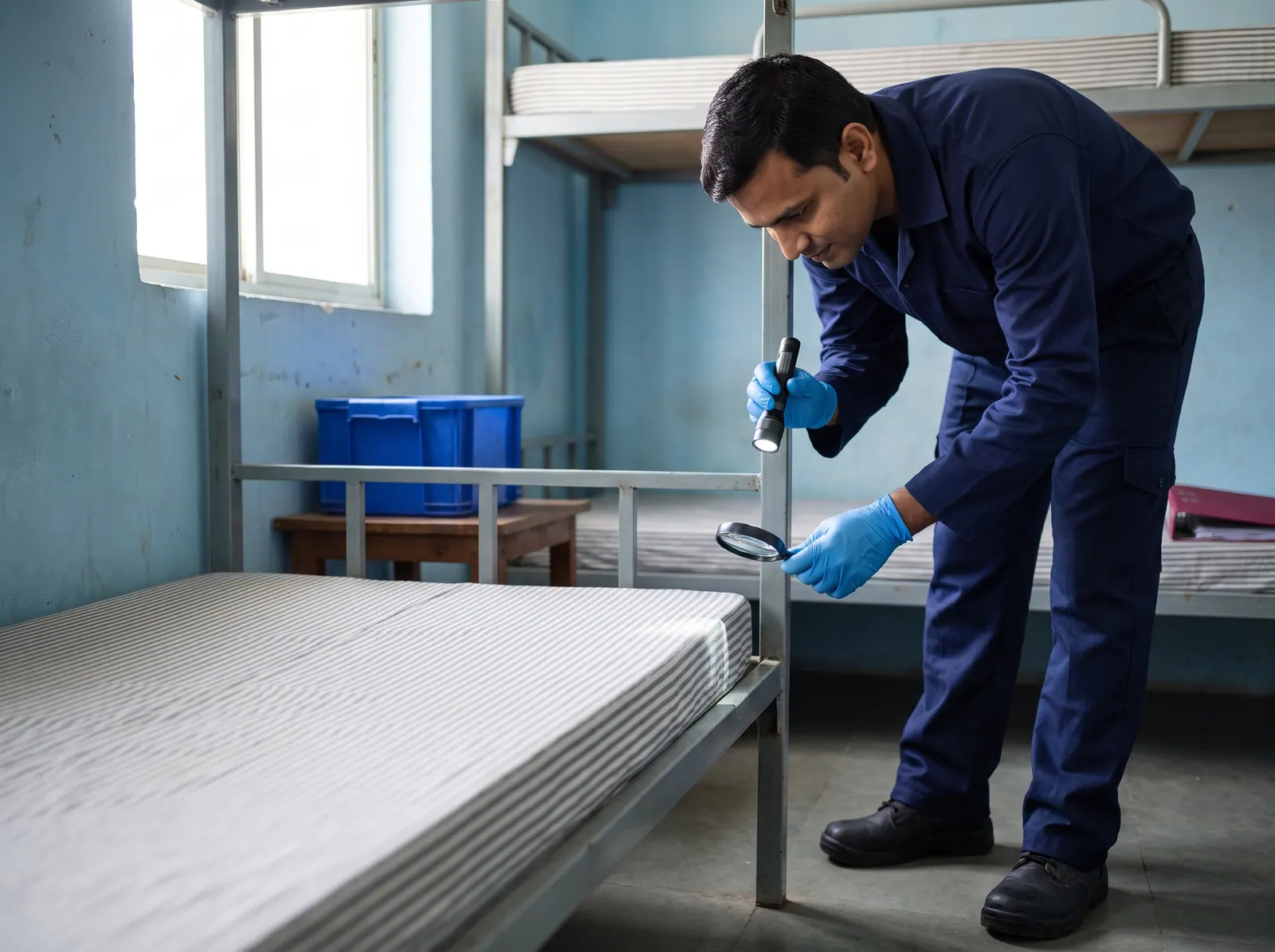
- Ask for a professional inspection to confirm which pest it is and how far it has spread.
We follow an Integrated Pest Management approach: inspection first, then sanitation and proofing advice, then targeted treatment. In Goa, we are a licensed pest control operator with the Directorate of Agriculture, Goa, using CIB&RC-registered products. After any treatment, follow the technician's instructions, keep children and pets away from treated areas until dry or as advised, ventilate the rooms and wash hands after touching treated surfaces.
In Goa: contact our Goa branch in Chimbel with photos and a short description, and the team can advise on an inspection.
In the Hyderabad region: our Shamshabad branch has recently opened. Tell us your location and the problem, and we'll confirm whether we can help. You can reach either branch through our contact page.
Frequently asked questions
QIs fine powder near my furniture always a sign of wood borer?
Not always. Fine powder under small round holes is a typical borer sign, but drywood termites push out small hard pellets that can look similar, and powder can also be left over from carpentry work or general dust. Clean the area and check whether fresh powder appears over the next week or two. If it does, or if you are unsure what you are looking at, an inspection will confirm the cause before any treatment is chosen.
QCan termites reach a flat on an upper floor?
They can. Termites usually start from the soil, but they can travel upwards through cracks in walls, ducts, electrical conduits, plumbing shafts and gaps around frames. Upper-floor infestations are less common than ground-floor ones, yet mud tubes or hollow-sounding woodwork on a higher floor should still be taken seriously and inspected, ideally along with the building's common areas.
QWill polishing or painting furniture get rid of wood borer?
A polish or paint finish makes the surface less attractive for beetles to lay eggs on, but it will not kill larvae that are already tunnelling inside the wood. Coating over active holes can also hide the evidence and make treatment harder to apply. It is better to have the item inspected and treated first, then finish it once the treatment has been completed as advised.
QDoes anti-termite treatment also protect furniture from wood borer?
Generally, no. Anti-termite treatment for buildings is designed to stop termites coming up from the soil and to deal with termites in affected woodwork. Wood borers are already inside the timber and do not need a route from the ground, so they need treatment applied directly to the affected wood. If you have both pests, each needs its own approach.
QHow do I know if exit holes are old damage or a current problem?
Old exit holes often have darker, weathered edges and no fresh powder beneath them. Active infestation usually shows pale, clean powder that reappears after you wipe it away, and sometimes new holes over time. Dated photographs help you compare. An inspector will look at the pattern of holes, the condition of the wood and any fresh debris to judge whether treatment is needed.
QShould I throw away furniture that has wood borer?
Not necessarily. Many pieces can be treated if the wood is still sound. Items that have become weak, crumbly or unsafe may need repair or replacement. Until it is inspected, keep the piece away from other wooden furniture so emerging beetles are less likely to lay eggs elsewhere, and avoid moving it to other rooms.
Last updated 13 October 2026. Information on this page is general guidance; your technician will advise on your specific property after inspection.