Quick answer
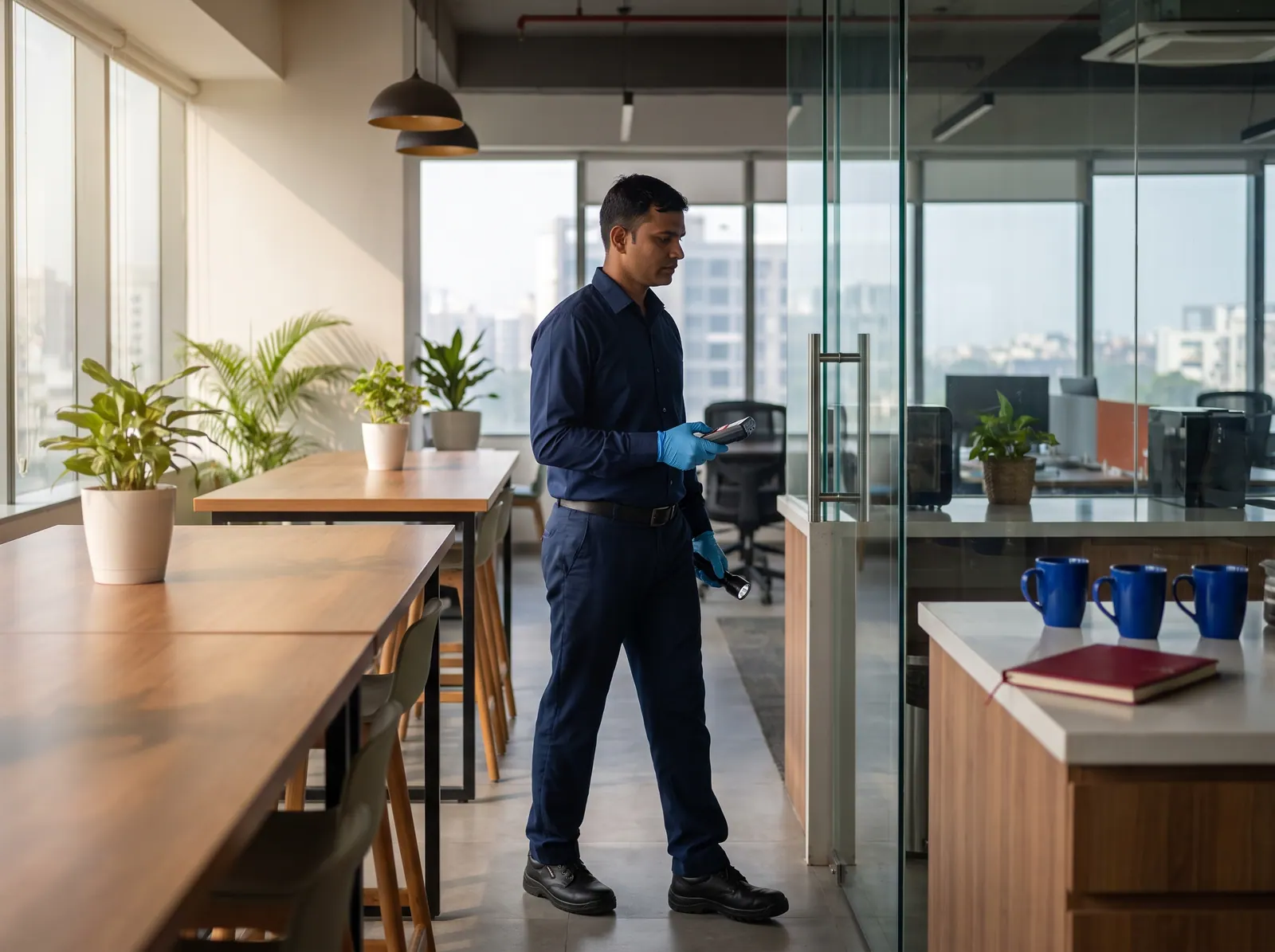
Our Goa branch in Chimbel provides ant control in Panaji (Panjim) for homes, flats, villas, hotels, cafés and offices. We inspect to find trails, entry points and nests, then use baits and targeted spot treatment so the colony is reached, not just the visible ants. We also give practical advice on food storage, moisture and sealing gaps. The number of visits depends on how established the colonies are.
Key points
- Ant control in Panaji is provided by the company's Goa branch in Chimbel, covering areas including Altinho, Campal, Miramar, Caranzalem, Dona Paula, Taleigao, St Inez and Ribandar.
- Treatment is inspection-led and focuses on trails and nests, using baits and targeted spot treatment rather than broad spraying.
- Termites (“white ants”) need separate anti-termite treatment; ants have a pinched waist and elbowed antennae.
- The Goa operation is a licensed pest control operator (Directorate of Agriculture, Goa) using CIB&RC-registered products, with Material Safety Data Sheets maintained.
- Service reports are shared after visits, and food businesses receive documentation aligned with HACCP/FSSAI audit expectations.
Our Goa branch in Chimbel provides ant control in Panaji (also called Panjim) for flats, bungalows, villas, shops, hotels, guest houses, cafés, bakeries and offices. We do not simply spray the ants you can see. We trace the trails back to where they come from and treat the colony, mainly with baits and targeted spot treatment.
Each visit also deals with the food, moisture and gaps that keep drawing ants indoors. This is the same ant control service we offer across Goa. Here it is adapted to the mix of buildings found in Panaji, from older family homes to apartment blocks, seafront hotels and city-centre offices.
Why do ants keep coming back after you spray them?
The ants on your counter are workers out foraging. The colony stays hidden, with its queen or queens, in places such as:
- wall voids, under loose tiles or behind skirting
- switchboards and electrical points
- pot plants or garden soil
Wiping or spraying the workers clears the trail for a day or two, but the colony simply sends more.
With some indoor species, repellent sprays, chalk lines and powders can make a colony split and start new nests elsewhere in the house. That is often why ants seem to spread to new rooms after home remedies. Baits work differently. Foraging workers carry the bait back and share it, so it reaches ants you never see.
What makes Panaji properties prone to ants?
Panaji's humid coastal climate suits many ant species for most of the year. During the heavy south-west monsoon, outdoor nests become waterlogged. Ants then often move indoors or forage harder for dry food and shelter. Our guide to ants in Goa kitchens during the monsoon covers that season in more detail.
- Older houses: laterite walls, wooden ceilings and tiled roofs have many joints and voids where ants can nest.
- Apartment buildings: flats share ducts, shafts and plumbing lines, so ants can travel from one flat to the next.
- Gardens and mature trees: these can host outdoor ants such as red weaver ants, which build leaf nests in trees and bite when disturbed.
- Food businesses: stored sugar, flour, syrups and baked goods attract both sweet-feeding and grease-feeding ants.
Is it ants or termites (“white ants”)?
Termites are often called “white ants”, and the treatment for them is completely different. Winged ants and winged termites can look alike, and both gather around lights, especially when the rains begin. These differences help you tell them apart:
| Feature | Ants | Termites |
|---|---|---|
| Waist | Narrow, pinched waist | Broad waist, body looks straight-sided |
| Antennae | Bent at an elbow | Straight and bead-like |
| Wings (winged forms) | Front wings longer than hind wings | Two pairs of roughly equal length, shed easily |
| Where you see them | Trails in the open, towards food and water | Rarely in the open; workers are pale and avoid light |
| Typical signs | Visible trails, small soil heaps near cracks | Mud tubes on walls, hollow-sounding or damaged wood |
Pre-construction soil treatment and the drill-fill-seal treatment of existing buildings are anti-termite treatments, carried out with reference to IS 6313. They are not ant control. If what you are seeing matches the termite column, see our page on termite control in Panaji instead.
What happens during an ant treatment visit?
- Inspection. The technician follows trails to entry points and likely nest sites. They also check for moisture and open food sources. Where possible, they identify the type of ant, because some prefer sweet bait and others prefer protein or grease.
- A plan for your property. The plan sets out which rooms come first and how kitchens and food areas are handled. It also covers what you should keep away from treated spots and how long children and pets should stay out. Finally, it states whether a follow-up visit is needed.
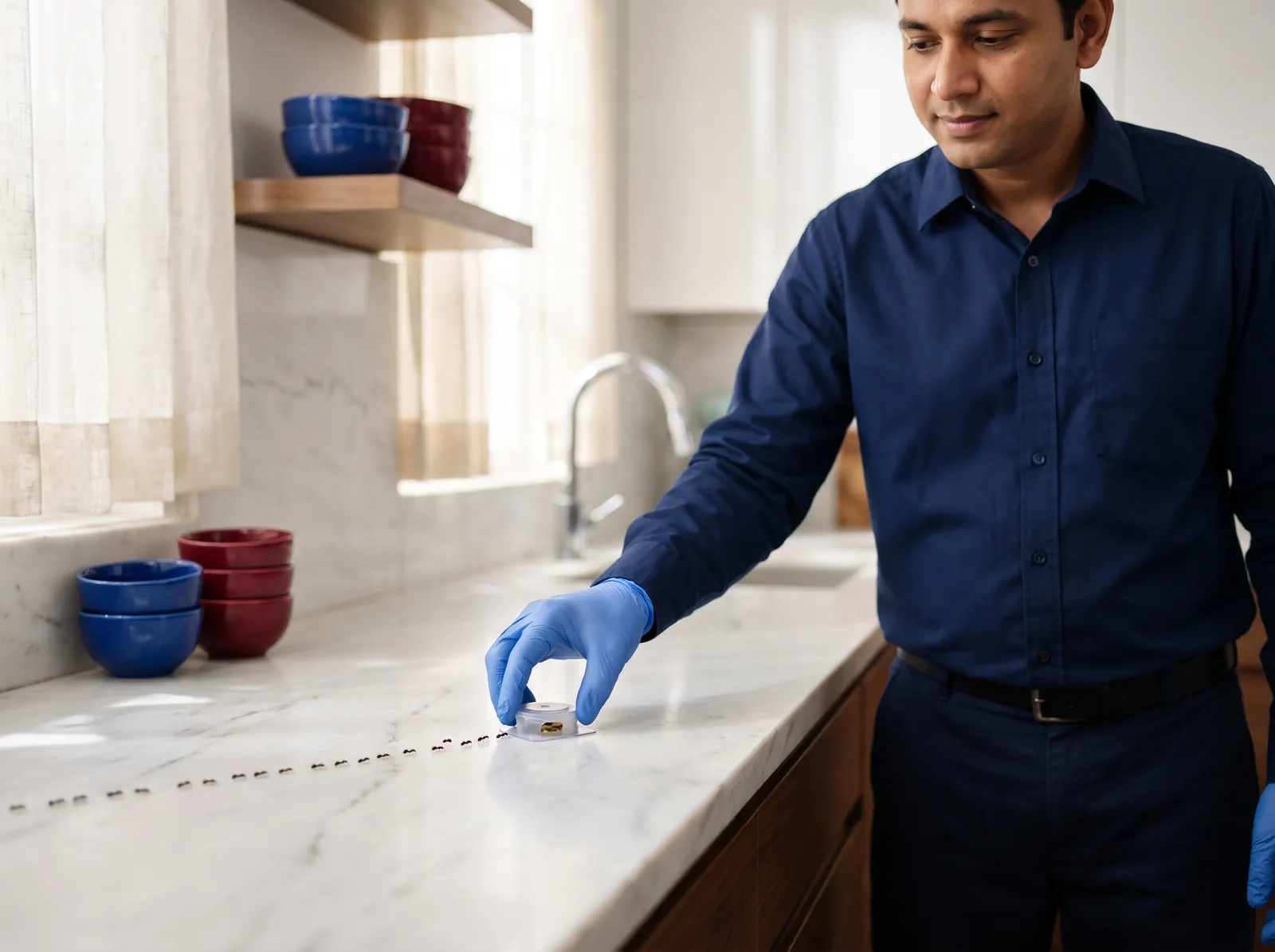
- Baiting. Bait is placed along trails and in cracks near nest entry points. It goes out of reach of children and pets, and away from food-contact surfaces.
- Targeted spot treatment. Where nests are found, for example in garden soil or along compound walls, they are treated directly. We avoid broad spraying indoors, because it can scatter colonies.
- Proofing and housekeeping advice. The technician points out gaps around pipes, skirting and fittings worth sealing. They also give advice on airtight food storage, leaks and rinsing recyclables. Any gaps in switchboards should be closed by an electrician.
- Service report. You receive a service report as proof of the visit. We also send updates on WhatsApp, and follow-ups are scheduled where your plan includes them.
For a day or two after baiting, you may see more ants around the bait points while they feed. This is normal. Some problems settle quickly, while others take a few days to show clear improvement.
Ant control for hotels, cafés and offices in Panaji
Commercial ant problems usually affect sensitive areas rather than a whole building.
- Hotels and guest houses: we focus on minibars and room pantries, room-service routes, stores, kitchens and gardens.
- Cafés, bakeries and cloud kitchens: attention goes to dry stores, preparation counters, display cabinets and drain points.
- Offices, banks and commercial complexes: these mostly need attention in pantries, cafeterias and cable trays, where food is eaten at desks.
Pest control is part of the hygiene requirements food businesses follow under FSSAI Schedule 4. For these businesses, we provide documentation aligned with HACCP and FSSAI audit expectations.
Visits can be planned around your quieter hours. Annual maintenance contracts are available if you want scheduled, year-round visits with service reports. Read more about scheduled programmes for businesses on our commercial pest control in Panaji page.
How do we keep your family, staff and pets safe?
We are a licensed pest control operator with the Directorate of Agriculture, Goa. We use CIB&RC-registered products, applied according to label directions, and keep Material Safety Data Sheets for every product we use. Our approach is Integrated Pest Management: inspection first, then sanitation and proofing advice, then targeted treatment. This means less product, placed more precisely.
Before the visit:
- Clear counters and the areas around trails, and put food away in closed containers.
- Keep pets in a separate room, and cover aquariums.
After the visit:
- Keep children and pets away from treated areas until they are dry, or for as long as the technician advises.
- Ventilate the rooms, and wash your hands after touching surfaces near treated points.
- Do not wash or wipe away bait placements until ant activity has dropped.
Some ants bite or sting. If anyone has a strong reaction, spreading swelling or any difficulty breathing, see a doctor promptly. For other pest concerns in the home, see our page on residential pest control in Panaji.
What affects the cost and the number of visits?
We give a quotation after inspection, based on:
- the size of the property and the number of rooms or zones involved
- how heavy and widespread the ant activity is
- the type of site: flat, villa, hotel, café, office or food unit
- whether gardens, compound walls or trees need treatment too
- whether you want a one-time service or an annual maintenance contract
A light problem with a single colony may settle after one visit. Long-standing problems, several colonies or large gardens usually need a short series of visits or a maintenance contract. The technician will recommend a weekly, monthly or quarterly schedule to suit the situation.
For specific services, a warranty applies to the treated area, as set out in your service agreement. It does not cover ants arriving from a neighbouring property or from outside. It also excludes structural changes, new construction, and cases where post-service instructions were not followed. Please ask what applies to your ant treatment before you book.
Which parts of Panaji do we cover?
Our records cover Panaji, including these areas:
- Altinho
- Campal
- Miramar
- Caranzalem
- Dona Paula
- Taleigao
- St Inez
- Ribandar
If your home or business is elsewhere in or near the city, tell us the exact location and we will confirm whether we can help. You can also see the other services available in Panaji.
How do I arrange ant control in Panaji?
Contact our Goa branch in Chimbel with your location, the type of property and where you are seeing ants. A clear photo of the ants helps the technician prepare, ideally taken next to a coin for scale. A photo of any trail or mud tube is also useful. We will agree a convenient time with you. If you need to change it, please let us know at least 48 hours ahead.
Frequently asked questions
QWill ant bait attract more ants into my kitchen?
Bait is placed on existing trails and near entry points. It intercepts ants that are already coming in rather than drawing new ones from outside. For a day or two, you may notice more activity around the bait points as workers feed and bring others. That is a sign the bait is being carried back to the colony, so avoid spraying or wiping those spots until activity drops.
QHow long does an ant treatment take?
It depends on the size of the property and how widespread the ants are. Most treatments are completed within a few hours. A single flat usually needs less time than a hotel or a property with a large garden. The technician will give you an estimated time frame during the initial inspection, so you can plan your day around it.
QCan we use the kitchen on the day of treatment?
Usually yes, once the technician confirms it. Baits go into cracks and protected spots away from food-contact surfaces, and spot treatment is kept away from open food. Keep food covered or stored as advised and wait for treated areas to dry. Wash your hands after touching surfaces near treated points. Always follow the specific instructions given at your visit.
QThe ants are coming from my neighbour's flat. Will treatment still help?
Treating your flat reduces the ants inside it, and baits can reach colonies that forage into your home. However, if the main nest is next door or in a shared duct, ants may keep arriving. The warranty applies only to the treated area. We will suggest which gaps to seal on your side and, where possible, a coordinated treatment arranged through your housing society.
QDo you deal with ants in gardens and on trees?
Yes. Ant control covers both indoor and outdoor problems. Outside, we look for nests in soil, along compound walls, in planters and in trees, and treat them with targeted baiting or spot treatment. Weaver ant nests in fruit or ornamental trees need careful handling because the ants bite when disturbed. Please do not try to cut these nests down before the visit.
QWill I get records my café can show during an FSSAI inspection?
Yes. After each visit we share a service report as proof of service. For food businesses, our documentation is aligned with HACCP and FSSAI audit expectations. Keep these reports together with your own cleaning and pest-sighting records, because inspectors generally want to see an ongoing programme rather than a single treatment.
QAre ants a sign that my home is not clean?
Not necessarily. Even well-kept homes get ants in humid weather. A few crumbs, a spilt sweet drink, pet food left out or a damp corner is enough to attract foragers. Good housekeeping makes a real difference. Sealing entry points and treating the colony itself are usually needed as well before the trails stop.
Last updated 13 October 2026. Information on this page is general guidance; your technician will advise on your specific property after inspection.