Quick answer
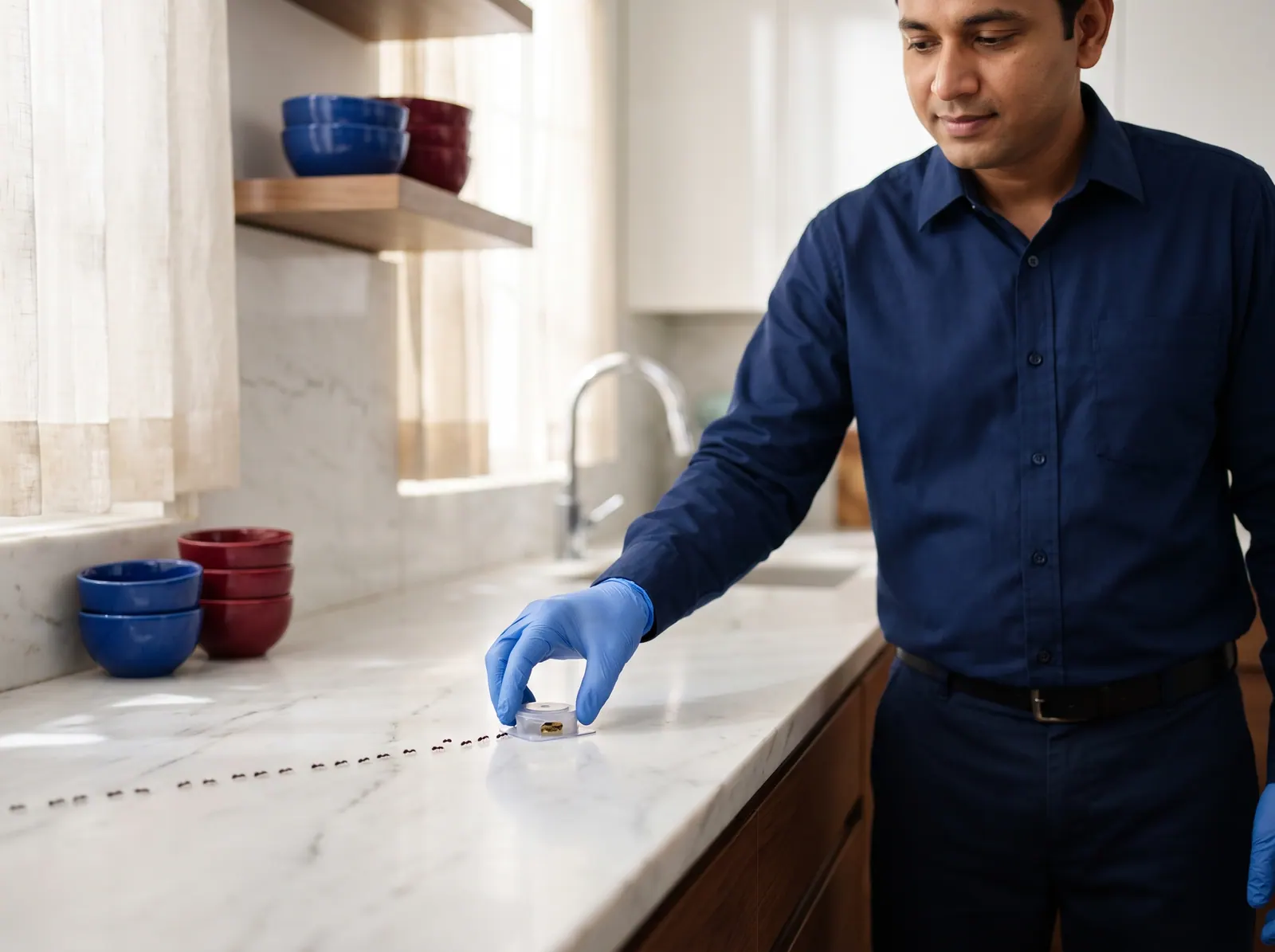
Efficacy Pest Control's Goa branch provides ant control across Margao, including Fatorda, Navelim, Aquem, Borda, Gogol and Comba. Rather than spraying the ants you can see, our technicians inspect trails and entry points. They place gel bait that worker ants carry back to the colony and spot-treat cracks and nesting points. You also get practical prevention advice and a service report after the visit.
Key points
- Ant control from our Goa branch covers Margao, including Fatorda, Navelim, Aquem, Borda, Gogol and Comba.
- Treatment uses trail and nest-focused baiting with spot treatment, so worker ants carry bait back to the hidden colony.
- Repellent household sprays scatter trails and can make ant problems harder to control.
- Goa's heavy monsoon floods soil nests and often drives ants indoors.
- Service reports are shared after visits, and food businesses can get HACCP/FSSAI-aligned documentation.
If ants are trailing across your kitchen counter, getting into the sugar tin or running along a shop shelf, our ant control in Margao is built around one idea: deal with the colony, not just the ants you can see. Our Goa branch in Chimbel serves Margao (also called Madgaon) and its neighbourhoods, including Fatorda, Navelim, Aquem, Borda, Gogol and Comba.
Each visit starts with an inspection. It then uses trail and nest-focused baiting, with spot treatment of cracks and entry points. We follow an Integrated Pest Management (IPM) approach, so you also get clear advice on food storage, sanitation and sealing gaps. You can read more about the method on our main ant control service page.
Why do ants keep coming back after you spray?
A visible trail is only a small part of the colony. Most of the ants stay hidden, including the queen or queens that lay the eggs. They may be in a wall void, under floor tiles, inside a planter or in the soil outside. Killing the workers on the counter does not stop the nest from sending out more.
Household sprays can also make things worse. Many are repellent, so ants simply walk around the treated strip. Some species react to disturbance by splitting into several smaller colonies. That is why a kitchen can seem clear for a day and then have trails in two new places.
Baiting works differently. Worker ants pick up a slow-acting bait, carry it back and share it through the colony. Because the bait acts slowly, ants keep feeding and bring others to it before it takes effect. This is how the treatment reaches nests that nobody can see.
What happens during an ant control visit?
- A short talk-through: We ask where and when you see ants, what they seem to be feeding on and what you have already tried.
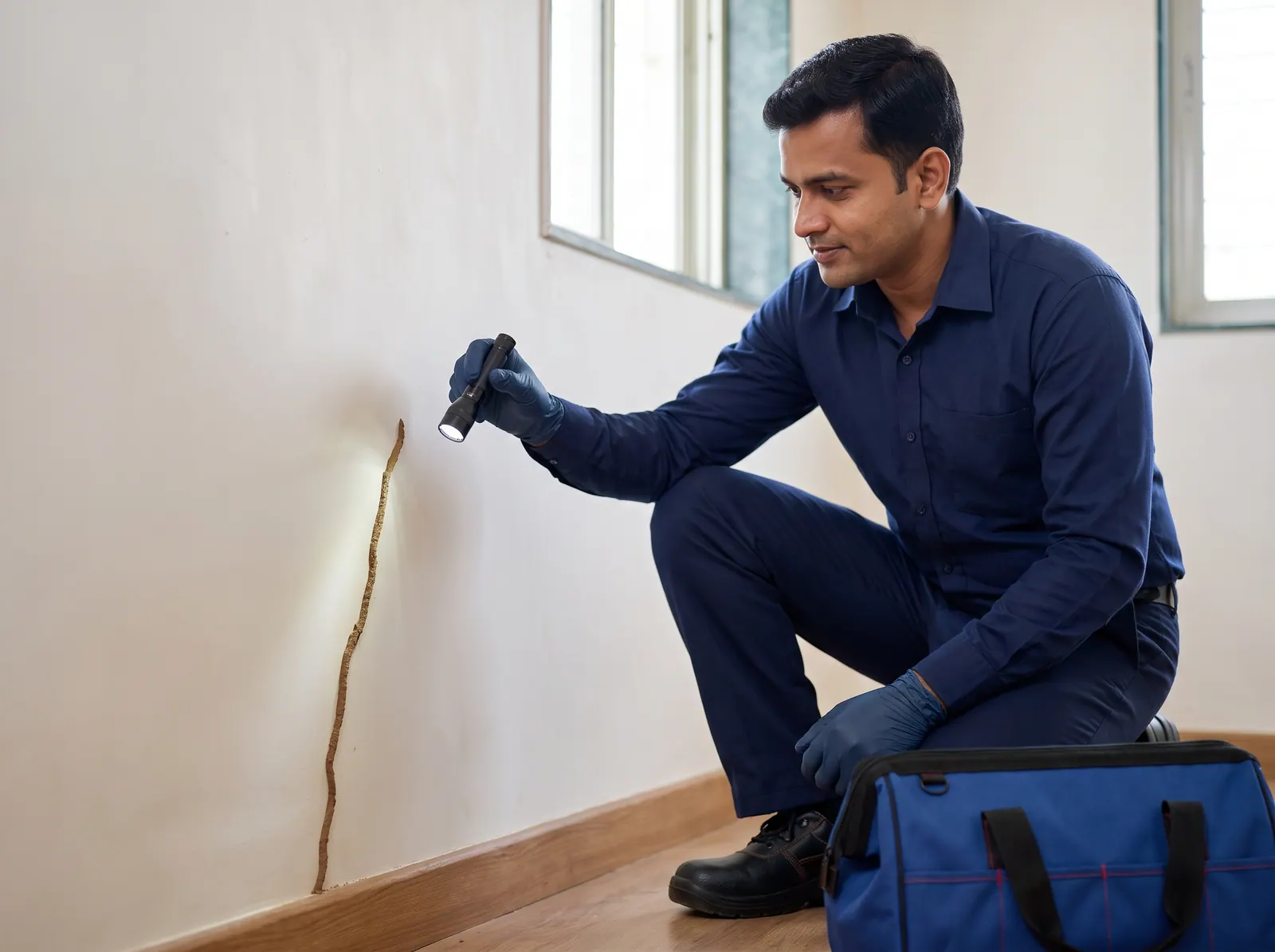
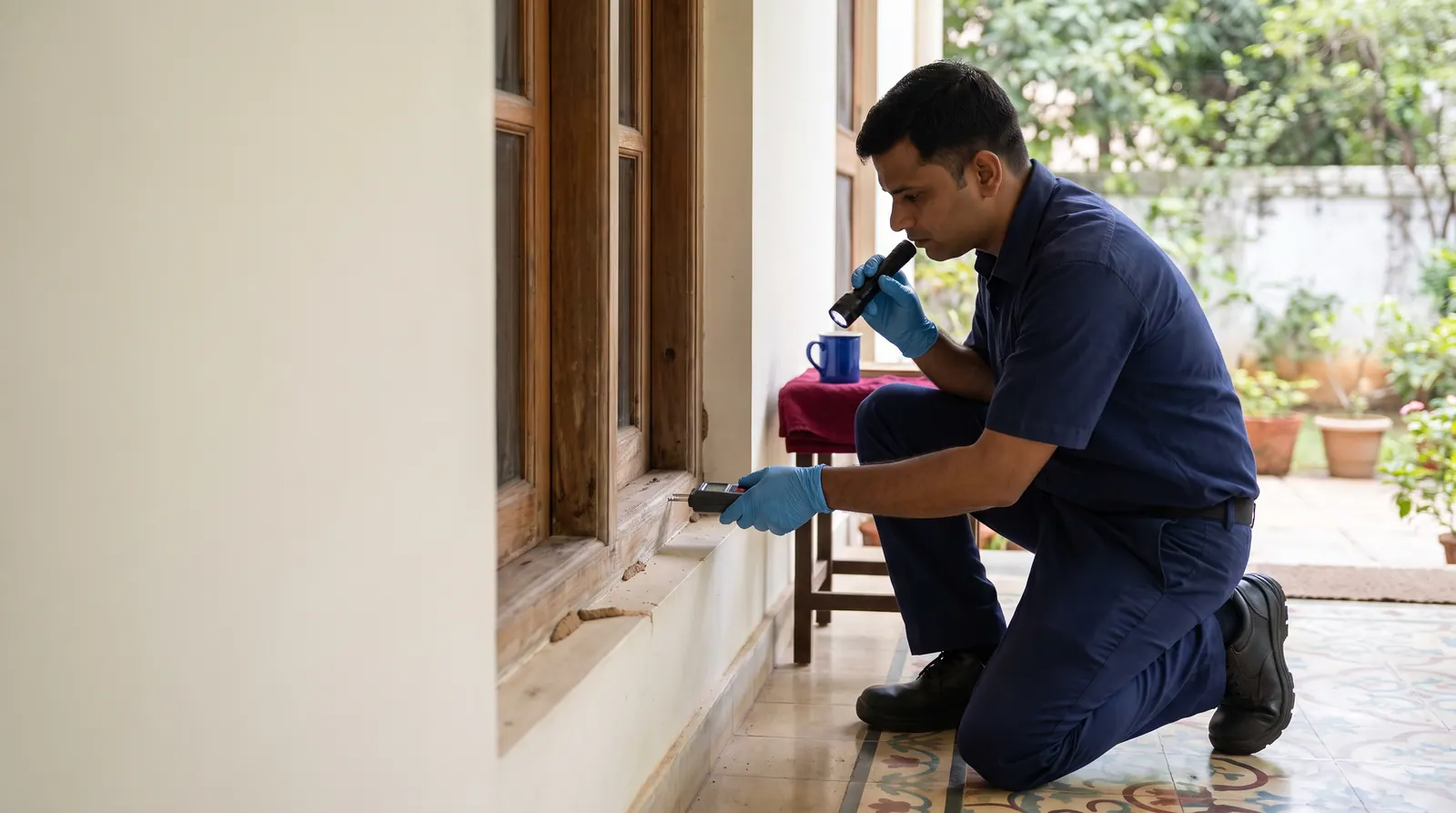
- Inspection: The technician follows trails back towards their entry points. Typical spots are skirting gaps, pipe openings under sinks, window frames, electrical points, tile joints and door thresholds. We also check for damp areas, which attract many ant species.
- Identifying the ant: Tiny house ants, larger black ants and red ants coming in from garden trees behave differently and accept different baits. We match the treatment to what we find.
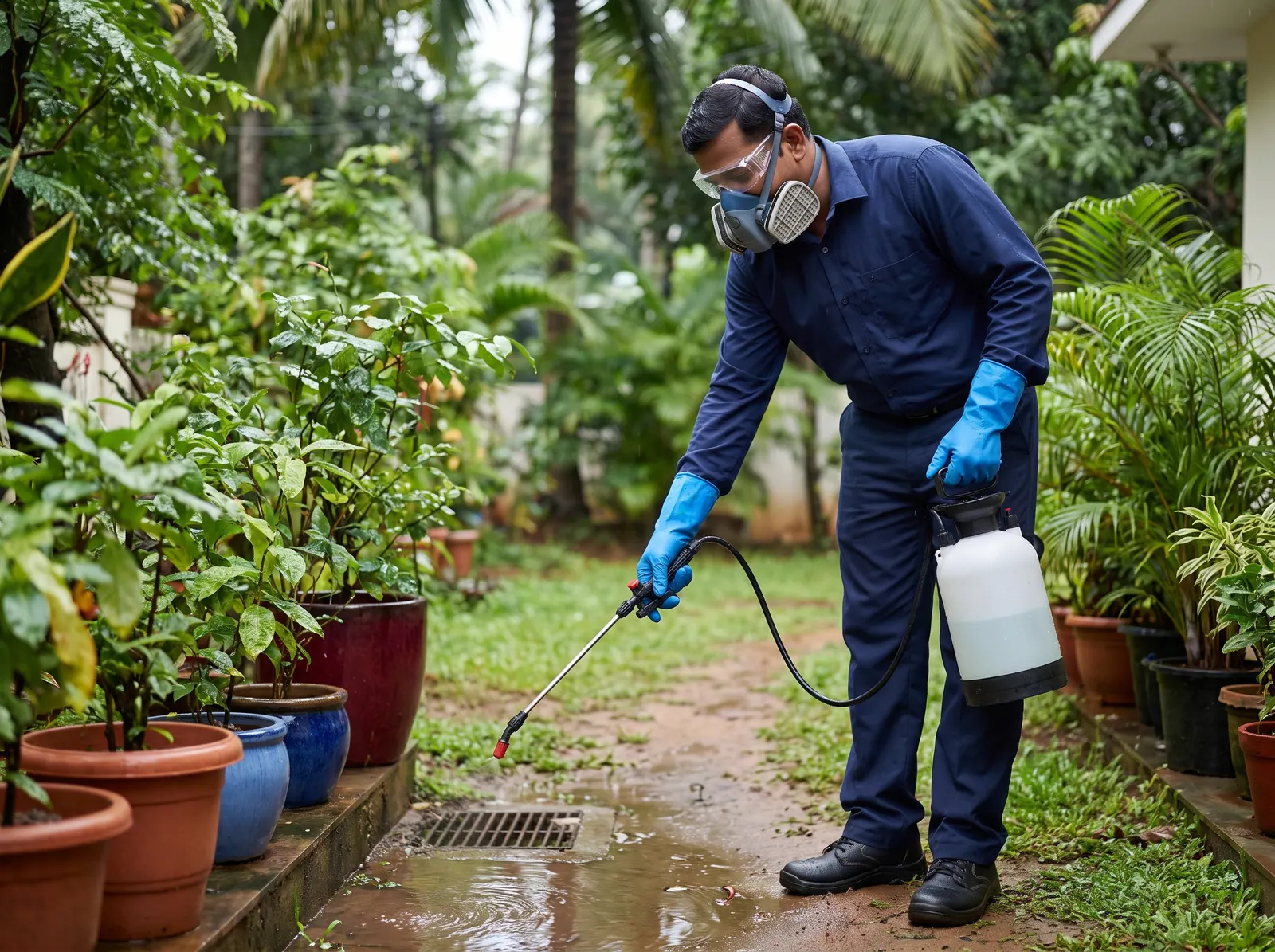
- Targeted treatment: Gel bait goes in small spots along trails and near entry points. Cracks and nesting points are spot-treated where needed. Where appropriate, outdoor nests along walls, compound edges or planters are treated separately.
- Prevention advice: We point out the gaps worth sealing and the food and moisture sources that are drawing ants in. We also explain what to avoid while the bait is working.
- Service report: After the visit we share a service report as proof of service, with WhatsApp updates if you prefer.
Ant problems in different kinds of Margao property
Margao is South Goa's main commercial town, so ant problems here range from family kitchens to market shops and busy food outlets. The method stays the same, but the hotspots differ from one property type to another.
| Property | Where ants usually show up | What we focus on |
|---|---|---|
| Flats and apartment blocks | Kitchen counters, sink cabinets, balcony doors, shared ducts | Bait along trails and sealing advice for pipe and duct openings. Trails are sometimes shared with neighbouring flats. |
| Older independent houses | Wooden frames, tile joints, gardens, compound walls | Indoor baiting plus treatment of outdoor nests around the plinth and garden |
| Shops, grocery stores and showrooms | Stock shelves, sugar and snack packets, storerooms | Discreet bait placement away from goods, plus storage and stock-rotation advice |
| Restaurants, bakeries and cafés | Prep tables, sweet and syrup stations, drains, dry stores | Kitchen-appropriate placements, a sanitation checklist and records for hygiene audits |
| Offices, clinics, schools and labs | Pantries, staff lunch areas, desks where food is kept | Pantry-focused baiting and simple food rules for staff |
Food businesses are expected to keep premises free of pests under FSSAI Schedule 4 hygiene requirements. For these businesses, our Goa operation provides documentation aligned with HACCP and FSSAI audit expectations. Ant work in a kitchen often goes hand in hand with cockroach treatment in Margao. Businesses that want scheduled, documented visits for several pests can look at our commercial pest control in Margao.
How does the monsoon change ant activity in Margao?
Goa's heavy south-west monsoon floods soil nests and soaks garden areas. Many ants then move indoors looking for dry, sheltered places and food. The humid weather also keeps kitchens, bathrooms and wall cavities damp, which suits several house-ant species. As a result, many households notice trails appearing suddenly once the heavy rains begin.
During the rains, a few habits help:
- Keep food sealed.
- Fix leaking taps and pipes.
- Clear wet leaf litter and stacked items away from outside walls.
Our guide to ants in Goa kitchens during the monsoon covers this in more detail.
Winged ants or termites?
After rain, swarms of winged insects around lights can be either flying ants or termites. Flying ants have a narrow, pinched waist, bent (elbowed) antennae and front wings longer than the back wings. Winged termites have a thick, straight waist, straight antennae and four wings of roughly equal length that drop off easily.
If you find shed wings on window sills or mud tubes on walls, treat it as a possible termite problem. See our page on termite control in Margao. If you are building a new home, the soil treatment done before flooring is an anti-termite treatment (covered by IS 6313 Part 2). It is not an ant service, so ask about it on that page.
How should you prepare, and what should you avoid afterwards?
Before the visit
- Clear food, fruit and open packets from counters and the areas around the trails.
- Do not spray household insecticide for a day or two beforehand, because it scatters the trails the technician needs to follow.
- Note where trails start and end, and the times of day you see them.
- Move pet bowls and keep pets secured during the treatment.
- Make sure an adult family member or a staff representative is present while the technician works.
After the visit
- Do not wipe, wash or spray over bait spots, because ants need to keep feeding on them.
- Expect more ants near the bait for a short while. This usually means they are taking it.
- Keep children and pets away from treated areas until they are dry, or for as long as the technician advises.
- Keep surfaces crumb-free and food in airtight containers, so the bait is the most attractive food around.
- Wash your hands if you touch a treated surface.
Our Goa operation is a licensed pest control operator (Directorate of Agriculture, Goa). We use CIB&RC-registered products, applied according to their label directions, and we maintain Material Safety Data Sheets for the products we use. If anyone at home feels unwell after a treatment or has a strong reaction to an ant bite, please see a doctor.
Which parts of Margao do we cover?
Company records list Margao town and these neighbourhoods: Fatorda, Navelim, Aquem, Borda, Gogol and Comba. If you are in a nearby village or coastal area and are not sure whether it is covered, tell us your location. We will confirm whether we can help before booking anything. For other pests in the town, see our overview of pest control in Margao.
What affects the cost of ant control?
We give a quotation after understanding the problem. Payment follows the quotation or invoice. The main factors that affect the cost are:
- Size of the area: a 1BHK or 2BHK flat, a villa, an office or a shop.
- Spread of the problem: a single kitchen trail, or trails in several rooms and outdoor nests along the compound.
- Type of ant: some species need more bait points or a follow-up visit.
- Type of premises: food businesses need more careful placement and documentation.
- One-off or scheduled: a single treatment, or regular visits under an annual maintenance contract.
Arranging ant control in Margao
Contact our Goa branch in Chimbel using the details on this page, or visit our Goa branch page. Tell us your Margao locality, the type of property and where you are seeing ants. A photo of the trail helps too. We will explain the treatment plan and what you need to do before the visit.
Frequently asked questions
QHow soon will the ants disappear after treatment?
It depends on the species, the size of the colony and how many nests there are. Bait is slow-acting on purpose, so you may see more ants near the bait spots for a short time while they feed and carry it back. Activity usually drops over the following days. Heavy or spread-out problems can need a follow-up visit, and the technician will tell you what to expect for your property.
QIs ant treatment safe in a kitchen used by children and pets?
Treatment is targeted. Gel bait goes in small spots inside cracks and along trails rather than being sprayed across open surfaces. Our Goa operation uses CIB&RC-registered products according to their labels and keeps Material Safety Data Sheets. Keep children and pets away from treated areas until they are dry or as the technician advises, and wash hands after touching treated surfaces.
QDo you treat ants in Fatorda, Navelim and other parts of Margao?
Yes. Our company records list Margao town along with Fatorda, Navelim, Aquem, Borda, Gogol and Comba. If your home or business is just outside these neighbourhoods, share your exact location with our Goa branch. We will confirm whether we can help before arranging a visit.
QCan a Margao restaurant or bakery get records for hygiene audits?
Yes. For food businesses, our Goa operation provides documentation aligned with HACCP and FSSAI audit expectations, along with a service report after each visit. Many food outlets combine ant work with cockroach, rodent and fly management under a scheduled programme. Ask about this when you contact us.
QWhat if ants come back after the treatment?
For specific services, a warranty applies to the treated area as set out in your service agreement. It varies by pest and treatment, and it does not cover structural changes or cases where post-service instructions were not followed. Ants can also enter again from a neighbouring flat or from outside. If you notice a new trail, tell us, and we will check for a fresh entry point or hidden nest and advise on prevention.
QShould I keep using my own ant spray between visits?
It is better not to. Most household sprays repel ants, so they stop feeding on the bait and move to new routes, and some species split into extra colonies when disturbed. Wiping trails with soapy water and keeping food sealed is fine. Leave the bait spots untouched so the colony keeps taking the bait.
Last updated 13 October 2026. Information on this page is general guidance; your technician will advise on your specific property after inspection.