Quick answer
Efficacy Pest Control's Goa branch in Chimbel treats termites, cockroaches, rodents, bed bugs, mosquitoes, wood borers, ants, flies and lizards. It also removes bee and wasp nests and provides bird netting and fumigation for homes, hotels, restaurants and businesses. Every job starts with an inspection, followed by targeted treatment and advice on proofing and sanitation. We are licensed by the Directorate of Agriculture, Goa, use CIB&RC-registered products and share a service report after each visit.
Key points
- Our Goa branch in Chimbel treats termites, cockroaches, rodents, bed bugs, mosquitoes, wood borers, ants, flies and lizards, and also provides nest removal, bird netting and fumigation.
- We are a licensed pest control operator with the Directorate of Agriculture, Goa, and use CIB&RC-registered products.
- Every job follows an IPM approach: inspection, sanitation and proofing advice, then targeted treatment.
- Service reports are shared after visits, and documentation for food businesses is aligned with HACCP and FSSAI audit expectations.
- For specific services, a warranty applies to the treated area, as set out in the service agreement.
If you need pest control services in Goa, our established Goa branch in Chimbel works with flats, villas, housing societies, hotels, restaurants, offices, shops and warehouses in the towns listed further down this page. This page covers what we treat and how a visit works. It also explains how Goa's seasons affect pests, so you can plan treatment rather than only react to it.
What pests do we treat in Goa?
Each service begins with an inspection, because the right treatment depends on the pest, where it is coming from and who uses the space. The table below summarises our main services.
| Pest or need | What we do | Where it usually shows up |
|---|---|---|
| Termites | Pre-construction soil treatment for new buildings, post-construction drill-fill-seal treatment for occupied buildings, and wood treatment | Door frames, skirting, cupboards, wooden ceilings, garden edges |
| Cockroaches | Gel baiting and targeted crack-and-crevice treatment | Kitchens, bathrooms, drains, food stores |
| Rats and mice | Inspection, tamper-resistant bait stations, traps and proofing advice | Kitchens, stores, warehouses, false ceilings |
| Bed bugs | Room-by-room inspection and treatment, with follow-up visits | Bedrooms, hotel rooms, hostels, staff accommodation |
| Mosquitoes | Breeding-site reduction, larviciding, indoor residual spraying and fogging | Gardens, drains, water tanks, open plots |
| Wood borers | Treatment of furniture, doors, frames and structural timber | Older furniture, rafters, door and window frames |
| Ants, flies and lizards | Nest-focused ant baiting, fly source reduction and sanitation advice, lizard habitat and entry-point management | Kitchens, pantries, garbage areas, drains, walls near lights |
| Bees, wasps and birds | Safe handling of nests near occupied areas; bird-proofing nets | Balconies, ducts, ledges, eaves |
| Stored goods and spaces | Fumigation where it is the appropriate method | Godowns, stores, consignments |
For more detail on individual pests, see our pages on termite control in Goa, cockroach control for Goa kitchens and homes, bed bug treatment in Goa and mosquito control in Goa.
How does Goa's climate shape pest problems?
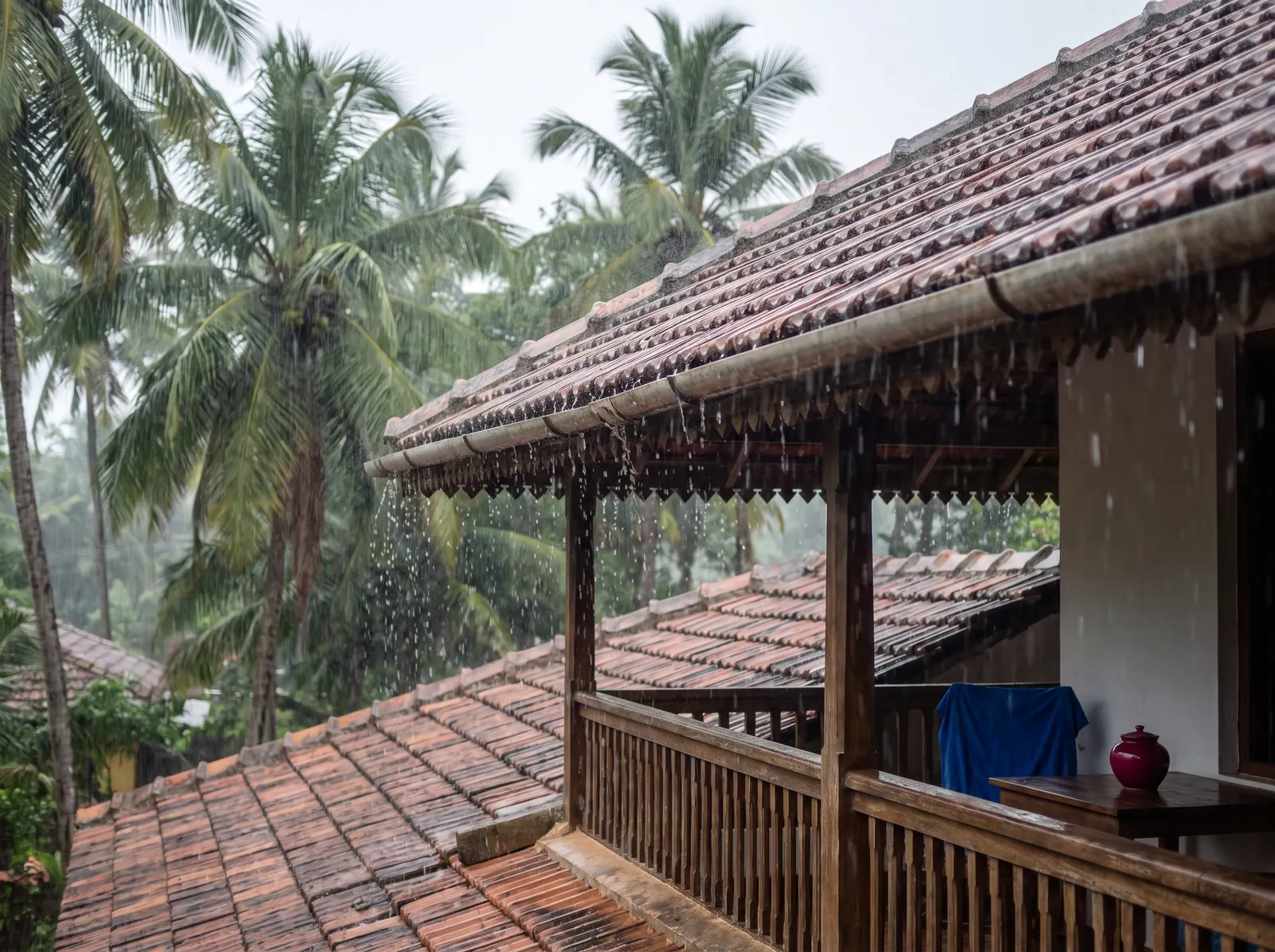
Goa has a humid coastal climate and a very heavy south-west monsoon. Damp soil and timber suit termites and wood borers. Water left standing after rain gives mosquitoes places to breed. When drains flood, cockroaches and rodents tend to move indoors in search of dry shelter.
Tourism adds another pattern. Hotels, guest houses and homestays see a steady flow of guests and luggage, and bed bugs travel easily in bags and bedding. Busy restaurant kitchens give cockroaches, flies and rodents food and warmth all year.
| Season | What tends to increase | Useful action |
|---|---|---|
| Hot months before the rains | Ants and cockroaches; termite activity in soil and wood | Book a termite inspection, clear gutters and drains, and seal gaps around pipes |
| Monsoon | Mosquito breeding, termite swarmers after early rains, flies, rodents seeking shelter | Empty standing water every week, check roofs and ceilings for leaks, keep food sealed |
| After the monsoon | Mosquitoes where water lingers; signs of borers in furniture that stayed damp | Recheck breeding sites and look for fresh wood powder under furniture |
| Cooler, drier months | Bed bugs in busy accommodation; kitchen pests during peak trade | Run regular room checks and schedule kitchen service |
What happens during a pest control visit?
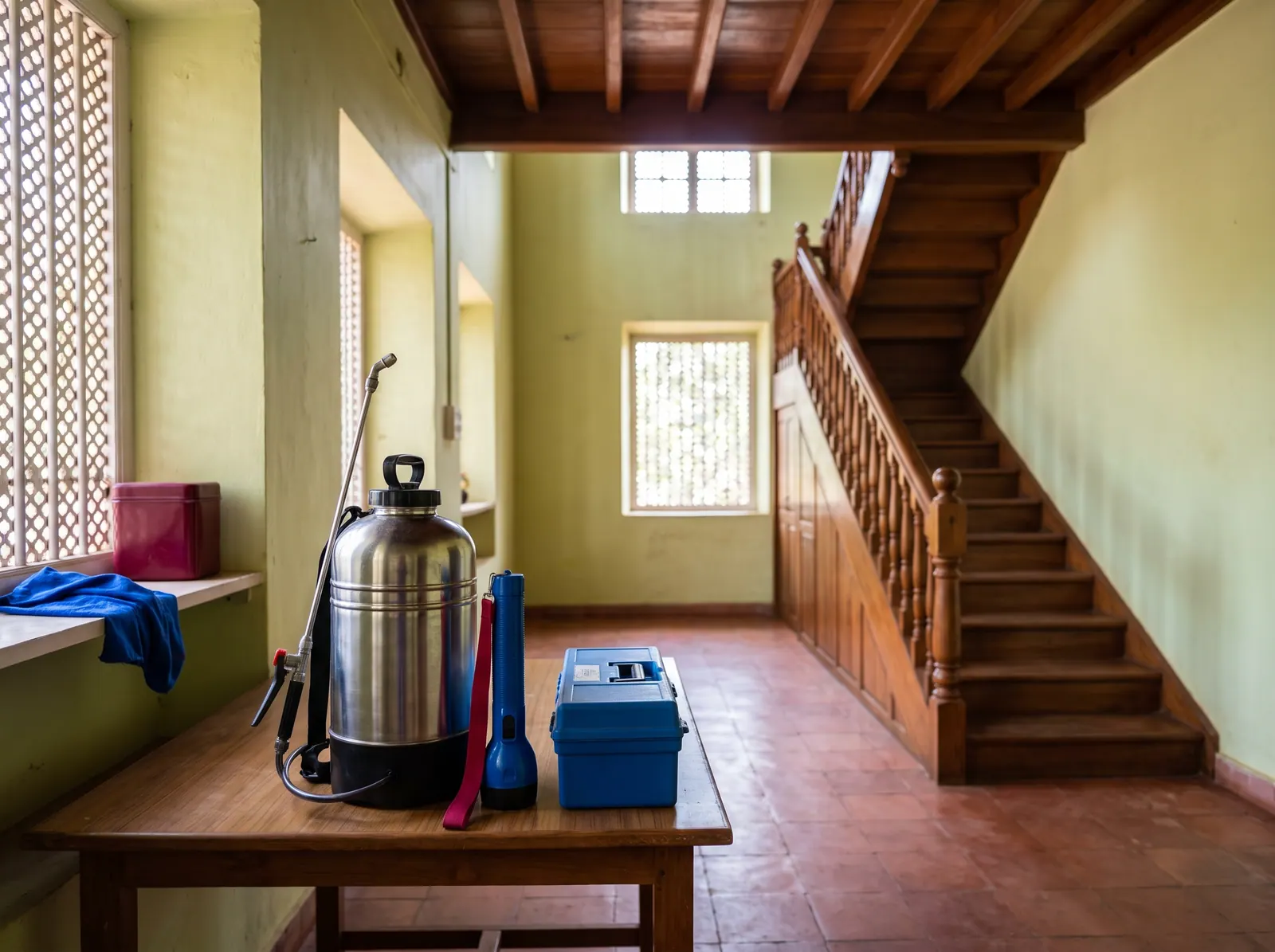
We follow an Integrated Pest Management (IPM) approach. That means inspection, sanitation and proofing advice, and targeted treatment, rather than spraying everything by default.
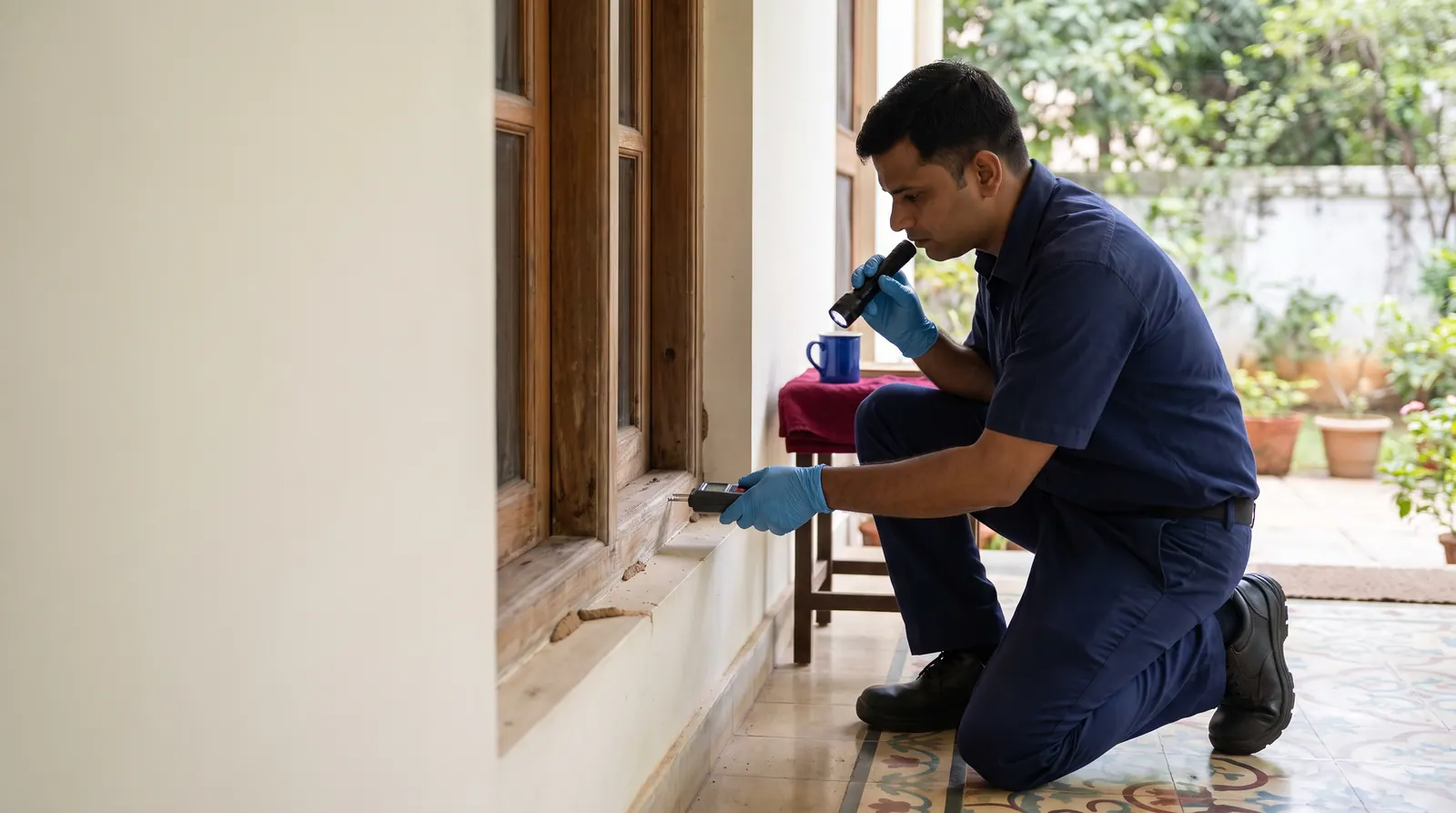
- Inspection. A trained technician identifies the pest and how far it has spread. They also look for entry points and the conditions that are attracting it, such as leaks, food waste, gaps around pipes or damp timber.
- Plan. The treatment is matched to the pest and the property. It also takes into account who uses the space: children, pets, elderly residents, hotel guests or food handlers.
- Targeted treatment. Examples include gel placed in cracks where cockroaches hide, bait stations along rodent runways and drill-fill-seal treatment along termite entry routes. We use CIB&RC-registered products and keep Material Safety Data Sheets for them.
- Proofing and sanitation advice. We point out what you can fix, such as sealing gaps, storing food in closed containers, managing waste and removing standing water.
- Report and follow-up. We share a service report after the visit, and clients receive updates on WhatsApp. Where a pest needs more than one visit, such as bed bugs, follow-ups are part of the plan.
Most treatments take a few hours, and the technician will give you an estimate at the inspection. Some pests drop off quickly, while others take a few days to show clear improvement.
Pest management for hotels, restaurants and food businesses
Hotel programmes cover guest rooms, kitchens, stores and staff accommodation, because pests in one area soon affect the others. Restaurant programmes focus on the kitchen, where cockroaches, rodents and flies matter most, and include audit-ready service records.
Food businesses are expected to meet FSSAI Schedule 4 hygiene requirements, and many also work to HACCP. Pest control is part of both. Our documentation for food businesses is aligned with HACCP and FSSAI audit expectations, so visit records are ready when an auditor asks for them.
Goa clients have written about this kind of work. Mr Sunil Ambokar, a purchase manager in Goa, wrote that bed bugs in his organisation's staff accommodation were resolved within the first three months. He added that he was also happy with our cockroach, lizard and rodent treatment.
For offices, shops, warehouses and industrial sites, we provide scheduled, documented commercial pest management. Annual Maintenance Contracts provide year-round scheduled visits with a service report each time.
Pest control for homes, villas and housing societies
Many older Goan homes have wooden ceilings, rafters and heirloom furniture. Termites or wood borers can damage these quietly for a long time. Small holes with fine powder beneath them, mud tubes on walls and hollow-sounding wood are all reasons to ask for an inspection.
For new construction, pre-construction soil treatment is carried out before the floor is laid. For occupied buildings, post-construction treatment works by drilling along entry points, filling the holes with treatment and sealing them. The Indian Standard IS 6313 deals with anti-termite treatment: Part 2 covers pre-construction and Part 3 covers post-construction. Builders often refer to it in their specifications.
In housing societies, shared spaces such as drains, garbage rooms, terraces and ducts often feed problems in individual flats. Treating common areas alongside flats usually works better than treating one flat at a time. Bird netting for balconies and ducts is a common society request.
How do we keep treatment safe at home and at work?
- Before: clear the areas to be treated, put food away and keep pets secured. Your technician will tell you about any specific preparation.
- During: a member of your household or staff should be present while the technician works.
- After: keep children and pets away from treated surfaces until they are dry, or for as long as the technician advises. Ventilate the rooms and wash your hands after touching treated areas. Do not wipe away gel bait placed in cracks.
- Products: we use CIB&RC-registered products, apply them according to label directions and keep Material Safety Data Sheets on file.
If anyone has a skin reaction, a bite or sting that worries them, or feels unwell, please see a doctor.
Which parts of Goa do we cover?
Our Goa branch serves these towns and localities:
- Panaji (Panjim): Altinho, Campal, Miramar, Caranzalem, Dona Paula, Taleigao, St Inez and Ribandar
- Porvorim: Alto Porvorim, Socorro, Sangolda and Penha de França
- Mapusa
- Calangute, Baga and Candolim, including Sinquerim and Nerul
- Margao: Fatorda, Navelim, Aquem, Borda, Gogol and Comba
- Vasco da Gama: Dabolim, Chicalim and Bogmalo
- Ponda: Farmagudi, Kundaim, Shiroda and Usgao
If your area is not listed, ask us anyway. We will tell you plainly whether we can help.
Licence, reports, warranty and recognition
- We are a licensed pest control operator registered with the Directorate of Agriculture, Goa, and we use CIB&RC-registered products.
- We share service reports as proof of service after visits.
- For specific services, a warranty applies to the treated area, as set out in your service agreement. It varies by pest and treatment. It does not cover structural changes, new construction, or problems caused by post-service instructions not being followed. If pests come in from a neighbouring property or from outside, ask your technician what you can do to keep them out.
- The company received the Indian Eminence Award (2026 – Goa), a Certificate of Excellence, which was accepted by our director, Hasan Raza.
How to arrange an inspection or service
Contact our Goa branch in Chimbel and tell us your locality, the type of property and what you are seeing. Photos of droppings, wood damage or insects are helpful. We will suggest a suitable visit and give you a quotation. Bookings depend on availability. If you need to cancel, please give at least 48 hours' notice, as a late-cancellation fee may apply.
Frequently asked questions
QHow much does pest control cost in Goa?
The cost depends on the pest, the size of the property, the treatment method and whether you need a one-time visit or an annual contract. For example, a termite job in an old house with timber ceilings is very different from cockroach gel baiting in a small flat. We give a quotation after understanding the problem. Payment follows the quotation or invoice, and we accept cash, UPI, card, net banking and bank transfer.
QHow often should I get pest control done in Goa?
It depends on the pest and how serious the problem is. Homes often need a treatment and a follow-up, and then occasional maintenance. Restaurants and hotels usually need regular scheduled visits, which may be weekly, monthly or quarterly. It is also sensible to have a termite and drainage check before the monsoon. An Annual Maintenance Contract sets this schedule out in advance, with a service report after every visit.
QDo I have to leave my home during treatment?
Not always. Gel baiting for cockroaches and ants, for example, causes very little disruption. For sprays or fogging, your technician will tell you which rooms to keep children and pets out of, and for how long. This is usually until surfaces are dry. Open windows to ventilate afterwards. A household member should be present while the technician is working.
QWhat happens if pests come back after treatment?
For specific services, a warranty applies to the treated area, as set out in your service agreement. The terms vary by pest and treatment. It does not cover structural changes, new construction, or problems caused by post-service advice not being followed. If pests are coming in from a neighbour's property or from outside, ask your technician which preventive steps will help keep them out.
QCan you provide pest control records for FSSAI or hotel audits?
Yes. We share a service report after each visit. For food businesses, our documentation is aligned with HACCP and FSSAI audit expectations. Restaurant and hotel programmes are set up so that records of each visit are kept and easy to show an auditor. This is one reason many food businesses choose a scheduled contract rather than calling only when a problem appears.
QCan termites be treated in a house that is already built?
Yes. For occupied buildings we use post-construction treatment. We drill along the points where termites enter, such as wall–floor joints and around door frames, fill the holes with treatment and then seal them. Infested woodwork can also be treated. We start with an inspection to find where the termites are coming from, because treating only the visible damage rarely solves the problem.
Last updated 13 October 2026. Information on this page is general guidance; your technician will advise on your specific property after inspection.