Quick answer
Beach shacks need cockroach control planned around the season. Treat the bare structure after it is put up and before stock arrives. Keep supplies sealed and off the floor, and use gel baits and targeted crack-and-crevice treatment in joints, hollow bamboo, counters and drains. Schedule visits outside service hours. At season's end, clear all food, clean thoroughly and pack equipment so cockroaches and egg cases don't carry over.
Key points
- Shacks' joints, hollow bamboo, thatch and raised decking give cockroaches many hiding places that cannot all be sealed.
- Cartons, crates and sacks arriving with deliveries are a common way cockroaches enter food businesses, so unpack outside and discard cardboard promptly.
- The best time for a first treatment is after the structure is erected and before stock arrives.
- Gel baiting works over several days, and cleaning up food scraps and grease helps it work.
- At season's end, remove all food, then clean, dry and seal stored equipment so cockroaches and egg cases do not carry over.
Shack pest control in Goa is a different job from treating a restaurant in a concrete building. A beach shack goes up after the monsoon, runs a busy open kitchen for a few months, and comes down again before the rains. Timber, bamboo, palm-leaf thatch and plywood give cockroaches plenty of places to hide.
The seasonal cycle adds a second problem. Supplies, equipment and cockroaches can all be packed away together and carried into the next season. This guide covers four things:
- where cockroaches settle in shacks and beach cafés
- how to store supplies so they don't feed an infestation
- when treatment works best
- what to do when you close for the season
For the service itself, see our page on restaurant, café and shack pest control in Goa.
Why are shacks difficult to keep free of cockroaches?
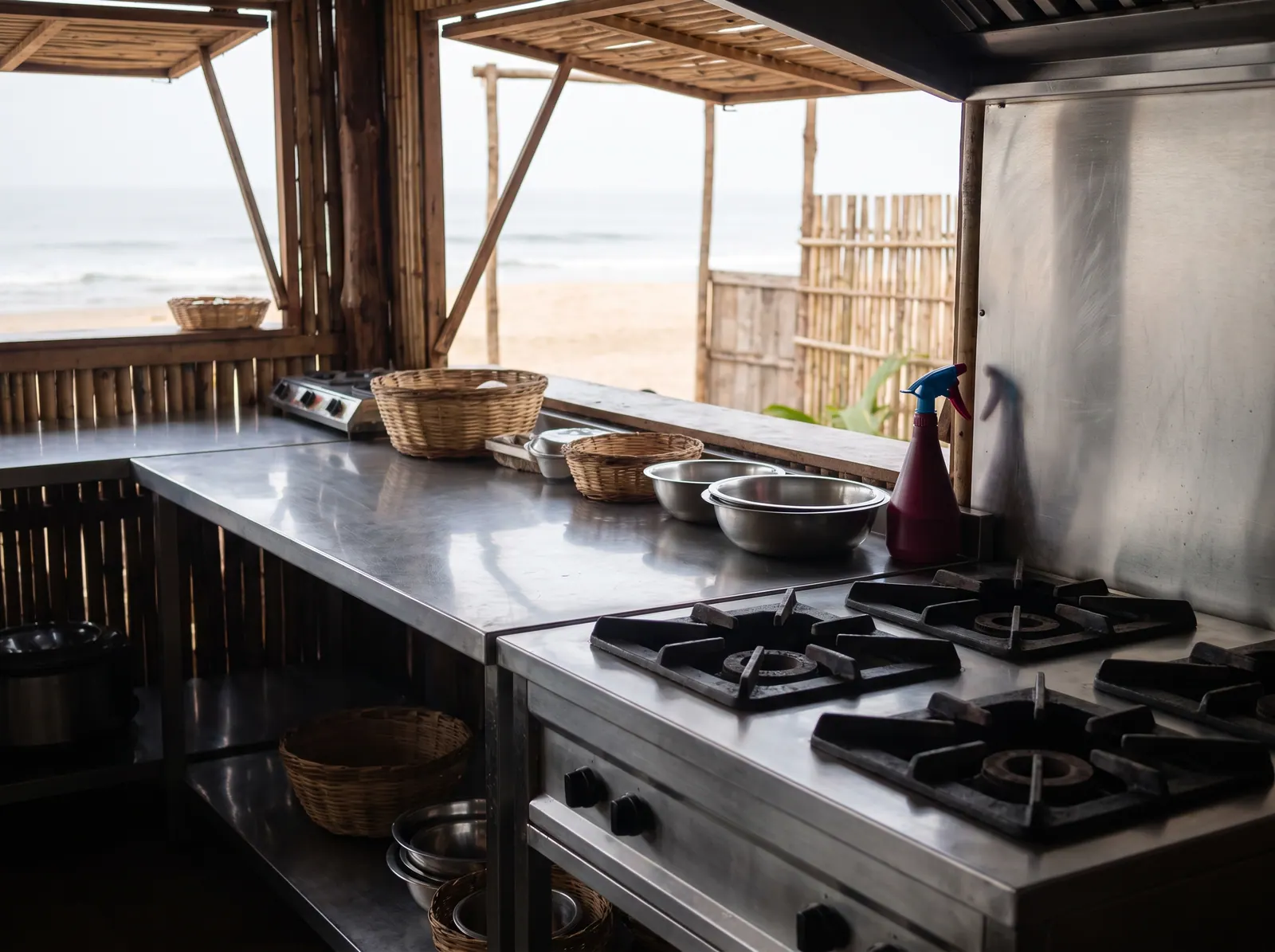
The structure. A shack is made of joints, lashings, hollow bamboo poles, cut timber ends and gaps between deck boards. Very few surfaces are sealed, and you cannot fill every crack the way you would in a masonry kitchen.
The open kitchen. It is warm, damp and constantly handling food. Sand, wind and crowds also make thorough cleaning harder.
The season. Stock arrives in bulk in cartons, crates and sacks, which is a well-known way for cockroaches to enter a food business. The structure and furniture are often rebuilt from materials stored through the monsoon, and these can hide cockroaches or their egg cases.
It also helps to know which cockroach you are dealing with:
- Small, light-brown cockroaches (German cockroaches) live close to food, heat and moisture inside the kitchen. They breed quickly, and the female carries her egg case until shortly before it hatches.
- Larger, reddish-brown cockroaches (American cockroaches) usually come from drains, soak pits and waste areas, and move in at night.
The treatment approach differs for each, so identification comes first.
Where do cockroaches hide in a shack?
Kitchen and wash-up area
- Undersides of plywood counters and shelves, and the gap where a counter top meets the frame
- Motor compartments and door seals of refrigerators, deep freezers and ice boxes
- Behind and under gas stoves, and around the cylinder
- The wash sink, temporary flexible pipes, and the point where grey water leaves the shack
- Waste bins and the spot where wet waste waits for collection
Bar and service counter
- Stacked beer and soft-drink crates, especially returned empties
- The space under the bar counter and behind glass racks
- Coffee machines, toasters, juicers and other warm appliances
- Cash-counter drawers and menu stands
The structure itself
- Open ends of bamboo poles and hollow sections
- Lashed joints and the gaps behind cladding
- Edges of thatch or palm-leaf roofing above the kitchen
- The space under raised wooden decking, where food scraps fall through
- Folds in tarpaulin and plastic sheeting
Around the shack
- Soak pits, drains and waste storage
- Back-of-house storerooms and staff resting areas
A simple check: look round with a torch an hour or two after closing. Cockroaches are active at night, and you will see where they come from far more clearly than in daylight.
How should a shack store its supplies?
Storage is often the weakest point in a shack because space is tight. The aim is twofold: give cockroaches no food, water or shelter near your stock, and stop new ones arriving with deliveries.
- Unpack deliveries outside the kitchen. Check cartons and sacks as you open them, and get rid of corrugated cardboard promptly. Cockroaches readily hide in its folds.
- Decant dry goods such as rice, flour, sugar, spices and snacks into sealed, food-grade containers with tight lids.
- Keep everything off the floor. Use raised shelves or racks set slightly away from walls and the frame, so you can see and clean behind them.
- Store empty bottle crates away from the kitchen and rinse returns before stacking them.
- Keep the dry store apart from the wash area and any dripping water.
- Never use the roof void or thatch for storage of food, napkins or paper goods.
- Rotate stock on a first-in, first-out basis so nothing sits forgotten at the back.
- Cover or close containers before closing, and keep staff food in its own sealed box.
FSSAI Schedule 4 hygiene requirements expect food businesses to keep premises free of pests and protect food from contamination. Good storage is a large part of meeting that, alongside regular pest control and records.
When should cockroach treatment be done?
For a seasonal business, timing matters as much as method.
Across the season
| Stage of the season | What to do |
|---|---|
| Structure up, before stock arrives | Inspect and treat the bare structure, joints, counters and drains. Nothing needs covering yet, so access is easiest now. |
| Opening weeks | Hold a follow-up visit to check bait uptake and treat new activity, especially after the first big deliveries. |
| Peak season | Keep to scheduled visits. Frequency depends on the pest and the level of activity, and may be weekly, monthly or quarterly once the problem is under control. |
| Before closing | Do a final inspection and treatment after food stock has been run down. |
| Monsoon storage | Check stored equipment and furniture for activity before it goes back into use. |
Time of day
Book visits outside service hours, either early morning before prep or after closing. Gel baiting and targeted treatment cause little disruption, but food, utensils and open containers should still be covered or moved first.
Follow the technician's advice on how long to keep staff, children and pets away from treated spots. Ventilate the area and wash hands after handling anything in it. Avoid spraying shop-bought insecticide over bait placements, because this can put cockroaches off the bait. Our guide on how to prepare for cockroach gel treatment has a fuller checklist.
How does professional cockroach control work in an open kitchen?
Our Goa operation follows an Integrated Pest Management approach: inspection first, then sanitation and proofing advice, then targeted treatment. In an open shack kitchen, blanket spraying is rarely the answer. Treatment works better when it reaches where cockroaches actually shelter.
- Gel baiting: small spots of bait go into cracks, hinges, joints and the undersides of fixtures, never on food-contact surfaces. Cockroaches feed and return to their hiding places, so results build over several days rather than instantly.
- Crack-and-crevice treatment: targeted application into hollow sections, frame joints and drain areas that bait alone may not reach.
- Sanitation and proofing advice: bait competes with food scraps and grease, so cleaning under decking and around equipment directly affects how well treatment works.
In Goa we work as a licensed pest control operator (Directorate of Agriculture, Goa) using CIB&RC-registered products, and we maintain Material Safety Data Sheets for the products we use. Service reports are shared after visits, with WhatsApp updates. For food businesses, we provide documentation aligned with HACCP and FSSAI audit expectations. You can read more about our methods on the cockroach control service page.
What should you do at the end of the season?
The last week of the season decides how clean your next opening will be. Work through these steps before the shack is dismantled:
- Run stock down, then remove all food, including spices, sugar, opened packets and staff food.
- Empty, defrost and clean refrigerators, freezers and ice boxes, and leave the doors propped open to dry.
- Deep-clean counters, shelves, stoves and the wash area, scraping grease and food debris out of joints and corners.
- Flush and clean drain lines and the area around the soak pit.
- Dispose of wet waste, cardboard, sacks and old menus rather than packing them away.
- Arrange a final inspection and treatment before dismantling, while the kitchen layout is still in place.
- Inspect furniture, crates and kitchen equipment before packing. Look for live cockroaches, droppings (small dark specks) and egg cases.
- Pack items clean and completely dry, in sealed boxes or wrapped, and store them raised off the floor in a dry place.
- Check timber furniture and bamboo for fine powder or small holes before storage. Our guide to wood borer in teak and rosewood furniture explains the signs.
- When you reopen, unpack and inspect everything outside before it goes into the new kitchen.
For the wider picture, including rodents and other pests over the closed months, see our monsoon shutdown pest plan for Goa hotels and shacks.
What is different for beach cafés in permanent buildings?
Cafés in masonry buildings near the beach have walls and floors that can be sealed. Proofing therefore counts for more: filling gaps around pipes, fitting gully trap covers and closing gaps under doors.
These cafés often share drains and ducts with neighbouring shops or flats, so cockroaches can move in from outside. They also tend to run all year rather than seasonally, which makes a regular schedule more useful than a single pre-season treatment. For a locality-focused view, see our page on cockroach treatment in Calangute.
Talking to our Goa branch
If you run a shack or beach café, tell us four things:
- where you are
- what your structure and kitchen are like
- when you open and close for the season
- what you are seeing
We'll confirm whether your location is covered and how we can help, and suggest an inspection and treatment schedule that fits around your season. You can reach our Goa branch in Chimbel through the contact details on this page.
Frequently asked questions
QCan cockroach treatment be done while our shack is open for the season?
Yes. Gel baiting and targeted crack-and-crevice treatment are designed for working kitchens. Visits are best timed before morning prep or after closing, with food, utensils and open containers covered or moved first. The technician will tell you which spots were treated and how long staff should stay away from them. Avoid cleaning over or spraying near bait placements afterwards.
QHow quickly will we see fewer cockroaches after gel baiting?
Gel bait works over days rather than hours. Cockroaches have to find the bait, feed and return to their hiding places, so you may see some activity, even a brief rise, soon after treatment. A follow-up visit checks bait uptake and treats any remaining activity. Good cleaning under decking and around equipment helps the bait work, because it has less food to compete with.
QCan cockroaches survive in our stored shack materials over the monsoon?
They can, particularly if items are packed with food residue, grease or cardboard, or stored somewhere damp. Egg cases tucked into crevices of equipment or crates can also survive. Clean and dry everything before packing, seal it in boxes or wrapping, and store it raised in a dry place. When you reopen, unpack and inspect items outside before they go into the kitchen.
QIs fogging enough to control cockroaches in a shack kitchen?
Usually not on its own. Cockroaches spend most of their time deep in cracks, hollow bamboo, appliance housings and drains, which open-air fogging does not reliably reach. Fogging is mainly used for flying insects such as mosquitoes. Cockroach control in a kitchen relies on inspection, sanitation and targeted placement of bait and treatment where cockroaches actually shelter.
QWhat pest control records should a shack or café keep for food safety inspections?
Keep dated service reports showing what was inspected, which areas were treated and any recommendations made, along with product information. FSSAI Schedule 4 expects food businesses to manage pests, and HACCP-based systems expect this to be documented. For food businesses in Goa, we provide service reports and documentation aligned with HACCP and FSSAI audit expectations.
QShould we treat before or after the shack structure goes up?
After the structure is up but before stock and equipment arrive. At that point joints, counters, shelving and drain points are fully exposed and nothing needs covering, so treatment can reach more hiding places. It also deals with any cockroaches carried in on stored timber, bamboo or furniture before your food supplies arrive.
Last updated 13 October 2026. Information on this page is general guidance; your technician will advise on your specific property after inspection.