Quick answer
Efficacy Pest Control's Goa branch in Chimbel treats wood borer (powder-post and furniture beetles) in furniture, doors, frames and structural timber. We cover Panaji, Margao, Vasco da Gama, Mapusa, Ponda, Porvorim and the Calangute–Candolim–Baga belt. Each job starts with an inspection to confirm active borer and judge what can be saved. We then use targeted injection, surface treatment of bare wood or, where suitable, fumigation, and share a written service report.
Key points
- Wood borer larvae feed inside timber for months; small round exit holes and fine powder are the usual visible signs.
- Goa's humid coastal climate and heavy monsoon keep timber damp, which suits several wood-boring beetles.
- Polished items are usually treated by injection into the holes, while bare wood can take a surface application.
- Treatment stops the beetles but cannot restore strength already lost in badly damaged timber.
- Our Goa branch is a licensed pest control operator (Directorate of Agriculture, Goa) using CIB&RC-registered products.
Small round holes and little heaps of fine powder under a cupboard, door frame or wooden ceiling usually mean wood borer. Our Goa branch in Chimbel provides wood borer pest control services across much of Goa for homes, hotels, restaurants, shops and offices. We treat furniture, doors, window frames and structural timber affected by powder-post and furniture beetles.
This page explains how to recognise active wood borer and how we inspect and treat it. It also covers what you need to do on the day and which parts of Goa we cover.
How do you know it is wood borer?
Wood borers are beetles whose larvae live inside timber for months, sometimes longer, eating their way through it. You rarely see the larvae. What you notice is the damage left when adult beetles chew their way out to breed.
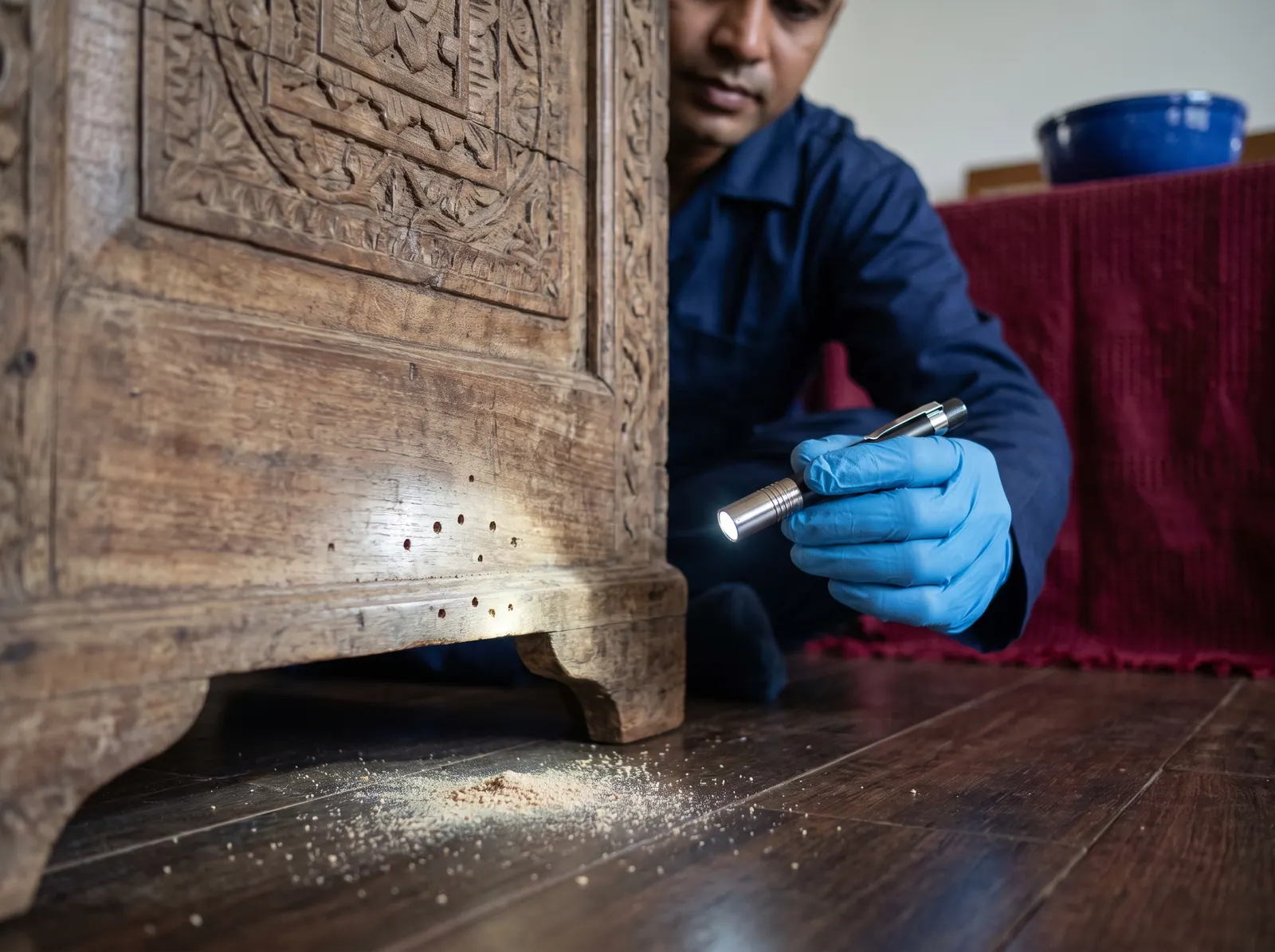
- Exit holes: small, neat, round holes, from pinhead size to a couple of millimetres across.
- Frass: fine, flour-like or gritty powder falling from holes and collecting on floors, shelves or inside drawers.
- Fresh-looking holes: clean, light-coloured edges suggest recent activity. Dark, dusty holes may be old damage.
- Weak or crumbling wood: edges and legs that break easily, or surfaces that give under pressure.
- Small beetles near windows or resting on wooden items.
Powder-post beetles favour the starchy sapwood of hardwoods. Furniture beetles attack older furniture and timber. Some longhorn beetles can also bore into construction timber. Knowing which type is present helps us judge how far the damage may go.
Termites can cause problems that look similar, but they work differently. Termites leave mud tubes, soil-packed galleries and wood hollowed out along the grain. The two need different treatment, so it pays to be sure. Our guide on how to tell termite damage from wood borer sets out the differences.
Why is wood borer such a problem in Goa?
Goa has a humid coastal climate and a very heavy south-west monsoon, so timber stays damper for much of the year than in drier parts of India. Damp wood is softer and more attractive to several wood-boring beetles. Houses closed up during the rains also have little air moving around cupboards, ceilings and roof timbers.
Goan buildings also contain a great deal of wood. Older Portuguese-era houses have timber rafters, wooden ceilings, balcão seating, carved doors and window frames. Many families keep furniture handed down for generations. Newer villas and flats are fitted with plywood wardrobes and kitchens. Furniture made from fresh or poorly seasoned sapwood can carry eggs or larvae from the day it arrives.
If you live in an older home, read our guide to protecting Portuguese-era homes from termites and wood borer.
How do we treat wood borer?
We follow an Integrated Pest Management approach. We inspect first, deal with the conditions that help the pest, and then treat only what needs treating.
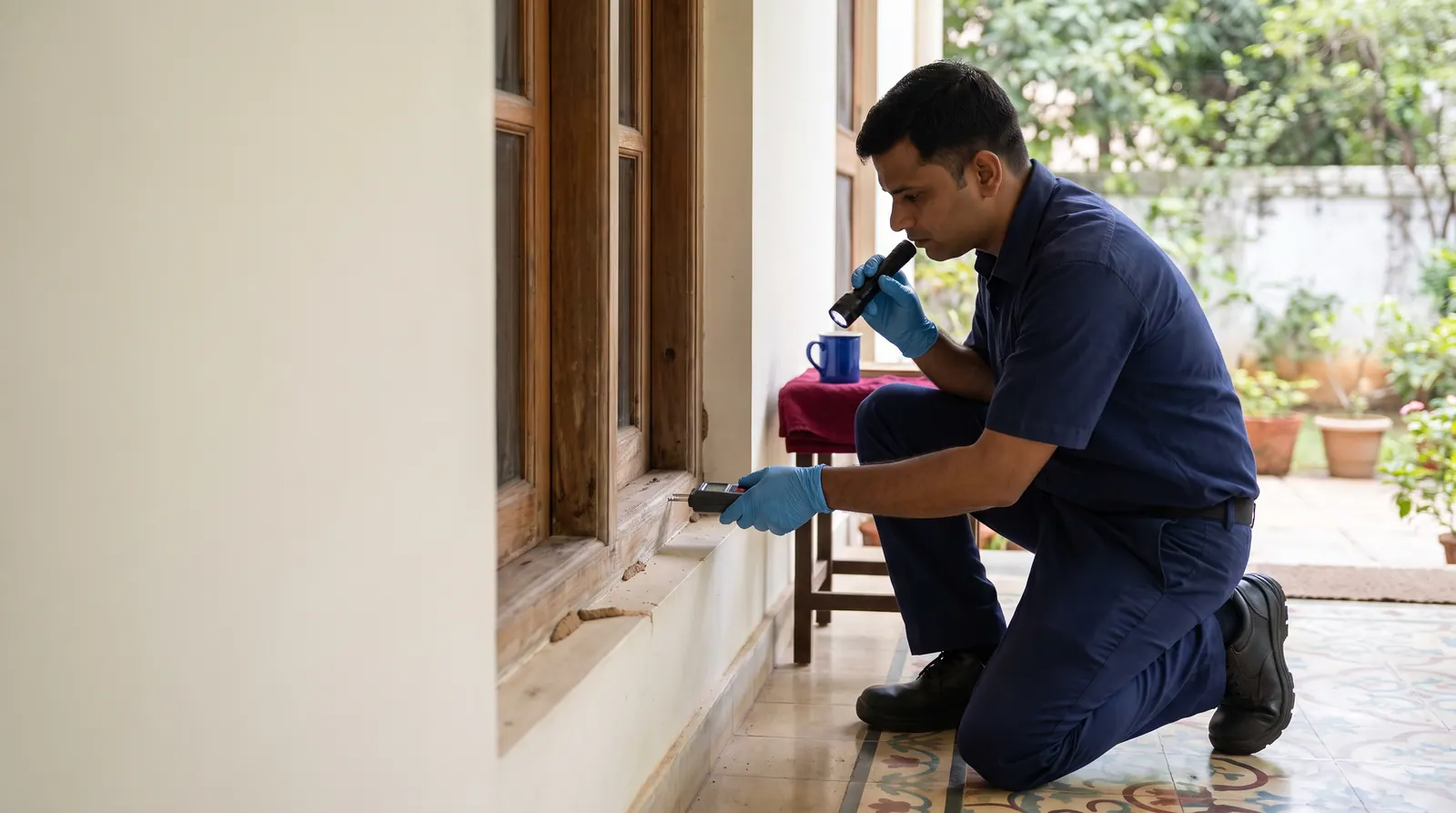
- Inspection. A technician checks the affected items and nearby timber and looks for fresh frass and new holes. They tap the wood to find hollow or weak sections. They also look for damp sources, such as roof leaks or furniture pushed against wet walls.
- Deciding what can be saved. Most furniture and joinery can be treated. If a beam or rafter is badly weakened, we will say so plainly and recommend that a carpenter or structural engineer assess it. Treatment stops the beetles, but it does not restore strength the wood has already lost.
- Targeted injection. A registered wood-treatment product is injected into exit holes and galleries so that it reaches the larvae inside. This suits polished, painted or carved items, where a surface application would not soak in.
- Surface treatment of bare wood. We treat unpolished surfaces by brush or spray so the product can penetrate. These include the backs and undersides of furniture, the insides of drawers, and unpainted rafters and frames.
- Fumigation where it is the right method. Fumigation can reach larvae deep inside heavily infested movable items, stored timber or consignments. It must be carried out in a sealed space under controlled conditions. See our fumigation services in Goa for more detail.
- Sealing and follow-up. Once the treatment has dried, the holes can be filled and the surface touched up. This also makes any new holes easy to spot later. Your technician will advise when to check again.
Which method suits which situation?
| Situation | Usual approach | Points to note |
|---|---|---|
| Polished or carved furniture with some active holes | Injection into holes and galleries | The surface finish is usually left intact |
| Unpolished backs, drawers, shelves and rafters | Surface application | Works best on bare, dry wood |
| Door and window frames | Injection plus treatment of exposed faces | Check for damp where the frame meets the wall |
| Heavily infested movable furniture or stored timber | Fumigation, where appropriate | Needs a sealed space and trained operators |
| Weakened structural timber | Treatment plus advice on repair or replacement | Lost strength cannot be restored by treatment |
Which properties do we treat?
Our Goa branch offers wood borer treatment for:
- Independent houses, heritage homes and villas: roof timbers, ceilings, staircases, doors and heirloom furniture.
- Flats and housing societies: wardrobes, beds, kitchen cabinets and main doors.
- Hotels, resorts and restaurants: guest-room furniture, wooden fittings, bar counters and storerooms.
- Offices and shops: wooden partitions, shelving and display units.
Antique and high-value pieces in teak, rosewood and other hardwoods need a gentle approach that protects the polish and carving. Our guide to wood borer in teak and rosewood furniture explains what owners should look out for.
Some homes and businesses have a lot of woodwork to keep an eye on. If that applies to you, ask about an Annual Maintenance Contract, which provides scheduled visits and service reports through the year.
Where in Goa do we provide wood borer treatment?
Our Goa branch in Chimbel covers these towns and their surrounding localities:
- Panaji (also Panjim), including Altinho, Campal, Miramar, Caranzalem, Dona Paula, Taleigao, St Inez and Ribandar. See wood borer treatment in Panaji.
- Margao, including Fatorda, Navelim, Aquem, Borda, Gogol and Comba. See wood borer treatment in Margao.
- Vasco da Gama, including Dabolim, Chicalim and Bogmalo.
- Mapusa.
- Porvorim, including Alto Porvorim, Socorro, Sangolda and Penha de França.
- Calangute, Baga and Candolim, including Sinquerim and Nerul.
- Ponda, including Farmagudi, Kundaim, Shiroda and Usgao.
If your area is not listed, tell us where you are and we will let you know whether we can help. You can find more about the branch on our Goa branch page.
What should you do before and after treatment?
Before the visit
- Empty the drawers and cupboards that will be treated.
- Move clothing, linen, books, food and utensils away from the work area.
- Clear access to frames, ceilings and the backs of furniture.
- Tell us about antiques, delicate finishes, and anyone in the household with health concerns.
- Arrange for an adult to stay with the technician during the service.
After the visit
- Keep children and pets away from treated items until they are dry, or for as long as your technician advises.
- Keep rooms ventilated.
- Wash your hands after touching treated surfaces.
- Do not wipe or polish treated wood until you are told it is fine to do so.
- Follow all post-service instructions, because the warranty can depend on them.
Our Goa branch is a licensed pest control operator (Directorate of Agriculture, Goa) and uses CIB&RC-registered products. We keep Material Safety Data Sheets for the products we use. If anyone feels unwell after a treatment, see a doctor and ask us for the product details to show them.
Reports, warranty and follow-up
After each visit we share a service report recording what was treated, and clients receive updates on WhatsApp. For specific services, a warranty covers the treated area, as set out in your service agreement.
The warranty varies by pest and treatment. It does not cover structural changes, new construction, or cases where post-service instructions were not followed. Your technician will explain the terms for your job before work begins.
How can you stop wood borer coming back?
- Buy furniture and building timber that is properly seasoned or treated.
- Inspect second-hand and antique furniture for holes and powder before bringing it home.
- Keep furniture a few inches away from damp walls and floors, especially during the monsoon.
- Air closed rooms and open cupboards on dry days.
- Fix roof, window and plumbing leaks promptly.
- Keep wood surfaces polished, varnished or painted, since sealed surfaces give beetles fewer places to lay eggs.
- Do not store old timber or firewood inside the house.
- Check your woodwork at least once a year. After the monsoon is a good time.
To arrange an inspection, contact our Goa branch in Chimbel. Tell us your location and what is affected, and send a photo of the holes and powder if you can. We will advise on the next step.
Frequently asked questions
QCan you treat antique or heirloom furniture without damaging the polish?
Usually, yes. For polished or carved pieces we generally inject treatment through the existing exit holes, which leaves the surface finish untouched. Please tell us beforehand about very old, fragile or valuable items so the technician can examine them closely and choose the gentlest method. Occasionally a piece is too heavily infested for injection alone. In that case we will explain the options, including whether fumigation is appropriate.
QDo we need to move out of the house during wood borer treatment?
For injection and surface treatment, most families stay at home. Keep children and pets out of treated rooms until surfaces are dry, or for as long as your technician advises, and keep the rooms ventilated. Fumigation is different, because it has to be carried out in a sealed space under controlled conditions. If your job needs fumigation, the technician will explain exactly what is involved and where it will be done.
QHow long does a wood borer treatment take?
It depends on how many items are affected and whether structural timber such as rafters or ceilings is involved. Many treatments can be completed within a few hours. A larger home with extensive woodwork, or a job that includes fumigation, can take longer. The technician will give you an estimated time after the inspection, so you can plan around the visit.
QI can still see some powder after treatment. Has it failed?
Not necessarily. Old frass left in the galleries can keep falling out for a while, especially when furniture is moved. Fill the holes and clean away the dust once you are told it is safe, so any new activity is easy to spot. If fresh holes or new powder keep appearing beyond the period your technician mentioned, contact our Goa branch so we can check the treated area.
QWill treatment repair the holes and weak wood?
Treatment is aimed at the beetles and their larvae. It does not rebuild wood they have already eaten. Exit holes can be filled and the surface touched up afterwards. Where furniture joints, door frames or roof timbers have been seriously weakened, a carpenter may need to repair or replace them. We will point this out during the inspection so you know what to expect.
QIs wood borer treatment covered by a warranty?
For specific services, a warranty applies to the treated area, as set out in your service agreement. The terms vary with the pest and the treatment used. The warranty does not cover structural changes, new construction, or cases where post-service instructions were not followed. Your technician will explain the terms for your job before work begins.
Last updated 13 October 2026. Information on this page is general guidance; your technician will advise on your specific property after inspection.