Quick answer
To protect a heritage house in Goa from termites and wood borer, start with a careful, non-destructive inspection of roof timbers, ceilings, beam ends, the balcão, doors, windows and antique furniture. Keep the timber dry, especially through the monsoon. Choose targeted treatments, such as soil treatment for termites and localised wood treatment for borer, applied discreetly and tested on old finishes first. Then follow a seasonal inspection routine.
Key points
- Termites usually reach old Goan houses from the soil, while wood borer larvae live inside the timber itself; each needs a different treatment.
- Roof timbers, beam ends set into walls, the balcão, door frames and antique furniture are the most vulnerable heritage elements.
- Non-destructive inspection relies on looking, tapping, checking for moisture and re-checking for fresh powder before any drilling.
- Post-construction termite treatment in occupied buildings is described in IS 6313 (Part 3); in heritage homes drill points and sealing need care.
- Controlling damp from roofs, gutters and walls is central to protecting old timber through Goa's monsoon.
Owning a Portuguese-era house in Goa means looking after timber that has already lasted generations: carved doors, rafters under clay tiles, plank ceilings, the balcão where the family sits in the evening, and furniture handed down over the years. If you are searching for practical advice on heritage house termite problems in Goa, the key is to protect that timber without damaging what makes the house special.
This guide explains which parts of an old Goan home are most at risk, how to inspect without causing harm, which treatment approaches suit old materials, and a simple routine to keep problems from returning.
Why are old Goan houses vulnerable to termites and wood borer?
Heritage homes combine thick laterite or masonry walls, lime plaster and a lot of exposed timber. Goa's humid coastal climate and very heavy south-west monsoon keep both soil and wood damp for months, which suits termites and makes timber more vulnerable to decay. We explain the background in more detail in our guide on why termites thrive in Goa.
Two very different pests are usually involved. Subterranean termites live in the soil and travel up into the house through cracks, wall cavities and mud tubes. Wood borers are beetles whose larvae tunnel inside the wood itself, often in furniture, doors and sapwood. They need different treatments, so correct identification comes first.
Termite or wood borer: how to tell them apart
| What you notice | Likely termites | Likely wood borer |
|---|---|---|
| Surface signs | Mud tubes on walls, plinths or beams; soil packed into cracks | Small round exit holes in the wood surface |
| Debris | Little or no dust; damaged wood may hold soil | Fine, flour-like powder below holes |
| Damage pattern | Wood hollowed along the grain, thin outer shell left intact | Tunnels packed with powder, often worst in sapwood |
| Seasonal clue | Winged swarmers around lights after the first rains | Fresh powder appearing in drier months |
For more examples, see how to tell termites and wood borer apart and our checklist of termite warning signs in Goan homes.
Which heritage elements need the closest watch?
- Roof timbers: rafters, purlins and battens under Mangalore-style tiles. Slipped or broken tiles let monsoon water in, and damp timber attracts termites.
- Beam ends set into walls: where timber meets masonry, moisture lingers and termites can travel unseen through the wall.
- Plank ceilings and timber upper floors: damage is often hidden on the upper face or between boards.
- The balcão: wooden columns, railings and seat frames are close to the ground and exposed to rain splash.
- Doors, windows and frames: including old window frames with shell or glass panes, and door frames resting on the floor or plinth.
- Staircases and skirting: the lowest steps and any timber touching the floor.
- Antique furniture: almirahs, chests, beds, cabinets and the family oratório, especially pieces standing against damp walls. Our guide on wood borer in teak and rosewood furniture covers these in more depth.
How can old timber be inspected without damaging it?
A good inspection of a heritage home should leave no trace. The aim is to map where activity is, how far it has spread and what is causing it, before anyone suggests drilling or treatment.
- Look first. Use a strong torch along roof timbers, beam ends, plinths and the backs and undersides of furniture. Note mud tubes, exit holes, powder and staining.
- Listen and tap. Gently tapping timber with a knuckle or a soft-headed tool can reveal hollow sections without breaking the surface.
- Probe only where hidden. If a closer check is needed, use a blunt probe in an inconspicuous spot rather than on carved or painted faces.
- Check for moisture. Damp patches, leaks and rising damp in laterite walls often explain where termites are entering. A moisture meter can help where available.
- Separate old from active damage. Brush away old powder, then check again after a few weeks. Fresh powder or newly built mud tubes mean activity.
- Record it. Photograph and note each location so treatment can be targeted and progress checked later.
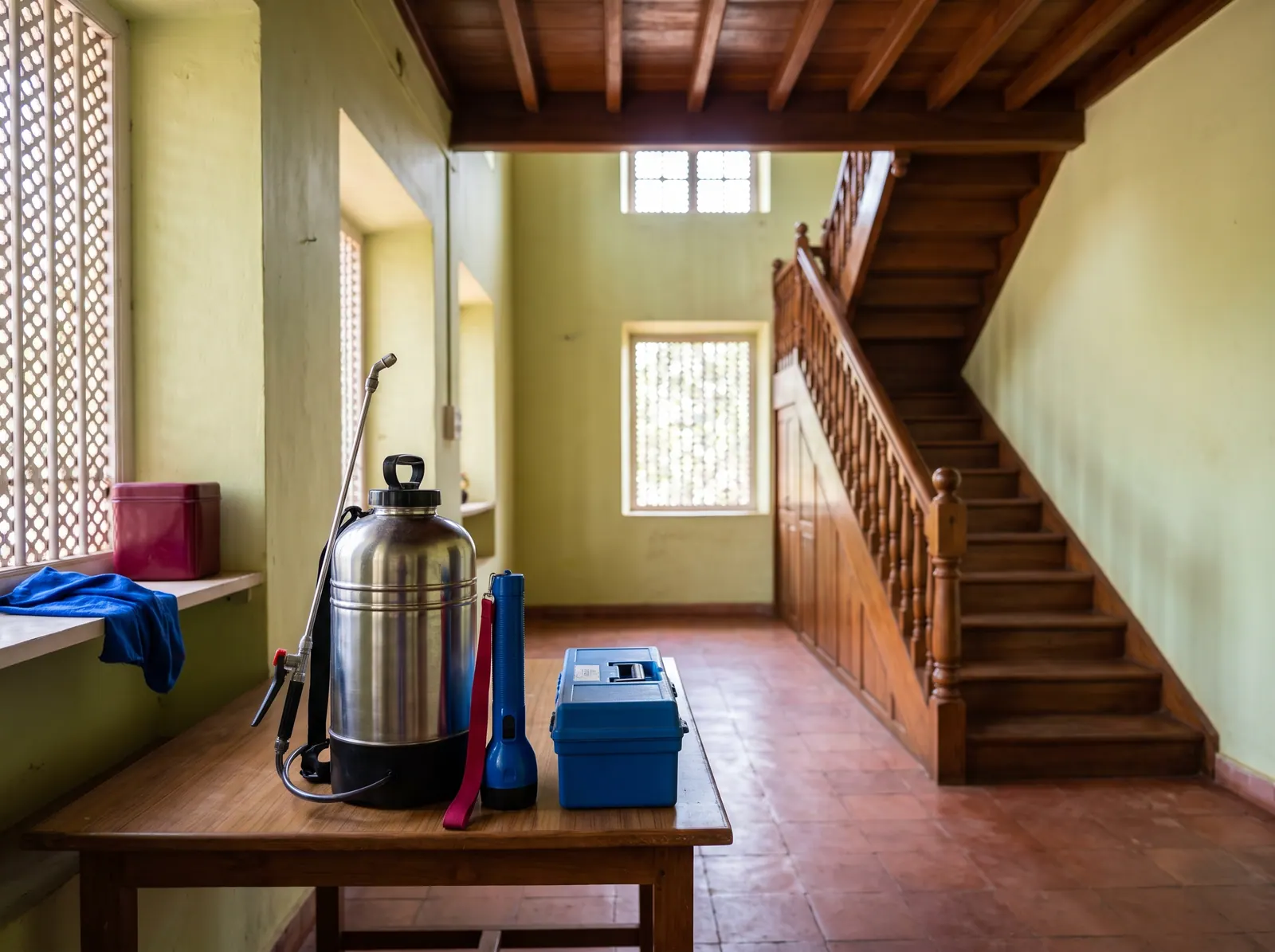
Our Goa team follows an Integrated Pest Management approach: inspection first, then sanitation and proofing advice, then targeted treatment only where it is needed.
What treatment approaches respect old materials?
Termites in an occupied heritage house
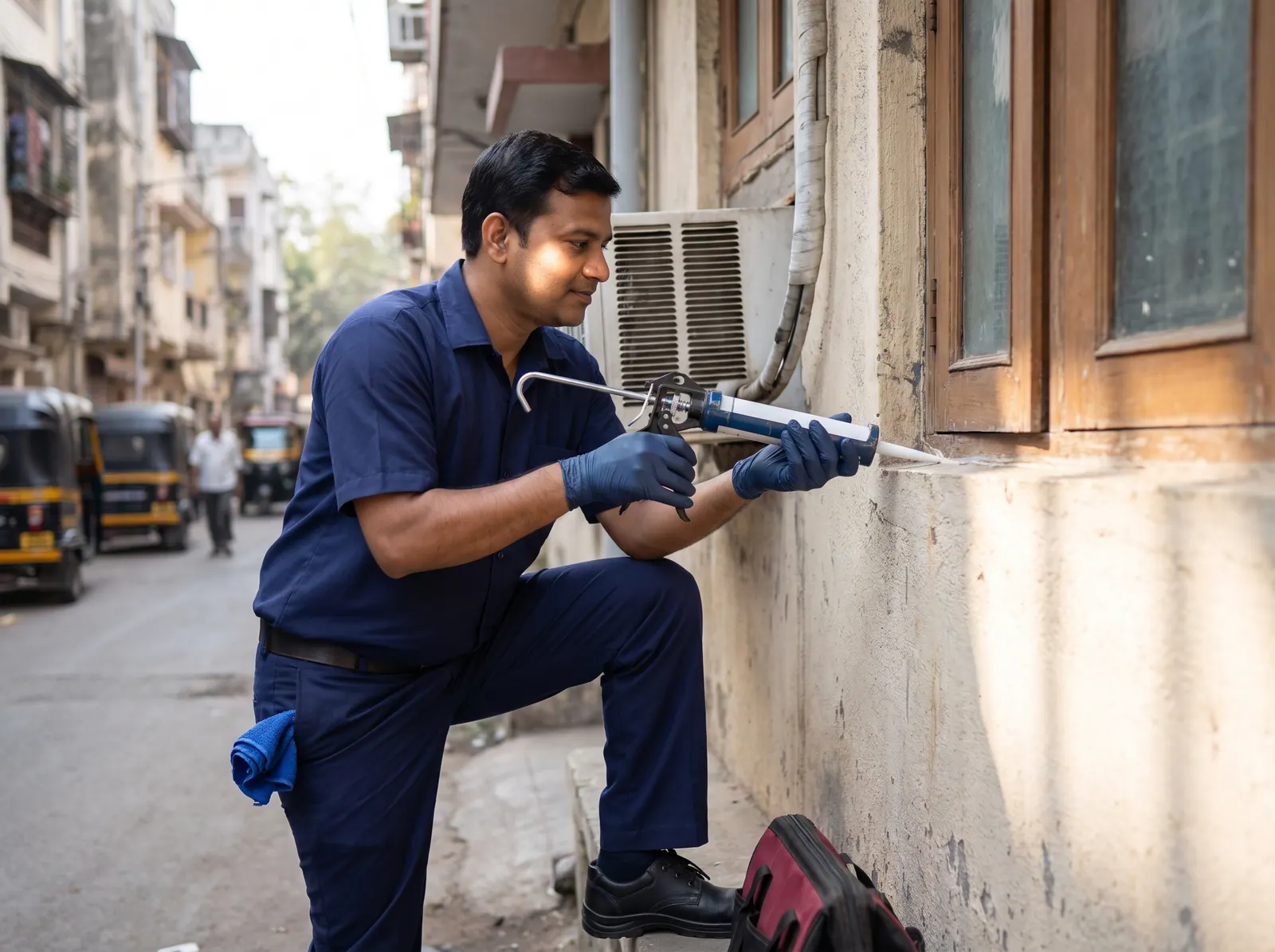
For buildings already standing, the usual method is post-construction anti-termite treatment as described in IS 6313 (Part 3): small holes are drilled along the inside of walls and at the plinth, a termiticide is introduced to create a treated barrier in the soil below, and the holes are sealed. Affected timber can also be given a wood treatment.
In a heritage house, this needs extra care. Old patterned tiles, red-oxide floors or lime plaster may be hard to replace. Before work starts, ask for drill points to be agreed with you, placed along joints or in less visible areas where possible, and sealed with a material that matches as closely as practical.
Wood borer in structural timber and furniture
Borer treatment is localised: a suitable product is applied to the surface or introduced into exit holes and galleries so it reaches the larvae. With antique pieces, the finish matters. French polish, lacquer, old paint and wax can react differently, so a small test patch on a hidden area should come first. Read more about our wood borer pest control services in Goa.
Fumigation for movable items
Where a heavily infested item can be moved, fumigation in a sealed enclosure may be the appropriate method, as it reaches deep into the wood. This must only be done by a licensed operator; it is never a DIY job.
Conservation questions to ask before any work
- Is the timber still structurally sound, or does it need a structural engineer or conservation carpenter to assess it?
- Can damaged sections be repaired or consolidated rather than replaced?
- Will the treatment leave stains, odour or residue on visible surfaces?
- How will drill holes be sealed, and where exactly will they go?
- What is the moisture source, and who will fix it?
Pest treatment stops activity; it does not restore weakened wood. Keep the two decisions separate, and keep original material wherever it is still sound.
How do you keep the household safe during treatment?
Ask what product will be used and why. Our Goa operation is a licensed pest control operator (Directorate of Agriculture, Goa) using CIB&RC-registered products, and Material Safety Data Sheets are maintained for the products used. If you want to check any provider's credentials, see how to find a certified pest control service.
- Keep children and pets away from treated areas until surfaces are dry, or as advised.
- Ventilate rooms well after treatment, and wash hands after touching treated surfaces.
- Move food, utensils, devotional items and textiles away from work areas beforehand.
- If anyone feels unwell after a treatment, see a doctor.
What seasonal routine keeps a heritage home protected?
Most damage in old houses builds up slowly, so a regular routine matters more than a single treatment.
| Season | What to do |
|---|---|
| Pre-monsoon (April–May) | Reset slipped roof tiles, clear gutters and drains, move firewood and debris away from walls, check plinths for mud tubes. Our pre-monsoon pest checklist has more. |
| First rains (late May–June) | Watch for winged termites around lights and windows; note where they appear. |
| Monsoon (June–September) | Check ceilings and beam ends for leaks and damp; keep rooms aired; pull furniture slightly away from damp walls. |
| Post-monsoon (October–November) | Thorough inspection of roof space, balcão and furniture; plan any treatment or repair. |
| Dry season (December–March) | Check furniture for fresh borer powder; a good window for wood treatment and carpentry repairs. |
Damp is the thread running through all of this. Fixing leaks and rising damp does more than any spray; our guide on damp walls and pests in Goan homes explains why.
For owners who prefer scheduled care, an Annual Maintenance Contract provides year-round visits with a service report after each visit. Where a warranty applies, it covers the treated area for specific services as set out in the service agreement, and it does not cover later structural changes, so tell us about any restoration you plan.
Found signs in your heritage home?
Do not scrape away mud tubes or sand down powdery timber before it has been inspected; these signs show where activity is. Take photos, note the locations and keep the area dry.
Our Goa branch in Chimbel can inspect the house, explain what we find and talk through options that suit old materials. Visit our Goa branch page to get in touch and tell us about your house and what you have noticed.
Frequently asked questions
QWill drilling for termite treatment damage my old floor?
Post-construction treatment does involve small drill holes, usually along walls and the plinth. In a heritage house, ask for drill points to be agreed with you beforehand, placed along tile joints or in less visible spots where practical, and sealed with a material matched as closely as possible. If a floor is especially fragile or irreplaceable, say so at the inspection stage so alternatives can be discussed.
QHow can I tell if wood borer holes in antique furniture are old or active?
Brush or vacuum away existing powder, place a sheet of dark paper beneath the piece, and check again after a few weeks. Fresh, flour-like powder or holes with clean, pale edges suggest the larvae are still active. Darkened holes with no new powder may be old damage, though it is still worth having the piece inspected before restoration.
QIs it safe to treat polished or painted antique furniture?
It can be, but old finishes vary. French polish, lacquer, wax and traditional paints may react differently to treatment products. A small test patch on a hidden area, such as the back or underside, should always come first. If the piece is especially valuable, you may also want to consult a furniture conservator about the finish before and after treatment.
QShould pest treatment be done before or after restoring my house?
Inspect before restoration begins, so active termites or borer are dealt with before new timber or finishes go in. Coordinate the timing with your architect or contractor, because structural changes after treatment can disturb treated areas. Warranties for specific services exclude later structural changes, so share your restoration plans at the start.
QDoes treating termites fix weakened rafters or beams?
No. Treatment is meant to stop pest activity; it does not restore strength to timber that has already been hollowed out. If rafters, beams or floor joists sound hollow or sag, have a structural engineer or experienced conservation carpenter assess them. Often sound original timber can be kept, with only failed sections repaired or replaced.
QDo we need to leave the house during treatment?
It depends on the method and the areas involved. Localised wood treatment and soil treatment usually need only the treated rooms to be cleared until surfaces dry, while fumigation of items is done in a sealed enclosure away from living areas. Your technician should explain what to prepare and how long to keep children and pets away.
Last updated 13 October 2026. Information on this page is general guidance; your technician will advise on your specific property after inspection.