Quick answer
To look after an empty Goa villa during the monsoon, prepare it before you leave. Remove food and rubbish, clear gutters and standing water, seal gaps and get it inspected for termites and rodents. Arrange a caretaker to walk through weekly, keep taps and toilets in use, and report signs of pests or damp. Book scheduled professional visits through the rains, then check every room before you unpack.
Key points
- Mosquitoes can breed in water left standing for about a week, including gutters, plant saucers and poorly covered tanks.
- Subterranean termites depend on moisture, so leaks and damp walls in a closed house help them reach woodwork unseen.
- Rodents look for dry shelter when the rains flood burrows and drains, and undisturbed rooms make good nesting sites.
- Running taps and flushing toilets regularly keeps drain traps filled and helps stop pests and odours rising from drains.
- Rodent droppings should be wetted with disinfectant and wiped up wearing gloves, not swept or vacuumed dry.
Many Goa villas stay closed from June to September while their owners are abroad or working in another city. Good villa monsoon care in Goa is less about one big treatment and more about three things: preparation, regular checks while you are away and a careful inspection when you return. This guide walks through each stage.
Why does a closed villa attract pests during the rains?
Goa's south-west monsoon brings very heavy rain and months of high humidity. An empty house offers pests what they look for in that weather: shelter, quiet, darkness and, often, damp.
- Rodents move indoors when burrows and drains flood. In an undisturbed villa they can nest in false ceilings, store rooms, kitchen cabinets and stored mattresses.
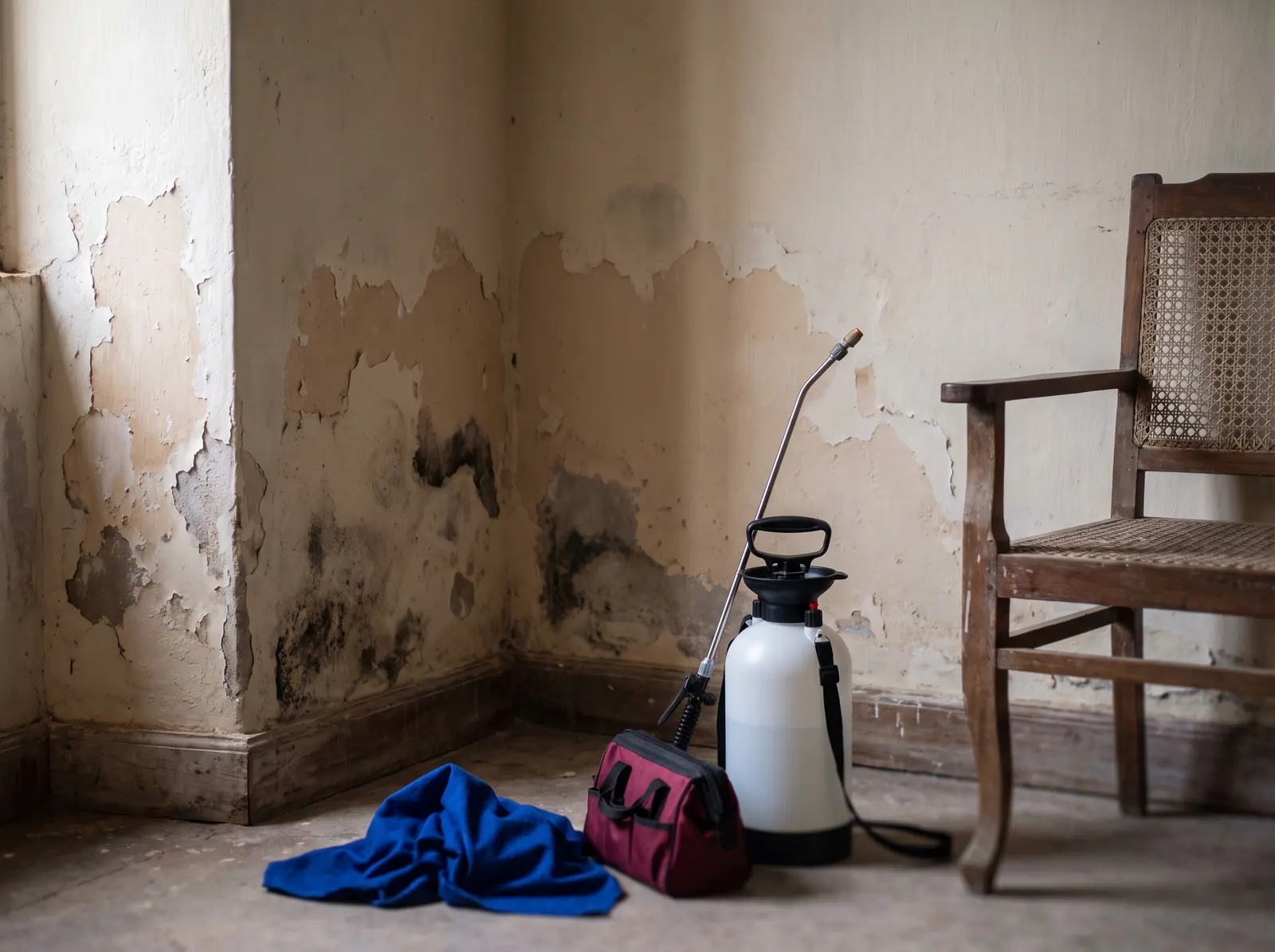
- Termites depend on moisture. Leaks, damp walls and wet soil against the foundation help subterranean termites reach door frames, cupboards and furniture unseen. Our guide on why termites thrive in Goa's laterite and humidity explains this in more detail.
- Damp-loving pests such as cockroaches, silverfish, millipedes and centipedes settle in quickly where nobody disturbs them. Wood borers can also work away in furniture and timber.
- Mosquitoes can breed in any water that stands for about a week: blocked gutters, plant saucers, uncovered tanks or a fold in a tarpaulin.
For a wider picture of the season, see what to expect from monsoon pests in Goa between June and September.
Before you leave: preparing the villa
The weeks before you close up matter most. Ideally, finish this work by May, before the first heavy rains. Our pre-monsoon pest checklist for Goa homes covers general preparation. The points below are specific to a house that will stand empty.
Kitchen and stores
- Remove all open food, grains, pet food and spices, or pack them in airtight, hard containers. Rodents chew through bags and thin plastic.
- Empty, clean and defrost the fridge. If you switch it off, prop the door open so mould does not grow inside.
- Take out all rubbish, including bins in outbuildings and staff quarters.
- Wipe shelves and the hob, and clean under appliances where crumbs and grease collect.
Outside and on the roof
- Clear gutters, downpipes and terrace drains so rain does not pool or seep into walls.
- Empty and turn over pots, buckets and plant saucers. Cover water tanks fully.
- Trim plants and creepers that touch walls or the roof. They act as bridges for rodents and keep walls damp.
- Move firewood, old timber and cardboard away from the walls of the house.
Entry points and belongings
- Check door sweeps, window mesh and vent covers. Seal gaps where pipes and cables enter the walls.
- Store linen, clothes and cushions in sealed bags or boxes, raised off the floor.
- Pull furniture a little away from the walls so a caretaker can see skirting and floors.
- Photograph each room. This makes it easier for whoever checks the house to spot changes.
Get an inspection before the rains
If you see any sign of termites, rodents or wood borer, deal with it before you leave rather than letting it go unchecked for four months. An inspection also shows where the house is vulnerable, such as a leaking terrace, a gap under a kitchen door or a drain without a cover.
Please don't leave loose rodent poison or improvised chemical traps lying around. They are a hazard to caretakers, pets and wildlife. Rodents that die inside a closed house can also leave a lasting smell.
Caretaker checklist for the monsoon months
A trusted caretaker, neighbour or property manager is your best protection. Give them a written list and ask them to send photos after each visit. The table below is a practical starting point; adjust it to suit your villa.
| How often | What to check |
|---|---|
| Weekly | Walk every room, including store rooms and staff quarters. Look for droppings, gnaw marks, shredded paper or fabric, and greasy rub marks along walls. Empty any water that has collected outdoors. |
| Weekly | Run each tap briefly and flush every toilet so drain traps stay filled with water. This helps stop cockroaches and odours coming up through the drains. |
| Weekly, in dry spells | Open windows, with mesh in place, for an hour or two to let air through and reduce damp. |
| Fortnightly | Check wooden frames, cupboards and furniture for mud tubes, hollow-sounding wood, fine powder or small round holes. Look for discarded wings on window sills after rain. |
| Fortnightly | Look for roof leaks, wet patches on walls and ceilings, and blocked gutters or terrace drains. |
| After heavy storms | Check for fallen branches against walls, flooding near the foundation and new pools of water in the compound. |
Ask the caretaker to report problems, not to treat them. Spraying household insecticide at a termite trail, for example, usually just moves the termites and makes them harder to find.
If something unusual turns up, the best response is a photo to you and a call to a pest professional. That might be piles of wings, a bee or wasp nest under the eaves, or signs of rats in the roof. Caretakers should never try to remove a bee or wasp nest themselves. Keep people away from it until it can be handled safely.
Scheduled professional visits while you are away
For a villa closed for the whole monsoon, a few planned visits are usually more effective than a single treatment. A typical pattern looks like this:
- Before the rains: an inspection, termite assessment and proofing advice, plus any treatment that is needed.
- Mid-monsoon: checking and servicing rodent bait stations or traps, inspecting for termite activity and damp-related pests, and treating where required.
- As the rains ease: a fuller visit ahead of your return and the post-monsoon mosquito period. Read more about post-monsoon mosquito season in Goa.
Our Goa branch follows an Integrated Pest Management (IPM) approach. We inspect first, advise on sanitation and proofing, and then use targeted treatment where it is needed rather than blanket spraying. For rats and mice in a closed house, this usually means tamper-resistant bait stations and traps placed where activity is found. See our rodent control service in Goa for details.
Some practical points for owners who are far away:
- Someone must let the technician in. Our terms ask for a client representative to accompany technicians during service, so arrange for your caretaker or property manager to be present.
- You can follow progress from a distance. In Goa we share service reports after visits and send WhatsApp updates to clients, so you can see what was found and what was done.
- Annual Maintenance Contracts suit owners who want visits fixed in advance through the year, with a service report each time.
- Licensing and products: our Goa operation is a licensed pest control operator with the Directorate of Agriculture, Goa, and uses CIB&RC-registered products.
Return checks: what to do when you get back
Try not to unpack straight away. A short, methodical walk-through in the first hour will tell you whether the villa came through the rains cleanly.
- Air the house. Open doors and windows and run the fans for a while before settling in. Notice any musty, ammonia-like or rotten smells, which can point to rodents or a dead animal.
- Check the kitchen and stores first. Look inside cabinets, behind appliances and in dry stores for droppings, gnawed packaging or cockroaches.
- Inspect the woodwork. Tap door frames, skirting and cupboard backs. Look for mud tubes, which suggest termites, and for fine powder and small round holes, which suggest wood borer. Wings near windows are another termite sign.
- Look at soft furnishings. Shake out stored linen and cushions, and check mattresses for damage or mould.
- Run water through everything. Flush the toilets, run the taps and pour water into floor drains.
- Walk the compound. Empty any containers holding water, and check gutters, tanks and plant pots.
If you find rodent droppings, don't sweep or vacuum them dry, as this can raise dust. Wear gloves, wet the area with a household disinfectant, wipe it up with disposable cloths and wash your hands well afterwards. If anyone in the household feels unwell after returning, or is bitten or stung, see a doctor.
If the villa needs treatment when you return, our guide on what to do in the first 48 hours after pest control explains how to bring the house back into use safely.
Talk to our Goa branch
If you own a villa in Goa and will be away over the monsoon, contact our Goa branch in Chimbel. Tell us where the villa is, how long it will be closed and who can give access. We will explain what an inspection and a visit plan could look like for your property.
Frequently asked questions
QHow often should a caretaker check an empty villa during the monsoon?
Once a week is a sensible minimum for a walk-through of every room, with an extra check after heavy storms. Weekly visits are often enough to catch rodent activity, standing water or a roof leak before it becomes a bigger problem. Ask for photos each time, especially of kitchens, store rooms, wooden frames and the compound, so you can compare them with what you saw before you left.
QIs it worth having the villa inspected for termites before I leave?
Yes, especially if the house has wooden frames, built-in cupboards or a history of damp. Termites rely on moisture, and a closed house through Goa's monsoon gives them months without disturbance. An inspection before the rains can find early activity and the conditions that encourage it, such as leaks or soil against walls, so any treatment is done while you can still arrange it.
QCan I get updates on visits while I am abroad?
In Goa we share service reports after visits and send WhatsApp updates to clients, so you can see what was inspected, found and treated. You will still need someone on site, because our terms ask for a client representative to accompany technicians during service. Most owners arrange for their caretaker or property manager to be present and let the technician in.
QIs it safe for my caretaker to enter the villa after a treatment?
Your caretaker should follow the technician's instructions for that visit. As a general rule, keep people and pets out of treated areas until surfaces are dry or for as long as advised, ventilate rooms before spending time in them and wash hands after touching treated surfaces. We maintain Material Safety Data Sheets for the products we use. If anyone feels unwell, they should see a doctor.
QWhat happens if pests come back after a treatment?
For specific services, a warranty applies to the treated area as set out in the service agreement. It varies by pest and treatment, and it excludes cases such as structural changes, new construction or post-service instructions not being followed. Pests that come in from neighbouring properties or from outside need preventive steps on your side, and our technicians can advise you on these.
QDoes your Goa branch cover the area where my villa is?
Our company records list towns including Panaji, Margao, Vasco da Gama, Mapusa, Calangute, Candolim, Baga, Ponda and Porvorim, along with several nearby localities. Bookings are subject to availability. Tell our Goa branch in Chimbel exactly where the villa is, and we will confirm whether and how we can help.
Last updated 13 October 2026. Information on this page is general guidance; your technician will advise on your specific property after inspection.