Quick answer
Efficacy Pest Control's Goa branch provides wood borer treatment in Mapusa for furniture, doors, window frames, cupboards and structural timber such as roof rafters. A technician first inspects to confirm the borers are active and not termites. The affected wood is then treated by injecting into exit holes and tunnels and treating bare surfaces. You receive a service report and advice on what to watch for afterwards.
Key points
- Wood borer damage usually shows as small round exit holes and fine, flour-like powder (frass); termites leave mud tubes and soil-lined tunnels instead.
- Polish and varnish stop surface treatments soaking in, so polished furniture is usually treated by injection into the holes.
- New or second-hand furniture can carry borer larvae for months before adults emerge, so it is worth checking items before placing them among other furniture.
- Damp, poorly ventilated timber during Goa's long monsoon favours some wood-boring beetles and decay, so ventilation and leak repair matter alongside treatment.
- After treatment, keep children and pets away from treated wood until dry or as advised, and ventilate the room.
Wood borer treatment in Mapusa (also called Mapsa) is handled by our Goa branch in Chimbel. We treat furniture, doors, door and window frames, cupboards, wooden ceilings and structural timber such as roof rafters and beams that have been damaged by powder-post and furniture beetles. The aim is to stop active borers, protect the wood that is still sound, and tell you honestly when a piece is too far gone to be worth treating.
Wood borers are beetle larvae that tunnel inside timber, often for months, before emerging as adults through small round holes. By the time you notice fine dust under a chair or wardrobe, the larvae have usually been feeding for some time. That is why a careful inspection matters more than a quick spray.
Is it wood borer or termites?
Both damage wood, but they need different treatment, so the first job is to identify which one you have. Wood borer usually shows itself through:
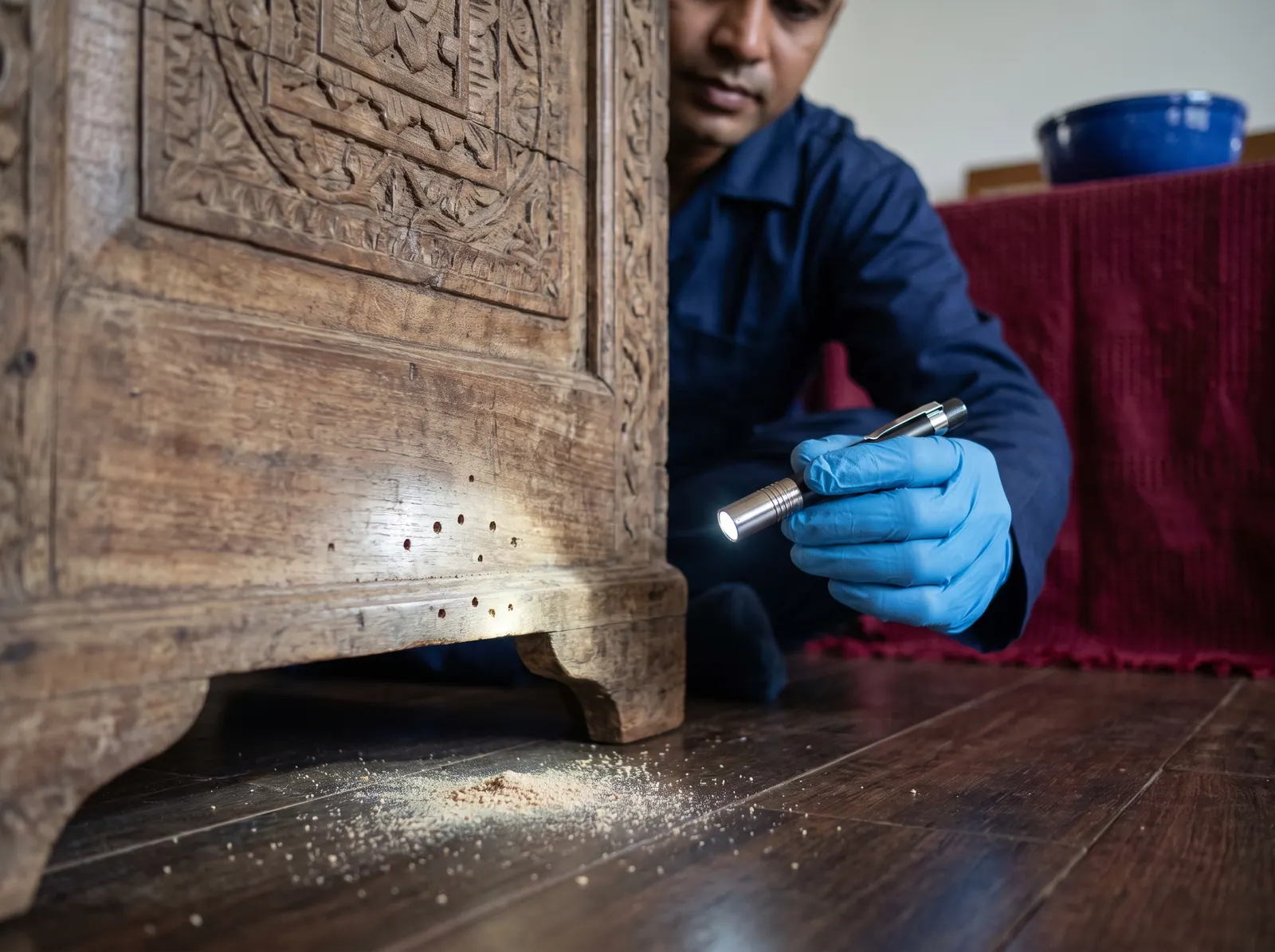
- Small round exit holes, often pinhead-sized, on the surface of the wood.
- Fine, flour-like or slightly gritty powder (called frass) in small heaps below the item or trickling out of the holes.
- Fresh holes with clean, light-coloured edges. Old, inactive holes tend to look dark and dusty.
- Wood that crumbles at the edges, especially chair legs, drawer runners and the bottoms of door frames.
- Small beetles found near windows or lights.
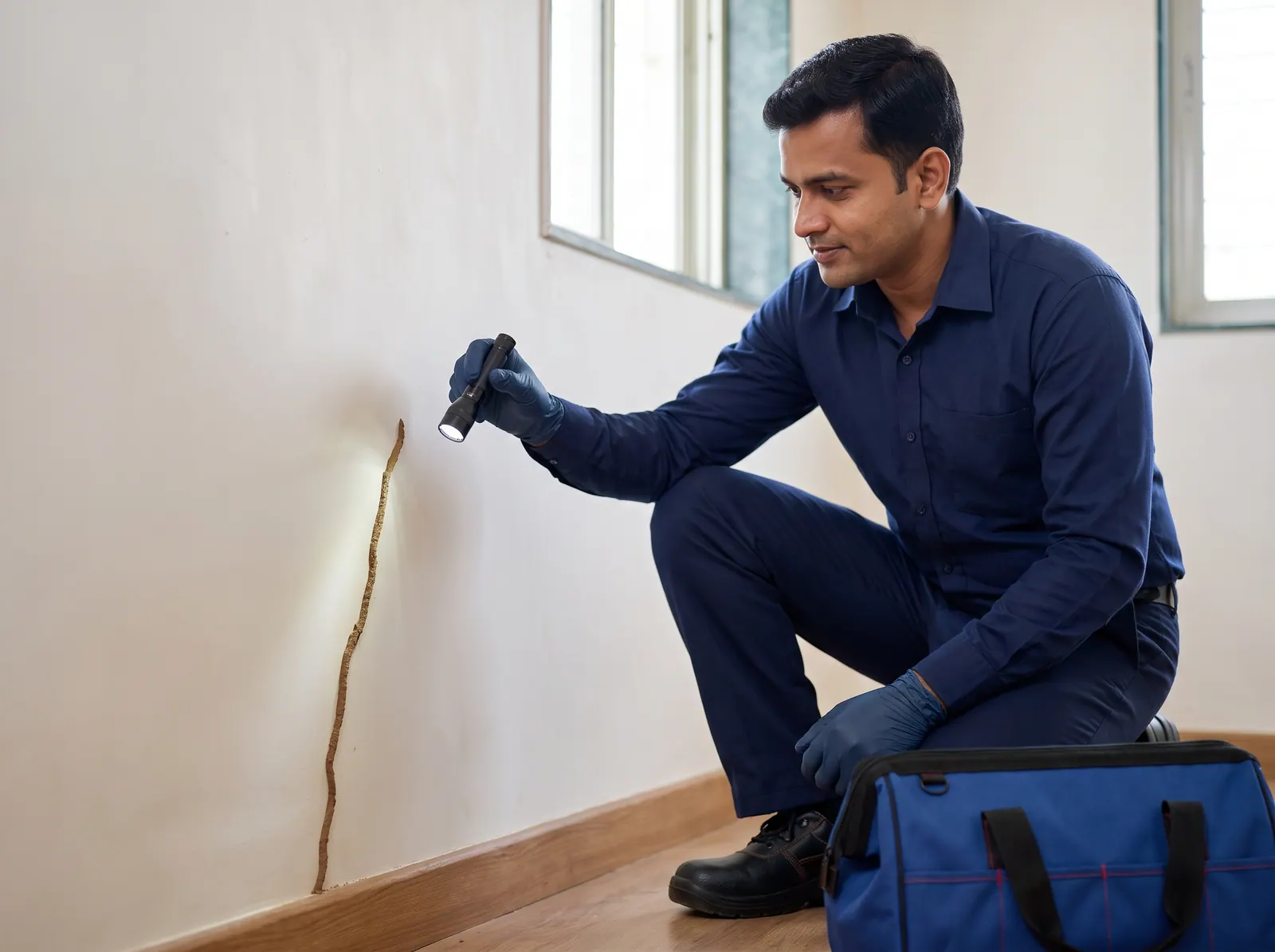
Termites, by contrast, usually leave mud tubes, soil-lined tunnels or papery, hollowed-out wood, and they tend to work up from the ground through walls and floors. If you see mud rather than dry powder, our termite control service in Mapusa is the more likely answer. Our guide on how to tell termites and wood borer apart explains the differences with more examples.
Why wood borer turns up in Mapusa homes and shops
Mapusa is the main market town of Bardez in North Goa, and many households buy furniture locally, including at the Friday market and from second-hand dealers. Borers often arrive hidden inside new or second-hand furniture, particularly pieces made with sapwood or with timber that was not treated before it was made up. The larvae can stay out of sight for a long time and only reveal themselves when adults emerge.
Older houses in and around the town often have tiled roofs on timber rafters, wooden ceilings, and heavy furniture passed down through the family. These are worth checking regularly. Our guide to protecting Portuguese-era homes from termites and wood borer covers roof timbers and old joinery in more detail.
Goa's long, very humid monsoon also plays a part. Timber in poorly ventilated rooms, store rooms and roof spaces can stay damp for weeks, which favours some wood-boring beetles and fungal decay. Good ventilation and fixing leaks are part of the solution, not just treatment.
How we treat wood borer in an occupied home
We follow an Integrated Pest Management approach: inspect first, deal with the conditions that help borers, then treat only where treatment is needed. A typical visit runs like this:
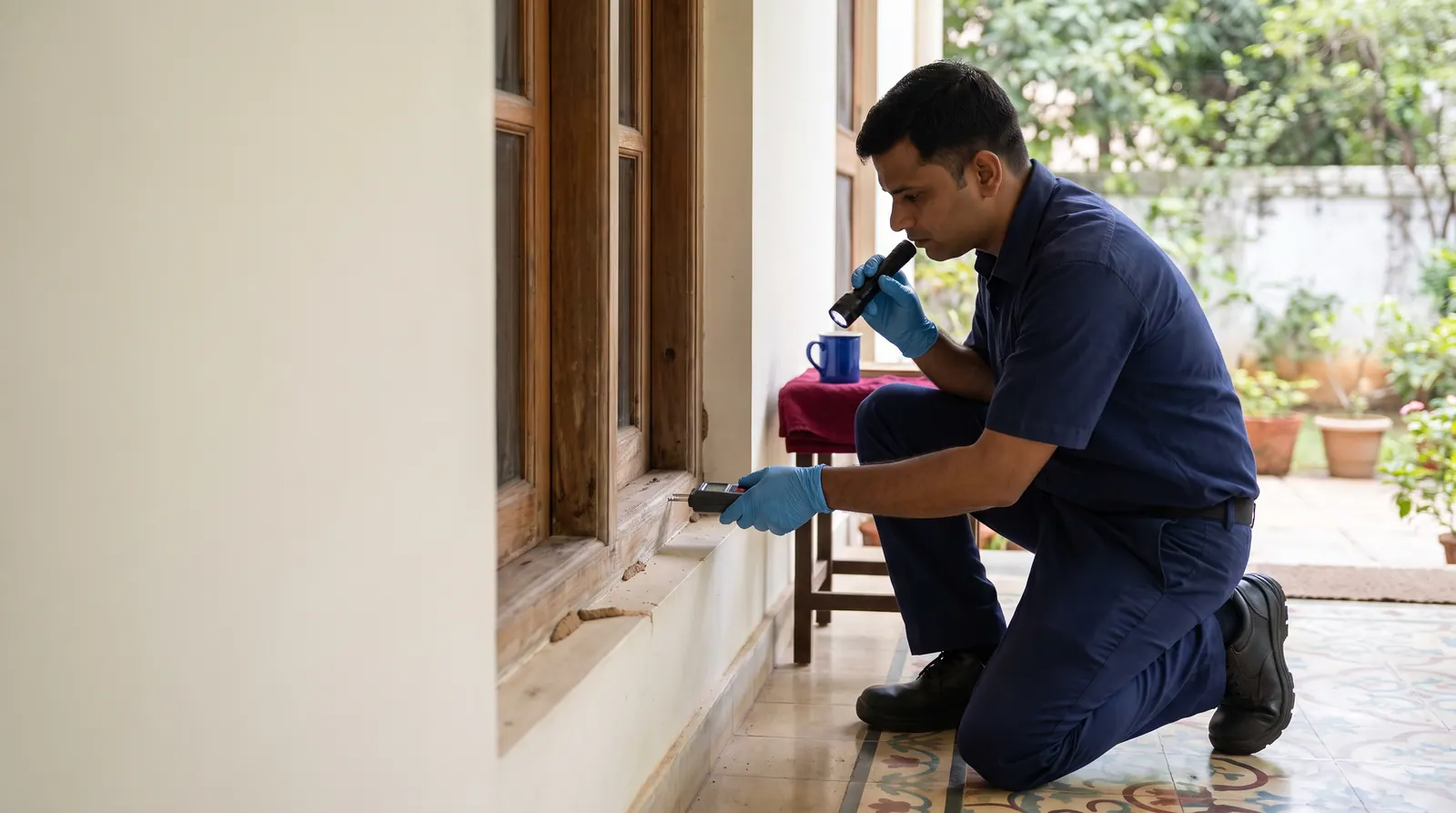
- Inspection of the whole room or house, not just the piece you noticed. Technicians check furniture, doors, frames, cupboards and accessible roof or ceiling timber, tapping and probing to find soft or hollow sections.
- Confirming what is active. We separate fresh activity from old, finished damage, and rule out termites.
- Deciding item by item whether to treat, treat and then repair, or replace. Badly weakened structural timber may need a carpenter, and we will say so.
- Injection treatment into exit holes and tunnels so it reaches the larvae inside. This is especially important for polished or painted wood, where a surface application cannot soak in.
- Treatment of bare, unpolished surfaces such as the undersides and backs of furniture, inner faces of cupboards, rafters and frame edges, so that emerging or egg-laying beetles meet treated wood.
- Fumigation where it is the appropriate method. For heavily infested movable items or stored goods, the team may recommend fumigation, which is a separate service with its own safety requirements.
- Service report and advice on what to watch for, when it is safe to fill holes or re-polish, and how to reduce the risk of fresh infestation.
What can be treated, and how
| Item | Usual approach | Worth knowing |
|---|---|---|
| Polished furniture (teak, rosewood, other hardwoods) | Injection into active holes; treatment of unpolished undersides | Polish and varnish block surface treatments from soaking in |
| Doors, frames and window shutters | Injection plus treatment of unpainted edges and back faces | Bottoms of frames near the floor are often the worst affected |
| Cupboards and built-in wardrobes | Injection and treatment of raw inner surfaces | Contents must be emptied before the visit |
| Roof rafters, beams and wooden ceilings | Surface treatment where accessible; injection in active areas | Seriously weakened timber may need replacing by a carpenter |
| Wooden flooring | Inspection and treatment of affected boards | Damp under the floor should be checked and fixed |
If your concern is mainly fine furniture, our guide to wood borer in teak and rosewood furniture explains what can and cannot be saved. For a fuller description of the service itself, see our wood borer treatment page.
Before and after the visit
A little preparation makes the treatment more thorough and safer for everyone in the house.
- Empty cupboards, drawers and shelves in the affected furniture, and keep food, utensils and clothing out of the treatment area.
- Clear access to roof spaces, lofts or ceiling hatches if timber there is affected.
- Tell the technician about young children, pets, or anyone with breathing problems in the house.
- A family member or representative should be present during the service.
Afterwards, keep children and pets away from treated wood until it is dry or for as long as the technician advises. Keep the rooms ventilated, wash your hands if you touch treated surfaces, and do not fill holes or re-polish until you are told it is safe. If anyone feels unwell, see a doctor.
Our Goa operation is a licensed pest control operator with the Directorate of Agriculture, Goa, and uses CIB&RC-registered products. We keep Material Safety Data Sheets for the products we use, and you can ask to see them.
What affects the cost, and how the warranty works
We give a quotation after the inspection, because the cost depends on:
- The number of items and the area of timber involved.
- How widespread and how active the infestation is.
- Access, especially for roof and ceiling timber.
- The method needed: injection, surface treatment, fumigation or a combination.
For specific services, a warranty applies to the treated area, as set out in your service agreement. The terms vary by pest and treatment. They do not cover new untreated furniture brought in later, structural changes, or cases where post-service instructions were not followed.
Shops, offices and other businesses in Mapusa
Shops with wooden shelving and display counters, offices with timber partitions, and guest houses or restaurants with wooden furniture can all be inspected and treated the same way, with visits planned around your working hours where possible. Businesses that want regular checks can set this up through an annual maintenance contract with scheduled visits and service reports. Our commercial pest control page for Mapusa has more on business programmes.
Arrange a wood borer inspection in Mapusa
Tell our Goa branch in Chimbel which items or rooms are affected and roughly how long you have been noticing powder or holes. Photos of the holes and the dust help the team judge whether it is borer, termite or old damage before the visit. For other pest services in the town, see our Mapusa area page.
Frequently asked questions
QDo we need to leave the house during wood borer treatment?
For most furniture, door and frame treatments, families do not need to move out. You will usually be asked to keep children and pets out of the room while the work is done and until treated surfaces are dry, and to keep the room ventilated. Fumigation is different and has its own safety requirements. If it is recommended, the technician will explain exactly what is needed before any work starts.
QCan furniture that already has lots of holes be saved?
Often, yes. The holes themselves do not mean the piece is ruined. What matters is how much sound wood remains and whether the borers are still active. Our technician will check strength at the joints, legs and edges. If a piece is too weak to be worth treating, we will tell you plainly so you can decide whether to repair it with a carpenter or replace it.
QWill I still see powder or new holes after treatment?
You may see a little loose powder for a short while as old frass is dislodged from existing tunnels. Clean it away and keep an eye on the treated items. Fresh piles of fine powder or new clean-edged holes appearing weeks later are worth reporting, because they can mean an area was missed or a new piece of furniture has brought borers in.
QI bought a cupboard at the Mapusa market. Should I check it for borer?
It is sensible to check any new or second-hand wooden item before placing it next to your other furniture. Look at the back, underside and drawer runners for small round holes and fine powder. If possible, keep it apart for a few weeks and watch for dust. If you find signs, ask for an inspection before the problem has a chance to spread.
QHow long does a wood borer treatment visit take?
It depends on the number of items, how much structural timber is involved and how easy it is to reach. A few pieces of furniture can often be done in a few hours, while a house with affected roof timber will take longer. The technician will give you an estimated time frame after the inspection, so you can plan the day.
QIs there a warranty on wood borer treatment?
For specific services, a warranty applies to the treated area, as set out in the service agreement you receive. The terms vary by pest and treatment. They do not cover new untreated wood or furniture brought in later, structural changes, or cases where the post-service instructions were not followed. Ask the team to explain the terms for your job before you book.
QHow can I pay, and what if I need to reschedule?
Payment is as per your quotation or invoice, and cash, UPI, card, net banking and bank transfer are accepted. If you need to cancel or move a booking, please let us know at least 48 hours before the scheduled visit, as a late-cancellation fee may apply.
Last updated 13 October 2026. Information on this page is general guidance; your technician will advise on your specific property after inspection.