Quick answer
Efficacy Pest Control's Goa branch in Chimbel offers fumigation for stored goods, warehouses, wooden furniture and consignments where a gas treatment is genuinely the right method. Fumigation uses a fumigant gas inside a sealed space to reach pests deep inside commodities, packaging and timber. It is a specialist, regulated activity. The area is sealed and vacated, and nobody re-enters until it has been aerated and cleared.
Key points
- Fumigation uses a gas inside a sealed space and can reach insects inside commodities, packaging and timber that sprays cannot.
- It suits stored goods, warehouses, enclosable furniture and consignments, but is rarely appropriate for occupied homes or everyday household pests.
- Fumigation leaves no lasting protection, so storage hygiene and proofing are needed afterwards.
- Safe fumigation requires sealing, exclusion of people and animals, warning signs, aeration, and re-entry only after clearance.
- The Goa branch is a licensed pest control operator (Directorate of Agriculture, Goa) using CIB&RC-registered products.
Fumigation is one of the most effective ways to deal with insects hidden deep inside stored goods, timber and packed consignments. It is also one of the most hazardous pest control methods, and it is often confused with everyday spraying or fogging. This page explains what our fumigation services in Goa involve, when fumigation makes sense and when it does not, and what you need to arrange so the work is done safely.
What is fumigation, and how is it different from spraying?
Fumigation treats a sealed space, stack or enclosure with a fumigant, which is a substance that acts as a gas. Because the gas spreads through the whole enclosed volume, it can reach insects inside grain, sacks, cartons, timber joints and furniture cavities. These are places a spray simply cannot touch.
Sprays, gels and baits work differently. They act on surfaces and in the cracks where pests walk, hide or feed. That makes them the right tool for most household and kitchen pests, but not for insects living inside a sack of pulses or a wooden frame.
In everyday conversation, many people in Goa say "fumigation" when they mean fogging for mosquitoes or a general spray. These are different treatments. True fumigation needs a gas-tight enclosure, a set exposure period, and controlled ventilation before anyone goes back in.
| Fumigation | Spraying, gel and baiting | Fogging | |
|---|---|---|---|
| How it works | Gas fills a sealed space | Product placed on surfaces, cracks or in bait points | Fine droplets released into the air |
| What it reaches | Inside commodities, packaging and timber | Where pests walk, hide and feed | Flying insects in open air at the time of treatment |
| Area during treatment | Fully sealed and vacated | Usually cleared and kept away from until dry or as advised | Kept clear during and after, as advised |
| Lasting effect | None once the gas has cleared | Some products continue working for a period | Short-lived |
| Typical uses | Stored goods, godowns, furniture, consignments | Cockroaches, ants, crawling insects | Adult mosquitoes and flies outdoors |
When is fumigation the right method?
Fumigation is worth considering when pests are inside the material itself and the material, or the space holding it, can be fully enclosed. Typical situations include:
- Stored commodities such as grains, pulses, flour, spices, dried fruit and nuts, where beetles and moths are breeding inside the produce.
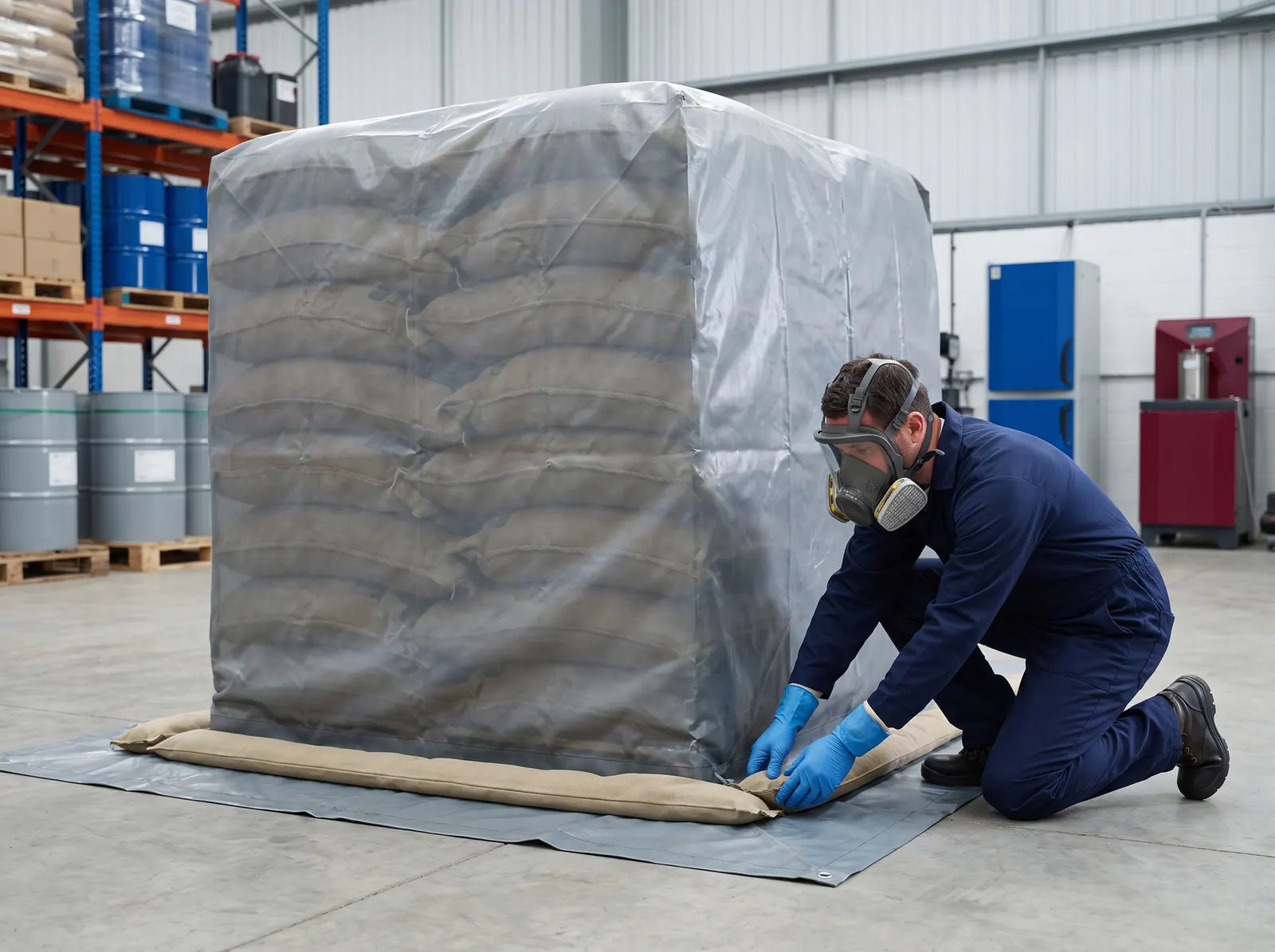
- Warehouses and godowns, where infested stacks can be covered with gas-tight sheets and treated without moving every sack.
- Wooden furniture, antiques and loose timber with active borer damage, where the items can be sheeted or placed in an enclosure. For fixed woodwork, our wood borer treatment in Goa is often more practical.
- Wooden packaging, pallets, crates and consignments that need to be free of live insects before dispatch or after receipt.
- Stored materials in closed rooms or containers, where the whole space can be sealed and kept vacant for the full treatment.
Goa's warm, humid coastal climate and very heavy south-west monsoon create conditions in which stored-product insects and damp-related damage can build up quickly. Checking stock before and after the monsoon helps you catch problems while they are still limited to a few stacks.
If you need fumigation for an export consignment or a particular certificate format, mention this at the enquiry stage. We will confirm whether we can provide what your buyer or shipping agent requires before any work is booked.
When is fumigation not the right choice?
Fumigation is powerful, but it is rarely the answer for everyday pest problems in homes, hotels and restaurants. Other methods are usually safer and more effective:
- Cockroaches in kitchens and bathrooms: gel baiting and crack-and-crevice treatment target them where they live. See our cockroach control service in Goa.
- Bed bugs in bedrooms, hotel rooms or staff accommodation: a room-by-room inspection and treatment with follow-up visits is the usual approach. See bed bug control in Goa.
- Termites in walls, floors and soil: these are treated through soil treatment and drill-fill-seal methods in line with IS 6313, not by fumigation. See our termite control service in Goa.
- Mosquitoes: breeding-site reduction and targeted treatment matter far more than any gas.
- Occupied flats and shared buildings where the space cannot be properly sealed and vacated, or where gas could reach neighbouring units.
After an inspection, we will tell you plainly whether fumigation is justified or whether a targeted treatment will do the job with less disruption and risk.
Why is fumigation a specialist, regulated activity?
Fumigants are highly toxic to people and animals as well as to pests. In India, pesticides are regulated under the Insecticides Act, 1968, products must be registered with the CIB&RC, and pest control operators are licensed by the state. Many fumigants are restricted and may only be handled by trained, authorised people.
Our Goa branch is a licensed pest control operator (Directorate of Agriculture, Goa) and uses CIB&RC-registered products. We maintain Material Safety Data Sheets for the products we use. Fumigation should never be attempted by untrained people, at home or at a workplace.
What safety controls does fumigation require?
Every fumigation job follows the same basic sequence of controls. Each step exists to keep people out of harm's way until the gas has gone.
- Assessment: what is infested, how much, where it is kept, and whether the space can be sealed safely.
- Sealing: the room, container or stack is made as gas-tight as possible, using sheets, tapes and sealing of gaps, doors and vents.
- Exclusion and warning: people and animals are kept out, and warning signs are placed at access points.
- Application: the fumigant is applied only by the trained team, following the product label.
- Exposure period: the enclosure is left undisturbed for the time the treatment needs. Seals and sheets must not be opened early.
- Aeration: the space is ventilated in a controlled way to clear the gas.
- Clearance: nobody re-enters until our team confirms the area is cleared for use.
Food commodities may only be treated with products approved for that use, and must be aerated as directed before they are handled or used. If anyone feels unwell after possible exposure, move them to fresh air and see a doctor immediately. Tell the doctor that a fumigant was used nearby.
What do you need to arrange before fumigation?
A safe fumigation depends as much on the client's preparation as on the treatment itself. Please plan for the following:
- Share clear details: what is infested, the approximate quantity and packaging, the size of the room or container, and its location.
- Vacate the area: arrange for staff, residents, pets and any animals to stay out until the area is cleared.
- Remove items not being treated: especially open food, medicines, plants and anything you do not want exposed.
- Inform others: tell staff, security, neighbours or your housing society so nobody enters by mistake.
- Provide access and a representative: a responsible person should accompany our technicians and be available during the job.
- Plan for downtime: the space and goods will be out of use for the exposure and aeration period, so schedule deliveries and dispatches around it.
- Leave seals and signs in place: do not lift sheets, open doors or remove notices until you are told the area is clear.
How do we carry out fumigation in Goa?
We work on an Integrated Pest Management basis. That means inspection first, then sanitation and proofing advice, then a targeted treatment. Fumigation is used only where it is the appropriate method.
After each visit we share a service report and proof of service, with WhatsApp updates for clients. For food businesses such as food stores, hotel stores and distributors, we provide documentation aligned with HACCP and FSSAI audit expectations. Because fumigation leaves no lasting protection, we also advise on storage hygiene, stock rotation and proofing to reduce the chance of re-infestation.
Fumigation is handled by our Goa branch in Chimbel. Our company records cover towns including Panaji, Margao, Vasco da Gama, Mapusa, Ponda, Porvorim, Calangute, Candolim and Baga. You can check the full list on our areas we serve page. Whether a particular fumigation job is feasible depends on the site, so we confirm this after assessment.
Request a fumigation assessment
Tell us what is infested, where it is stored and roughly how much there is. Our Goa branch will advise whether fumigation is appropriate, which alternatives might suit better, and what preparation the job would need. You can reach the team through our contact page.
Frequently asked questions
QCan you fumigate my whole flat or house?
Whole-house fumigation of an occupied flat is rarely appropriate. It needs a fully sealed, vacated building, and gas can travel to neighbouring homes through shared walls, ducts and plumbing. For most household pests, such as cockroaches, bed bugs, ants and termites, targeted treatments work better with far less risk and disruption. After an inspection, we will explain which method suits your home and why.
QHow long will my warehouse or goods be out of use?
It depends on the fumigant, the temperature, the volume being treated and how quickly the space can be aerated. Plan for the area to be unavailable for the full exposure period plus ventilation and clearance. We give you an estimated timeframe at the assessment stage so you can schedule deliveries, dispatches and staff around it.
QCan fumigated grain or food stock still be used?
Food commodities should only be fumigated with products approved for that use, applied according to the label. After treatment, the stock must be aerated as directed before it is handled, sold or used. We explain the post-treatment instructions for your specific goods. Please follow them closely and keep the service report with your stock records.
QIs fumigation a good option for wood borer in furniture?
It can be, when the affected pieces can be fully enclosed under sheets or in a sealed space, because the gas reaches larvae deep inside the wood. For fixed doors, frames and structural timber, a direct wood borer treatment is usually more practical. We look at the extent of the damage and whether the items can be moved before recommending either approach.
QDo you provide fumigation for export consignments?
Requirements for export consignments vary by buyer, destination and shipping agent, and some call for particular certificates. Please share your exact requirement when you contact our Goa branch. We will confirm whether we can provide the treatment and paperwork you need before any work is booked, so there are no surprises at dispatch.
QWill fumigation stop pests from coming back?
No. Fumigation kills the insects present at the time, but it leaves no lasting protection once the gas has cleared. New stock, damp storage or gaps in the building can bring pests back. Good storage hygiene, stock rotation, regular checks and proofing are what keep goods protected afterwards, and we advise on these as part of the job.
QIs mosquito fogging the same as fumigation?
No. Fogging releases fine droplets into the open air to knock down flying insects. It does not need a sealed space and has only a short effect. Fumigation uses a gas inside a gas-tight enclosure to reach pests hidden inside goods or timber. For mosquitoes, removing breeding sites matters most, and fogging is only one possible part of that work.
Last updated 13 October 2026. Information on this page is general guidance; your technician will advise on your specific property after inspection.