Quick answer
During Goa's monsoon, heavy rain floods ant nests in soil and under paving. Colonies move their young to drier spots such as wall cavities, tile gaps and sink cabinets, and forage indoors for food. To deal with them, follow the trail back to where it enters. Use slow-acting baits rather than sprays so workers carry the bait to the nest. Keep sugars sealed, surfaces dry and leaks fixed.
Key points
- Heavy monsoon rain floods ant nests in soil, so colonies move their young to drier places, often inside homes.
- Following an ant trail backwards from food reveals the entry point, and sometimes the nest.
- Slow-acting baits are carried back to the nest and can reach the queens, while sprays mostly kill only the foragers you can see.
- Spraying some species, such as Pharaoh ants, can make colonies split into several smaller ones.
- Sealed storage, dry sinks, fixed leaks and sealed gaps around pipes are the most effective ways to prevent monsoon ants.
If you live in Goa, you will know the pattern. The south-west monsoon sets in, and within days a thin line of ants appears along the kitchen tiles, around the sugar jar or inside the dish rack. Ants and the monsoon in Goa go together for simple reasons, and once you understand them the problem becomes much easier to manage.
This guide covers four things: why ants move indoors in heavy rain, which kinds you are likely to see, how to trace a trail to its source, and why baiting usually works better than spraying.
Why does the monsoon drive ants into Goa kitchens?
Most ants that trouble homes nest outdoors, in soil, under paving stones, in garden walls or in the gaps of old stone and laterite masonry. When weeks of heavy rain saturate the ground, those nests flood. The colony does not simply drown. Workers carry the eggs, larvae and pupae to higher, drier places, and a house is often the nearest dry place available.
Once indoors, a colony finds most of what it needs in or near the kitchen:
- Shelter: wall cavities, gaps behind tiles, hollow skirting, sink cabinets, cupboard bases, and even switchboards and appliances that stay warm.
- Food: rain disrupts outdoor food sources, so foragers search further and find sugar, oil, crumbs, fruit and pet food.
- Moisture: humid air keeps spills sticky and slow to dry. Dripping taps and damp cabinets provide both water and nesting space.
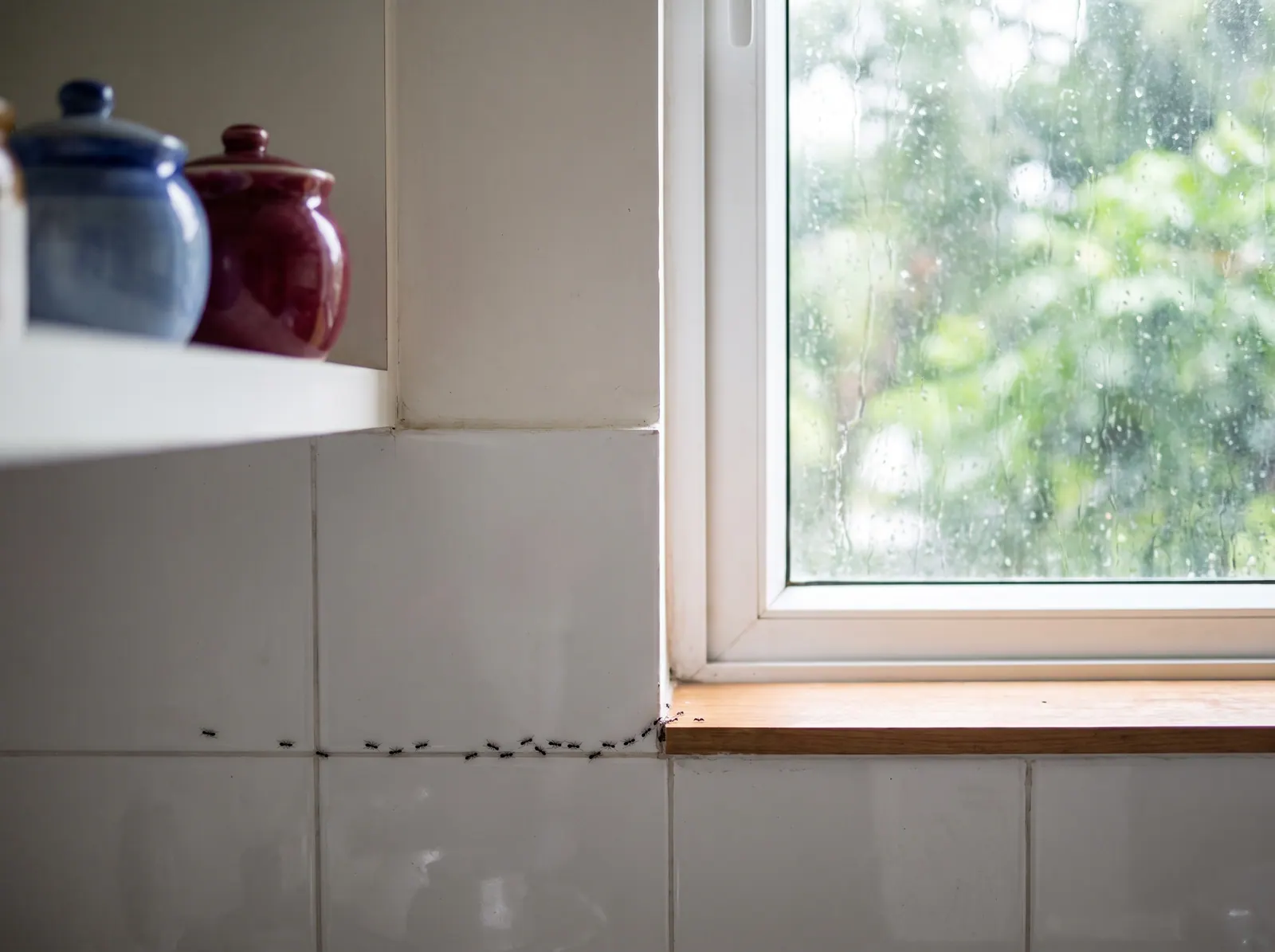
- Easy access: cracked grout, gaps around pipes and cables, and rain-swollen door and window frames that no longer close tightly.
Between showers you may also see swarms of winged insects. Winged ants are reproductives leaving to start new colonies. Termites swarm in similar weather, so it is worth checking which one you have. Our guide to telling flying ants from flying termites explains the differences.
Which ants are you likely to see indoors?
Several kinds of ant turn up in homes across coastal India. Exact identification sometimes needs a closer look, but size, colour and behaviour give useful clues. Knowing the type matters, because the right approach differs.
| Ant | What it looks like | Where you tend to see it | Why it matters |
|---|---|---|---|
| Ghost ants | Tiny, with a dark head and pale, almost see-through legs and abdomen | Sweets, fruit, sink edges, bathrooms | They can nest in many small hidden spots indoors, so baiting suits them better than chasing nests |
| Pharaoh ants | Tiny and yellowish to light brown | Warm, hidden places near food and water | Spraying can make a colony split into several new ones, so bait is the preferred approach |
| Crazy ants | Dark, with long legs, running fast and erratically | Along walls, around bins and near doors | They often forage in large numbers from outdoor nests, so the source is usually outside |
| Large black ants (often carpenter ants) | Noticeably bigger, black, often active at night | Around wooden frames, cupboards and damp timber | Some nest in damp or decaying wood, so their presence can point to a hidden leak |
| Small reddish stinging ants | Small, reddish-brown, aggressive when disturbed | Garden edges, doorways, potted plants | Their stings are painful, so keep children and pets away from the nest area |
The red ants that build leaf nests in mango and cashew trees are weaver ants. They are mainly an outdoor matter, covered in our guide to weaver ants around Goan homes.
How do you follow an ant trail back to its source?
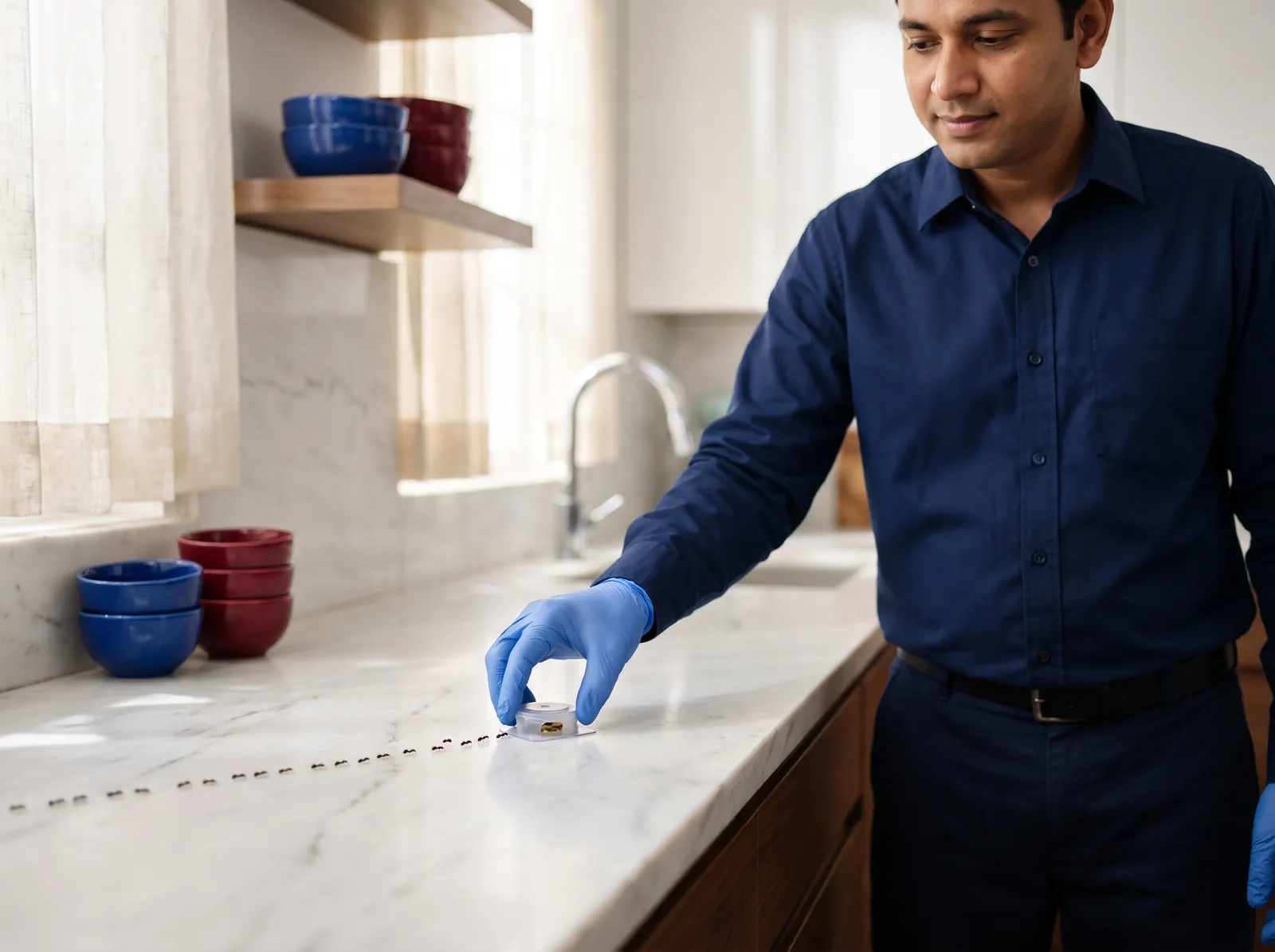
Foraging ants lay a scent trail that others follow to food. If you wipe the trail away straight away, the ants simply find the route again, and you lose the clue that leads to the nest. Watch the trail first.
- Watch at quiet times. Ants are often busiest in the evening after cooking, and early in the morning before the kitchen is in use.
- Make the trail visible. Put a small dab of honey or jam on a piece of card where you have seen ants. Leave it for a short while and a clear line usually forms.
- Follow the line away from the food. The point where the ants disappear into a gap is the entry point, or sometimes the nest itself.
- Check the usual entry points. Look at gaps along skirting, cracked tile grout, window and door frames, and plumbing holes under the sink. Also check holes made for gas lines and cables, and the space behind the fridge.
- Note where the trail goes. A trail that leads outdoors suggests a garden or wall nest. One that vanishes into a wall, cabinet or appliance suggests the colony has moved inside.
- Take photos or a short video of the ants and the entry point. This helps with identification later.
Several trails coming from different directions, or ants in more than one room, usually means more than one nest or a colony that has spread. That is a good point to have the property inspected.
Baits or sprays: which works better for kitchen ants?
The ants you see are only the foragers. The queen, or several queens, and the developing young stay hidden in the nest. Lasting control depends on reaching the nest, and this is where baits and sprays differ most.
| Baits | Sprays | |
|---|---|---|
| How it works | Slow-acting bait is carried back by workers and shared through the colony | Kills the ants it touches |
| Effect on the nest | Can reach the queens and young | Usually leaves the nest untouched |
| Speed | Gradual, usually over several days | Visible ants gone quickly, often back soon after |
| In a kitchen | Placed in small amounts, away from food and prep surfaces | Residue on cooking and food areas is a concern |
| Side effects | More ants at the bait at first, which is expected | Can scatter colonies and, with some species, cause them to split |
Baits work because they are slow. A bait that killed instantly would never get back to the nest. While a bait is working, you may see more ants feeding on it for a while. Resist the urge to wipe them away or spray near the bait, because that breaks the chain.
Sprays do have a place, but a limited one. Targeted spot treatment at entry points or outdoor nests, applied away from food areas, can support a baiting programme. Spraying kitchen counters and shelves on its own rarely fixes the problem.
If you use household ant products
- Read and follow the label directions.
- Never spray food, utensils or food-preparation surfaces.
- Keep bait stations out of reach of children and pets, and keep them away from treated areas until dry or as the label advises.
- Ventilate the room and wash your hands after use.
- If anyone has a reaction to an ant sting, or swallows a product, see a doctor promptly and take the product label with you.
Kitchen habits that keep ants out during the monsoon
Baiting deals with the colony that is already there. Everyday habits decide whether the next one moves in.
Every day
- Wipe counters, the stove and the area around the gas cylinder at night.
- Do not leave dishes in the sink overnight. Dry the dish rack and the sink edge.
- Rinse jam, sauce and syrup bottles, and wipe jar rims before closing them.
- Use a bin with a tight lid and empty it daily, especially after cooking fish or meat.
- Pick up pet bowls after meals, or stand them in a shallow dish of water so ants cannot reach them.
Storage
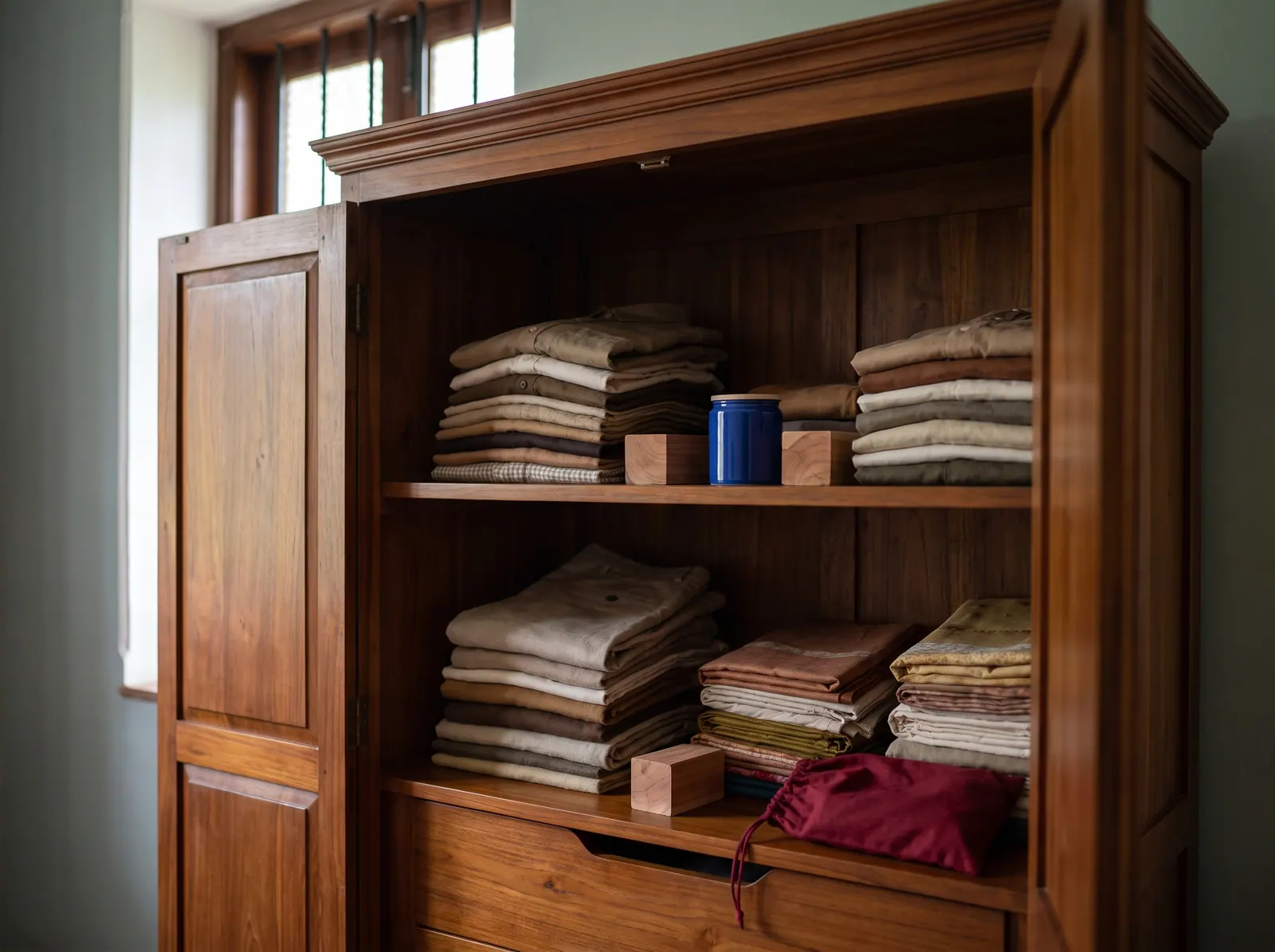
- Keep sugar, jaggery, honey, biscuits and sweets in airtight containers. This matters most around festivals like Ganesh Chaturthi, which falls during the rains.
- Keep very ripe bananas and cut fruit in the fridge rather than in a open bowl.
- Seal grains and flour too. Our guide to stored rice and pantry pests covers this in more detail.
Moisture and entry points
- Fix dripping taps and leaks under the sink, and keep the cabinet dry and ventilated.
- Seal gaps around pipes and cables, and repair cracked grout. This is best done before the rains, as set out in our pre-monsoon pest checklist.
- Trim plants and creepers that touch the walls or window frames.
- Keep firewood, coconut husks and garden debris away from the house walls.
How does our Goa team approach monsoon ant problems?
Our Goa branch follows an Integrated Pest Management approach: inspection, sanitation and proofing advice, and targeted treatment. For ant control, that means trail-focused and nest-focused baiting with spot treatment, rather than blanket spraying of your kitchen.
- An inspection to identify the ant and trace trails to entry points and nests.
- Bait placed along active trails and near nests, away from food-preparation surfaces.
- Spot treatment at entry points or outdoor nests where appropriate.
- Practical advice on sealing gaps and on kitchen habits.
- A service report shared with you after the visit.
In Goa we are a licensed pest control operator under the Directorate of Agriculture, and we use CIB&RC-registered products. Material Safety Data Sheets are kept for the products we use. Your technician will explain how to prepare the kitchen, and how long to keep children and pets away from any treated areas.
When should you ask for professional help?
- Ants keep returning after a couple of weeks of good kitchen habits and careful baiting.
- Trails come from several directions, or ants appear in more than one room.
- Ants are inside switchboards, electrical points or appliances.
- Large black ants come out of wooden frames or cupboards, which may mean damp timber.
- Stinging ants are nesting where children play or pets rest.
- You find winged insects indoors and are not sure whether they are ants or termites.
Ants are only one part of the rainy season. Our overview of monsoon pests in Goa covers what else to watch for between June and September.
If any of the signs above sounds familiar, contact our Goa branch in Chimbel. Tell us where in Goa you are and what you are seeing. Photos of the ants and the trail help, and we will suggest the right next step.
Frequently asked questions
QWhy do ants appear so suddenly when the rains start in Goa?
The first heavy spells of the monsoon saturate the soil quickly. Colonies nesting in the ground, under paving or in garden walls must move their young to drier places, often within a day or two. At the same time, outdoor food sources are disrupted. A dry, food-rich kitchen is an obvious target, which is why ants can seem to arrive overnight.
QWill the ants go away by themselves once the monsoon ends?
Sometimes the number of foragers drops when the ground dries. But a colony that has settled inside a wall cavity, cabinet or appliance has no reason to leave while it has shelter, food and moisture. Without baiting and better kitchen habits, many indoor colonies carry on through the dry months and become active again the following monsoon.
QWhy do I see more ants after putting down bait?
This is usually a sign the bait is working. Foragers that find an attractive bait recruit nestmates along their scent trail, so activity around the bait often rises for a short time. They carry the bait back and share it through the colony. Avoid wiping them away or spraying nearby. Numbers normally fall over the following days as the bait reaches the nest.
QAre ant baits safe to use in a kitchen with children and pets?
Follow the label directions closely. Choose enclosed bait stations where possible and place them where children and pets cannot reach, such as behind appliances or inside cabinet edges. Keep bait away from food, utensils and preparation surfaces, and wash your hands after handling it. If a child or pet swallows bait, see a doctor or vet promptly and take the product label with you.
QCan ants damage my house, or are they only a nuisance?
Most kitchen ants are mainly a hygiene problem, because they walk over food and surfaces. Some large black ants can nest in damp or decaying wood, so finding them in frames or cupboards may point to a hidden leak. Ants are also sometimes confused with termites, which do damage timber. If you see winged insects or crumbling wood, have it checked.
QDo chalk lines, turmeric or other home remedies keep ants away?
Some household remedies may make ants detour for a while by interrupting their scent trail. They do not reach the nest, though, so the colony survives and finds another route. Simple habits are more effective: sealed storage, dry surfaces and fixed leaks. Combined with slow-acting baits that workers carry home, they work far better than barriers.
QHow long does professional ant treatment take to show results?
It depends on the type of ant, the number of nests and how much food is available elsewhere in the home. Because baits act slowly so they can reach the colony, improvement is usually gradual over several days rather than instant. Your technician will explain what to expect after the inspection, and what you can do in the kitchen to help.
Last updated 13 October 2026. Information on this page is general guidance; your technician will advise on your specific property after inspection.