Quick answer
To get a Goa hotel ready for the tourist season, run a full pest inspection in early October before rooms fill. Check kitchens, stores and drains for cockroaches and rodents. Inspect mattresses and headboards for bed bugs. Clear standing water from gardens, gutters and water features. Look for termite and wood-borer activity encouraged by the damp monsoon. Then treat what you find, fix entry points, brief staff and set up records for the season.
Key points
- Low occupancy during the monsoon lets pests settle into closed rooms, idle kitchens and damp stores.
- Bed bugs travel in luggage and furniture, and can survive long periods in empty rooms, so check every room before reopening.
- Removing standing water is the main mosquito control step; fogging alone does not deal with breeding sites.
- FSSAI Schedule 4 hygiene requirements and HACCP systems expect food businesses to plan and document pest control.
- Keep people and pets out of treated areas until dry or as advised, and ventilate before reuse.
For most hotels and resorts in Goa, October is the month to prepare pest control for the tourist season. Months of heavy south-west monsoon rain, high humidity and lower occupancy give pests time to settle into quiet corners. These include closed rooms, idle kitchens, damp stores and overgrown gardens.
The weeks before the first full bookings are the best time to find and deal with them. Rooms can still be emptied and areas closed off for treatment.
This guide is a practical checklist for general managers, housekeeping heads, chefs and engineering teams. It follows on from our monsoon shutdown pest plan for Goa hotels and shacks. It covers the reopening side: inspection, kitchens, guest rooms, gardens and staff.
Why do pest problems show up when a hotel reopens?
Low occupancy changes how a building behaves. Rooms that are rarely opened stay dark and undisturbed. Floor traps in unused bathrooms can dry out, giving cockroaches and drain flies an easy route up from the drain line. Stores that are not rotated give rodents and cockroaches shelter.
Damp soil and timber around the building suit termites. Moisture-affected wood in furniture and frames can also show wood borer activity.
Once the season starts, deliveries increase, kitchens run at full capacity and guests arrive with luggage from many places. Any problem left over from the monsoon grows, and closing rooms or kitchens for treatment becomes much harder. Fixing things in October is simpler and less disruptive than fixing them at peak occupancy.
Pre-season inspection sweep: what should it cover?
Start with a structured walk-through of the whole property, not just the areas guests see. The sweep works best when people from housekeeping, kitchen and engineering take part. Bring a torch, a floor plan and a simple sheet for marking findings by location.
| Area | What to look for |
|---|---|
| Kitchens and dishwash | Live or dead cockroaches, egg cases, droppings near motors and door seals, grease build-up under equipment |
| Dry and cold stores | Gnawed packaging, rodent droppings, insects in grains and flour, damaged door sweeps |
| Guest rooms | Dark spotting, shed skins or live bugs on mattress seams, headboards and furniture joints; dry floor traps |
| Staff accommodation | The same bed bug checks as guest rooms; clutter and food kept in rooms |
| Woodwork and furniture | Mud tubes on walls and frames, hollow-sounding timber, fine powder and small holes in furniture |
| Gardens, terraces and roofs | Standing water in pot saucers, drains, gutters, tarpaulins and discarded containers; ant trails into buildings |
| Waste area and loading bay | Fly activity, rodent runways, overflowing bins, gaps around doors and shutters |
| Ducts, false ceilings and ledges | Rodent rub marks and droppings, bird nesting, bee or wasp nests near occupied areas |
Record the exact location of each finding and how serious it looks. That list becomes your work plan for treatment, repairs and cleaning. It also gives you a baseline to compare against later in the season.
Kitchens, stores and back of house
The kitchen is where a pest problem affects food safety, audits and reputation fastest. Before the season, clear and deep-clean under and behind fixed equipment. Grease and food debris in those gaps are exactly where cockroaches shelter.
Also check refrigeration door seals, motor housings and electrical panels. These stay warm and are often overlooked.
- Cockroaches: Targeted gel baiting and crack-and-crevice treatment suit kitchens. They place product where cockroaches hide, rather than across food-contact surfaces.
- Rodents: Look for droppings, gnaw marks and greasy rub marks along walls. Seal gaps around pipes and cables and fit door sweeps. Place bait stations or traps so they are tamper-resistant and away from food. Our guide to rodent control in hotel guest areas and back of house goes into more detail.
- Flies: Clean drains and floor channels, and keep bins lidded and emptied often. Check screens and air curtains at service doors.
- Stores: Rotate stock, and keep goods off the floor and away from walls so you can inspect behind them. Discard packs showing insect or rodent damage.
FSSAI Schedule 4 hygiene requirements expect food businesses to keep their premises free of pests. HACCP-based systems treat pest control as a prerequisite programme.
Plan kitchen treatments for times when the kitchen is closed. Remove or cover food and utensils, and clean surfaces before the kitchen is used again. Our guide to HACCP pest control documentation for Goa hotels explains what auditors typically ask to see.
Guest rooms and bed bug checks
Bed bugs are not a sign of dirt. They travel in luggage, clothing and second-hand furniture, and they can survive long periods without feeding in an empty room. A room that had a problem before the monsoon may still have one now, so a room-by-room check before full occupancy is worth the time.
How to check a guest room for bed bugs
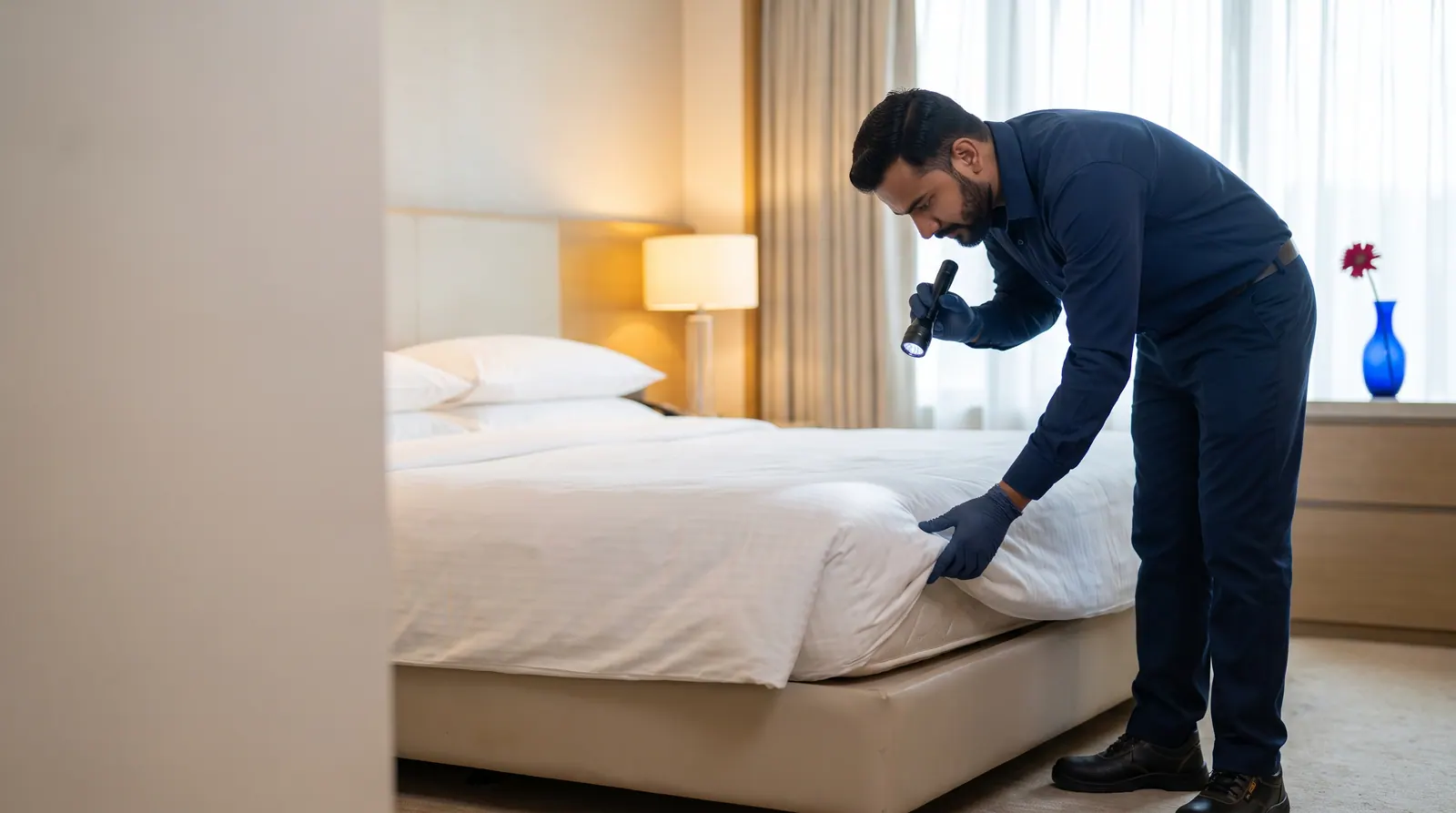
- Strip the bed. Inspect mattress seams, piping, labels and corners with a torch.
- Check the bed base or frame, especially joints, screw holes and the underside.
- Look behind the headboard, which is a common hiding place.
- Check bedside tables, sofa seams, curtain folds and skirting near the bed.
- Look for small dark spots (droppings), pale shed skins, tiny eggs and live bugs.
- Record the room number and the result, even when nothing is found.
If you find signs, take the room out of use. Seal linen in bags before carrying it through corridors to the laundry. Avoid moving furniture from that room to others.
Professional treatment is usually needed, with follow-up visits, because eggs can hatch after the first treatment. Some hotels also fit bed bug-proof mattress encasements, which make later inspections quicker.
Give staff accommodation the same attention. One Goa purchase manager's published testimonial describes bed bugs in staff accommodation as a persistent headache, and says our team resolved it. Our guide to bed bugs after travel explains how bed bugs spread through hotels, buses and trains.
Gardens, pools and mosquitoes
Resort gardens, lawns and water features are part of the guest experience. After the monsoon, they also hold a lot of standing water. Mosquitoes breed in small amounts of still water, so removing or managing breeding sites matters more than spraying.
- Empty or remove pot saucers, buckets, old tyres, coconut shells and anything else that collects rain.
- Clear roof gutters, terrace drains and AC drip trays.
- Check tarpaulins and pool covers that were used during the monsoon. Folds in them hold water.
- Keep swimming pools circulating and treated as normal. A well-maintained pool is not usually the problem, but unused pools, balancing tanks, ornamental ponds and fountains can be.
- Trim dense shrubs close to rooms and restaurants, where adult mosquitoes rest.
Where water cannot be removed, larviciding may be used. Indoor residual spraying or fogging can reduce adult mosquitoes for a time. Fogging alone does not deal with breeding sites, and it has to be timed around guests.
Our guide to the post-monsoon mosquito season in Goa covers this in more detail. The garden walk is also a good time to look for termite mud tubes on trees, fences and wooden structures, and for ant nests along building edges.
Staff briefings before the first guests arrive
Pest control during the season depends on the people who are in the building every day. Hold a short briefing before reopening, and repeat it for new seasonal staff.
- Housekeeping: what bed bug signs look like, how to report them, and how to bag linen from a suspect room.
- Kitchen and stewarding: closing-time cleaning, keeping food covered, leaving bait stations unblocked, and reporting sightings with the time and place.
- Stores and receiving: checking deliveries for droppings, damaged packs and insects before goods go into store.
- Engineering and gardens: repairing gaps, door sweeps and screens, and stopping water from collecting.
- Front office: responding calmly to a guest complaint, moving the guest, and escalating the issue.
Keep a simple pest-sighting log at key points. It lets your pest management provider act on facts rather than guesswork. For a fuller programme, see staff training for pest prevention in Goa hotels and restaurants.
A four-week October readiness timeline
| Week | Focus |
|---|---|
| Week 1 | Full inspection sweep; findings listed by location; bait station and trap positions reviewed |
| Week 2 | Deep cleaning of kitchens and stores; repairs to gaps, screens and door sweeps; garden water cleared |
| Week 3 | Targeted treatments zone by zone (kitchens, affected rooms, woodwork, garden); follow-up visits scheduled |
| Week 4 | Treated areas re-checked; staff briefings held; records set up for the season |
Adjust the timeline to your opening date. A small boutique property may manage it in two weeks, while a large resort may need to work block by block.
How we approach pre-season work for Goa hotels
Our Goa branch in Chimbel follows an Integrated Pest Management approach with hotels and resorts. That means inspection first, then sanitation and proofing advice, then targeted treatment where it is needed.
We are a licensed pest control operator with the Directorate of Agriculture, Goa, and we use CIB&RC-registered products. We maintain Material Safety Data Sheets for the products we use.
After each visit we share service reports as proof of service, along with WhatsApp updates. For food businesses, we provide documentation aligned with HACCP and FSSAI audit expectations.
During any treatment, follow these safety steps:
- Keep guests, staff, children and pets away from treated areas until they are dry, or for as long as advised.
- Ventilate rooms after treatment.
- Wash hands after contact with treated surfaces.
- If anyone has a reaction to a bite or sting, advise them to see a doctor.
If you are preparing a property for the season, contact our Goa branch in Chimbel. Tell us your location, the size of the property and what you have noticed. We will talk through an inspection and a plan that fits your opening date.
Frequently asked questions
QWhen should a Goa hotel start its pre-season pest work?
Ideally, start in early October or as soon as the heaviest monsoon rain eases, about three to four weeks before you expect full occupancy. That leaves time to inspect, carry out repairs and cleaning, treat in stages and re-check treated areas. Starting late usually means working around guests, which limits what can be closed off. Properties opening earlier should move the whole timeline forward.
QDo we need to treat every guest room for bed bugs before reopening?
Not necessarily. Inspect every room, and treat the rooms where you find signs, plus any rooms next to them if advised. Blanket treatment without inspection adds cost and disruption without telling you where the problem actually is. Record the result for every room, including clear ones, so you have a baseline. Bed bug treatment normally needs follow-up visits, because eggs can survive the first round.
QCan pest treatments go ahead while part of the hotel is occupied?
Often, yes, if the work is planned zone by zone. Treated rooms and areas are kept closed to guests and staff until they are dry, or for as long as the technician advises, and are ventilated before reuse. Kitchens are best treated after service, with food and utensils removed or covered. Agree the schedule with housekeeping and the kitchen in advance so no one walks into a treated area.
QIs fogging enough to control mosquitoes around a resort garden?
Fogging can reduce adult mosquitoes for a while, but it does not remove the standing water where new mosquitoes breed. Breeding-site reduction comes first: empty containers, clear gutters and drain trays, and manage ponds and unused tanks. Larviciding may help where water cannot be removed. Any fogging should be timed so guests are not in the area, and it works best as one part of a wider plan.
QWhat pest control records should a hotel kitchen keep for audits?
Keep service reports for every visit, a map of bait station and trap positions, a pest-sighting log, and details of the products used along with their safety data sheets. Records of the corrective actions you took, such as repairs or deep cleans, are also useful. FSSAI hygiene requirements and HACCP systems both expect pest control to be planned and documented, not handled only when something appears.
QHow often should a hotel have pest control visits during the season?
It depends on the property's size, the pests involved and the level of activity found at inspection. Busy kitchens often need more frequent visits than guest areas. Many hotels use an annual maintenance contract with scheduled visits and service reports, adjusted through the year. Visits may be weekly, monthly or quarterly depending on the area, with extra visits if staff log new sightings.
QWhat should staff do if a guest reports bites in their room?
Respond calmly and move the guest to a room that has been checked, not one next door. Take the original room out of use and inspect it before anything is moved. Bag the linen and the guest's laundry carefully. If the guest has a skin reaction or feels unwell, suggest they see a doctor. Staff should not offer medical advice.
Last updated 13 October 2026. Information on this page is general guidance; your technician will advise on your specific property after inspection.