Quick answer
Fruit flies in a Goa bar breed in fermenting fruit and in sugary or alcoholic residue. Drain flies breed in the slimy film inside drains. To stop either, identify the fly and find every breeding source. Use tape tests over drains and inspect under equipment. Scrub drains mechanically, keep fruit chilled, and clean drip trays, mats and bins at every close. Traps and treatments help only after the sources are removed.
Key points
- Fruit flies breed in fermenting fruit and sugary or alcoholic residue; drain flies breed in the slimy film inside drains.
- In warm weather, a fruit fly can develop from egg to adult in about a week.
- Clear tape laid over a drain overnight shows whether that drain is producing flies.
- Pouring hot water or chemicals down a drain rarely removes the film where drain fly larvae live; it needs to be scrubbed out.
- Fogging and space sprays kill only flying adults; lasting control depends on removing breeding sources.
If small flies are hovering over your garnish tray or drifting up from the floor drain behind the bar, you are almost certainly dealing with fruit flies, drain flies, or both. A Goa bar or restaurant has fresh fruit, sugary mixers, beer and cashew feni on one side, and wet floors and drains on the other. Both kinds of fly thrive in those conditions.
Both problems can be solved once you find where the flies are breeding. Spraying the flies you can see rarely fixes anything on its own. This guide covers four things:
- how to tell fruit flies and drain flies apart
- where they breed in a typical bar
- the cleaning routines that break their life cycle
- where traps and professional treatment fit in
Fruit fly or drain fly: how can you tell?
Both are only a few millimetres long, so they are easy to confuse. The quickest clues are how they fly and where they rest.
| Feature | Fruit fly | Drain fly |
|---|---|---|
| Appearance | Tan or light-brown body, often with red eyes | Grey or dark, fuzzy body with broad, hairy wings, like a tiny moth |
| Wings at rest | Folded over the back | Held roof-like over the body, giving a heart or triangle outline |
| How it flies | Quick, hovering flight around food and drinks | Weak, short hops; often just sits on walls |
| Where you see it | Fruit, glasses, bottles, bins, drip trays | Walls and splashbacks near sinks, floor drains and toilets |
| What it breeds in | Fermenting fruit and sugary or alcoholic residue | Slimy organic film inside drains and other wet areas |
Some small flies run across surfaces rather than fly, or turn up in places that fit neither pattern. These may be another type, such as phorid flies. Phorid flies can point to a broken drain or decaying matter under the floor.
Getting the identification right matters, because each fly has a different source and a different fix. House flies are a separate problem again; see our guide to house fly control in Goa.
Why are Goa bars especially prone to small flies?
Warmth and humidity speed up fermentation and the growth of slime in drains. They also shorten fly life cycles. In warm weather a fruit fly can go from egg to adult in about a week, so one forgotten source can produce a steady stream of new flies.
The south-west monsoon adds more moisture. Floors stay damp, mops and mats take longer to dry, drains run slowly and cardboard soaks up spills. Open-sided bars and beach shacks also let flies drift in from outside, which makes it even more important to control the sources you can reach.
Where do fruit flies breed in a bar?
Fruit flies lay eggs on the surface of moist, fermenting material, and the larvae feed in that film. In a bar, check these places first:
- Garnish and fruit storage: cut limes, lemons, oranges, pineapple and mint left out after service, and whole fruit ripening at room temperature.
- Empty bottles and cans: crates of empties waiting for collection, especially beer, wine, feni and juice containers with residue inside.
- Drip trays and bar mats: beer and syrup spills left overnight in trays or under rubber mats.
- Dispensing equipment: beer tap nozzles, soda gun holsters, bottle pourers and speed rails coated with sugary residue.
- Bins: wet-waste bins without lids or liners, and the dried film at the bottom of the bin itself.
- Cleaning kit: mop heads and cloths left damp in a bucket, and sponges by the glass-wash sink.
- Hidden spills: syrup or juice that has run under bar fridges, behind the ice well or into gaps in tile grout.
Fruit flies can also breed in the organic film inside drains. A drain can therefore produce fruit flies as well as drain flies.
Where do drain flies breed?
Drain fly larvae live in the gelatinous film, the 'slime', that builds up inside pipes and wherever water stands with organic matter in it. Common sites include:
- floor drains under the bar and in the kitchen, especially where the grate is rarely lifted
- glass-washer and dishwasher drain lines
- ice machine and ice well drains
- sink overflows and slow-running sinks
- grease traps and sumps
- condensate trays under fridges, chillers and air-conditioning units
- broken or loose floor tiles with water trapped beneath them
Pouring hot water or a strong cleaning chemical down a drain usually rinses only the surface of the film. Larvae deeper in the pipe survive unless the film is scrubbed out, so the flies come back.
How do you find the breeding source?
- Identify the fly. Catch a few on clear tape and compare them with the table above.
- Map where adults gather. Note which areas have the most flies at opening and closing. Adults usually stay close to where they emerged.
- Tape-test the drains. At closing, lay clear tape across each drain opening, sticky side down, leaving gaps so water can still escape. Flies stuck to the tape next morning show you which drain is active.
- Use monitoring cups. Place small lure traps at different stations to see where numbers are highest.
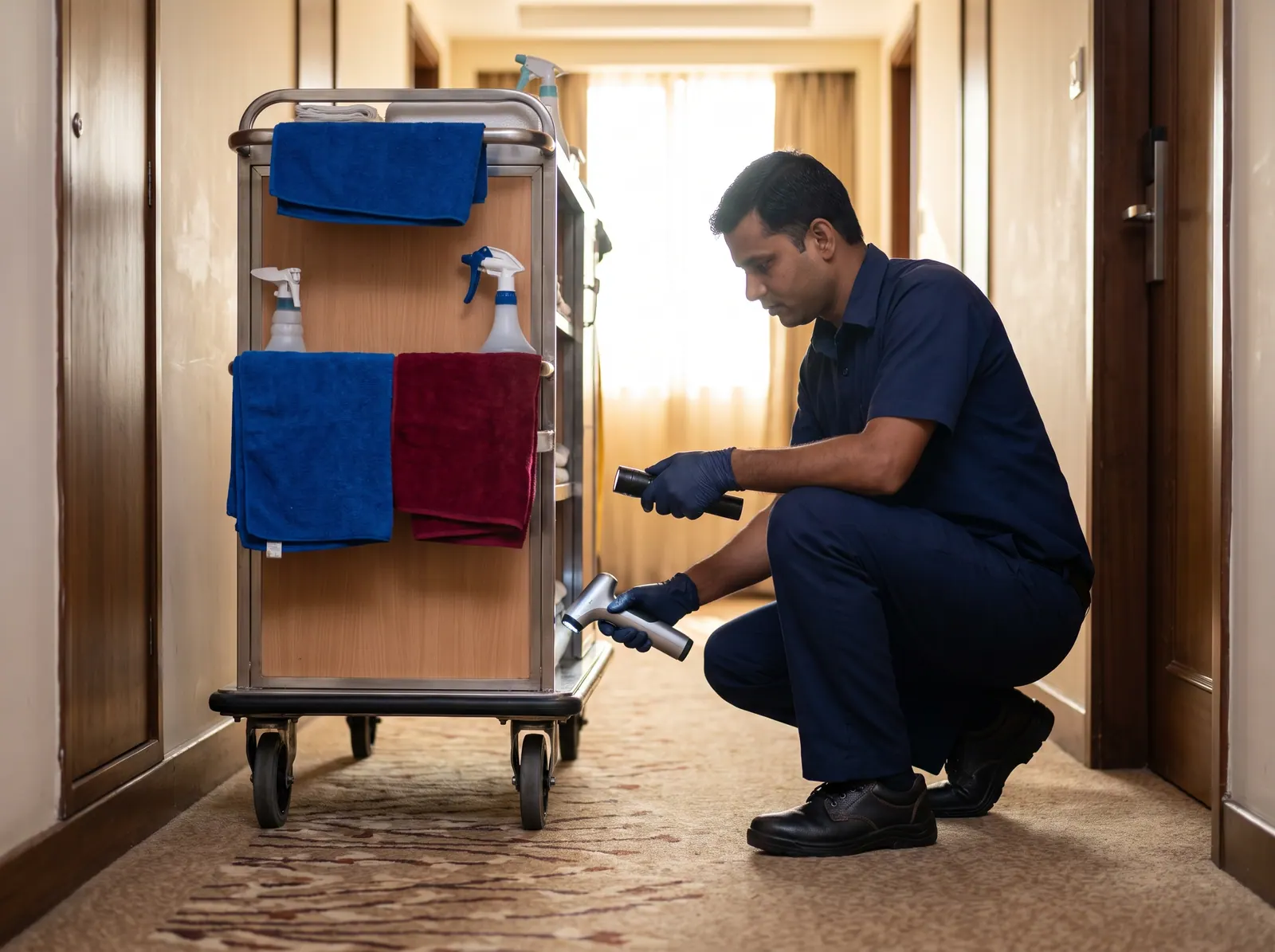
- Look under and behind. Use a torch to check:
- under bar fridges (pull them out where possible)
- beneath mats and drip trays
- behind the ice well
- under the back-bar counter
- Check what comes in. Inspect fruit deliveries and returned empties. Eggs and larvae can arrive on overripe fruit.
Expect to find more than one source. In a busy bar, a drain and a fruit store are often both contributing at the same time.
Which cleaning routines break the cycle?
A new generation can develop in about a week, so cleaning has to be consistent rather than occasional. A simple routine that staff follow every day works better than a deep clean once a month.
| When | What to do |
|---|---|
| At every close | Refrigerate or discard cut garnishes. Empty and wash drip trays. Lift, rinse and dry bar mats. Rinse empties or keep them in closed crates. Empty wet-waste bins and replace liners. Wring out mops and cloths and hang them to dry. |
| Weekly | Scrub floor drains and grates with a long drain brush. Clean beer tap nozzles, soda gun holsters and pourers. Pull out bar fridges and clean beneath them, and clean around the ice well. Wash bins inside and out. |
| Monthly, and more often in the monsoon | Inspect drain lines, grease traps and condensate trays. Look for broken tiles, failed grout and pooled water. Review where flies are still being seen and adjust the routine. |
If you use enzyme- or bio-based drain cleaners, use them after scrubbing, not instead of it, and follow the label. Keep fruit in a fridge or in covered containers.
For bin handling and staff habits, see our guides on waste management and pests for Goa restaurants and staff training for pest prevention in hotels and restaurants.
Do traps and treatments help?
Traps and treatments are useful, but they work best once the breeding sources have been dealt with.
Monitoring traps
Simple vinegar traps or commercial lure traps catch fruit flies and show whether numbers are falling. They will not clear an infestation on their own while flies are still breeding.
Insect light traps
Light traps with glue boards catch house flies well but tend to be less effective against fruit flies and drain flies. If you use them:
- place them away from food preparation and drink service
- keep them out of sight of entrances, so they don't draw flies in from outside
- change glue boards as the manufacturer advises
Avoid electric-grid units over food or drink areas, because they can scatter insect fragments.
Professional treatment
For drain flies, professional treatment usually combines mechanical cleaning with a bio-based gel or foam that coats the inside of the drain, where the larvae live. For persistent fruit flies, targeted applications may be made to cracks, voids and resting areas away from food-contact surfaces.
Space sprays and fogging only knock down adults flying at the time. If the sources remain, new flies keep emerging.
Safety around treatment
- Remove or cover food, garnishes, ice, glassware and utensils before any treatment.
- In a food business, treatment should be carried out by a licensed pest control operator using registered products, following label directions.
- Keep staff, customers and pets away from treated areas until they are dry or for the time advised, and ventilate the space.
- Wash hands and clean food-contact surfaces before service resumes.
Flies, hygiene records and inspections
Food businesses are expected to meet the FSSAI Schedule 4 hygiene requirements, which include keeping premises free from pests. Many operators also follow HACCP principles. Visible flies around a bar or kitchen are an obvious hygiene concern for customers and inspectors alike.
Keep a written cleaning log for drains and bar equipment alongside your pest control service records. Together they show that flies are being managed systematically rather than only when someone complains.
If your venue also handles fresh fish and seafood, the sources are different. Our guide to flies around fish markets and seafood kitchens covers that separately.
How does our Goa branch handle fly problems in bars and restaurants?
Fly control is one of the services offered by our Goa branch in Chimbel. We follow an Integrated Pest Management (IPM) approach, which has three parts:
- an inspection to identify the fly and find its breeding sources
- sanitation and proofing advice your team can act on
- targeted treatment only where it is needed
You can read more about our fly control service. In Goa:
- We are a licensed pest control operator (Directorate of Agriculture, Goa) and use CIB&RC-registered products.
- We maintain Material Safety Data Sheets for the products we use.
- We share service reports after visits and send clients updates on WhatsApp.
- We provide documentation for food businesses aligned with HACCP and FSSAI audit expectations.
Tell our Goa branch in Chimbel where your bar or restaurant is, what the flies look like and where you see them most. We'll advise you on the next step.
Frequently asked questions
QWhy do fruit flies keep coming back even after we clean the bar?
Usually because one breeding source has been missed. Common culprits are a floor drain with slime inside, syrup that has run under a bar fridge, a crate of unrinsed empties or a mop left damp overnight. Surface cleaning removes adults but not eggs and larvae. If you still see flies a week or two after a thorough clean, keep searching. Tape-test the drains and check under and behind equipment.
QCan bleach or boiling water get rid of drain flies?
Usually not on their own. Both tend to rinse only the surface of the film inside the pipe, leaving larvae deeper down alive. Drain flies are controlled by physically scrubbing out that film with a drain brush, then keeping the drain clean regularly. Bio-based drain products can help after scrubbing, applied as the label directs. Fixing slow drains and broken tiles also removes places where water and debris collect.
QShould we put an insect light trap behind the bar?
A light trap with glue boards is useful for house flies and for monitoring, but fruit flies and drain flies are generally less attracted to it. If you install one, keep it away from drink preparation and out of sight of entrances, so it doesn't pull flies in from outside. Avoid electric-grid models over food or drink areas, because insect fragments can scatter.
QCan fruit flies arrive with our fruit deliveries?
Yes. Fruit flies lay eggs on ripe and overripe fruit, so a problem can start from a single box of mangoes or bananas. Check deliveries on arrival and set aside damaged or very ripe fruit. Move fruit into a fridge or covered containers rather than leaving it on open shelves. Using older stock first also reduces the time fruit sits ripening at room temperature.
QHow long does it take to clear a fruit fly or drain fly problem?
It depends on how many sources there are and how quickly they are removed. Once breeding stops, no new adults emerge, so numbers should start to drop. Adults already present can linger for a while. If flies are still appearing steadily after a week or two of consistent cleaning, a source has probably been missed and needs a closer inspection.
QDo you provide service records that we can show during a food safety audit?
In Goa, we share service reports after visits and send clients updates on WhatsApp. For food businesses, we provide documentation aligned with HACCP and FSSAI audit expectations. Keeping these records alongside your own daily cleaning logs gives a clear picture of how flies are being managed. Contact our Goa branch in Chimbel to discuss what your venue needs.
Last updated 13 October 2026. Information on this page is general guidance; your technician will advise on your specific property after inspection.