Quick answer
Post-construction termite treatment protects a building that is already standing and in use. In Goa, our team inspects and maps termite activity. We then drill small holes along wall–floor junctions and floors, inject a CIB&RC-registered termiticide into the soil beneath and seal the holes. Affected woodwork is also treated. A service report is shared, and follow-up and the warranty on the treated area are set out in your service agreement.
Key points
- Post-construction treatment targets termites in buildings that are already built and occupied, without lifting floors.
- Drill–fill–seal means drilling small holes along wall–floor junctions and floors, injecting termiticide into the soil beneath, then sealing the holes.
- IS 6313 (Part 3) is the Indian Standard covering anti-termite treatment of existing buildings.
- Fixing leaks and keeping cardboard and timber away from walls helps treatment last, especially through Goa's monsoon.
- The Goa branch shares service reports after visits; warranty applies to the treated area as set out in the service agreement.
If termites are already inside your home, villa, hotel or office, the building cannot be treated the way a bare plot is. Post-construction termite treatment in Goa has to work around existing floors, walls, furniture and the people using the space. Our Goa branch in Chimbel carries out this treatment for occupied properties. It starts with a careful inspection and follows the general approach that IS 6313 (Part 3) sets out for existing buildings.
This page explains what we do, in what order, and what to expect during and after treatment. If you are still building, our page on pre-construction anti-termite treatment covers soil treatment before the floor is laid.
When does a building need post-construction treatment?
Most termites that damage buildings in Goa are subterranean. They live in the soil and travel into the building through hairline cracks, expansion joints, gaps around pipes and electrical conduits, and the joint where the floor meets the wall. They build mud tubes to protect themselves from dry air. They feed on wood, paper, cardboard and other cellulose material.
Goa’s humid coastal climate and heavy south-west monsoon keep soil and masonry damp for long periods, which suits termites well. People usually contact us after noticing one or more of these signs:
- Thin mud lines running up walls, skirting or the back of cupboards
- Door or window frames that sound hollow or crumble when pressed
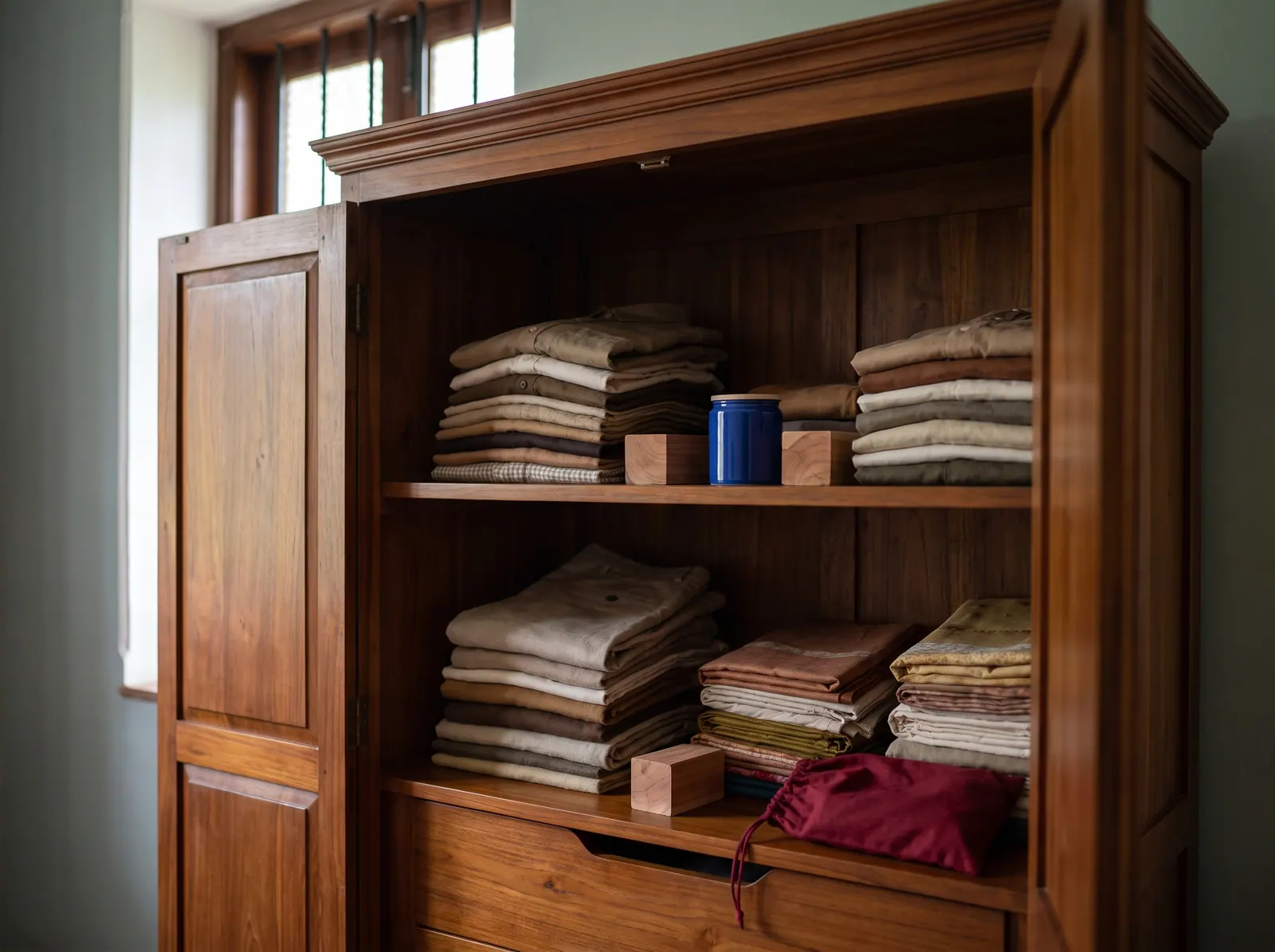
- Damaged wardrobes, bookshelves or stored papers and cartons
- Swarms of winged termites indoors, often after the first rains
- Small piles of discarded wings near windows and lights
If you are unsure what you are seeing, our guide to termite warning signs in Goan homes explains each sign in more detail.
How do we inspect and map termite activity?
Treatment is only as good as the inspection behind it. Before any drilling, a technician walks through the whole property, not just the room where you first saw termites. Termites seen in a bedroom cupboard may be entering through a bathroom wall or a cracked floor in the next room.
During the inspection we check:
- Wall–floor junctions, skirting and floor cracks on the ground floor
- Kitchens, bathrooms and utility areas, where pipes enter and moisture collects
- Door frames, window frames, built-in cupboards and wooden staircases
- Ceiling timber, rafters and false ceilings, where accessible
- The outside of the building: soil against walls, garden beds, stored timber and debris
- Signs of damp, leaks or seepage that keep walls and soil wet
We then mark out the active areas, likely entry points, the walls and floors to be drilled, and the woodwork to be treated. Moisture problems are noted too, because fixing leaks and clearing cellulose material is part of our Integrated Pest Management (IPM) approach. You receive our recommended treatment and a quotation based on what the inspection shows.
What is drill–fill–seal, in plain terms?
The aim is to create a continuous treated zone in the soil beneath and around the building. This stops termites from reaching the structure from the ground, without lifting your floor. The work has three stages, plus the outside of the building where needed.
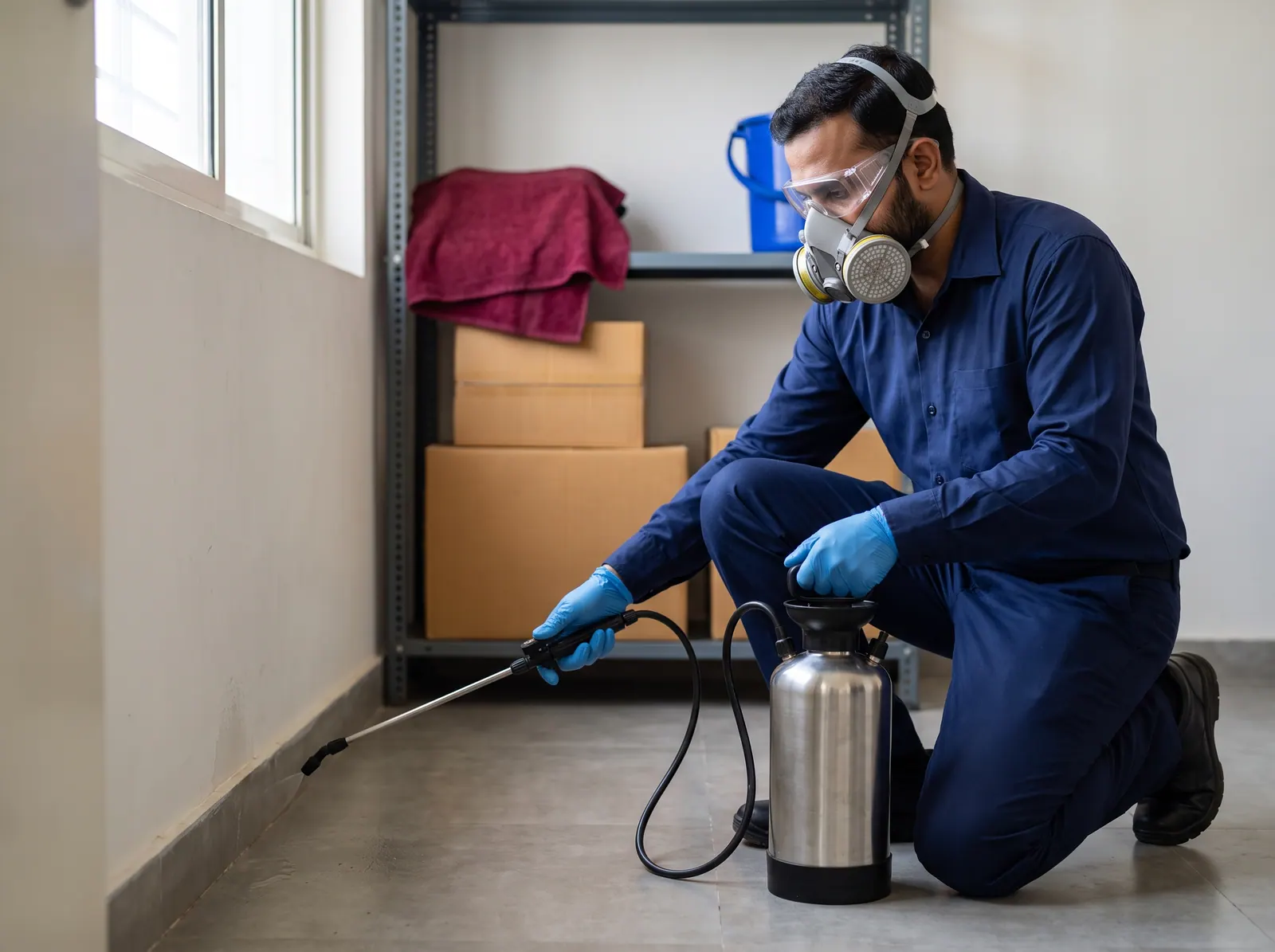
- Drill: Small holes are drilled at intervals along the inside edge of walls where they meet the floor. Holes are also drilled along floor cracks, expansion joints and around pipe entries.
- Fill: A termiticide, diluted according to its label, is injected into each hole so it spreads into the soil under the floor.
- Seal: Each hole is closed with cement or a suitable filler, matched as closely as is practical to the existing floor.
- Outside perimeter: Where there is open soil along the external walls, the soil at the base of the walls is treated to complete the barrier.
IS 6313 (Part 3) is the Indian Standard for anti-termite treatment of existing buildings. It describes this kind of soil treatment beneath and around a building, together with treatment of woodwork. We follow its approach in general terms. The exact drilling pattern depends on how your building is constructed and what the inspection finds.
We are a licensed pest control operator with the Directorate of Agriculture, Goa, and we use CIB&RC-registered products applied as per their labels. Drilling does create some noise and dust. Our guide on how to prepare your home for termite drilling treatment lists simple steps that make the visit quicker and cleaner.
Where do we treat, and how?
| Area | What we look for | How it is usually treated |
|---|---|---|
| Ground-floor wall–floor junctions | Mud tubes, damp or damaged skirting | Drill–fill–seal along the wall line |
| Floor cracks and expansion joints | Tubes emerging, swarming points | Drilling and injection along the crack or joint |
| Kitchens, bathrooms, pipe and conduit entries | Gaps around pipes, leaks, damp walls | Injection around entry points; leak repair advised |
| Door and window frames, built-in cupboards | Hollow sound, soil packed into joints | Wood treatment plus treatment of masonry around the frame |
| External walls | Soil, debris or timber touching the wall | Soil treatment along the base; clearing advice |
| Garden, trees and stumps | Mounds, tubes on trunks or fences | Separate garden and landscape termite treatment where needed |
How do we treat woodwork and furniture?
Termites often reach timber that is fixed to or touching masonry: door and window frames, built-in wardrobes, kitchen cabinets, wooden staircases, panelling and false ceilings. We treat affected timber by applying termiticide into the damaged galleries through small holes, and to surfaces where appropriate. Mud tubes are cleared so that any new activity is easy to spot later.
Loose furniture should be moved slightly away from walls so we can inspect it and the wall behind. Some pieces may be too hollowed out to save. If so, we will tell you which ones, so a carpenter can repair or replace them.
Not all wood damage is caused by termites. Termite damage is usually packed with soil or mud. Wood borer damage shows small round exit holes and fine, flour-like powder, and it needs a different treatment. See our page on wood borer treatment in Panaji for more.
Treating occupied homes, villas, hotels and offices
Flats and housing societies
Termites in upper-floor flats usually travel up from the ground through the building’s structure, ducts and shafts. Treating a single flat can reduce activity in that flat. A more complete result usually needs the society to treat the ground floor, common areas and the building perimeter as well. We can explain the options to the managing committee.
Independent houses and villas
Many Goan homes combine laterite or masonry walls with timber doors, rafters and ceilings. For these homes, we inspect roof and ceiling timber as carefully as the floors. Houses with gardens may also need the outside perimeter and planted areas treated.
Hotels, resorts and offices
Businesses rarely want to close for treatment. We can plan the work in phases, room by room, floor by floor or zone by zone, in coordination with your housekeeping or facilities team. Service reports after each visit give you a record of what was treated and where.
Is post-construction treatment safe for my family and staff?
Treatment is carried out by our technicians using CIB&RC-registered products as per label directions. We maintain Material Safety Data Sheets for the products we use, so you can ask what is being applied. Please follow these precautions:
- Keep children and pets out of treated rooms until surfaces are dry, or for as long as the technician advises.
- Keep rooms well ventilated during and after treatment.
- Remove or cover food, utensils, toothbrushes and pet bowls in the areas being treated.
- Do not mop or wash treated floor edges until the technician says it is fine.
- Wash your hands after touching treated surfaces.
- If anyone feels unwell after treatment, see a doctor and mention the treatment.
Under our terms, a representative of the household or business should be present with the technicians during the service.
What happens after treatment?
After each visit, we share a service report as proof of service. Clients also receive updates on WhatsApp. Any follow-up inspections are arranged as set out in your service agreement.
Seeing a few termites or winged termites shortly after treatment is not unusual. Tell us if activity carries on. Old mud tubes that have been cleared should not rebuild in treated areas.
A warranty applies to the treated area for specific services, as set out in the service agreement. It varies by treatment. It does not cover structural changes, new construction, or cases where post-service instructions are not followed. Termites can also come from a neighbouring property or untreated ground, so prevention on your side matters. Our article on how long anti-termite treatment lasts explains what affects the life of a treatment.
These steps help the treatment last:
- Fix leaking taps, pipes and roof seepage, especially before the monsoon.
- Do not store cardboard, papers or wood directly against walls or on the floor.
- Keep firewood, spare timber and garden debris away from external walls.
- Tell us before any renovation, retiling or new drilling into treated floors.
Arranging post-construction termite treatment in Goa
Our Goa branch in Chimbel offers post-construction termite treatment as part of our termite control service. The towns in our coverage records include Panaji, Margao, Vasco da Gama, Mapusa, Porvorim, Ponda, Calangute, Candolim and Baga.
To get started, contact our Goa branch in Chimbel. Tell us your location, the type of property and what you have noticed. Photos of mud tubes or damaged wood help us plan the inspection.
Frequently asked questions
QWill drilling damage my floor tiles or marble?
The holes are small and placed along floor edges, cracks and joints rather than across the middle of the room. Each hole is sealed with cement or a suitable filler and matched as closely as is practical. On marble or patterned tiles the repair may still be visible up close. Please tell us about special flooring during the inspection so we can discuss drilling positions, such as grout lines, before work begins.
QDo we need to move out during post-construction termite treatment?
Usually not. Treatment can be done with the household in place, working room by room. Keep children and pets out of treated rooms until surfaces are dry, or as the technician advises, and keep the rooms ventilated. How long the work takes depends on the size of the property, and we will give you an estimate at the inspection. A household member should be present while the technicians work.
QOur flat is on an upper floor. How did termites get there?
Subterranean termites start in the soil, but they can travel upwards through cracks, ducts, shafts and conduits inside the building's structure. They often stay hidden behind walls and cupboards. Treating your flat can reduce activity there. A longer-lasting result usually needs the housing society to treat the ground floor, common areas and perimeter, because that is where termites enter from the soil.
QHow is post-construction treatment different from pre-construction treatment?
Pre-construction treatment is done on open soil before the floor is laid, so the treated layer can be applied directly. In a finished building that soil is covered. Post-construction treatment therefore reaches the soil by drilling through the floor and injecting, then sealing the holes, and adds treatment of existing woodwork. It follows the general approach of IS 6313 (Part 3) rather than Part 2.
QWhat does the warranty on the treated area cover?
A warranty applies to the treated area for specific services, as written in your service agreement, and it varies by treatment. It does not cover structural changes, new construction, or cases where post-service instructions were not followed. If termites come in from a neighbour's property or untreated ground, prevention steps are needed on your side. Ask your technician how to reduce that risk.
QCan a hotel or office stay open while it is treated?
In most cases, yes. We can plan the work in phases, treating a set of rooms, a floor or one zone at a time, in coordination with your housekeeping or facilities team. Treated areas are kept out of use until they are dry or as advised. A service report after each visit records what was treated, which helps you track progress across the property.
Last updated 13 October 2026. Information on this page is general guidance; your technician will advise on your specific property after inspection.