Quick answer
There is no single fixed lifespan for anti-termite treatment. How long it stays effective depends on the product used, how thoroughly the soil barrier was applied, and whether it is later disturbed by digging, renovation, plumbing leaks or moisture. Pre-construction soil treatment protects from beneath the building; post-construction drill-fill-seal treatment protects an existing one. Any warranty period is the one written in your service agreement, and regular inspections confirm protection is holding.
Key points
- Anti-termite treatment has no single fixed lifespan; it lasts as long as the treated zone stays effective and undisturbed.
- Pre-construction treatment (IS 6313 Part 2) treats soil during building; post-construction treatment (IS 6313 Part 3) uses drill-fill-seal in existing buildings.
- Soil disturbance, moisture, renovations, product choice and application quality all affect how long protection holds.
- Mud tubes, shed wings, hollow-sounding wood and bubbling paint are signs to call for an inspection.
- The warranty period that applies is the one stated in your service agreement.
Homeowners, housing societies and builders often ask how long termite treatment lasts, usually hoping for a single number. The honest answer is that it depends on the building, the soil, the product and, above all, on what happens to the treated area after the technicians leave. This guide explains the factors that matter, how pre-construction and post-construction treatments differ, the signs that protection needs attention, and why follow-up inspections are worth the time.
One point up front: the only protection period you should rely on is the one written in your service agreement. Treat any general figure you read online with caution, because it cannot account for your particular property.
Why is there no single answer?
Most termite damage to buildings in India comes from subterranean termites. They live in the soil and travel into a building through cracks in the floor, gaps around pipes, expansion joints and the junction between floor and wall. Anti-termite treatment works mainly by creating a continuous treated zone in the soil that termites cannot cross safely.
That treated zone does not stay the same forever. Termiticides gradually break down in soil, and any gap in the zone, whether from digging, a new pipe or a leak washing the soil, gives termites a way through. So the real question is not only how long the chemical lasts, but how long the barrier stays continuous and undisturbed.
Pre-construction vs post-construction: how do they differ?
The stage at which a building is treated makes a large difference to how complete the protection can be. The Indian Standard IS 6313 covers both situations: Part 2 deals with pre-construction treatment and Part 3 with treatment of existing buildings.
| Pre-construction treatment | Post-construction treatment | |
|---|---|---|
| When it is done | During construction, before and as foundations, plinth and floors are laid | In an existing, often occupied, building |
| How it works | Soil in foundation trenches, under the floor and around the plinth is treated in stages so the building sits on a treated zone | Holes are drilled along floor-wall junctions and other entry points, treatment is injected, and the holes are sealed (drill-fill-seal), with wood treatment where needed |
| Main strength | Coverage can be very thorough because the soil is open and accessible | Targets the routes termites are actually using in the building |
| Main limitation | Later digging, extensions or plumbing work can break the treated layer | Access is limited by finished floors, fixed furniture and fittings |
If your building was treated during construction, keep the builder's records. They help any future inspector understand what was done and where. If you are planning post-construction treatment, our guide on how to prepare your home for termite drilling treatment explains what to move and expect on the day.
What shortens the life of a termite treatment?
These are the factors we look at when judging whether a treatment is likely to keep working.
| Factor | Why it matters |
|---|---|
| Soil disturbance | Digging for gardens, drains, cables or paving next to the building can remove or dilute the treated soil and leave an untreated gap. |
| Moisture | Leaking pipes, blocked drains, poor roof drainage and damp walls attract termites and can wash treated soil. Goa's very heavy south-west monsoon and humid coastal climate, and the monsoon season on the Deccan plateau around Hyderabad, both bring periods of wet soil. |
| Renovations and extensions | New rooms, re-tiled floors, raised plinths and new wooden fittings can create areas the original treatment never covered. |
| The product used | Products registered with the CIB&RC differ in how they act and how long they persist in soil. Using a registered product at the rate on its label matters. |
| Quality of application | Skipped sections, holes drilled too far apart or poorly sealed holes leave weak points. |
| Surroundings | Old tree stumps, buried timber, firewood or cardboard stacked against walls keep termite colonies active close to the building. |
What can you do to help the treatment last?
Much of a treatment's lifespan is in the hands of the people living in or managing the building. A few simple habits help:
- Tell your pest control provider before any digging, renovation or extension near treated walls or floors.
- Fix plumbing leaks, seepage and blocked drains promptly, especially before the monsoon.
- Keep soil, garden beds and mulch from piling up against the plinth.
- Store wood, cardboard and old furniture off the floor and away from walls.
- Do not reopen or damage sealed drill holes, and follow the post-treatment instructions you are given.
- Keep a record of when and where treatment was done.
Which signs mean the treatment needs attention?
Call for an inspection if you notice any of the following:
- Mud tubes on walls, skirting, door frames or along pipes.
- Winged termites or piles of shed wings near windows and lights, often after the first rains.
- Hollow-sounding or soft wood in door frames, skirting, cupboards or furniture.
- Bubbling paint or wallpaper, or fine lines of soil in cracks.
- Damaged stored items such as books, files or cardboard boxes.
- Doors or windows that suddenly stick, which can sometimes follow damage inside the frame.
Not every damaged piece of wood means termites. Fine powder and small round exit holes usually point to wood-boring beetles instead; our guide on how to tell termites from wood borer explains the difference, because the treatment is not the same.
Why do follow-up inspections matter?
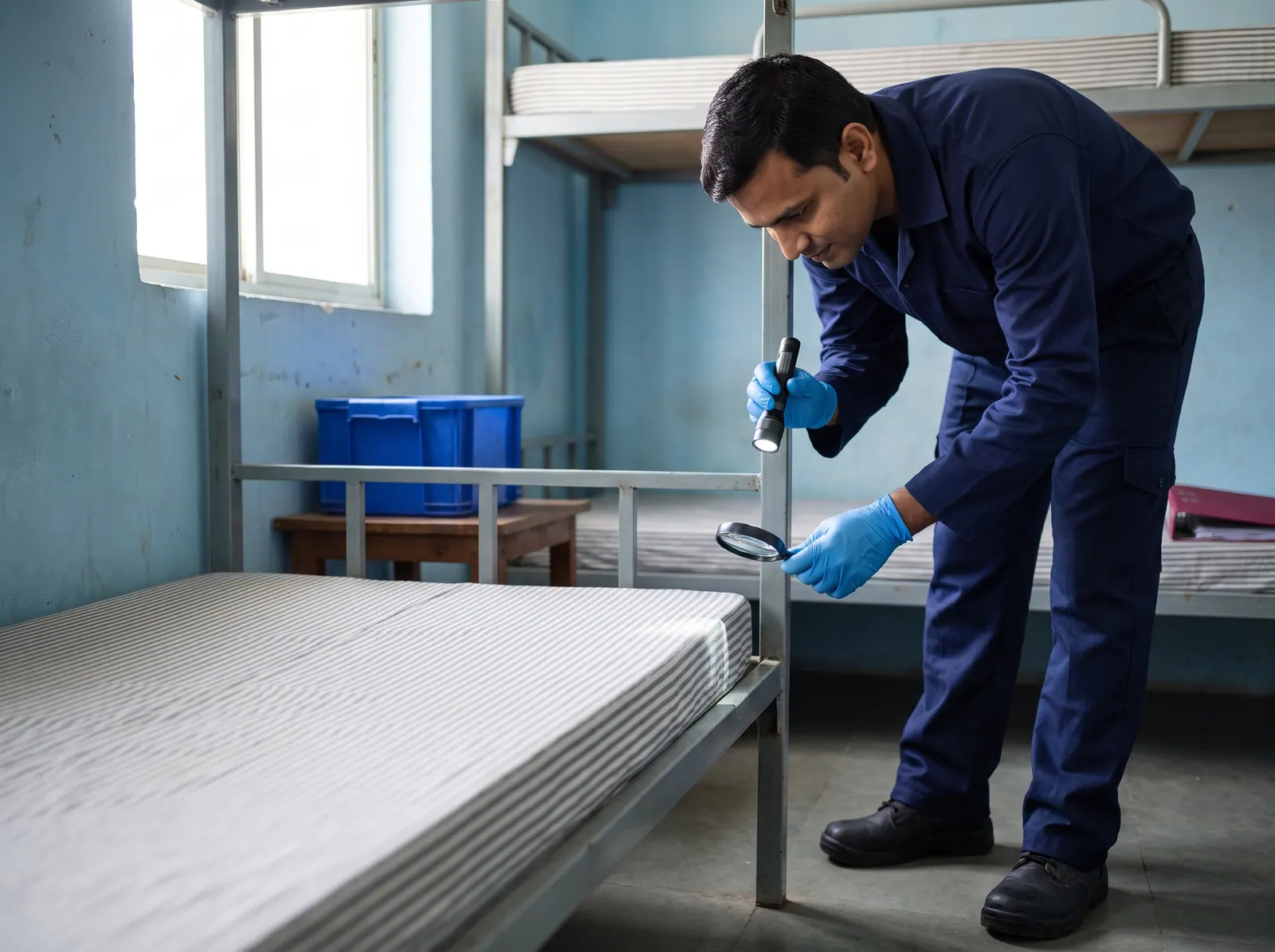
Termite activity is often hidden inside walls, under floors and behind cupboards. By the time damage is obvious, termites may have been active for some time. Scheduled inspections catch new activity early, while it is still easy to deal with.
During a follow-up inspection a technician typically:
- Checks floor-wall junctions, door frames, skirting and wooden fittings for fresh mud tubes or damage.
- Looks for new moisture problems, leaks and seepage.
- Asks about renovations, digging or new furniture since the last visit.
- Checks that drill holes remain sealed.
- Recommends spot treatment of any area where the barrier may have been breached.
This inspection-first approach is part of the Integrated Pest Management method we follow across the company, described in more detail on our how we work page. For clients of our Goa branch, service reports are shared after visits, which gives you a running record of the property's history.
What does a termite treatment warranty cover?
For our Goa operation, a limited warranty applies to the treated area for specific services, as set out in the service agreement. The period and conditions vary by pest and treatment. Warranties generally do not cover structural changes, new construction, or problems arising when post-service instructions have not been followed, so it is worth reading your agreement carefully and keeping it safe. Our terms and conditions explain the general position.
Talk to us about your property
If you are unsure whether an older treatment is still protecting your building, or you are planning construction or renovation, an inspection is the sensible first step. You can read more about our termite control approach, including pre-construction soil treatment and post-construction drill-fill-seal work.
In Goa, contact our Goa branch in Chimbel to arrange a visit. In the Hyderabad region, our Shamshabad branch has recently opened — tell us your location and the problem, and we'll confirm whether we can help.
Frequently asked questions
QCan I get an exact number of years for how long my termite treatment will last?
No honest provider can promise an exact lifespan for every building, because results depend on soil, moisture, the product and whether the treated area is later disturbed. The figure that matters is the warranty period written in your service agreement, which applies to the treated area under the stated conditions. Regular inspections are the most reliable way to know whether protection is still holding.
QDoes renovation or re-tiling affect an existing termite treatment?
It can. Breaking floors, laying new tiles, building extensions or digging near the foundation may remove treated soil or create areas that were never treated. Let your pest control provider know before the work starts, so they can advise on protecting the existing treatment and, if needed, treating the new areas once work is complete.
QIs pre-construction treatment enough on its own?
Pre-construction soil treatment gives a building a strong start because the soil is open and can be treated thoroughly. But the treated zone can still be broken later by plumbing work, garden digging or extensions. Keeping construction records, watching for signs of activity and arranging periodic inspections help make sure protection continues over time.
QI saw winged termites after the first rain. Has my treatment failed?
Not necessarily. Winged termites swarm from colonies after rain and may come from outside the building, attracted to lights. However, if you find them emerging from cracks in floors, walls or door frames indoors, or see mud tubes, it suggests activity inside and is worth an inspection. Collect a few wings or insects to show the technician.
QShould I reopen or clean the sealed drill holes after treatment?
No. The drill holes are sealed so the treatment stays where it was placed. Reopening them, scrubbing them out with water or chipping the seal can weaken protection at exactly the points termites are likely to use. If a seal is damaged during cleaning or repairs, mention it at your next inspection.
QDoes moisture really make a difference to termite treatment?
Yes. Termites need moisture, so leaking pipes, seepage, blocked drains and damp walls attract them towards a building. Persistent water can also wash treated soil. Fixing leaks promptly, especially before and during the monsoon, is one of the most useful things you can do to support any anti-termite treatment.
Last updated 13 October 2026. Information on this page is general guidance; your technician will advise on your specific property after inspection.