Quick answer
Efficacy Pest Control provides termite control across Goa from its Chimbel branch. Every job starts with an inspection. The treatment then depends on the building: pre-construction soil treatment for new construction, drill-fill-seal treatment for occupied homes and businesses, and direct treatment of affected woodwork. We are a licensed pest control operator in Goa, use CIB&RC-registered products and share a service report after each visit.
Key points
- Termite control in Goa is provided from the Efficacy Pest Control branch in Chimbel.
- Treatment is inspection-led: pre-construction soil treatment, post-construction drill-fill-seal, or wood treatment.
- The company is a licensed pest control operator (Directorate of Agriculture, Goa) using CIB&RC-registered products.
- A service report is shared after visits, with WhatsApp updates for clients.
- Warranty applies to the treated area for specific services, as set out in the service agreement.
Efficacy Pest Control provides termite control across Goa from our branch in Chimbel. Every job starts with an inspection, and the treatment follows from what we find. That might be pre-construction soil treatment for a building still going up, drill-fill-seal treatment for an occupied home or business, or direct treatment of affected woodwork.
When people look for the best termite control services in Goa, what usually matters is a clear diagnosis, the right method for the building and honest paperwork afterwards. This page explains how we approach each of these.
Why do termites need attention in Goa?
Subterranean termites live in the soil and enter buildings through cracks, expansion joints, conduits and gaps around door frames. Goa's humid coastal climate and very heavy south-west monsoon keep soil and walls damp for months, which suits them. Seepage through walls and roofs during the rains adds to the moisture they need.
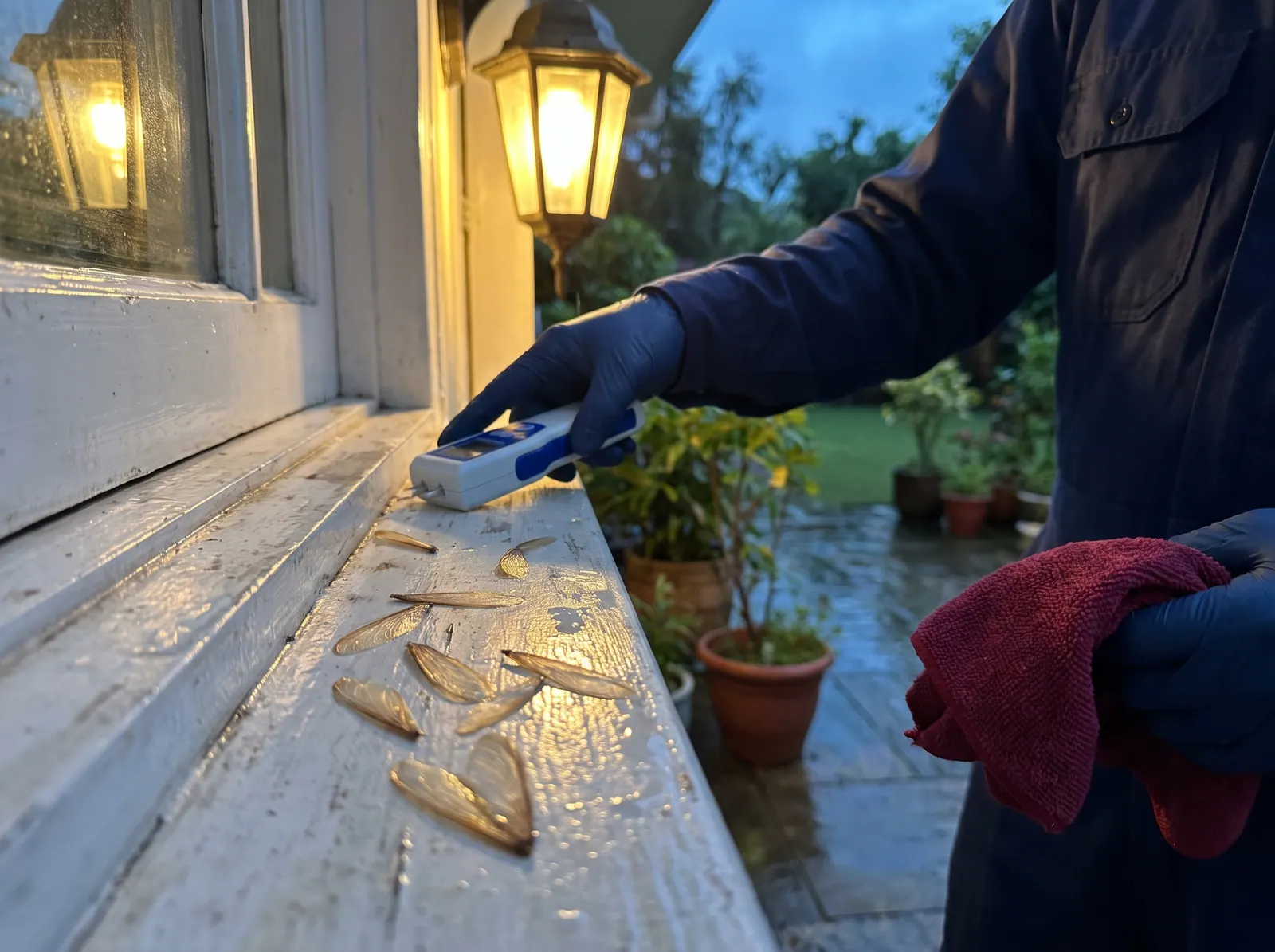
Many Goan properties also contain a lot of timber. Traditional houses have wooden rafters and tiled roofs, newer flats have built-in wardrobes, and villas and holiday homes may stay closed for weeks with wooden furniture inside. Termites can work through this wood unseen. Swarms of winged termites often appear around lights after the first showers; our guide to flying termites after the first rains in Goa explains what they mean.
What signs should prompt an inspection?
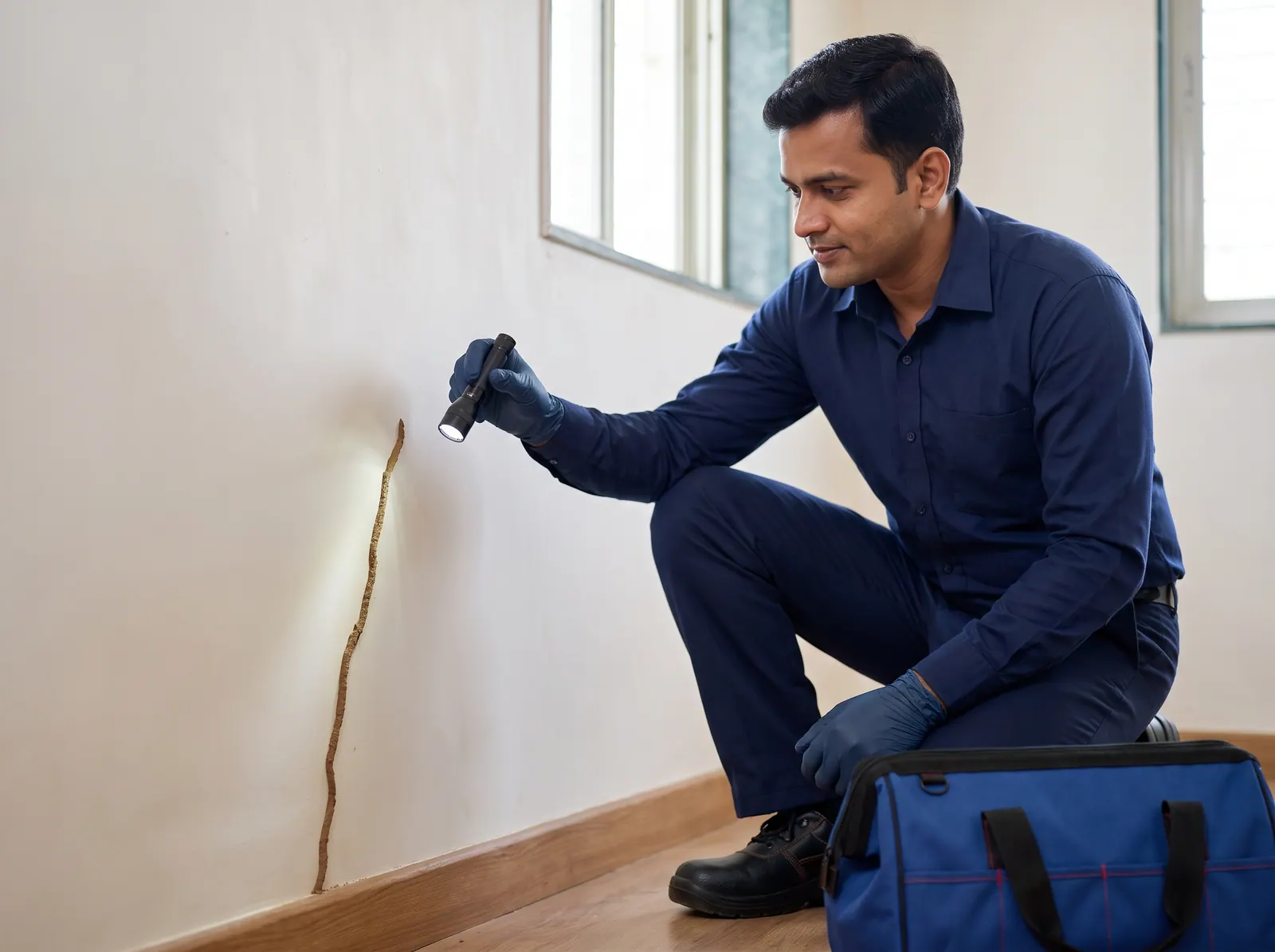
- Mud tubes: thin, earthy tunnels running up walls, along the plinth or inside cupboards.
- Hollow or crumbling wood: skirting, door frames or shelves that sound hollow when tapped or give way under light pressure.
- Discarded wings: small piles of wings near windows, doors or lights, especially after rain.
- Bubbling paint or damp patches: sometimes linked to termite activity inside walls.
- Fine pellets or powder near wood: these can point to drywood termites or wood-boring beetles, which an inspection can tell apart.
Our guide on termite warning signs in Goan homes covers what to check room by room and what not to disturb before an inspection.
Which termite treatment does your property need?
| Your situation | Treatment | What it involves |
|---|---|---|
| New house, building or extension under construction | Pre-construction anti-termite treatment | The soil is treated in stages, from foundation trenches to the plinth fill before flooring, to create a treated layer beneath and around the structure. |
| Occupied house, flat, office, shop or hotel with termite activity | Post-construction drill-fill-seal | Small holes are drilled at intervals along floor–wall junctions and other entry points, filled with termiticide, then sealed. |
| Doors, frames, furniture or wooden ceilings with termite damage | Wood treatment | Affected timber is treated directly after inspection. Badly damaged pieces may also need repair or replacement by a carpenter. |
The Indian Standard IS 6313 covers pre-construction (Part 2) and post-construction (Part 3) anti-termite treatment, and builders and architects often refer to it in their specifications. You can read more about pre-construction anti-termite treatment in Goa and post-construction termite treatment for occupied buildings.
Not every damaged piece of wood is a termite problem. Powder-post and furniture beetles cause similar-looking damage and need a different approach; see our wood borer treatment in Goa.
What happens during a termite treatment?
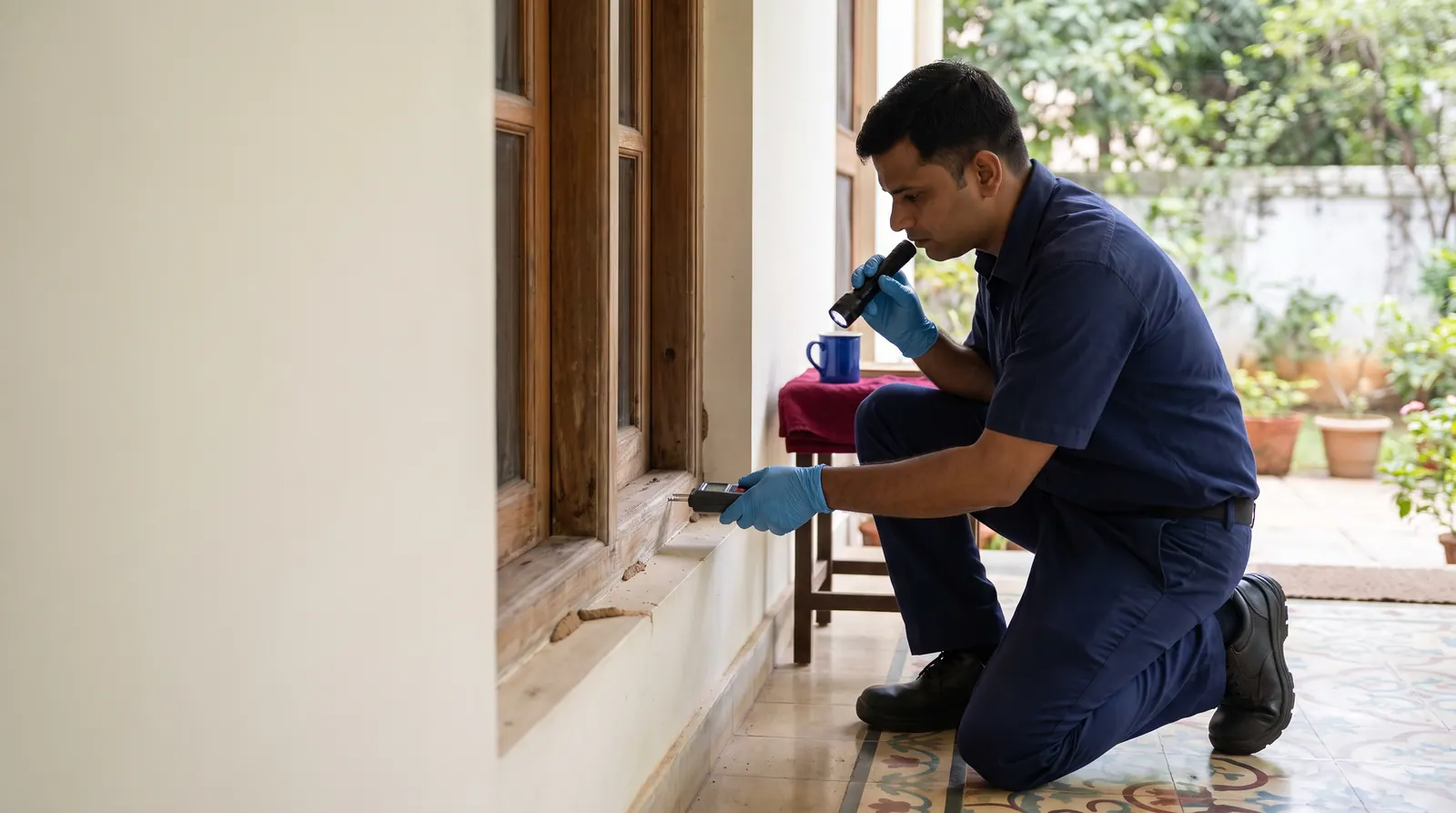
- Inspection: we check walls, floors, woodwork, wet areas and the outside of the building to find active termites, entry points and conditions that attract them.
- Plan and quotation: we explain which method suits the property and which areas will be treated.
- Preparation: you clear the areas to be treated as advised. Our guide on preparing your home for termite drilling treatment lists what to move and cover.
- Treatment: a client representative accompanies our technicians while the work is carried out.
- Report: we share a service report after the visit, with updates on WhatsApp.
- Prevention advice: we point out moisture problems, gaps and stored materials that could invite termites back.
How do we keep the treatment safe and accountable?
We are a licensed pest control operator with the Directorate of Agriculture, Goa, and we use CIB&RC-registered products applied as the label directs. Material Safety Data Sheets are maintained for the products we use. Our approach follows Integrated Pest Management: inspection, sanitation and proofing advice, then targeted treatment rather than blanket spraying.
Keep children and pets away from treated areas until they are dry or as our technician advises, ventilate the rooms, and wash hands after touching treated surfaces. If anyone feels unwell, see a doctor.
A warranty applies to the treated area for specific services, as set out in your service agreement. It varies by treatment and does not cover structural changes, new construction or not following post-service instructions.
What affects the cost of termite control?
- Built-up area and number of floors
- Whether the building is under construction or already occupied
- How widespread the termite activity is
- The amount of woodwork that needs treatment
- Floor type, since drilling through stone or tiles takes more care
We give a quotation after inspecting the property, so you know what is included before work starts.
How can you reduce the risk of termites returning?
- Repair roof leaks, plumbing leaks and wall seepage, ideally before the monsoon.
- Keep firewood, cartons and spare timber off the ground and away from walls.
- Check wardrobes and cupboards on outer or damp walls a few times a year.
- Clear construction debris and old wood from around the building.
- Arrange periodic inspections, especially if the property is closed for part of the year.
Where in Goa do we provide termite control?
From our Goa branch in Chimbel we serve Panaji, Porvorim, Mapusa, Calangute, Candolim, Baga, Ponda, Margao and Vasco da Gama, along with nearby localities in our records. Details are on our Goa branch page.
To arrange an inspection, contact our Goa branch in Chimbel with your location, the type of property and what you have noticed. If your area is not listed above, tell us where you are and we will confirm whether we can help.
Frequently asked questions
QDo we need to move out during drill-fill-seal treatment?
Usually not. Drilling is done room by room, and furniture along the treated walls is moved away beforehand. You should keep children and pets out of rooms being treated until the surfaces are dry or until our technician says it is fine to return, and keep the space ventilated. Our technician will explain what applies to your home during the inspection.
QCan you treat termites in an old Goan house with wooden rafters?
Yes, older houses can be treated, but the plan depends on what the inspection finds. We look at soil entry points, walls and the roof timber separately. Active termites in the building are usually handled with post-construction treatment, while affected rafters and beams receive wood treatment. Timber that has lost its strength may need a carpenter or structural advice, which treatment alone cannot fix.
QAre flying termites after the first rains a sign that my house is infested?
Not necessarily. Winged termites swarm from colonies in the soil after early rains and are drawn to lights, so they can come from a garden or a neighbouring plot. If you find shed wings indoors repeatedly, or see mud tubes on walls, an inspection is worth arranging to check whether a colony is active inside the building.
QIs pre-construction anti-termite treatment worth it if I am building a villa?
For most new construction in Goa, treating the soil while the foundation and plinth are open is the most practical time to do it. Once floors are laid, the same areas can only be reached by drilling. The treatment has to be timed with your construction stages, so involve us early and share the schedule with your contractor.
QWhat does the warranty cover?
The warranty applies to the area we treat, for specific services, and its terms are written into your service agreement. It varies by treatment. It does not cover structural changes, new construction or not following the post-service instructions. Termites coming from a neighbouring or untreated property are also outside the treated area, so ask our technician how to reduce that risk.
QDoes someone need to be at the property during treatment?
Yes. Our terms require a client representative to accompany the technicians during the service. This helps us access every area that needs treatment, confirm what is being moved or drilled, and explain aftercare on the spot. For holiday homes or rented properties, a caretaker or property manager can be present on your behalf.
Last updated 13 October 2026. Information on this page is general guidance; your technician will advise on your specific property after inspection.