Quick answer
Clothes moths and carpet beetles in Goa are small insects whose larvae eat wool, silk, feathers, fur and leather. They prefer soiled items left undisturbed in closed, humid wardrobes. Look for irregular holes, silken webbing or small cases, and bristly brown larvae or shed skins. Empty and vacuum the wardrobe, then wash, dry-clean or freeze affected items. Store clean fabrics in sealed containers and reduce damp. Seek professional help if damage keeps spreading.
Key points
- Clothes moth and carpet beetle larvae, not the adults, damage fabric by feeding on animal fibres such as wool, silk, fur, feathers and leather.
- Clothes moths often leave silky webbing or small cases; carpet beetle larvae are bristly and leave shed skins but no webbing.
- Closed, dark, humid wardrobes and soiled clothes left undisturbed encourage fabric pests.
- Sealed freezing for about a week, then thawing inside the bag, kills all life stages in items that cannot be washed.
- Clean, fully dry storage in sealed containers is the most effective prevention.
You open a wardrobe after the monsoon and find small holes in a wool shawl or a silk saree. The cause is often one of two fabric pests: clothes moths or carpet beetles. If you are dealing with a clothes moth problem in Goa, this guide explains how to tell the two apart and why closed, humid wardrobes suit them. It also covers what you can do yourself before you consider professional treatment.
Which fabrics do clothes moths and carpet beetles damage?
The adult insects do not eat cloth. The damage is done by their larvae, which feed on keratin, the protein in animal fibres. That means wool, silk, pashmina and cashmere, fur, feathers, felt, leather and down are all at risk.
Cotton and synthetic fabrics are rarely eaten on their own. They can still be damaged when they are blended with wool, or when they are soiled with sweat, food or body oils. Carpet beetle larvae are also less fussy than moth larvae. They will feed on hair, lint, dead insects and some stored foods.
Both pests prefer items that are left undisturbed. Typical examples are the back of a shelf, a wedding saree folded away for years, woollens kept for travel, and a rolled-up rug in a storeroom.
How do you identify clothes moths and carpet beetles?
Clothes moths
Adult clothes moths are small, slim and buff to golden in colour, usually under a centimetre long. Unlike many moths that circle lamps, they avoid light. They tend to flutter low in dark corners and wardrobes rather than flying towards bulbs.
The larvae are creamy-white caterpillars with darker heads. Some species leave silky webbing, tunnels and tiny droppings on the fabric. Others carry a small tube-shaped case, which often takes on the colour of whatever they are eating. Damage tends to be concentrated in hidden places: under collars, inside folds and along seams.
Carpet beetles
Adult carpet beetles are tiny, rounded beetles only a few millimetres long. Some are mottled with brown, white and yellowish scales, and others are plain dark. Adults are drawn to light and feed on flower pollen outdoors. You will often notice them on windowsills.
The larvae are the real clue. They are small, brown, bristly and slightly carrot-shaped, and they leave behind papery shed skins as they grow. Their damage shows as scattered, irregular holes, and as thinning patches on rugs along the edges and under furniture. Carpet beetles do not leave webbing.
Not every hole is a pest
Humid homes have several causes of fabric damage. This comparison helps narrow them down:
| Likely cause | What you see | Fabrics usually affected |
|---|---|---|
| Clothes moth | Holes with silky webbing or small cases, fine droppings, small buff moths in dark places | Wool, silk, fur, feathers, felt |
| Carpet beetle | Scattered irregular holes, bristly brown larvae, shed skins, tiny round beetles near windows | Wool, silk, leather, feathers, rugs; also lint and some stored foods |
| Silverfish | Surface grazing, thin or ragged patches, yellowish stains, silvery insects at night | Starched cotton, linen, silk, paper |
| Mildew or mould | Musty smell, grey, black or white spots, discolouration; holes only after long neglect | Almost any fabric, especially cotton and leather kept damp |
If the damage looks more like grazing than holes, our guide to silverfish and booklice in humid Goan homes may be more relevant.
Why do humid Goan wardrobes encourage fabric pests?
Goa's humid coastal climate and heavy south-west monsoon keep indoor air damp for months. Fabric-pest larvae develop more readily in warm, humid conditions. A closed wardrobe adds what they like most: darkness, still air and long periods without disturbance.
Several common household situations make things worse:
- Wardrobes against outer walls. Built-in and freestanding cupboards on external or damp walls stay cooler and wetter inside. See our guide on how damp walls invite pests.
- Clothes put away worn or damp. Sweat, food spills and moisture make fabric more attractive to larvae and encourage mildew.
- Hidden sources nearby. Bird nests on ledges and in ducts, dead insects, and debris in roof spaces or wooden false ceilings can all support carpet beetles. These then wander into rooms.
- Lint, hair and old woollens. Pet hair under beds, dust along skirting and forgotten woollen rugs or soft toys give larvae food outside the wardrobe.
Carpet beetle larvae also turn up in pantries, feeding on stored grains and pulses. If you find bristly larvae in the kitchen as well, read our guide to stored rice and pantry pests.
How should you store clothes through the monsoon?
Good storage prevents more damage than any treatment. These habits protect fabrics from both pests and mildew:
- Store only clean items. Wash or dry-clean wool, silk and leather before putting them away for the season.
- Make sure everything is fully dry. Air items on sunny days before the monsoon arrives and again once it ends. Air silks in shade to avoid fading.
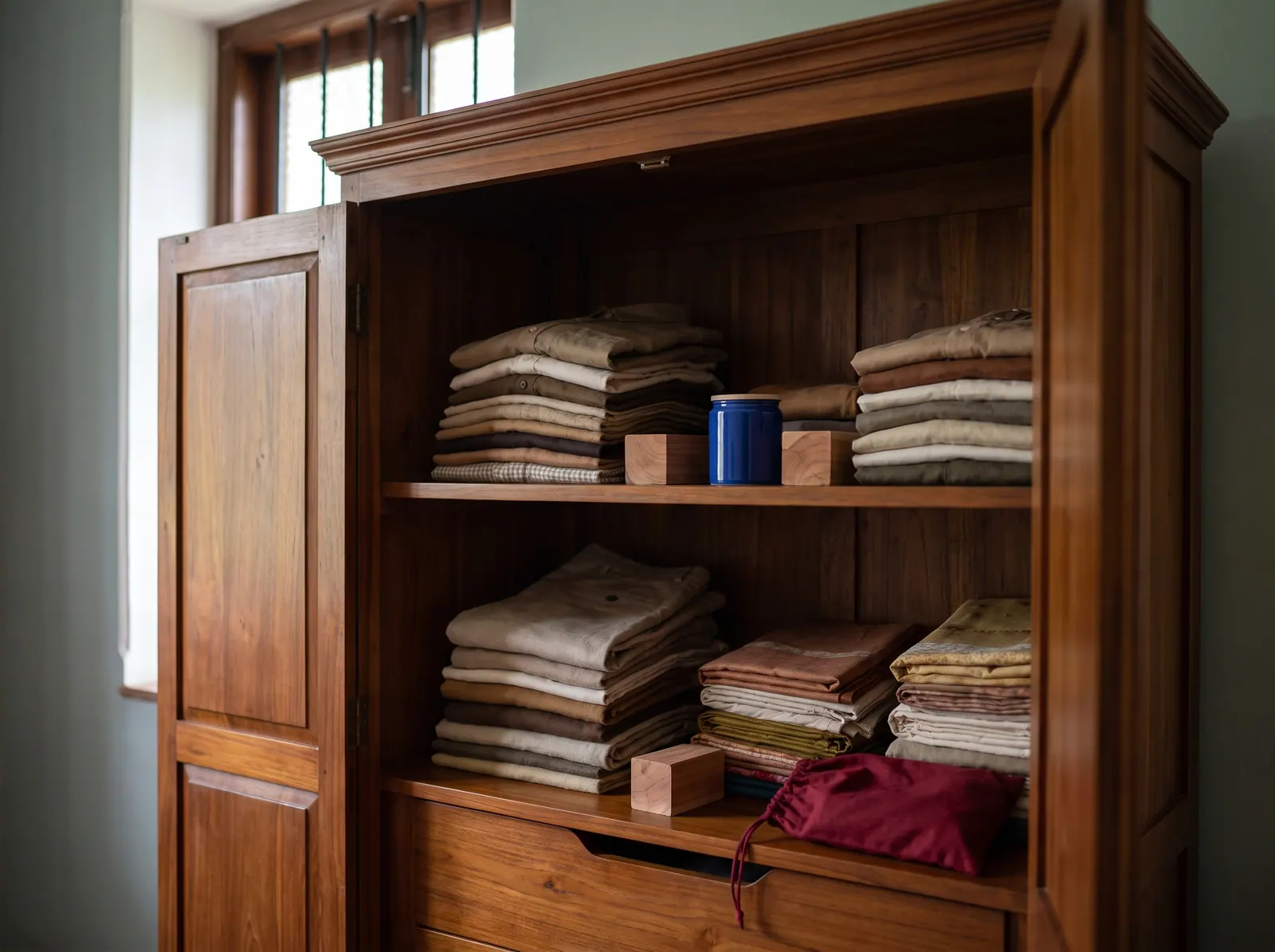
- Use sealed storage for valuable fabrics. Zip-lock bags, airtight plastic boxes and sealed garment bags keep insects out. Cotton wraps for sarees let fabric breathe but do not stop insects, so check those items more often.
- Keep cupboards off damp walls. Leave a small gap behind freestanding wardrobes and get leaks or seepage repaired.
- Manage moisture. Open wardrobe doors on dry days. Moisture absorbers such as silica gel, used as the product directs, help in closed cupboards, and a dehumidifier helps in closed rooms.
- Disturb stored items regularly. Every few weeks, take items out, shake and refold them, and look along seams and folds.
Neem leaves, cloves and cedar are traditional choices. They may mildly deter adult insects, but they will not kill eggs or larvae already in a garment.
Mothballs are pesticides, not a household freshener. If you use them, follow the label exactly and keep them in closed containers out of reach of children and pets. Do not rely on them in place of cleaning.
How do you clean an infested wardrobe?
- Empty it completely. Take everything out into good light and inspect each item. Bag damaged items separately straight away so larvae do not spread to clean clothes.
- Vacuum thoroughly. Cover shelves, corners, joints, drawer runners and hinge recesses, and the floor behind and under the wardrobe. Use a crevice tool for gaps. Do the same under beds and sofas, along skirting and around rug edges.
- Dispose of the dust carefully. Empty the vacuum bag or canister into a sealed bag outdoors and throw it away.
- Wipe and dry. Clean surfaces with a mild detergent, then leave the doors open until the wood or metal is completely dry.
- Deal with the clothes. Wash washable items in the hottest water the care label allows and dry them fully. Send delicate items for dry-cleaning. Brush woollens outdoors, paying attention to seams and folds, and freeze items that cannot be washed (see below).
- Restock only clean items, using sealed storage for anything made of wool, silk or leather.
- Keep checking. Inspect again after a few weeks. Pheromone traps for webbing clothes moths catch males and are useful for monitoring, but they will not solve an infestation on their own.
Does freezing kill clothes moths and carpet beetles?
Yes. A sustained, deep freeze kills eggs, larvae and adults, which makes it useful for items you cannot wash. To freeze an item:
- Place it in a plastic bag, press out as much air as you can, and seal it.
- Put it in the freezer on the coldest setting for about a week, and avoid opening the freezer often.
- Take the bag out and leave it sealed at room temperature for several hours. In Goa's humidity this matters: condensation should form on the outside of the bag, not on the fabric.
- Open the bag, brush the item gently and inspect it. Repeat if you later find live larvae.
For heirloom textiles, heavily embellished pieces or anything very fragile, take advice from a textile specialist before freezing. Sunlight helps too, because larvae avoid light and heat. However, sun alone does not reach deep folds and can fade silk, so treat it as an extra step rather than a cure.
When is professional treatment worth considering?
Home cleaning and storage usually work when only a few garments are affected. Consider professional help if:
- damage continues after a thorough clean-out
- beetles or larvae keep appearing in several rooms
- wool carpets, upholstered furniture or built-in wardrobes are affected
- the source may be a bird nest, roof space or ceiling void
- you run a guest house, hotel or shop with many textiles to protect
We follow an Integrated Pest Management approach. A visit starts with inspection to confirm which pest is present and find where it is breeding. You then get cleaning and proofing advice, followed by targeted treatment of cracks, voids and carpet edges rather than spraying clothes. You can read more about how we work.
Our Goa branch is a licensed pest control operator using CIB&RC-registered products. Where fumigation is the appropriate method for stored goods, it is among the services offered in Goa. Where birds are nesting on ledges or in ducts, bird netting can remove a source of carpet beetles.
Safety around fabric-pest treatment
- Do not spray household insecticide directly onto clothes, bedding or children's items.
- After any treatment, keep children and pets out of treated areas until surfaces are dry or as advised, and ventilate the room.
- Wash your hands after handling infested items or traps.
- Carpet beetle larval hairs can irritate the skin of some people. If you develop a rash or any other reaction, see a doctor.
Talk to our Goa branch
If holes keep appearing despite cleaning and careful storage, our Goa branch in Chimbel can talk through what you are seeing. It helps to tell us which fabrics and rooms are affected and whether you have noticed moths, beetles, larvae or webbing. Photos of the damage and any insects also help.
Visit the Goa branch page for details, or contact us to describe the problem.
Frequently asked questions
QAre clothes moths or carpet beetles harmful to health?
Clothes moths are not known to bite or spread disease; the concern is damage to fabric. Carpet beetles do not bite either, but the bristly hairs of their larvae can irritate the skin of some people, sometimes causing an itchy rash. If you or a family member develops a skin reaction or any other symptom you are unsure about, please see a doctor rather than treating it yourself.
QWhy do I keep finding tiny round beetles on my windowsill?
Adult carpet beetles are attracted to light and often gather at windows, especially when they are trying to get outdoors to feed on flower pollen. A few on a sill are a sign to look nearby for larvae. Check rugs, woollens, wardrobe corners, under furniture and any bird nests close to windows or ducts.
QWill clothes moths eat my cotton and polyester clothes?
They rarely eat pure cotton or synthetic fabric on its own, because the larvae need animal protein such as wool or silk. However, blends containing wool can be damaged. So can cotton or synthetic items stained with sweat, food or body oils. Washing clothes before storage removes much of that attraction.
QIs it safe to use naphthalene balls in my wardrobe?
Mothballs are pesticides and give off fumes, so treat them with care. If you choose to use them, follow the label directions exactly and keep them in closed containers. Place them well out of reach of children and pets, and ventilate rooms where clothes are aired. They are not a substitute for cleaning, and they will not fix an established infestation by themselves.
QCan I freeze a silk saree to kill larvae?
Many silk items can be frozen safely if sealed in a bag with the air pressed out. Leave the bag sealed while it returns to room temperature so condensation does not wet the fabric. For heirloom sarees, heavy zari work or very fragile pieces, ask a textile specialist first. Embellishments and old dyes can react differently.
QHow often should I check stored clothes during the monsoon?
Every few weeks is a sensible routine in Goa's damp months. Take items out, shake and refold them, and look along seams, collars and folds for holes, webbing, larvae or mildew spots. Regular disturbance discourages larvae, and early checks catch damp or pest problems before they spread to other garments.
Last updated 13 October 2026. Information on this page is general guidance; your technician will advise on your specific property after inspection.