Quick answer
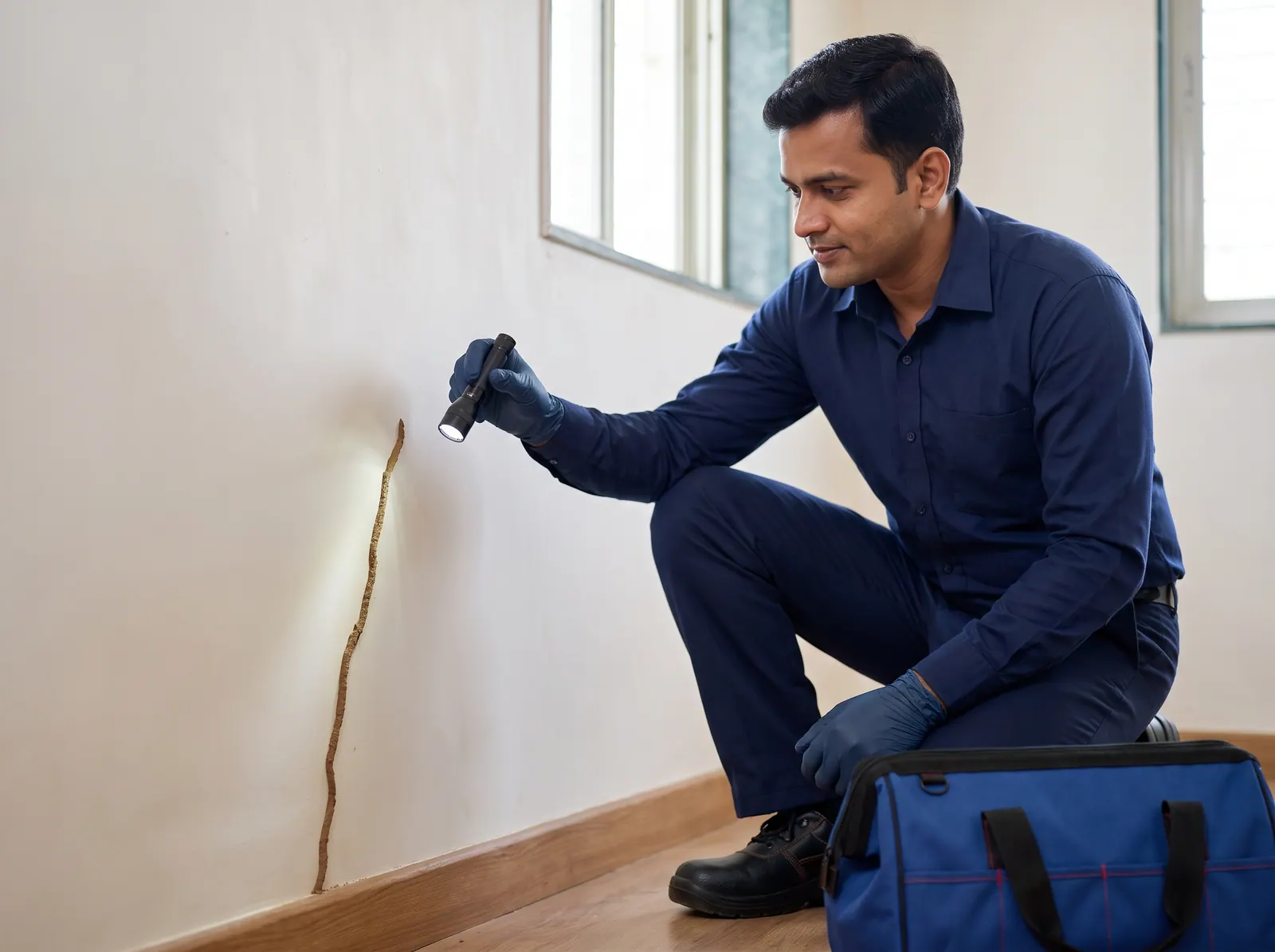
Termite control in Panaji starts with an inspection to find where termites enter and what they are feeding on. Occupied homes, flats and offices are usually treated by drilling along walls and floors, injecting a registered termiticide and sealing the holes. New buildings get soil treatment before flooring. Affected woodwork is treated too. Our Goa branch in Chimbel serves Panaji, including Altinho, Miramar, Taleigao, Dona Paula and nearby areas.
Key points
- Subterranean termites live in soil and need moisture, so damp walls, leaks and waterlogged ground make buildings more vulnerable.
- Occupied buildings are usually treated by drilling along wall-floor junctions, injecting termiticide into the soil and sealing the holes (post-construction treatment, IS 6313 Part 3).
- New buildings are best protected with soil treatment at each construction stage before floors are laid (IS 6313 Part 2).
- Household sprays kill visible termites but not the colony in the soil.
- Our Goa branch covers Panaji, including Altinho, Campal, Miramar, Caranzalem, Dona Paula, Taleigao, St Inez and Ribandar.
Mud tubes on a wall, a door frame that sounds hollow, or winged insects around a light after the first monsoon rain are all good reasons to have your Panaji property checked for termites. Our termite control in Panaji, Goa is inspection-led. We find where termites are coming from, treat the soil and structure to cut off their route, and treat the woodwork they have reached.
The service is provided by our Goa branch in Chimbel, which covers Panaji (also called Panjim). We are a licensed pest control operator with the Directorate of Agriculture, Goa, and we use CIB&RC-registered products.
Why do Panaji buildings need attention for termites?
Panaji sits at the mouth of the Mandovi, with a warm, humid coastal climate and a very heavy south-west monsoon. Subterranean termites, the type that build mud tubes, live in the soil and need moisture. Damp walls, leaking pipes and waterlogged ground around a building suit them well.
The city's mix of buildings brings its own risks:
- Older houses on Altinho, in Ribandar and around the old city often have timber floors, staircases, roof beams and rafters, with wooden doors and windows set into thick walls.
- Apartment blocks in Taleigao, Caranzalem, Dona Paula and St Inez have modular kitchens, built-in wardrobes and wooden flooring that can hide termite activity until damage shows.
- Hotels, guest houses and restaurants around Miramar and Dona Paula combine wooden furniture, storerooms and landscaped gardens close to the building.
- Offices and shops in Campal and the city centre keep paper files, cardboard cartons and wooden fixtures, all of which termites will feed on.
Termites can stay active through the year. Winged termites (swarmers) commonly appear around the start of the monsoon, when they leave established colonies to start new ones. A few indoors does not always mean your building is infested, but it is a sensible moment to arrange an inspection.
What signs of termites should you look for?
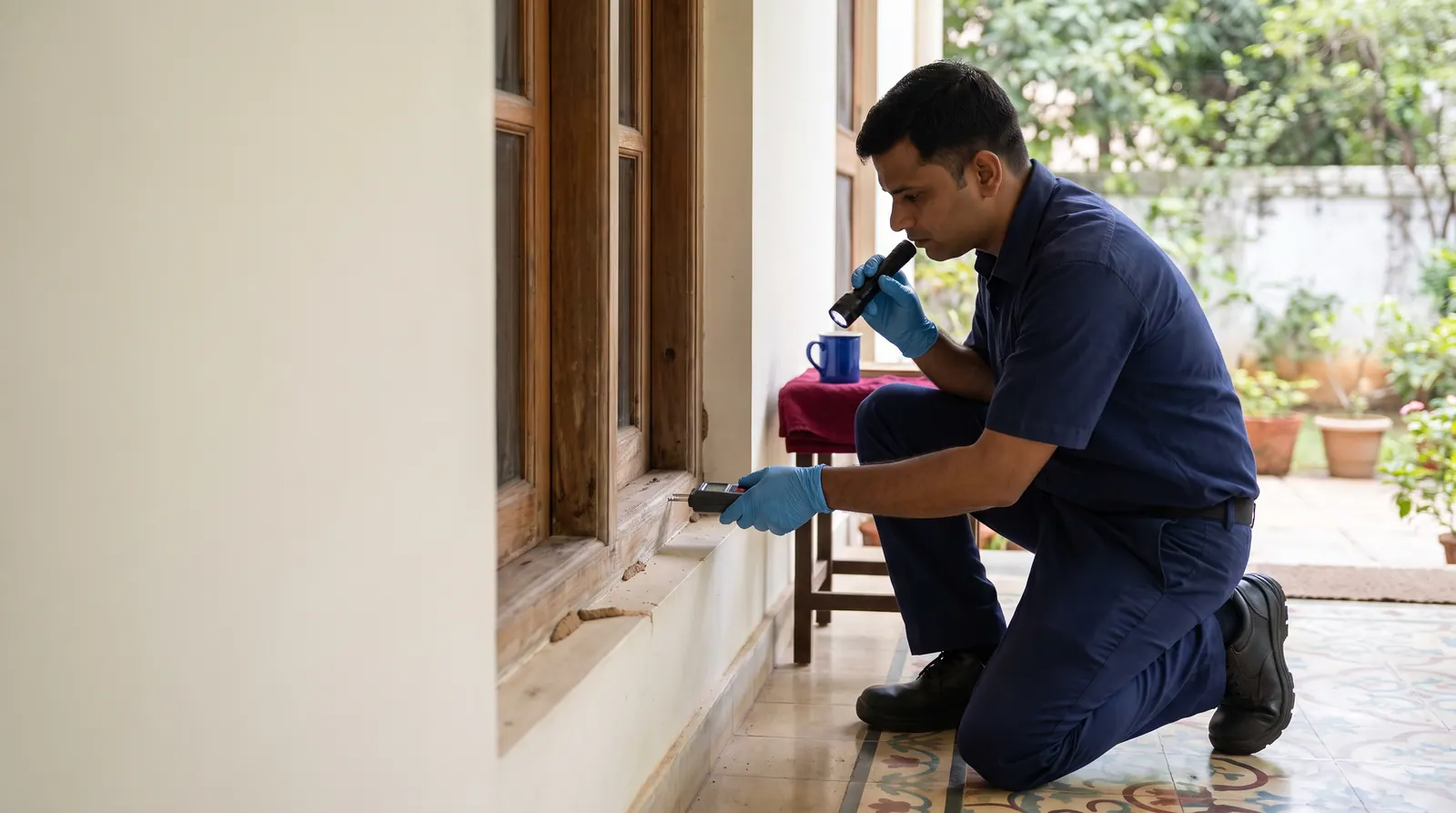
- Thin brown mud tubes running up walls, along skirting, behind cupboards or over the foundation.
- Wood that sounds hollow when tapped, feels soft, or has blistered paint on its surface.
- Door and window frames that start sticking or warping for no clear reason.
- Discarded wings near windows, doors and light fittings.
- Soil-like material in cracks between floor tiles or where the wall meets the floor.
- Damaged paper, books or cardboard boxes in storerooms and lofts.
- Small, hard, seed-like pellets below wooden items, which can indicate drywood termites living inside the wood.
For a fuller checklist, see our guide to termite warning signs in Goan homes. Fine powder falling from small round holes in furniture is usually a beetle problem rather than termites, and it needs a different approach, explained on our page on wood borer treatment in Panaji.
Until the inspection, try not to break open mud tubes or spray household insecticide on them. A spray kills only the termites you can see, not the colony in the soil, and it makes active routes harder to trace.
How do we treat termites in an occupied home or office?
We follow an Integrated Pest Management approach: inspection first, then advice on moisture and entry points, then targeted treatment. For a building already in use, the standard method is post-construction anti-termite treatment, generally in line with IS 6313 (Part 3).
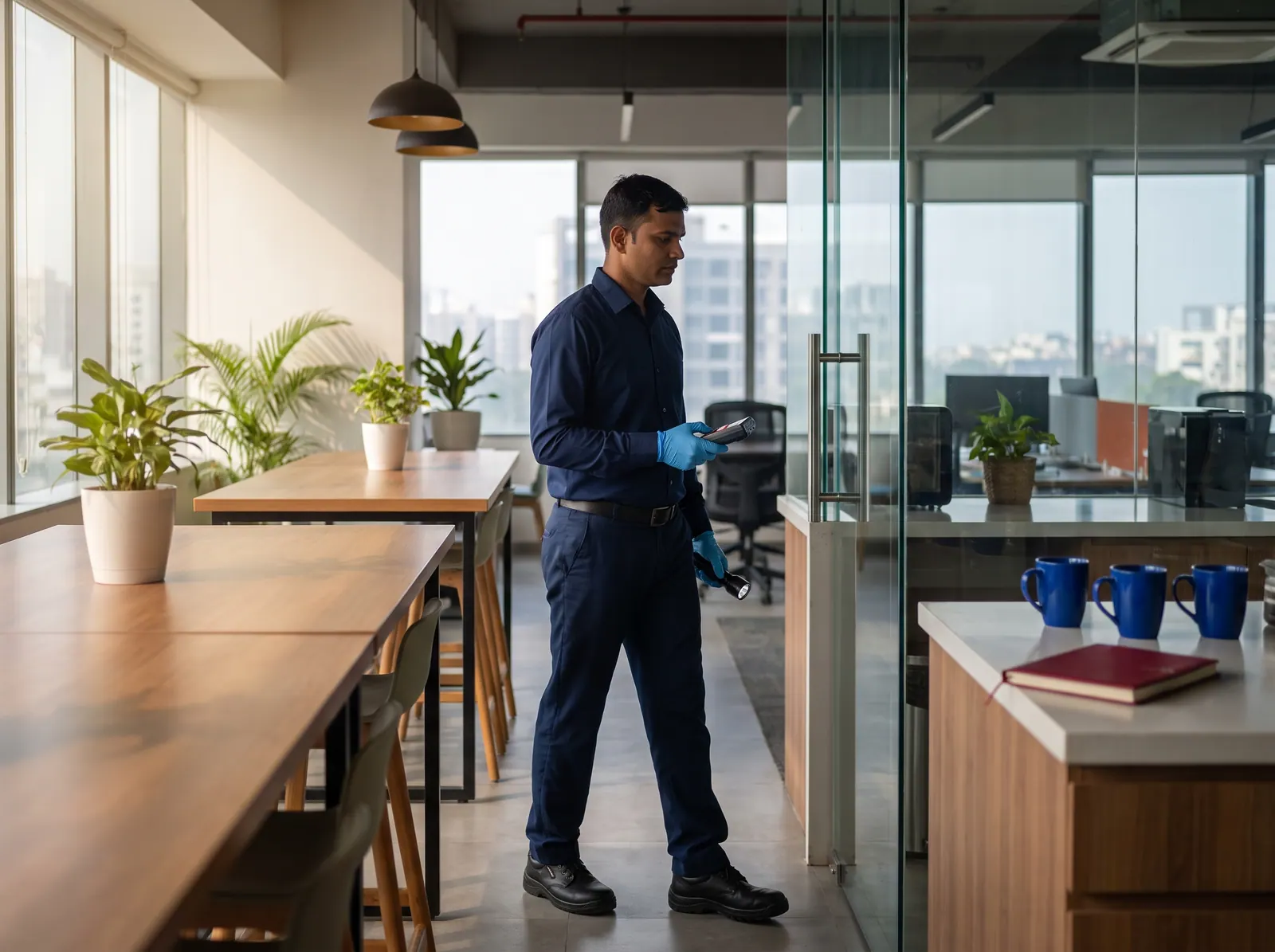
- Inspection. We check walls, floors, skirting, door and window frames, kitchen and wardrobe units, wet areas, storerooms, the outside perimeter and any garden beds against the building. We note leaks and damp patches that are helping termites.
- Treatment plan and quotation. We explain which areas will be drilled, which woodwork will be treated, roughly how long the work will take and how you should prepare.
- Drill, fill and seal. Small holes are drilled at intervals along the junction of floor and wall and around points such as door frames and pipe entries. A registered termiticide is injected into the soil below the floor, and the holes are sealed and finished.
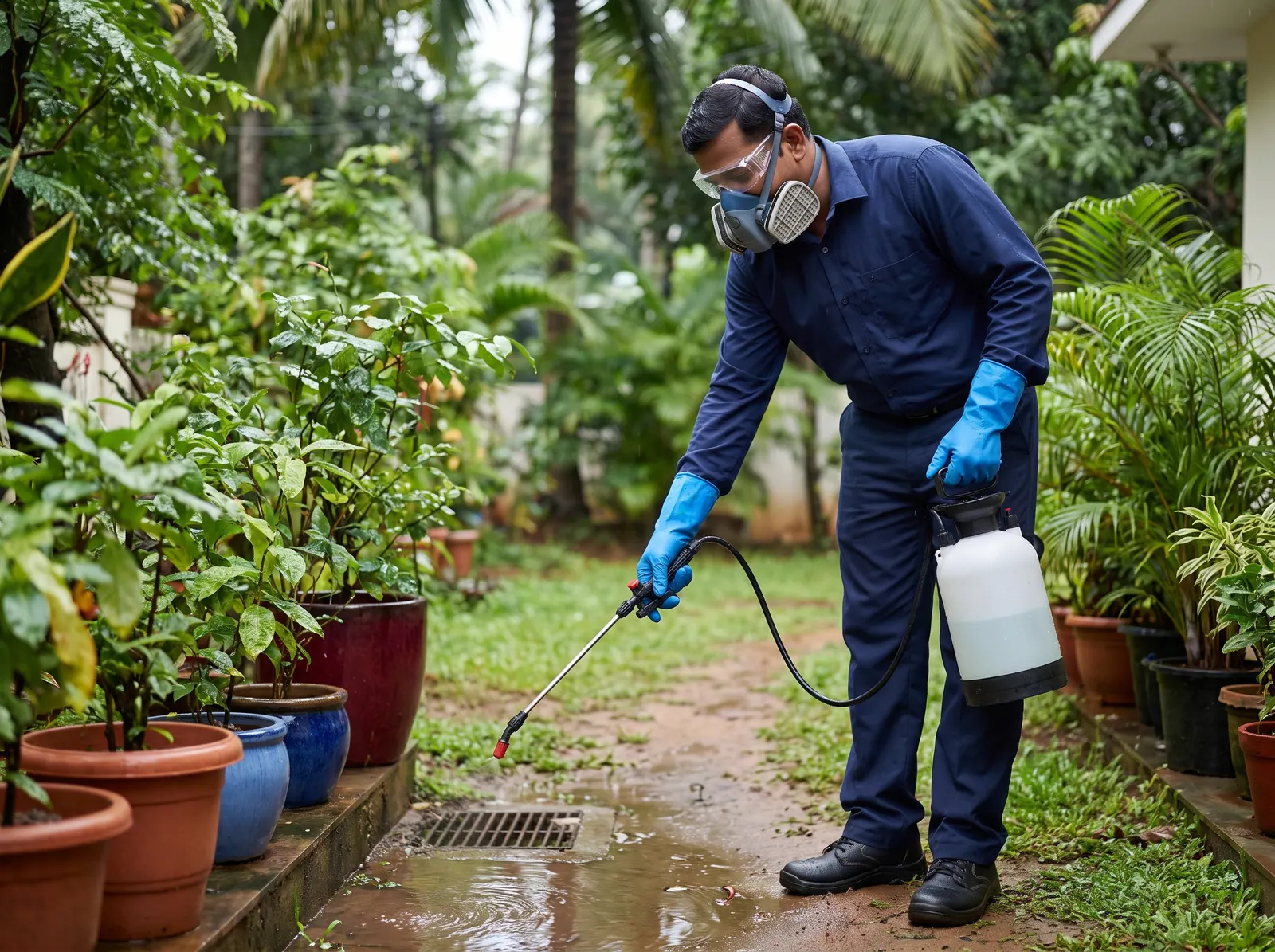
- Perimeter and soil treatment. Where there is exposed soil around the building, it is treated to form a barrier between the colony and the structure.
- Wood treatment. Infested and vulnerable timber, such as frames, cupboards and wooden panelling, is treated.
- Report and aftercare. You receive a service report after the visit, updates on WhatsApp, and aftercare instructions.
Before the visit, read how to prepare your home for termite drilling treatment. You can find more detail on the method on our page on post-construction termite treatment in Goa.
Flats and housing societies
Subterranean termites come up from the soil, so in an apartment block the colony is usually below the building, not inside one flat. On upper floors they can travel through wall cavities, ducts and gaps along plumbing lines.
Where possible, it works better for the society to arrange treatment of the ground floor, common areas and building perimeter, with individual flats treated as needed. If you are treating only your own flat, we will explain what the treatment can and cannot cover. Drilling in common areas will need the society's permission.
Woodwork, furniture and gardens
Treatment stops further feeding, but it cannot restore wood that has already been hollowed out. If a beam, door frame or staircase is badly weakened, we will point it out so you can have a carpenter repair or replace it. Garden beds, tree stumps and stacked timber against the walls are also checked, because they often link a colony to the building.
Building or renovating in Panaji? Treat before the floor goes down
The easiest time to protect a building is during construction. Pre-construction anti-termite treatment involves treating the soil in foundation trenches and pits, below the plinth and floor, and along the external perimeter at set stages of work, generally following IS 6313 (Part 2).
Because each stage has to be treated before it is covered, the work has to be planned with your contractor's schedule. The same applies to extensions and to major renovations where old flooring is being lifted. Read more about pre-construction anti-termite treatment in Goa.
If you are buying or renting a flat or an older house in Panaji, an inspection before you commit can show whether there is active termite activity or past damage. Our guide to termite inspection before buying property in Goa explains what to check.
Which treatment suits your property?
| Your situation | Usual approach | Points to note |
|---|---|---|
| New building or extension under construction | Pre-construction soil treatment at each stage | Must be coordinated with the site schedule |
| Occupied flat, house or office with termite signs | Post-construction drill-fill-seal plus wood treatment | Furniture needs to be moved away from walls |
| Older house with timber floors, beams or rafters | Detailed inspection of timber and soil, drill-fill-seal and wood treatment | Badly weakened timber may need repair by a carpenter |
| Hotel, restaurant, shop or office | Treatment planned area by area around working hours, with service reports | Documentation can support food safety audits |
| Buying or renting a property | Pre-purchase inspection | Gives you information before you commit |
What affects the cost?
We do not quote a single fixed price, because two Panaji properties of the same size can need very different work. The main factors are:
- The built-up area, number of floors and length of wall-floor junctions to be drilled.
- Whether the treatment is pre-construction or post-construction.
- The type of flooring and structure, and how much exposed soil surrounds the building.
- How far the termites have spread and how much woodwork needs treatment.
You receive a quotation after the inspection, and payment is made as per the quotation or invoice.
Safety, records and aftercare
Safety during treatment
We use CIB&RC-registered products, apply them according to label directions, and maintain Material Safety Data Sheets for the products we use. Drilling is noisy and creates some dust, so we will tell you which rooms to clear.
Keep children and pets out of treated areas until they are dry or for as long as the technician advises. Ventilate the rooms afterwards and wash your hands if you touch treated surfaces. A member of the household or staff should be present during the service. If anyone feels unwell after a treatment, please see a doctor.
Hotels, restaurants and offices
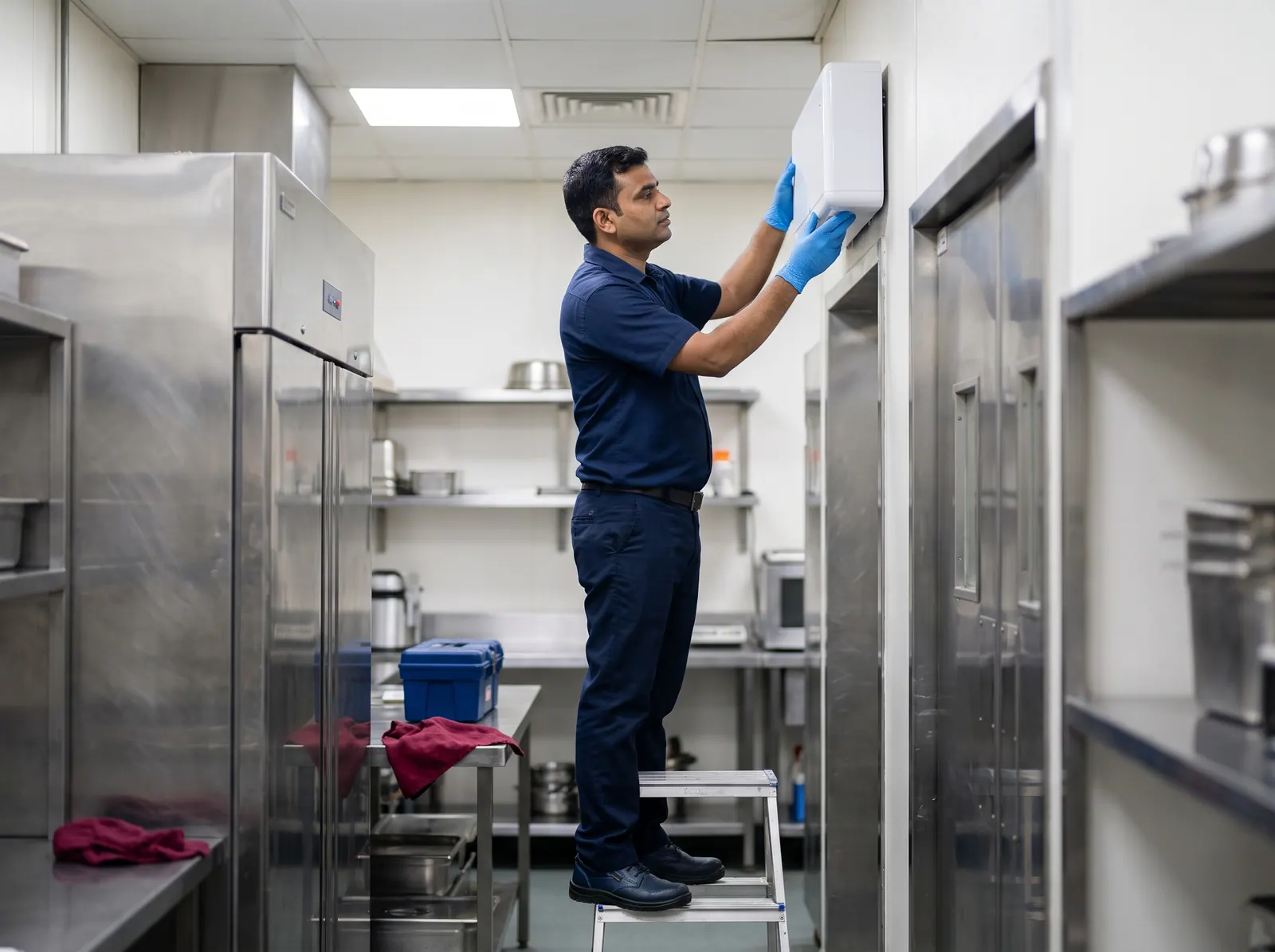
Food businesses are expected to keep pests under control as part of FSSAI Schedule 4 hygiene requirements. For hotels, restaurants and food units, we provide documentation aligned with HACCP and FSSAI audit expectations, along with service reports after each visit. Work can be phased so that guest rooms, kitchens and stores are treated in turn.
Warranty and looking after the treated area
For specific services, a warranty applies to the treated area, as set out in your service agreement. Terms vary by treatment. The warranty does not cover structural changes, new construction, or cases where post-service instructions were not followed.
- Follow the written aftercare instructions, especially on cleaning treated floors.
- Tell us before drilling new holes, relaying floors or building against treated walls.
- Fix leaks and damp patches, which attract termites back.
- Keep firewood, timber and soil away from external walls.
- Watch for new mud tubes and let us know if you see any.
Which parts of Panaji do we cover?
Our Goa branch covers Panaji, including Altinho, Campal, Miramar, Caranzalem, Dona Paula, Taleigao, St Inez and Ribandar. If your property is elsewhere in or around the city, tell us the exact location and we will confirm whether we can help.
To arrange an inspection, contact our Goa branch with your locality, the type of property and what you have noticed. Photos of mud tubes or damaged wood help us plan the visit.
Frequently asked questions
QHow long does termite treatment take for a flat in Panaji?
It depends on the size of the flat, the number of rooms to be drilled and how much woodwork needs treatment. Most treatments can be completed in a few hours, while larger houses, older buildings with a lot of timber and commercial premises take longer. Our technician will give you an estimated time frame after the inspection, so you can plan your day around the visit.
QIs termite treatment safe with children and pets at home?
We use CIB&RC-registered products, follow label directions and maintain safety data sheets for them. You will be asked to keep children and pets out of the rooms being treated until the surfaces are dry or for as long as the technician advises, and to ventilate afterwards. Cover or remove food, and wash your hands after touching treated areas. If anyone feels unwell, see a doctor.
QCan I get rid of termites myself with a spray?
A household spray kills the termites you can see, but the colony usually lives in the soil below or around the building and keeps sending workers in. Spraying can also make active mud tubes harder to trace during an inspection. Lasting control needs treatment of the soil and structure, which is why we recommend an inspection before you try anything yourself.
QHow soon will I notice a difference after treatment?
Termite activity usually falls over the following days and weeks rather than stopping instantly, because termites are affected as they move through treated soil and wood. Avoid breaking open old mud tubes to check. Note any new tubes, fresh soil in cracks or new damage, and tell us about them so they can be checked against your service report.
QDo I need permission from my housing society for drilling?
For work inside your own flat, you generally only need to follow your society's rules on noise and working hours. Drilling in common areas such as lobbies, staircases or the building perimeter needs the society's agreement. Since termites usually come up from the soil below the building, treatment arranged by the society for the ground floor and perimeter is often more effective than treating one flat alone.
QWhat happens if termites come back after treatment?
For specific services, a warranty applies to the treated area, as set out in your service agreement, and the terms vary by treatment. It does not cover structural changes, new construction or cases where aftercare instructions were not followed. If termites reach the building from an untreated neighbouring property, our technicians can advise on steps you can take to reduce that risk.
QHow much does termite control cost in Panaji?
There is no single fixed price. The cost depends on the built-up area and number of floors, whether you need pre-construction or post-construction treatment, the type of flooring and structure, and how much woodwork needs attention. We give you a written quotation after inspecting the property, and payment is made as per the quotation or invoice.
Last updated 13 October 2026. Information on this page is general guidance; your technician will advise on your specific property after inspection.