Quick answer
Most house spiders in Goa, such as huntsman, cellar (daddy long-legs), jumping and small cobweb spiders, are harmless to people. They eat cockroaches, mosquitoes and other insects. More come indoors in the monsoon because rain drives them and their prey to shelter. Sweep webs regularly and cut down the insects they feed on. Consider professional treatment only if numbers stay high despite cleaning, or if an underlying insect problem needs fixing.
Key points
- Most spiders found in Goan homes are harmless to people and feed on household insects.
- The south-west monsoon pushes spiders and their insect prey indoors, towards sheltered and lit areas.
- Reducing insects through lighting, screens, drain covers and removing standing water reduces spiders more effectively than spraying them.
- Weekly web removal during the monsoon is usually enough for most homes.
- Treatment makes sense when webbing persists despite cleaning or when spiders come with an underlying insect problem.
Seeing more house spiders in Goa once the rains arrive is normal, and it is rarely a cause for alarm. Spiders are predators: they come where the insects are, and the monsoon brings plenty of insects. This guide explains how to recognise the spiders you are most likely to find in a Goan house, why their numbers rise during the wet months, how to make your home less attractive to them, and when it makes sense to call in professional help.
Are the spiders in your Goan house dangerous?
For the most part, no. The spiders that live in and around homes are shy and avoid people. Bites are uncommon and usually happen only when a spider is pressed against the skin, for example inside a shoe, a folded towel or clothes left on the floor.
Spiders are also useful. A single large huntsman spider in a bathroom or kitchen will hunt cockroaches, crickets and moths at night. Many households in Goa simply let one or two live quietly behind a cupboard.
Which common house spiders are harmless?
You do not need to name the exact species. Recognising a few broad groups is enough to decide what to do.
| Spider type | How to recognise it | Where you usually see it | What to do |
|---|---|---|---|
| Huntsman (giant house spider) | Large, flat, brownish body; long legs spread out sideways; very fast | Walls at night, behind cupboards and frames, bathrooms | Leave it, or trap it under a container and release it outdoors |
| Cellar spider (daddy long-legs) | Tiny body, very long thin legs; may vibrate in its web when disturbed | Ceiling corners, bathrooms, storerooms, behind doors | Vacuum or sweep away loose webs |
| Jumping spider | Small, compact and often hairy; large front eyes; moves in short hops | Window sills, sunny walls, curtains | Leave it; it builds no web and hunts small insects |
| Cobweb (tangle-web) spider | Small, with a round, glossy abdomen | Under shelves, behind furniture, window frames, light fittings | Remove webs during routine cleaning |
| Garden orb weaver | Often colourful; builds a large, neat wheel-shaped web | Between trees, shrubs, compound walls and verandah pillars | Leave it unless the web blocks a path |
Large orb weavers become very noticeable in Goan gardens during and after the monsoon, sometimes with webs spanning several feet. They look dramatic but stay outdoors and do not come looking for people.
When should you be more cautious?
A few spiders found in India can give a painful bite. Be careful with any spider you cannot identify, especially large, hairy, ground-dwelling spiders that sometimes turn up near plantations, forested slopes or piles of stone and timber. Do not handle them. Use a container and a stiff card, or ask for help.
If anyone is bitten and has spreading pain, swelling, feels unwell, or if the person bitten is a young child or elderly, see a doctor. If you can do so safely, take a photo of the spider to show the doctor.
Why do more spiders come indoors during the monsoon?
Goa's heavy south-west monsoon changes conditions outdoors almost overnight. Several things happen at once:
- Outdoor shelter gets soaked. Leaf litter, wall crevices, garden debris and ground burrows flood or stay wet, so spiders look for drier spots, often under eaves, in verandahs and inside the house.
- Their food multiplies. Mosquitoes, flies, moths, winged termites and other insects breed rapidly in the humidity and standing water. Spiders follow their prey.
- Lights draw insects to your walls. On wet evenings, flying insects gather around lit windows, doorways and verandah lamps. These become ideal hunting spots for spiders.
- Damp, quiet spaces suit them. Storerooms, lofts, garages and rarely used rooms stay humid and undisturbed during the rains. Webs build up there quickly. Our guide to damp walls and pests in Goan homes explains how moisture invites a whole chain of pests.
Homes that are closed up for weeks, such as second homes and holiday villas, often show heavy webbing when they are reopened after the monsoon. That is mainly because nobody has been sweeping, not because of a sudden infestation.
How do you reduce the insects that spiders feed on?
Spiders stay where food is easy to find. Cut down the insects and the spiders will drift away on their own. This works far better than repeatedly spraying the spiders themselves.
- Manage outdoor lighting. Switch off verandah and gate lights when they are not needed. Draw curtains at night, and position lamps away from doors and windows where possible.
- Fit or repair mesh screens on windows, ventilators and exhaust openings to keep flying insects out.
- Remove standing water from pots, trays, gutters and terraces to cut mosquito breeding. The pre-monsoon pest checklist for Goa homes is a good place to start before the rains.
- Deal with cockroaches and other crawling insects. Cover floor drains, seal gaps around pipes, and keep kitchens dry overnight. See our guide to cockroaches in Goan apartments for drain and duct hotspots.
- Control damp-loving insects. Silverfish, booklice and similar insects feed spiders in storerooms and bookshelves. Keep papers and boxes off the floor and improve ventilation. Our guide to silverfish and booklice in humid Goan homes covers this in more detail.
- Reduce clutter. Stacks of cardboard, unused furniture and bags in corners give both spiders and their prey places to hide.
- Trim plants away from walls so that creepers and shrubs do not act as bridges into windows and eaves.
When and how should you remove spider webs?
Regular, gentle cleaning is usually all a home needs. During the monsoon, a weekly sweep of the usual spots keeps webs from building up.
- Use a long-handled cobweb broom or a vacuum cleaner with a brush attachment for ceiling corners, fans, light fittings and window frames.
- Check behind doors, under stair landings, inside cupboards that stay closed, and around exhaust fans.
- Wear gloves and good light when clearing storerooms, lofts or garages, and move items slowly rather than reaching blindly into dark gaps.
- Look up. Webs and droppings in timber or board ceilings can point to insects or rodents above. Our guide to pests in wooden false ceilings explains what to check.
- Leave garden orb webs alone unless they cross a path, gate or washing line. If you need to move one, do it gently with a stick.
Household insect sprays may kill the spider you can see, but they do nothing about the conditions that brought it in. If you use any product, follow the label directions exactly, keep children and pets away until the area is dry, ventilate the room, and wash your hands afterwards.
When does professional treatment make sense?
Most homes never need treatment specifically for spiders. It is worth considering when:
- Webs return within days across many rooms even after regular cleaning.
- You are seeing large numbers of spiders alongside cockroaches, ants, silverfish or other insects, which suggests an underlying insect problem.
- A storeroom, loft, warehouse, guest room or reception area needs to stay presentable and web-free.
- A home has been shut for a long period and needs a thorough clean-out before guests or tenants arrive. Owners of second homes may find our page on pest control for villas and holiday homes useful.
- Someone in the household is anxious about spiders, or you have found a spider you cannot identify and would rather not deal with yourself.
What does a sensible treatment involve?
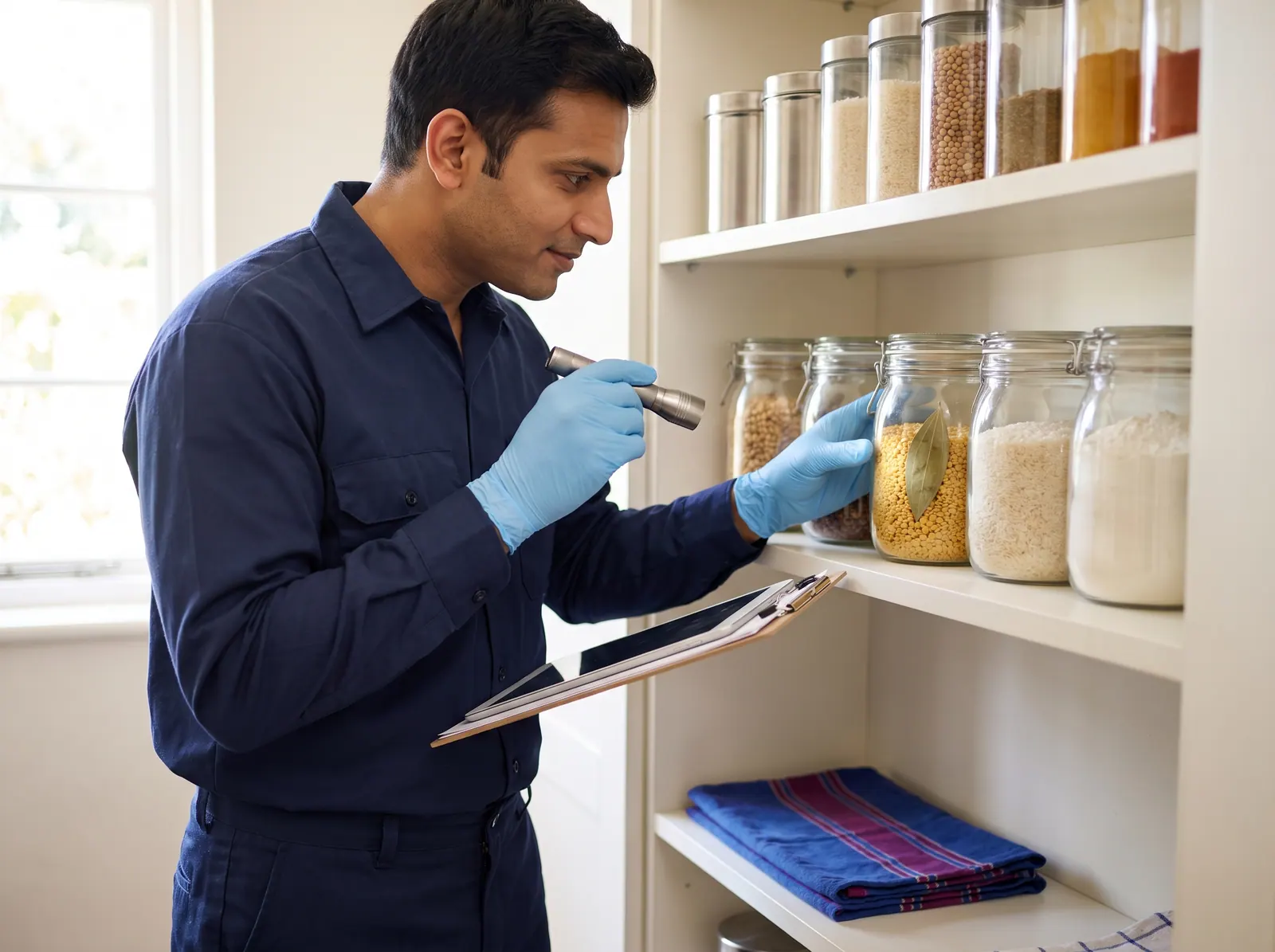
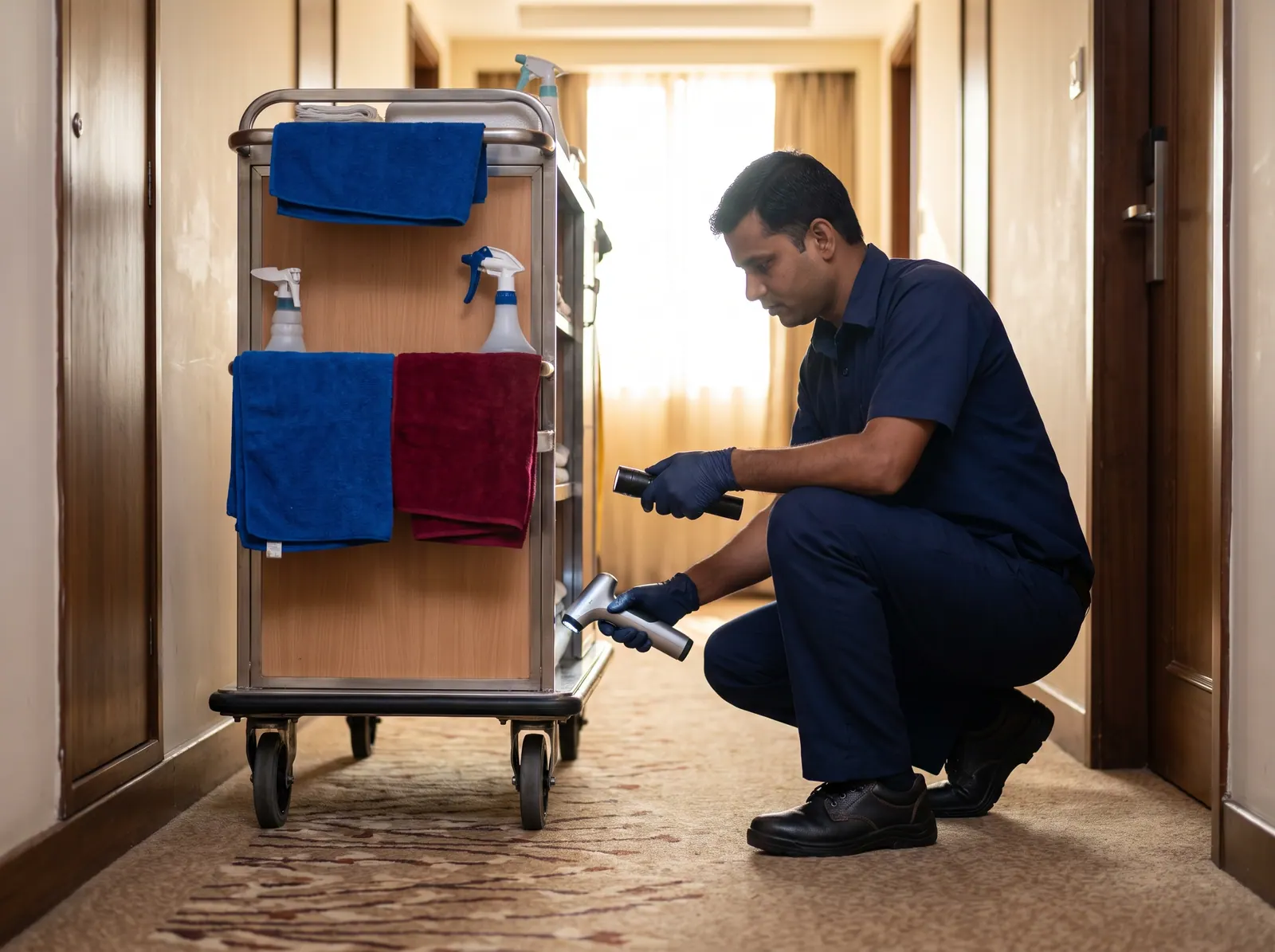
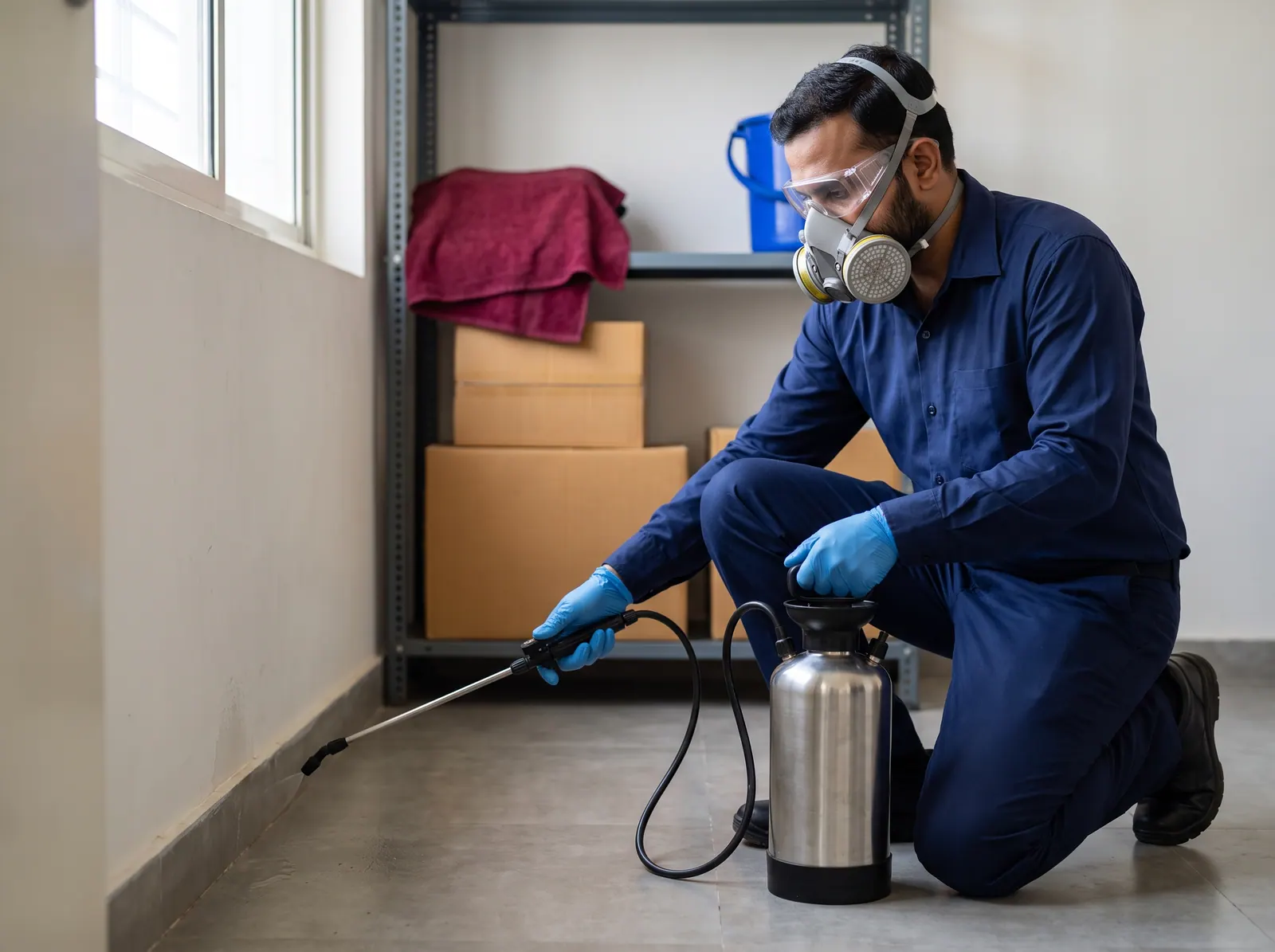
We follow an Integrated Pest Management approach. It starts with an inspection to find where spiders are concentrated and what they are feeding on. That is followed by sanitation and proofing advice, such as lighting, screens, drains and clutter. Only then do we apply targeted treatment to the problem areas and to the insects that sustain the spiders. Spraying spiders on their own, without tackling their food, usually gives only a short-lived result.
In Goa, we work as a licensed pest control operator under the Directorate of Agriculture, Goa, and use CIB&RC-registered products. Material Safety Data Sheets are maintained for the products we use. After any treatment, keep children and pets away from treated surfaces until they are dry or for as long as the technician advises, and air the rooms well.
Not sure whether your spider problem needs attention?
If webs keep coming back, or you are seeing spiders together with other pests, contact our Goa branch in Chimbel. Tell us where you are and what you are seeing, and we will advise on whether simple changes at home will be enough or whether an inspection would help.
Frequently asked questions
QIs the big, fast spider in my bathroom dangerous?
A large, flat, brown spider with long legs spread sideways is very likely a huntsman. Huntsman spiders are harmless to people in normal circumstances and feed on cockroaches and other insects at night. They are shy and usually run away. If you prefer it gone, place a wide container over it, slide a stiff card underneath, and release it outdoors away from the door.
QWhy are there so many spider webs in my house after the monsoon?
During the rains, insects multiply and spiders move to drier, sheltered spots, including verandahs, storerooms and rooms that are not used often. Webs also build up quickly when nobody disturbs them, which is why closed-up homes often look heavily webbed when reopened. A thorough clean and steps to reduce insects usually bring things back under control.
QShould I kill spiders or leave them?
Most house spiders are beneficial because they eat mosquitoes, flies and cockroaches, so leaving a few is reasonable. Remove webs during routine cleaning and relocate spiders you do not want indoors. Killing them without reducing their food supply rarely helps for long, because new spiders move in wherever insects are plentiful.
QWhat should I do if someone is bitten by a spider?
Spider bites are uncommon, and most cause only mild irritation. If the bitten person has spreading pain, significant swelling, or feels unwell, or if a young child or elderly person is bitten, see a doctor promptly. If it is safe to do so, take a photo of the spider so the doctor knows what caused the bite.
QCan I keep spiders out of my villa while it is closed for the rains?
You cannot make a house completely spider-free, but you can reduce the build-up. Before leaving, clear clutter and cardboard, cover floor drains, check mesh screens, and switch off outdoor lights. Remove standing water from terraces and pots. Arranging for someone to air and sweep the property periodically during the monsoon also helps a great deal.
QDoes professional spider treatment stop them coming back permanently?
No treatment can promise that spiders will never return, because they keep arriving from gardens and surroundings. Treatment works best as part of a wider approach that reduces their insect food and the shelter around the house. Regular web removal, good lighting habits and controlling other pests keep numbers low between visits.
Last updated 13 October 2026. Information on this page is general guidance; your technician will advise on your specific property after inspection.