Quick answer
Termites thrive in Goa because the moisture, warmth and wood they need are present for much of the year. The very heavy south-west monsoon saturates soil and walls. Coastal humidity keeps timber damp. Porous laterite masonry holds moisture and has joints termites can travel through. Many homes also use timber roofs, frames and furniture. Activity is most visible around the monsoon, with swarms after the first rains, but subterranean termites stay active year-round.
Key points
- Termites need moisture, warmth and cellulose, and Goa's humid coastal climate provides all three for much of the year.
- Goa's very heavy south-west monsoon saturates soil and walls, which encourages termite foraging and swarms after the first rains.
- Porous laterite masonry holds moisture, its joints offer hidden routes, and reddish mud tubes can blend into red stone.
- Timber roofs, low-set wooden frames, furniture against damp walls and soil heaped against plinths all raise termite risk.
- Anti-termite treatment in India is guided by IS 6313: Part 2 covers pre-construction and Part 3 covers post-construction treatment.
Why do termites do so well in Goa?
Termites need three things: moisture, warmth and cellulose to eat. Cellulose is mainly wood, but also paper, cardboard and some fabrics. Goa offers all three for most of the year.
The climate is warm and humid, and the south-west monsoon is very heavy. Many homes also combine porous laterite masonry with timber roofs, door frames, furniture and fittings. Together, these conditions keep termite pressure high in both old houses and newer flats.
This guide covers Goa's climate, soil and building traditions, and how they shape termite activity through the year. It will help you know when to look, what to look for and what reduces the risk. If you are not sure whether the winged insects in your home are termites at all, start with our guide to telling flying ants from flying termites.
How do the monsoon and humidity drive termite activity?
Subterranean termites cause most of the structural damage in homes. They live in colonies in the soil. Their workers dry out quickly in open air, so they travel inside soil, inside wood or through mud tubes they build over hard surfaces. Damp conditions make all of this easier.
Goa's south-west monsoon, roughly June to September, brings very heavy and sustained rain. During these months:
- Soil around foundations stays wet for weeks.
- Walls absorb moisture.
- Small roof or plumbing leaks soak timber that would otherwise stay dry.
Damp wood is softer and more attractive to termites. Moist soil also lets them forage nearer the surface and further from the nest.
Even outside the monsoon, Goa's coastal humidity means indoor wood rarely becomes truly dry. Several places can hold enough moisture to support termite feeding:
- Cupboards against outer walls
- Wooden panelling near bathrooms
- Paper and cardboard stored in closed rooms
Laterite: the stone and soil under many Goan homes
Laterite is the reddish, iron-rich rock and soil found widely across Goa. It has been the region's traditional building stone for generations, and cut laterite blocks are still common in houses, plinths and compound walls. Termites do not eat laterite, but it matters for three reasons.
- It is porous. Laterite blocks and the earth around them absorb water during the monsoon and can stay damp long afterwards. This keeps conditions along walls and floors favourable to termites.
- It has joints and voids. Mortar joints, cracks and small gaps between blocks and plaster give termites hidden routes from the soil to the timber inside.
- It hides the evidence. Mud tubes are built from soil. On red laterite or red-earth plinths they can blend in closely. A tube that would stand out on a white wall is easy to miss on an unplastered compound wall or the base of an old house.
Which building practices raise termite risk?
Goa's architecture is part of its charm, but many of its features give termites easy opportunities. Older Portuguese-era houses are especially rich in timber. Our guide to protecting Portuguese-era homes from termites and wood borer covers them in more detail.
Common risk factors include:
- Timber roofs. Rafters, battens and beams under clay tiles can stay damp for months after a single monsoon leak.
- Low-set frames. Wooden door and window frames are often set directly into masonry at or near floor level.
- Wooden interiors. Older homes have timber floors, staircases and ceilings. Newer flats have plywood or particle-board wardrobes and modular kitchens.
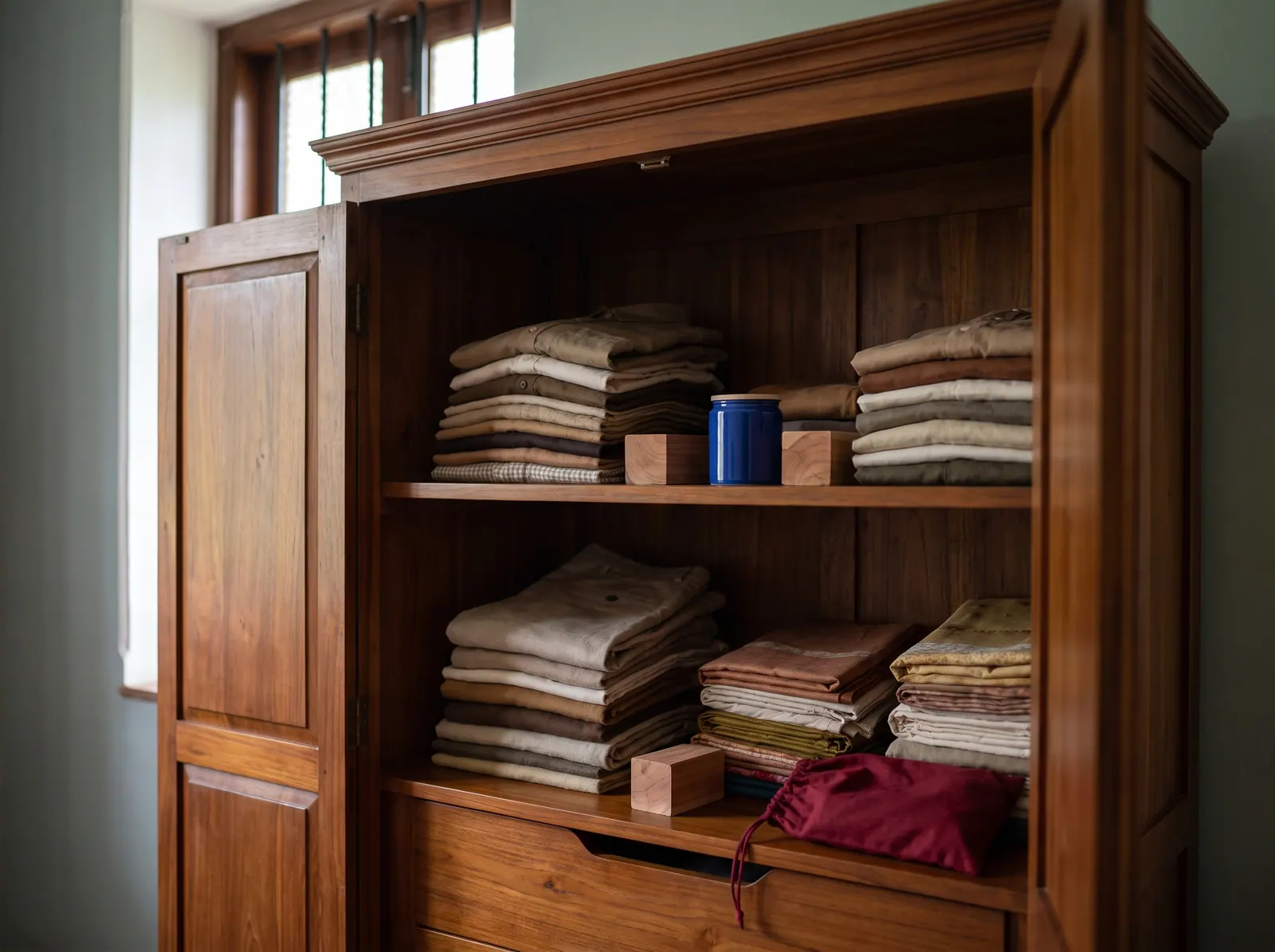
- Furniture against damp walls. Cupboards and bookshelves are often pushed flush against external walls that take on monsoon damp.
- Soil against the plinth. Heaped soil, planters or garden beds bridge the gap between ground and wall.
- Stored cellulose. Firewood, old timber, coconut husks, cardboard and construction leftovers are often kept against the house or in outbuildings.
- Untreated renovations. Work that disturbs old floors or walls, or adds new timber, can open new routes if soil and wood are not treated.
- Closed properties. In homes and villas left shut for long periods, early signs go unnoticed until damage is advanced.
Newer reinforced-concrete buildings are not immune. Subterranean termites can enter through expansion joints, cracks in floor slabs and gaps around pipes and electrical conduits. From there they reach door frames, wardrobes and skirting.
How does termite activity change through the year in Goa?
Subterranean termite colonies are active all year. What changes with the seasons is what you are likely to see and what is worth doing.
| Period | What is happening | What to do |
|---|---|---|
| Pre-monsoon (April–May) | Hot and humid. Colonies are active below ground, and damage from the previous year may still be hidden. | Inspect timber, move stored items away from walls, and fix roof tiles and gutters before the rains. |
| First rains (late May–June) | Winged termites often emerge in large numbers, usually in the evening, and fly towards lights. | Switch off unnecessary outdoor lights and note where swarms appear. A swarm indoors is a strong warning sign. |
| Monsoon (June–September) | Soil is saturated and walls are damp. Leaks wet roof and frame timber, and foraging inside buildings is high. | Watch for new mud tubes, blistered paint and soft wood. Fix leaks promptly, and check closed rooms and empty properties. |
| Post-monsoon (October–November) | Walls and wood start to dry. Damage done during the rains often becomes visible. | A good time for a thorough inspection and planned treatment. |
| Cooler, drier months (December–March) | Activity continues but is less visible. Dry weather makes inspection and repairs easier. | Replace damaged timber, carry out repairs, and plan treatment for any renovation or new construction. |
To prepare your home before the rains, work through our pre-monsoon pest checklist for Goa homes. Our guide to flying termites after the first rains explains what a swarm does and does not tell you. If you own a holiday home, see looking after an empty Goa villa during the monsoon.
What signs of termites should you check for?
- Mud tubes. Look for pencil-width earthen tubes on plinths, walls, skirting, and inside cupboards and door frames.
- Hollow or weak wood. Timber may sound hollow when tapped, feel soft, or give way under light pressure.
- Blistered surfaces. Paint or laminate may bubble or wrinkle where termites are feeding just beneath.
- Soil in odd places. Packed earth may appear in cracks, joints or around frames.
- Discarded wings. Small, equal-sized wings near windows, doors and lights after the first rains are a clue.
- Damaged paper. Check boxes, files and books stored on floors or against walls.
Small round exit holes with fine, flour-like powder usually point to wood borer rather than termites. The treatment approach for wood borer is different, so it helps to tell them apart.
Practical ways to lower the termite risk
No single step makes a building termite-proof. The following measures reduce the conditions termites rely on and make problems easier to spot early.
- Manage water. Clear gutters and downpipes, replace broken roof tiles before the monsoon, and repair plumbing leaks promptly.
- Keep soil off the plinth. Pull soil, mulch and planters back from the walls so the plinth stays visible and dry.
- Move wood and cardboard away. Store firewood, spare timber and boxes off the ground and away from the house.
- Leave a gap behind furniture. Keep cupboards and shelves slightly away from external walls, and open them regularly during the rains.
- Ventilate closed rooms. Use fans and open windows on dry days so timber and stored items can dry out.
- Seal small gaps. Fill cracks and gaps around pipes and conduits. Sealing will not stop an existing infestation, but it removes easy entry routes.
- Inspect twice a year. Before and after the monsoon are the most useful times.
- Treat before you build. Plan anti-termite treatment for new construction and major renovations rather than waiting for damage.
If you find mud tubes, resist the urge to scrape them all off or spray household insecticide. Termites usually retreat and reappear elsewhere, which makes the problem harder to trace.
Never pour fuel or improvised chemical mixtures into walls or soil. They create fire and health risks and do not reliably reach the colony.
What does professional termite treatment involve?
Effective termite management starts with an inspection to find entry points, the extent of activity and the moisture problems behind it. Treatment then depends on the building.
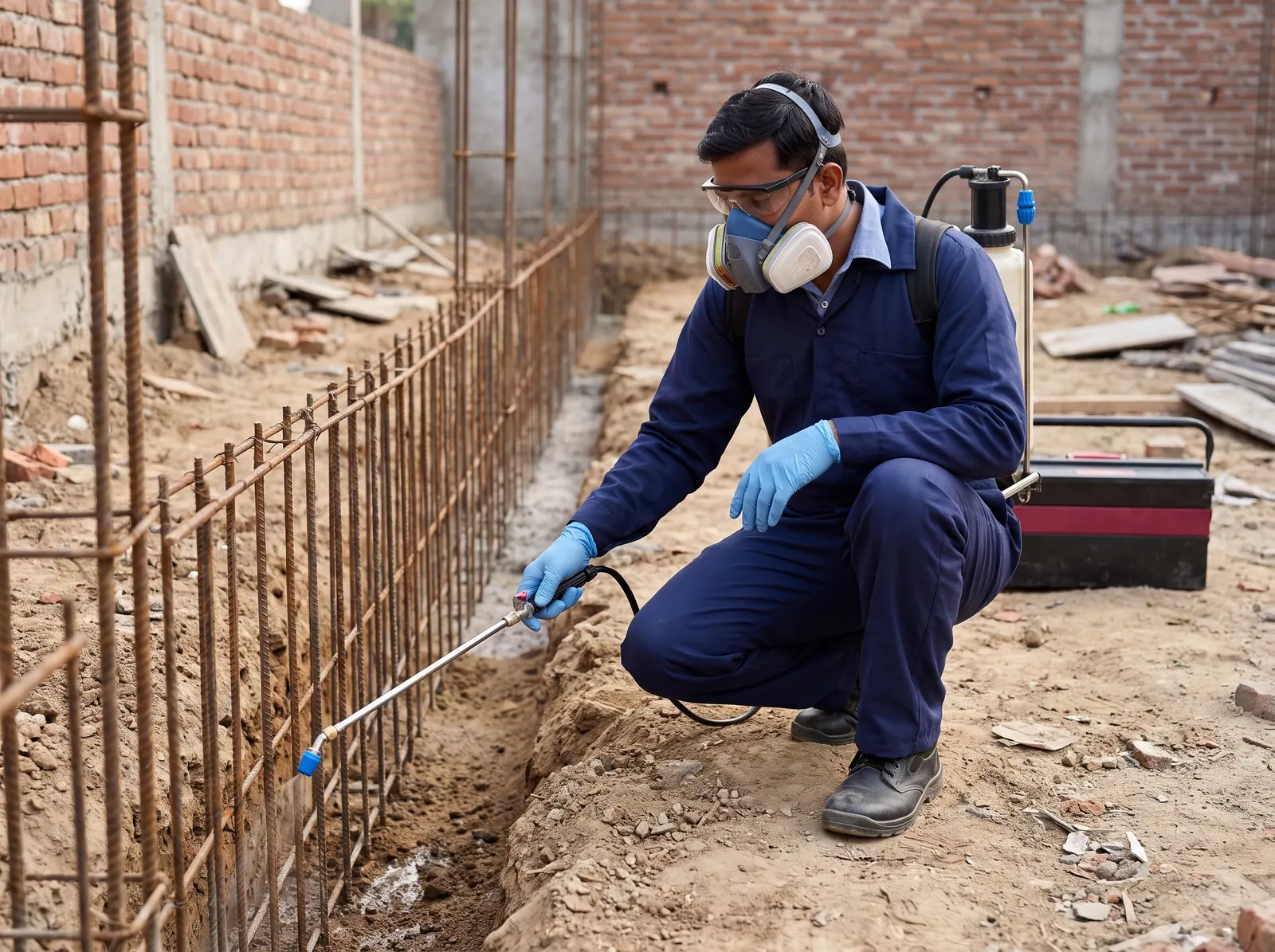
- New construction: pre-construction soil treatment, guided by IS 6313 Part 2.
- Occupied buildings: post-construction treatment, guided by IS 6313 Part 3. This usually means drilling along wall and floor junctions, introducing termiticide into the soil below, and sealing the holes.
- Affected timber: wood treatment where needed.
In Goa, Efficacy Pest Control works as a licensed pest control operator under the Directorate of Agriculture, Goa, using CIB&RC-registered products. We follow an Integrated Pest Management approach: inspection, sanitation and proofing advice, then targeted treatment. Service reports are shared after visits.
Where a warranty applies, it covers the treated area as set out in the service agreement. You can read more about our termite control service in Goa.
During and after any treatment, follow the technician's instructions. Keep children and pets away from treated areas until they are dry or for as long as advised, ventilate rooms, and wash your hands after touching treated surfaces.
Concerned about termites in your Goa home?
Perhaps you have found mud tubes, soft timber or winged termites indoors. Tell our Goa branch in Chimbel where your property is and what you have noticed. We will let you know how we can help and what an inspection would involve.
Frequently asked questions
QAre termites only a problem during the Goa monsoon?
No. Subterranean termite colonies live in the soil and stay active throughout the year. The monsoon makes them more noticeable, because damp soil and wet timber encourage foraging and swarms appear after the first rains. Damage often continues quietly through the drier months, which is why many people only discover it after the rains when walls and wood begin to dry out.
QCan termites damage laterite walls?
Termites do not eat laterite stone. However, they can travel through mortar joints, cracks and gaps between blocks and plaster to reach timber inside the building, such as door frames, roof members and cupboards. Laterite also holds monsoon moisture well, and reddish mud tubes are easy to miss against red stone. Inspect the base of laterite walls carefully.
QI live in a new concrete flat. Do I still need to worry about termites?
Yes, it is still worth staying alert. Subterranean termites can enter concrete buildings through slab cracks, expansion joints and gaps around pipes and conduits, even on upper floors. They then feed on wooden frames, wardrobes, modular kitchens and stored paper. Watch for mud tubes along skirting and inside cupboards, especially those against external walls.
QWhen is the best time to get a termite inspection in Goa?
Inspections are useful at any time if you suspect activity. Many owners find the period just before the monsoon helpful, because it allows leaks and risk factors to be fixed before the rains. The months after the monsoon are also good, as drying walls and timber reveal damage done during the wet season. For new construction, plan treatment before the foundations are laid.
QSwarms of winged insects came in after the first rain. Is my house infested?
Not necessarily. Winged termites often fly in from outdoor colonies towards lights on monsoon evenings. Swarms emerging from inside the home, or discarded wings collecting near frames and skirting, are stronger signs of a colony in or under the building. Check whether they are termites or flying ants first, then look for mud tubes and damaged wood.
QCan I treat termites myself with sprays from the shop?
Household sprays kill the termites they touch but rarely reach the colony in the soil. Spraying or breaking mud tubes usually makes termites move and reappear elsewhere, which complicates later inspection. Pouring fuels or homemade mixtures into walls is unsafe. Reduce moisture and remove wood from around the house, and leave soil and structural treatment to a licensed operator.
Last updated 13 October 2026. Information on this page is general guidance; your technician will advise on your specific property after inspection.