Quick answer
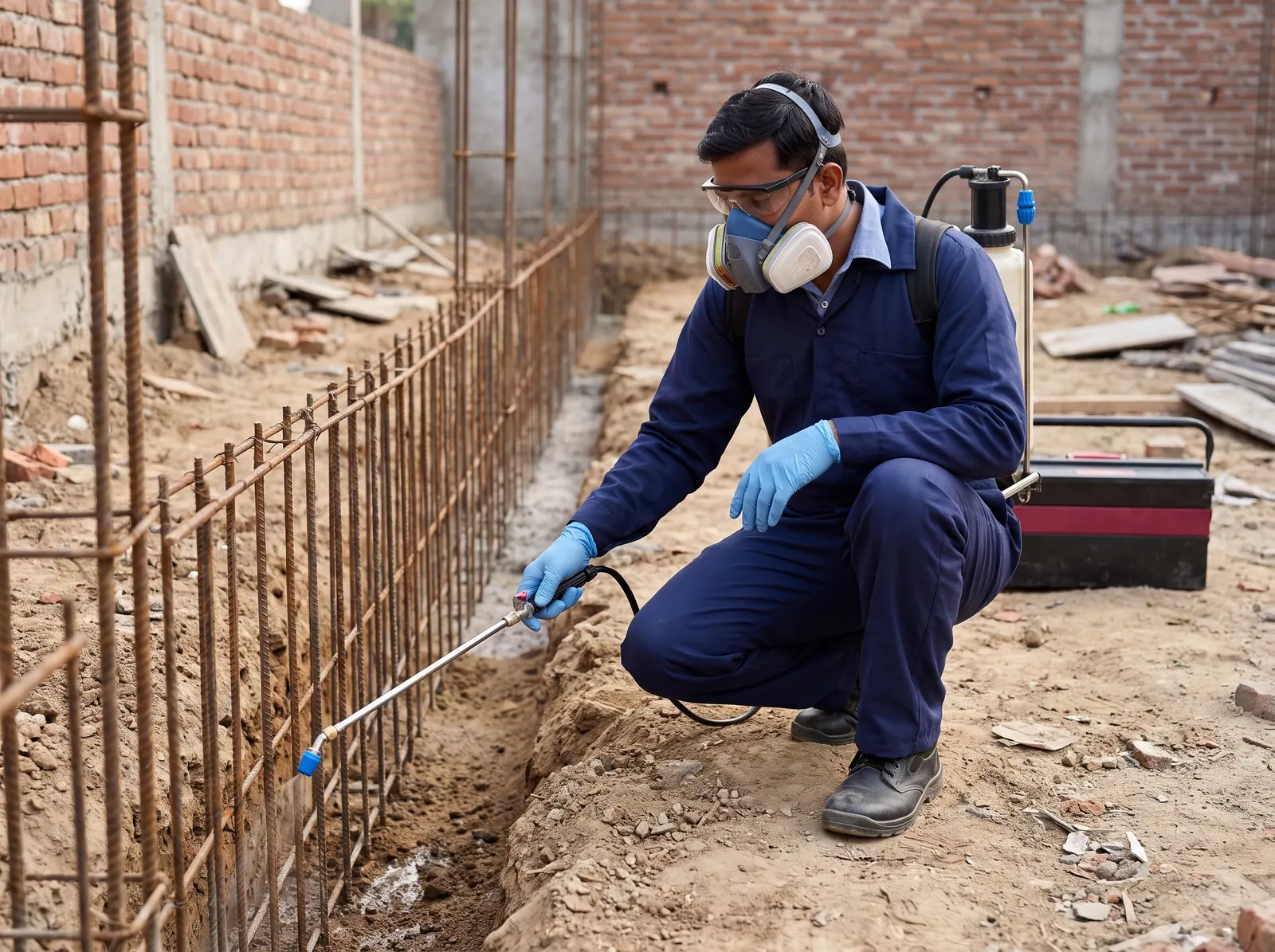
Pre-construction anti-termite treatment in Goa works best when it is built into the construction schedule, not added at the end. Under IS 6313 (Part 2), soil is treated in stages: foundation trenches, backfill against foundations, plinth fill before flooring, wall-floor junctions and the external perimeter. Plan excavation and treatment around the south-west monsoon, never treat waterlogged soil, and keep stage-wise records to hand over to buyers.
Key points
- IS 6313 (Part 2) covers anti-termite soil treatment for new buildings; Part 3 covers existing buildings.
- Treatment is staged: foundation trenches, backfill, plinth fill, wall-floor junctions, service entries and the external perimeter.
- Treated soil should be reasonably dry and compacted, and covered promptly; waterlogged soil should not be treated.
- Digging through treated soil after treatment breaks the barrier unless the disturbed soil is re-treated.
- Stage-wise records with dates, areas, product details and photographs give buyers clear proof of treatment.
For builders and contractors in Goa, anti-termite treatment for new construction is one of the few protections that must happen while the building is still at foundation level. Once foundations are backfilled and floors are laid, the soil underneath can only be reached by drilling through finished surfaces. This guide explains how pre-construction treatment fits into the build, how the monsoon affects it, what records to hand over to buyers, and the site mistakes that most often weaken it.
Subterranean termites live in the soil and enter buildings through hairline cracks, construction joints and gaps around pipes. They often go unnoticed until they reach door frames, cupboards or stored paper. Goa's warm, humid coastal climate suits them, which is why a continuous treated layer of soil between the ground and the building matters.
What does pre-construction anti-termite treatment involve?
Pre-construction treatment creates a chemical barrier in the soil that termites cannot cross without contact. The Indian Standard IS 6313 (Part 2) describes how this is done for new buildings: which soil surfaces are treated, at which stage, and how the chemical is applied. Part 3 of the same standard covers treatment of buildings that are already standing.
The treatment is not a single visit. It is a series of applications, each timed to a stage of construction, so that every surface is treated before it is covered. You can read more about how we approach this on our pre-construction anti-termite treatment in Goa page.
How should treatment be sequenced with construction stages?
The simplest way to get sequencing right is to put each treatment stage on the site schedule alongside the civil work it depends on. The table below shows the usual order.
| Construction stage | What is treated | Must happen before |
|---|---|---|
| Site clearing | Termite mounds, old roots and stumps removed; any active mounds dealt with | Excavation |
| Foundation excavation | Bottom and sides of foundation trenches and basement pits | PCC or foundation concrete is poured |
| Backfilling around foundations | Earth in contact with foundation walls, treated as backfill is placed and compacted | Each layer of backfill is covered by the next |
| Plinth filling | Top surface of the consolidated earth inside the plinth | Sub-base or flooring is laid |
| Wall and floor junction | Soil along the junction of walls and floor | Floor finish closes the junction |
| Services entry | Soil around pipes, conduits and cables entering the building | Service trenches are backfilled |
| Completion | Soil along the external perimeter of the building | Paving, plinth protection or landscaping |
In practice, this means the pest control operator needs advance notice of each stage. A useful habit is to give the operator a call-ahead when trenches are nearly ready, rather than after concrete has been ordered.
Who should coordinate on site?
- The site engineer confirms when each surface is ready and stops the next activity until treatment is done.
- The pest control operator measures the area, prepares the diluted chemical as per the product label and treats the surface.
- A client or builder representative witnesses the treatment and signs off the stage record.
What does IS 6313 (Part 2) say about quantities?
The standard sets out how much diluted chemical should be applied to each type of surface. Rates are expressed per square metre for surfaces such as trench bottoms and the plinth fill, and per unit length for areas such as backfill against foundation walls and the external perimeter. The rates differ by surface, because the aim is to soak a sufficient depth of soil, not just wet the top.
We do not publish dilutions or volumes here. The correct dilution depends on the specific CIB&RC-registered product used, and its label is the legal reference. What builders can usefully check is this:
- The operator works out the area of each surface and the total volume needed before starting.
- The chemical is diluted on site according to the label, not by guesswork.
- Application is even and slow enough to soak in, rather than running off into low spots.
- The volume actually used broadly matches the area treated, and both are written on the stage record.
If the numbers do not add up, for example a large plinth treated with very little solution, ask why before the surface is covered.
How does Goa's monsoon affect treatment timing?
Goa's south-west monsoon, roughly June to September, brings very heavy and persistent rain. Soil treatment depends on the chemical soaking into reasonably dry, compacted soil and then being left undisturbed, so wet weather is the biggest practical constraint for builders here.
Wet-weather rules worth following
- Do not treat waterlogged soil. If trenches hold standing water, drain or dewater them first and let the surface firm up.
- Avoid treating just before heavy rain. Rain falling on a freshly treated, uncovered surface can wash the chemical away or carry it elsewhere.
- Cover treated surfaces promptly. Laying PCC, blinding or the floor sub-base soon after treatment protects the barrier.
- Plan excavation for dry windows. Where possible, schedule foundation work so trench treatment and the first pour happen before the monsoon sets in.
- Inspect after the monsoon. If work paused mid-season, check whether treated layers were eroded, disturbed or flooded, and discuss re-treatment of affected areas with your operator.
If a project must continue through the rains, keep treated areas sheeted and drained, and record the weather conditions on each stage record. That record helps explain later decisions to buyers.
What records should builders keep and hand over to buyers?
Buyers, housing societies and their lawyers increasingly ask for proof that anti-termite treatment was carried out. A one-line note in the sale agreement is far less reassuring than a stage-wise file. A good handover file includes:
- Name of the pest control operator and its licence details.
- The product used, its registration status and its Material Safety Data Sheet.
- A record for each stage: date, surface treated, approximate area and volume used.
- Photographs of each stage before it was covered.
- Signatures of the site engineer or builder representative who witnessed the work.
- Any warranty terms, with the areas they cover and their conditions.
- Notes on anything that could affect the barrier, such as later service trenches.
From our Goa branch in Chimbel, we work as a licensed pest control operator (Directorate of Agriculture, Goa) using CIB&RC-registered products. We share service reports after visits and maintain Material Safety Data Sheets for the products we use. Where a warranty applies, it covers the treated area for specific services, as set out in the service agreement. Our how we work page explains our inspection-led approach.
What are the most common mistakes on site?
- Treating only once. A single spray at the end of the job cannot reach trench bottoms or the plinth fill.
- Skipping the backfill. Untreated earth against foundation walls leaves a direct route upward.
- Disturbing treated soil. Plumbing, electrical or drainage trenches dug after treatment break the barrier unless the disturbed soil is re-treated.
- Burying timber debris. Formwork offcuts, shuttering wood and roots left in the fill become food sources inside the barrier.
- Treating wet or loose soil. The chemical runs off or stays on the surface instead of soaking in.
- Forgetting the perimeter. Paving or landscaping laid before perimeter treatment makes it harder to treat later.
- Keeping no records. Without stage records and photographs, there is no way to show buyers what was done.
Timber elements such as door frames also benefit from attention, because termites and wood borers can arrive in timber itself. Soil treatment protects the building from below; it does not treat wood already infested.
How do you keep a working site safe during treatment?
- Keep workers and visitors out of treated areas until the surface is dry or as the operator advises.
- Do not eat, drink or store food near the treatment area, and wash hands after any contact.
- Keep treatment well away from wells, drinking-water tanks and open drains.
- Make sure empty chemical containers leave the site with the operator and are not reused.
- The operator should follow label directions and use suitable protective equipment.
Anyone who feels unwell after exposure on site should see a doctor promptly.
What happens after handover?
The barrier lasts best when it is left alone. Advise buyers and societies not to dig along foundations without re-treatment, and to plan gardens and paving with the perimeter in mind. Our guide on how long anti-termite treatment lasts explains what affects its life, and our garden and landscape termite treatment page covers outdoor areas. If termites appear in an occupied building later, post-construction termite treatment uses drilling and sealing to reach the soil below.
Planning a project in Goa?
If you are building in Goa, contact our Goa branch in Chimbel with the site location, the stage your project has reached and the approximate plinth area. We will talk you through a stage-wise treatment schedule and the records you can expect, and confirm how we can help.
Frequently asked questions
QCan pre-construction treatment still be done if the foundations are already laid?
Partly. Trench bottoms already covered by concrete cannot be reached, but backfill, plinth fill, wall-floor junctions and the perimeter can still be treated if they are not yet closed. Once floors are finished, the remaining option is post-construction treatment, which involves drilling and sealing to reach the soil. It is worth calling an operator in as early as possible, ideally before excavation is complete.
QWhat should we do if heavy rain falls right after a stage is treated?
Tell your operator as soon as possible and do not cover the surface until it has been checked. If the treated soil was flooded or visibly washed, the affected area may need re-treatment once it has drained and firmed up. Note the date and weather on the stage record so the decision is documented for the handover file.
QDo buyers need a certificate of anti-termite treatment?
Requirements vary between projects and lenders, so check with your legal adviser. In practice, buyers and housing societies value a clear file: operator and licence details, product information, stage-wise dates and areas, photographs taken before each surface was covered, and any warranty terms. This gives far more assurance than a single line in the agreement.
QDoes soil treatment protect door frames and wooden fittings?
Soil treatment stops termites coming up from the ground into the building. It does not treat timber that is already infested or protect it from wood borers, which can arrive in the wood itself. Using well-seasoned, inspected timber and treating wooden elements where appropriate is a separate step worth planning alongside the soil treatment.
QDoes plumbing or electrical work after treatment cause problems?
It can. Any trench dug through treated soil, for pipes, cables or drainage, breaks the barrier along that line. Ideally, service trenches are dug before the relevant treatment stage. If that is not possible, the disturbed soil should be re-treated before backfilling, and the work noted on the stage record.
QHow many site visits does pre-construction treatment usually need?
It depends on how the build is phased. Treatment follows construction stages, so there are typically separate visits for foundation trenches, backfill, plinth fill and the external perimeter, with extra visits if the project is built in phases or blocks. Sharing your construction schedule with the operator at the start makes it easier to plan.
Last updated 13 October 2026. Information on this page is general guidance; your technician will advise on your specific property after inspection.