Quick answer
In India, a 'government-certified' pest control service is a pest control operator licensed by the state under the Insecticides Act, 1968. In Goa, the Directorate of Agriculture issues the licence, and the operator must use only CIB&RC-registered products. To check, ask for a copy of the licence and confirm the name and validity date. Ask which products will be used and see their labels and safety data sheets. Insist on a written report after every visit.
Key points
- Pest control operators in India need a state licence under the Insecticides Act, 1968; in Goa it is issued by the Directorate of Agriculture.
- Insecticides used must be registered with the CIB&RC, and their labels state approved uses and precautions.
- Check that the licence name matches the invoice, that the licence is valid, and that its scope covers your job.
- Food businesses should keep pest control records to meet FSSAI Schedule 4 and HACCP expectations.
- Anti-termite treatment for buildings is covered by IS 6313 Part 2 (pre-construction) and Part 3 (post-construction).
If you are searching for how to find a certified pest control service from the government, the first thing to know is that there is no single "government certificate" badge for pest control companies. What exists is a licensing system. Pest control operators who apply insecticides for clients need a state licence under the Insecticides Act, 1968. The products they use must be registered with the Central Insecticides Board and Registration Committee (CIB&RC).
This guide explains what those requirements mean, how to check them yourself in Goa, and which warning signs to look for. It is written for homeowners, housing societies, hotel and restaurant managers, and builders.
What does "government-certified pest control" actually mean in India?
When a company calls itself government-approved or government-certified, it should be able to show three things.
- A pest control operator (PCO) licence. This is issued under the Insecticides Act, 1968 by the state's licensing authority. It permits a business to carry out pest control work using insecticides.
- CIB&RC-registered products. The CIB&RC registers insecticides in India. Each registered product carries a label that states the pests and situations it is approved for, along with its safety precautions.
- Trained people and safe practice. The licence is held by the business, but the people doing the work should be trained in handling and applying products. They should also follow the label and use protective equipment.
A licence is the legal baseline, not a measure of quality. A licensed firm can still do careless work. So treat the licence as your first filter, then judge the provider on how it inspects, treats and reports.
Who issues pest control licences in Goa?
In Goa, PCO licences are issued by the Directorate of Agriculture. When you ask a provider for its licence, check that:
- the business name on the licence matches the name on the quotation and invoice;
- the licence is still valid, with an expiry or validity date you can read;
- the scope covers the kind of work you need, such as household or public health pest control.
If anything looks unclear, you can contact the Directorate of Agriculture to confirm a licence. Keep the licence number and the company name handy when you do.
How do you verify a pest control company's credentials, step by step?
- Ask for the licence before the visit, not after. A genuine operator will share a copy without hesitation.
- Ask what will be used for your pest. Request the product names and active ingredients for each pest on the quotation. Vague entries like "chemical spray" are not enough.
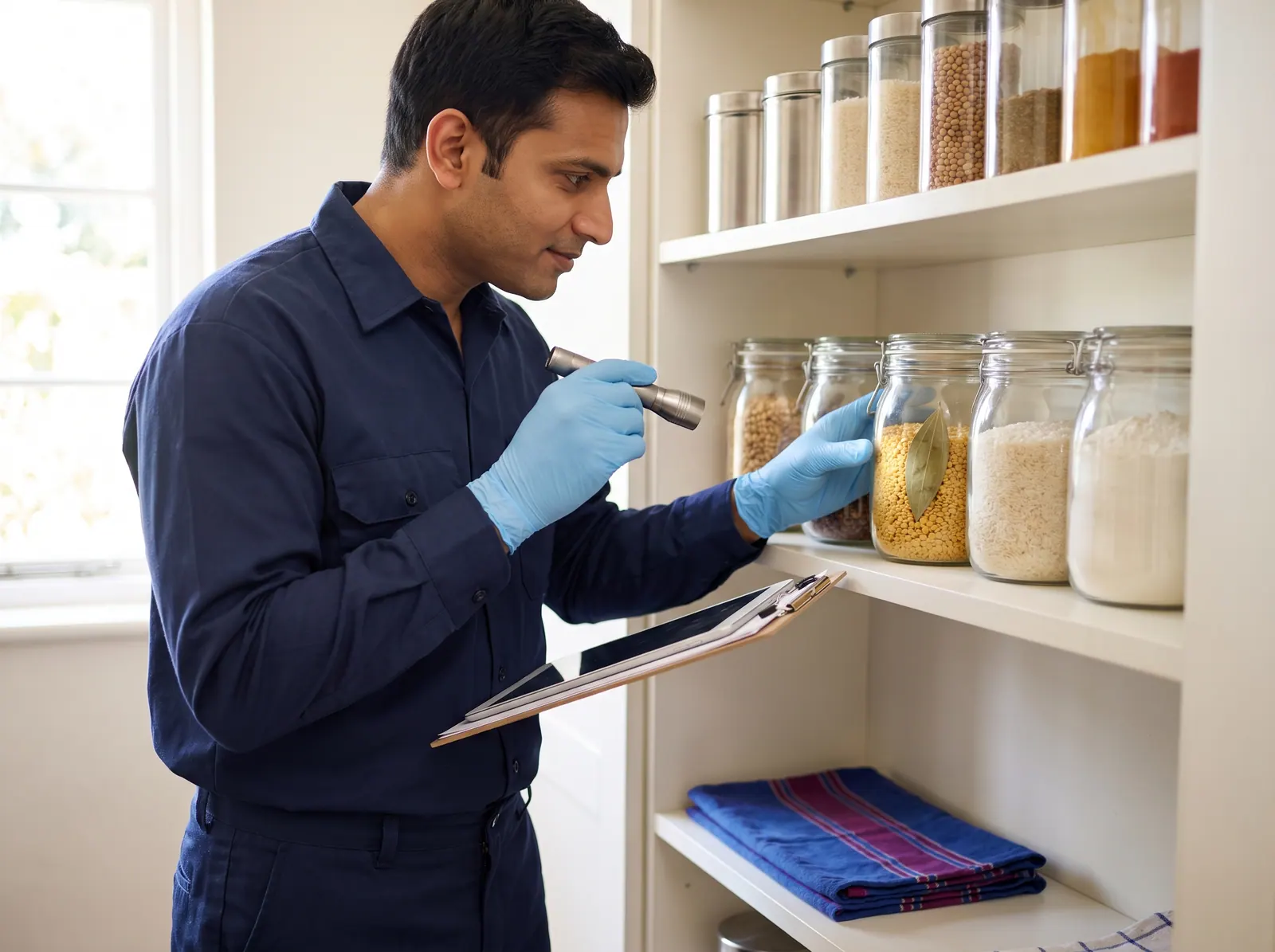
- Check the labels and safety data sheets. Ask to see the label or the Material Safety Data Sheet (MSDS, sometimes called SDS) for each product. The label confirms the product is meant for that pest and situation.
- Ask who will do the work. Find out whether the technicians are trained for the specific treatment, such as gel baiting, rodent stations or anti-termite drilling. Ask what protective equipment they will wear.
- Ask for written terms. Get the scope, visit frequency and any warranty conditions in writing. Warranties normally depend on the pest, the treatment and on you following the post-service instructions.
- Ask what report you will receive. A proper service report records what was found, what was done, where and with which products. It also lists what you need to fix on your side. Our guide on how to read a pest control service report explains what a useful report contains.
What should you ask, and what is a good answer?
| Question to ask | A reassuring answer | A worrying answer |
|---|---|---|
| Can I see your PCO licence? | A copy with the matching name and a current validity date | "It's pending" or "We don't need one" |
| What product will you use for this pest? | A named product, with the label or MSDS offered | "Our special chemical" or "Herbal, no need to know" |
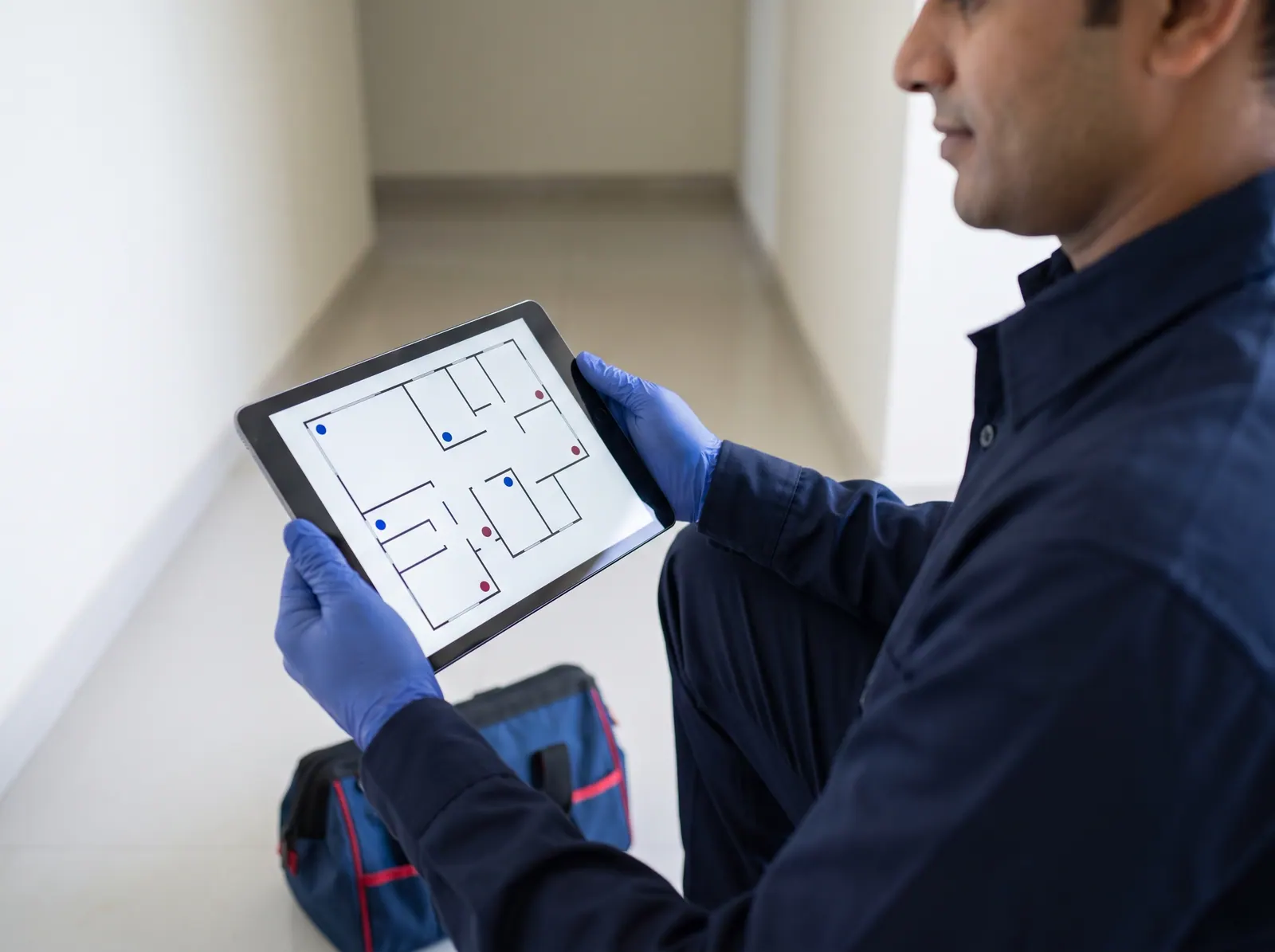
| Will you inspect first? | Yes, to find where the pests hide, how they get in and what attracts them | A fixed spray quoted over the phone for every problem |
| What happens after the visit? | A written report and clear advice on cleaning and sealing gaps | No paperwork beyond a bill |
| What does the warranty cover? | Specific conditions set out in the service agreement | "Pests will never come back" |
Extra checks for hotels, restaurants and builders
Food businesses and hotels
Restaurants, hotel kitchens, bakeries and caterers in Goa work under FSSAI hygiene requirements. Schedule 4 of the FSSAI licensing rules expects a pest control programme for food businesses. Many kitchens also follow HACCP principles.
Auditors usually want to see records, not just hear that treatment was done. Ask your provider whether it can supply service records, product details and pest-activity notes in a form your auditor will accept. For hotels, also ask how guest rooms, stores and staff accommodation will be scheduled so that operations are not disrupted.
Builders and owners of older homes
For termite work, the relevant Indian Standard is IS 6313. Part 2 covers pre-construction soil treatment, and Part 3 covers post-construction treatment of existing buildings. If you are building, ask the provider how its method follows IS 6313 Part 2. Ask also what documentation you will receive for your records.
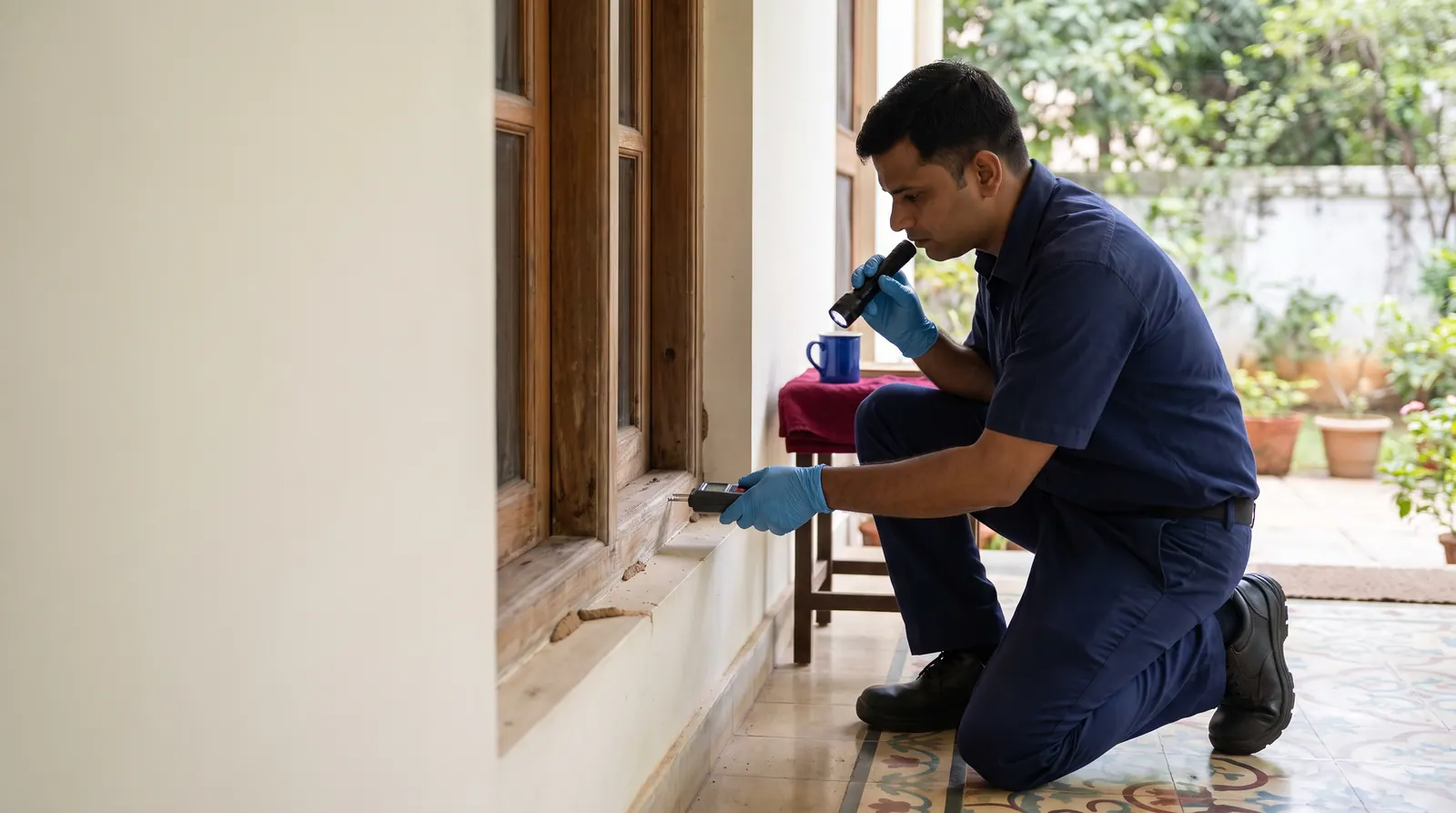
Goa's older houses, with timber roofs, rafters and doors, often need both termite and wood borer attention. Our guide to protecting Portuguese-era homes from termites and wood borer covers what to look for. You can also read about our approach to termite control in Goa.
What are the red flags to avoid?
- No licence, a licence in a different company's name, or one that has expired.
- Refusal to name products or show labels.
- Promises of permanent or "100%" results, or one treatment that supposedly fixes every pest for a year.
- Heavy space spraying indoors with no inspection and no advice on cleaning, food storage or sealing gaps.
- Technicians with no gloves or masks, or who decant chemicals into unlabelled bottles.
- Invoices that do not say what was done or where.
For more on choosing a dependable provider beyond licensing, see how to find a no-trouble pest control service provider.
Is a government licence the same as other certificates?
No. The PCO licence and CIB&RC product registration are legal requirements. Some firms also advertise private management-system certifications or memberships. These are not government licences and do not replace one.
If a company highlights such a certificate, ask to see it and check who issued it and whether it is current. Above all, make sure it can still show you the state licence.
Why the method matters as much as the paperwork
A licensed operator using registered products should still match the treatment to the problem. Integrated Pest Management (IPM) means inspecting first, then fixing the conditions that attract pests, such as moisture, food waste and open gaps. Products are used in targeted ways, such as gel baits in cracks rather than broad spraying.
This matters in Goa's humid coastal climate. During the heavy south-west monsoon, damp walls, blocked drains and stored items give pests shelter. Our guide to monsoon pests in Goa explains what to expect from June to September.
How our Goa branch fits this checklist
Efficacy Pest Control was founded in Goa, and our Goa branch in Chimbel works to the standards described above.
- We are a licensed pest control operator, licensed by the Directorate of Agriculture, Goa, and we use CIB&RC-registered products.
- Material Safety Data Sheets are maintained for the products we use.
- We follow an IPM approach: inspection, sanitation and proofing advice, then targeted treatment.
- Service reports are shared after visits, and clients receive WhatsApp updates.
- For restaurants, hotels and other food businesses, we provide documentation aligned with HACCP and FSSAI audit expectations.
- For specific services, a warranty applies to the treated area, as set out in the service agreement.
You are welcome to ask to see our licence and product details before any work begins. To learn more about the branch, visit our Goa branch page. Then tell us your location, the type of property and the pest problem, and we will explain what we would recommend.
Frequently asked questions
QIs there an official government list of approved pest control companies in Goa?
There is no consumer-facing badge that marks a company as government-certified. The requirement is a PCO licence issued by the Directorate of Agriculture, Goa, under the Insecticides Act, 1968. Ask the company for a copy of its licence and check the name and validity date. If you are unsure, contact the Directorate of Agriculture to confirm the licence.
QHow can I tell if a pesticide is CIB&RC-registered?
Ask the provider to name the product and show you its label or safety data sheet. A registered product's label states the pests and situations it is approved for, along with its precautions. If a provider will not tell you what it is using, or describes it only as a 'special' or 'secret' formula, treat that as a warning sign.
QDoes a licence mean the treatment is safe for my children and pets?
A licence shows the business is legally permitted to apply insecticides. It does not guarantee careful work. Safety depends on using the right product correctly. Follow the technician's instructions, keep children and pets away from treated areas until they are dry or for as long as advised, ventilate rooms and wash hands. If anyone feels unwell, see a doctor.
QWhat documents should a restaurant or hotel in Goa ask for?
Ask for a copy of the PCO licence and the names of the products used, with their labels or MSDS. You should also receive a service report after each visit showing what was found, what was treated and what corrective action is needed. Records like these help when demonstrating a pest control programme under FSSAI Schedule 4 or HACCP-based audits.
QShould a builder in Goa ask for anything specific for termite treatment?
Yes. Pre-construction anti-termite treatment is covered by IS 6313 Part 2, and treatment of existing buildings by IS 6313 Part 3. Ask the provider how its method follows the relevant part. Also ask which registered product will be used and what written record you will receive for the project file.
QCan I ask Efficacy Pest Control to show its licence before booking?
Yes. Our Goa operation is licensed by the Directorate of Agriculture, Goa, and uses CIB&RC-registered products. We are happy to share licence and product details before any work begins, so you can check them for yourself.
Last updated 13 October 2026. Information on this page is general guidance; your technician will advise on your specific property after inspection.