Quick answer
House lizards in Goa are small geckos that come indoors to hunt insects. Lights draw moths, flies and mosquitoes, and lizards follow the food, slipping in through gaps around doors, windows, pipes and ducts. What actually helps is reducing insects, changing how you use outdoor lights and sealing entry points. Popular remedies such as eggshells, peacock feathers and naphthalene balls have little evidence behind them.
Key points
- House lizards are geckos that hunt insects at night and are not venomous.
- Lights attract insects, and lizards gather where insects gather.
- Reducing insects, screening windows and sealing gaps are the measures that make a real difference.
- Eggshells, peacock feathers and similar remedies have no reliable evidence; naphthalene and tobacco-based mixes are a risk to children and pets.
- Any food a lizard falls into should be discarded; see a doctor if someone feels unwell after eating it.
If you live in Goa, you have almost certainly shared your walls with a house lizard. They appear near the tube light in the evening, dart behind the fridge and chirp from the ceiling at night. Most people want fewer of them indoors, but the remedies passed around are often more folklore than fact.
This guide to house lizards in Goa explains why they come in, what genuinely reduces them, and which popular tricks you can safely skip. The short version: lizards follow insects, so the insects and the gaps they use matter far more than anything you hang on the wall.
What exactly is a house lizard?
The lizards you see on walls and ceilings are house geckos, small reptiles that have lived alongside people for a very long time. They are usually pale grey or light brown and can change shade slightly depending on the surface and light.
- They are active at night. Geckos rest in cracks and behind objects during the day and hunt after dark.
- They eat insects. Moths, flies, mosquitoes, small cockroaches and other insects make up their diet.
- They climb almost anything. Special pads on their toes let them walk on smooth walls, glass and ceilings.
- They can drop their tails. A gecko under threat may shed its tail, which keeps wriggling for a while. A new tail grows back.
- They lay small, hard-shelled eggs, usually two at a time, tucked into crevices, behind frames, inside cupboards or behind furniture.
- They make noise. The chirping or clicking you hear at night is the gecko calling.
Are house lizards harmful?
House geckos are not venomous and do not attack people. They may nip if grabbed, but they would much rather run. The real concern is hygiene: like reptiles generally, they can carry bacteria such as Salmonella, and their droppings (small dark pellets with a white tip) can end up on counters and shelves.
Keep food covered, wipe surfaces where droppings appear, and wash your hands after cleaning. If a lizard falls into food, throw the food away. If anyone feels unwell after eating something they suspect was contaminated, see a doctor.
Why do lizards come indoors in Goa?
A lizard indoors needs three things: food, shelter and a way in. Goa's humid coastal climate, very heavy south-west monsoon and the greenery around most homes all support plenty of insect life, which in turn supports geckos.
Homes here also tend to offer easy access. Tiled roofs, timber frames, ventilation openings, gaps around air-conditioner pipes and doors left open in the evening breeze all give a gecko a route inside. Once in, cluttered corners, wall hangings and the space behind cupboards give it a place to hide and lay eggs.
Lights, insects and gaps: the chain that brings lizards in
Lights
Bright lights near doors, windows and verandahs pull in moths, flies and other flying insects after dark. Geckos have learnt to wait near lights because that is where the food gathers. A porch light beside an open window is close to an invitation.
Insects
If there are lizards, there are insects for them to eat. Ants on the kitchen counter, flies around the bin, mosquitoes in the bedroom and cockroaches near the drain all keep lizards fed. Reducing these is the single most useful step, and it improves hygiene in its own right.
Gaps
Geckos are slim and flexible, so small openings are enough. Common entry points include:
- Gaps under main doors and balcony doors
- Windows without mesh, or with torn mesh
- Holes around AC pipes, cable entries and exhaust fans
- Open ventilators and kitchen chimney ducts
- Cracks where window and door frames meet the wall
- Gaps under roof tiles and at the top of walls in older houses
What actually works at home
None of these steps will make a house lizard-free overnight, but together they steadily reduce how many come in and stay.
- Rethink outdoor lighting. Switch off lights that are not needed, keep them away from open windows, or use warm yellow bulbs, which tend to attract fewer insects than bright white light.
- Screen and close up at dusk. Fit mesh on windows and ventilators, repair torn mesh, and close doors as the lights come on.
- Cut down the insects. Tackle the underlying problem, whether that is ants in the kitchen, house flies around food and bins, cockroaches in drains and cabinets or mosquitoes during the monsoon.
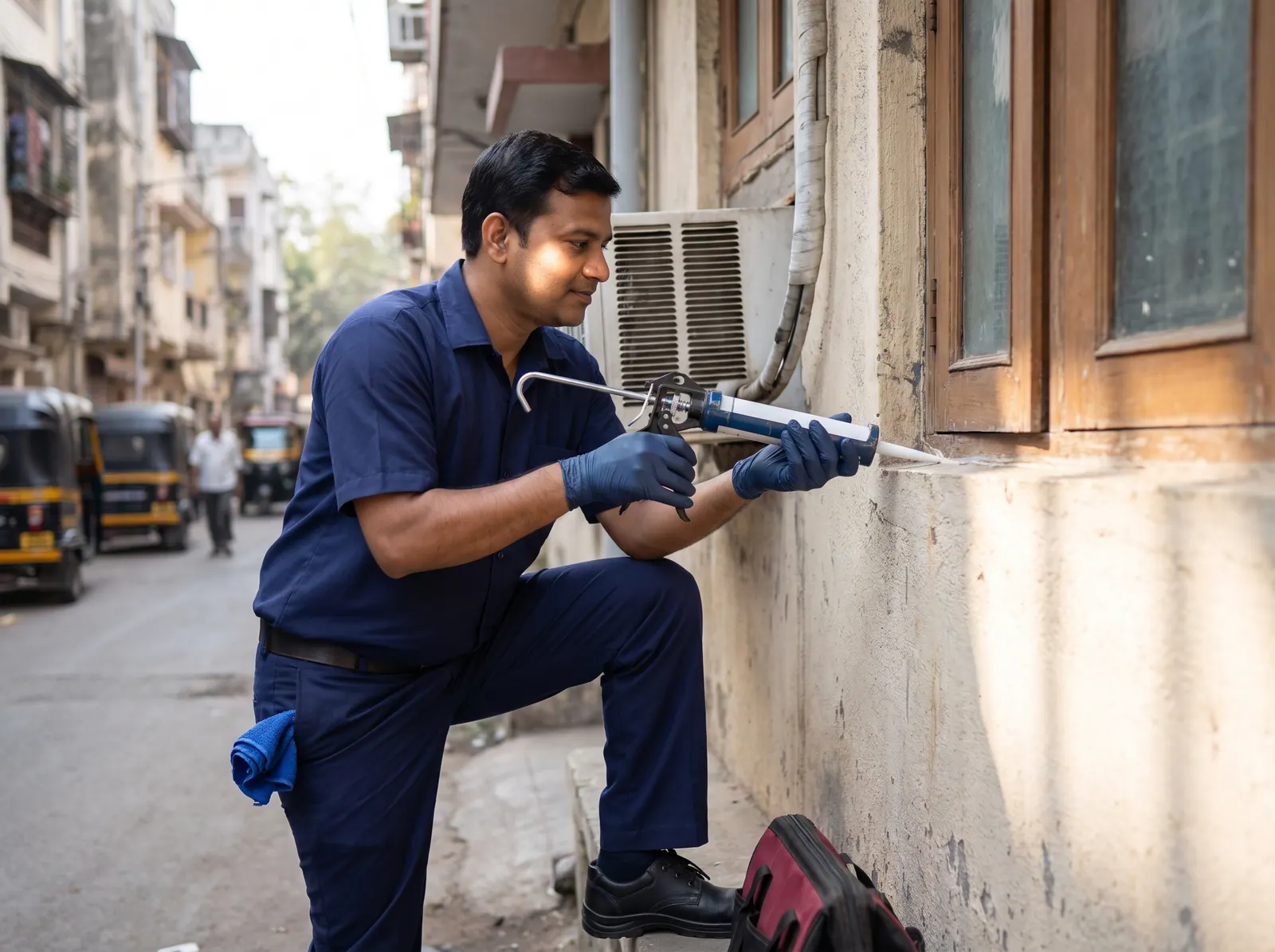
- Seal the gaps. Fit door sweeps, fill cracks around frames and pipe entries, and cover duct openings with mesh.
- Remove hiding places. Declutter, move furniture slightly away from walls and check behind frames, mirrors and calendars regularly.
- Look for eggs. Check crevices, cupboard corners and behind furniture, and clear any eggs you find.
- Move single lizards out gently. Guide one towards an open door with a broom, or cover it with a container, slide a card underneath and release it outside.
Home remedies: myths and reality
Many remedies are shared with great confidence. Here is an honest look at the common ones.
| Remedy | What people claim | What is actually true |
|---|---|---|
| Eggshells on shelves | Lizards think a predator is nearby | There is no good evidence for this. Harmless, but it will not fix the problem. |
| Peacock feathers | Lizards fear peacocks | No reliable evidence. Lizards return as long as there are insects and gaps. |
| Naphthalene balls | The smell drives lizards away | The fumes are not suitable for living spaces, and the balls are dangerous if swallowed by children or pets. Best avoided. |
| Onion, garlic or pepper sprays | Strong smells repel lizards | Any effect is short-lived, and pepper sprays can irritate eyes and skin. |
| Homemade balls with tobacco or coffee | Lizards eat them and die | Tobacco is toxic and a real risk to children and pets. Do not make these. |
| Spraying cold water | Freezes the lizard so you can catch it | It may slow one lizard briefly, but does nothing about why it came in. |
| Glue boards | Catch lizards easily | They cause slow suffering and also trap other small animals. Best avoided. |
The pattern is clear: remedies that ignore insects and entry points rarely make a lasting difference.
Lizards in hotels, restaurants and food businesses
At home a lizard is mostly a nuisance. In a hotel room, restaurant kitchen or food store it can mean a guest complaint or a hygiene concern. Food businesses are expected to keep premises free of pests under FSSAI Schedule 4 hygiene requirements, and HACCP-based food-safety systems treat pest control as a basic control.
A lizard problem in a kitchen almost always points to an insect problem, poor screening or gaps in the building. For food businesses in Goa, our team provides documentation aligned with HACCP and FSSAI audit expectations, so pest activity and corrective steps are recorded.
When is professional help useful?
Many households manage well with the steps above. It is worth bringing in professional help when:
- Lizard numbers stay high even after you have improved lighting, screening and cleanliness
- You suspect an insect problem, such as cockroaches or ants, that you cannot control yourself
- You run a hotel, restaurant, office or other premises where sightings affect customers or audits
- Entry points are hard to reach, such as high ceilings, roof spaces or ducts
- You keep finding eggs or droppings in kitchens and food storage areas
Our approach follows Integrated Pest Management: an inspection to find out why lizards are present, advice on sanitation and proofing, and targeted treatment of the insects that feed them. Lizard control from our Goa branch is based on habitat and entry-point management rather than simply spraying, and you can read more about how we work.
If any insect treatment is carried out, follow the technician's instructions and the product label, keep children and pets away from treated areas until dry or as advised, ventilate rooms and wash hands after contact with treated surfaces.
Talk to our Goa team
If house lizards are a constant presence in your home or business, contact our Goa branch in Chimbel. Tell us where you are and what you are seeing, and we will suggest the most sensible next step. For general questions about visits and preparation, see our Goa pest control FAQs.
Frequently asked questions
QIs it normal to have house lizards in a Goa home?
Yes. House geckos live alongside people throughout Goa, and seeing one or two near lights in the evening is common. Their presence usually means there are insects around for them to eat. If you see many lizards, find droppings in the kitchen or keep finding eggs, it is worth looking for the insect source and the gaps they are using to get indoors.
QDoes a lizard falling into food make it poisonous?
House geckos are not venomous, but they can carry bacteria such as Salmonella, so any food a lizard has fallen into should be thrown away rather than eaten. Clean the utensil and surrounding surfaces thoroughly. If anyone has already eaten the food and feels unwell, or if you are worried, please see a doctor rather than relying on home treatment.
QDo lizards come in more during the monsoon?
Many households notice more activity during and after the monsoon. The humid, wet conditions support more insect life, and lizards follow their food. Doors and windows left open for ventilation, and lights on for longer on dark evenings, also make it easier for insects and lizards to come inside. Screening and sensible lighting help most at this time.
QWill pest control spray kill the lizards in my house?
Spraying lizards is not the aim of good lizard control. Lasting results come from reducing the insects they feed on and closing the gaps they use. Lizard control from our Goa branch focuses on habitat and entry-point management, along with targeted treatment of insect problems such as cockroaches, ants or flies where these are present.
QHow do I deal with lizard eggs I find?
Lizard eggs are small, round and hard-shelled, often found in pairs in crevices, behind frames, inside cupboards or behind furniture. Wearing gloves, pick them up with a tissue, dispose of them outside the house, then clean the spot and wash your hands. Sealing the crevice where you found them reduces the chance of more being laid there.
QDo yellow bulbs really reduce lizards?
Yellow or warm-coloured bulbs tend to attract fewer flying insects than bright white light, so fewer lizards gather around them to feed. They will not remove lizards on their own, but combined with switching off unneeded lights, keeping lights away from open windows and fitting mesh, they make your home a less attractive hunting ground.
Last updated 13 October 2026. Information on this page is general guidance; your technician will advise on your specific property after inspection.