Quick answer
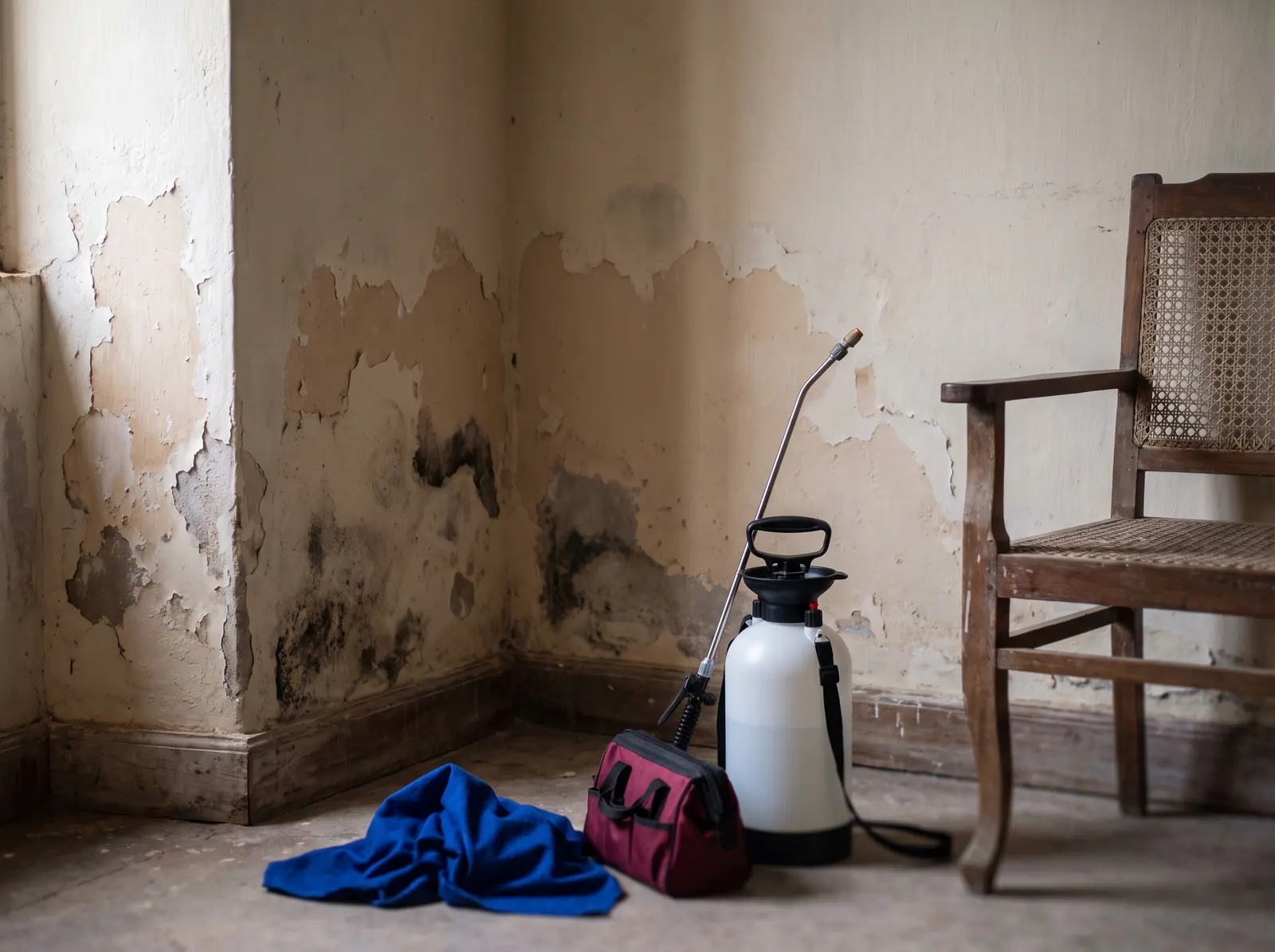
Damp walls attract pests because many insects need moisture to survive. Seepage softens timber for termites, gives cockroaches water near drains, and feeds mould that silverfish and booklice live on. Millipedes also wander in from wet soil. In a damp Goan house, first stop the water, then dry and ventilate, check for termites before repairs, and use targeted treatment only where an infestation is confirmed.
Key points
- Many household pests, including termites, cockroaches, silverfish, booklice and millipedes, depend on moisture and gather around damp walls.
- The pattern of a damp patch, such as a band at floor level, stains below the roof or a wet wall beside a bathroom, usually points to its source.
- Stop active leaks and fix drainage before treating pests, or the problem tends to return.
- Inspect for termites before replastering, retiling or waterproofing so an active colony is not sealed out of sight.
- White salt deposits on damp plaster are a moisture sign, not a pest sign; mud tubes and powder beside holes in wood point to termites or wood borer.
If your walls show damp patches, flaking plaster or a musty corner that never quite dries, you will often find pests nearby. This guide covers the link between damp and pests in Goan homes. It explains which pests follow moisture, how to trace where the water is coming from, and what to fix first so treatment actually works.
Goa's heavy south-west monsoon and humid coastal air are hard on buildings. Older houses with laterite walls and lime plaster, tiled roofs and terrace flats can all take on water. Once a wall stays wet, it becomes a home for insects that cannot survive in dry conditions.
Why does a damp house attract pests?
Most household insects lose water through their bodies and need a steady supply to survive. A damp wall, a leaking pipe behind a cabinet or a soggy corner under the stairs gives them drinking water and humid shelter. It also softens wood and grows the mould some insects feed on.
Damp also damages the building in ways that help pests. Plaster cracks and comes away from the wall, skirting boards swell and gap, and timber rots. Each of these creates hiding places and entry routes that were not there before.
Which pests are drawn to damp walls and corners?
Termites
Subterranean termites live in the soil and need moisture to survive. They travel through mud tubes along walls and foundations, and damp, softened timber is easier for them to eat. Door frames near a wet wall, wooden skirting and cupboards against seeping masonry are common trouble spots. Our guide to termite warning signs in Goan homes explains what mud tubes, hollow-sounding wood and discarded wings look like.
Cockroaches
Cockroaches need water often. The larger American cockroach in particular favours drains, sewer lines, damp bathrooms and the gaps behind leaking plumbing. A dripping trap under the kitchen sink or a wet duct can support a population even in a clean home. If you live in a flat, see our guide to cockroaches in Goan apartments, drains, ducts and shafts.
Silverfish and booklice
Silverfish are small, silvery, fast-moving insects that come out at night. They thrive in humid rooms and feed on starchy material such as paper, book bindings, wallpaper paste and cardboard. Booklice are tiny pale insects that feed on the microscopic mould growing on damp paper, walls and stored goods. Both are a strong sign that a room is too humid. Read more in silverfish and booklice in humid Goan homes.
Millipedes
Millipedes live in damp soil and leaf litter and feed on decaying plant matter. During and after heavy rain they often crawl indoors, especially into ground-floor rooms and verandahs next to garden beds. They do not bite and usually die indoors because the air is too dry for them. Some release a fluid that can stain or irritate skin, so sweep them up rather than handling them, and wash your hands if you touch one.
Others that follow moisture
- Drain flies breed in the slimy film inside drains and wet waste pipes.
- Springtails are tiny jumping insects found around damp potted plants, wet tiles and mouldy grout.
- Centipedes hunt the small insects that gather in damp places.
- Mosquitoes can breed in water pooling from leaking tanks, blocked gutters and AC drain pipes.
How do you find where the damp is coming from?
The shape and timing of a damp patch usually point to its source. Note whether it appears only after rain or stays wet all year, and whether it starts at the floor, the ceiling or beside a bathroom.
| Where the damp shows | Likely source | Pests it may attract |
|---|---|---|
| A band along the bottom of a wall, with a tide mark | Rising damp from the ground, soil or paving built up against the wall, poor drainage around the plinth | Termites, millipedes, silverfish |
| Patches on the top-floor ceiling or high on walls, worse in the monsoon | Cracked or slipped roof tiles, blocked valleys, failed terrace waterproofing, parapet cracks | Termites in roof timber and false ceilings, booklice, cockroaches |
| A wall next to a bathroom or kitchen, wet all year | Leaking concealed pipes, failed floor waterproofing in the bathroom, gaps around tiles and traps | Cockroaches, drain flies, silverfish |
| Around windows and below sills | Gaps in frames, missing drip edges, cracks in external plaster | Silverfish, ants, termites in frames |
| Mould on cool walls of closed rooms | Condensation and poor ventilation, common in houses left shut | Booklice, silverfish |
| Near overhead tanks, AC units or downpipes | Overflowing tanks, dripping AC drains, broken gutters | Mosquitoes, cockroaches |
A few simple checks help before you call a plumber or waterproofing contractor:
- If your home has a water meter, close every tap and see whether the meter still moves. If it does, a hidden pipe may be leaking.
- Walk around the outside after a heavy shower and watch where water collects, overflows or runs down walls.
- Look at the roof or terrace from above for broken tiles, cracks, blocked outlets and standing water.
- Check under sinks, behind washing machines and around toilet bases for drips and soft, stained wood.
Not every white mark on a damp wall is a pest sign. Powdery white crystals on plaster are usually salts left behind as water evaporates. Fine powder beside tiny holes in wood points instead to wood borer, and earthy tubes running up a wall point to termites.
What should you fix first?
Order matters. Treating pests while water keeps coming in usually brings the problem back, and repairing walls without checking for termites can seal an active colony out of sight. This sequence works for most homes:
- Stop the active water. Repair leaking pipes, taps, tanks and AC drains. These are often the cheapest fixes and remove water that pests depend on daily.
- Sort out drainage outside. Clear gutters and downpipes, make sure rainwater runs away from the walls, and keep soil, mulch, firewood and dense planting from piling up against the plinth.
- Dry out and ventilate. Open windows on dry days, run exhaust fans in bathrooms and kitchens, and move furniture a little away from damp walls so air can circulate.
- Clear damp clutter. Cardboard boxes, old newspapers and wood stored on the floor of damp rooms feed silverfish and termites. Move storage onto racks and into sealed plastic boxes.
- Get a pest inspection before the big repairs. Before you replaster, retile or waterproof, have the affected walls, frames and timber checked for termites and other pests. Some treatments, such as drill-fill-seal termite treatment, are best done before new plaster or tiles go on.
- Carry out the building repairs. Roof, terrace and wall waterproofing are jobs for a qualified contractor. Ask them to seal cracks and gaps around pipes, which also closes pest entry points.
- Monitor. Keep an eye on repaired areas through the next monsoon. New damp or fresh insect activity is an early warning worth acting on.
The dry months after the monsoon and before the next rains are the practical window for roof and waterproofing work. Our pre-monsoon pest checklist for Goa homes sets out what to check before June.
When does pest treatment actually help?
Drying out a house reduces pests over time, but it does not always remove an infestation that is already established. Here is how damp-related pests usually respond:
- Termites: fixing damp makes the house less attractive, but an active colony will not simply leave. Inspection-led anti-termite treatment is usually needed, along with treatment or replacement of damaged timber. This matters even more in older houses; see protecting Portuguese-era homes from termites and wood borer.
- Cockroaches: once leaks and drains are fixed, gel baiting and targeted crack-and-crevice treatment are effective. Without fixing the water, numbers tend to bounce back.
- Silverfish and booklice: lowering humidity and clearing paper clutter is the main control. Targeted treatment helps where numbers stay high after the room is drier.
- Millipedes: usually seasonal. Sweeping them up, clearing leaf litter and mulch from beside the house and sealing gaps under doors is generally enough. Treatment around the outside is only worth considering for heavy, repeated invasions.
- Drain flies and mosquitoes: cleaning drains and removing standing water does most of the work. Treatment supports source reduction but does not replace it.
Avoid spraying household insecticides onto damp walls or into wall cracks yourself. It rarely reaches the source, can scatter pests further into the wall, and leaves residues in living areas. If any product is used, follow the label directions, keep children and pets away until treated areas are dry or as advised, ventilate the room, and wash your hands afterwards. If anyone in the home has breathing problems you think may be linked to mould or damp, please see a doctor.
What about houses that stay shut for months?
Holiday homes and houses closed through the monsoon are especially prone to damp and pests. Without airflow, humidity builds up, small leaks go unnoticed and termites or cockroaches can settle in undisturbed. Before leaving, fix known leaks, clear gutters, empty and dry sinks and traps where possible, and ask someone to air the house during dry spells. Our page on pest control for villas and holiday homes in Goa covers this in more detail.
Getting help from our Goa branch
Our Goa team follows an integrated pest management approach. That means an inspection first, sanitation and proofing advice, and targeted treatment only where it is needed. In damp homes, that usually means pointing out the moisture sources that keep pests coming back, alongside any treatment. We are a licensed pest control operator with the Directorate of Agriculture, Goa, and use CIB&RC-registered products.
If you are planning major repairs or structural changes after a treatment, tell us beforehand. Warranties for specific services apply to the treated area as set out in the service agreement, and the terms can be affected by structural changes.
If damp walls and pests are a problem in your home, contact our Goa branch in Chimbel. Tell us your location and what you are seeing, and we will let you know how we can help.
Frequently asked questions
QWill waterproofing my walls get rid of termites?
Not on its own. Waterproofing removes the moisture that makes a house attractive to termites, which helps prevent future problems. But an established colony feeding on timber inside the building will usually keep going. Have the area inspected first. If termites are active, treatment is best done before or alongside the repair work, so the treated zone is not covered up and damaged wood can be dealt with.
QShould I treat for pests before or after repairing a damp wall?
Inspect before you repair. For termites, treatment such as drill-fill-seal is often best done before new plaster or tiles go on. For cockroaches, silverfish and drain flies, fix the leak and dry the area first, then treat what remains. Treatment applied while water is still coming in tends to give short-lived results.
QAre the millipedes coming into my house after rain dangerous?
Millipedes do not bite and are not considered dangerous. They come in from wet soil and garden beds during heavy rain and usually die indoors because the air is drier. Some release a fluid that can stain surfaces or irritate skin, so sweep them up rather than picking them up by hand. Wash your hands if you touch one, and see a doctor if irritation persists.
QCan a dehumidifier or exhaust fan help with silverfish?
Yes, lowering humidity is one of the most effective ways to reduce silverfish and booklice, because both depend on damp air and mould. Exhaust fans in bathrooms and kitchens, opening windows on dry days and a dehumidifier in closed rooms all help. Combine this with clearing old paper and cardboard and storing books and documents in dry, sealed containers.
QIs the white powder on my damp wall a sign of pests?
Usually not. White, crystalline or fluffy deposits on plaster are generally salts left behind as moisture evaporates from the wall, which points to a damp problem rather than insects. Pest signs look different. Wood borer leaves fine powder next to tiny holes in timber, while termites build earthy mud tubes along walls and frames. If you are unsure, ask for an inspection.
QHow can I tell whether damp is from rain or a plumbing leak?
Timing is the best clue. Patches that appear or spread during the monsoon and shrink in the dry season usually come from the roof, terrace, windows or rising damp. Patches that stay wet all year, especially beside bathrooms or kitchens, point to plumbing. If you have a water meter, close all taps and check whether it still moves, which suggests a hidden leak.
Last updated 13 October 2026. Information on this page is general guidance; your technician will advise on your specific property after inspection.