Quick answer
Efficacy Pest Control's Goa branch in Chimbel provides termite control in Mapusa (also called Mapsa) for flats, houses, shops, offices and storerooms. Every job starts with an inspection to find live activity, entry points and damp. We then use pre-construction soil treatment for new builds, drill-fill-seal treatment for occupied buildings, or direct wood treatment. We follow an IPM approach, use CIB&RC-registered products and share a service report after each visit.
Key points
- Mapusa (also called Mapsa) is covered by Efficacy Pest Control's Goa branch in Chimbel.
- New buildings get pre-construction soil treatment; occupied buildings get post-construction drill-fill-seal treatment; damaged wood is treated directly.
- Every job starts with an inspection, following an Integrated Pest Management approach.
- The company is a licensed pest control operator in Goa using CIB&RC-registered products, with MSDS maintained for each product.
- A service report is shared after each visit, and a warranty applies to the treated area for specific services, as set out in the service agreement.
You may have spotted mud lines on a wall, a door frame that sounds hollow, or winged insects after the first monsoon showers. If so, termite control in Mapusa starts with finding out where the termites are coming from. Our Goa branch in Chimbel covers Mapusa (also called Mapsa). We handle termite work for flats, independent houses, villas, shops, offices and storage buildings in the town.
We are a licensed pest control operator with the Directorate of Agriculture, Goa, and we use CIB&RC-registered products. Every job begins with an inspection. The right treatment depends on the building, the soil around it and where the damp is.
Why do termites get into Mapusa buildings?
Mapusa is the main market town of Bardez taluka, and its buildings vary a great deal. You will find older Goan houses with wooden rafters, tiled roofs and timber window frames. There are also newer apartment blocks and rows of shops with storerooms at the back. Each type of building gives termites a different way in.
Most termites that damage buildings live in the soil. They travel up through cracks in the plinth, gaps around pipes and joints in the floor, and they need moisture to survive. Goa's long, heavy south-west monsoon keeps walls and soil damp for months. That is why termite activity often shows up during or just after the rains.
- Older houses: roof timbers, door frames and wooden ceilings, especially where a roof leak has kept the wood damp.
- Apartments: kitchen cabinets, wardrobes fixed to outer walls, and skirting near bathrooms.
- Shops and storerooms: cardboard cartons, wooden shelving, and stock kept against walls or on the floor.
What signs should you look for?
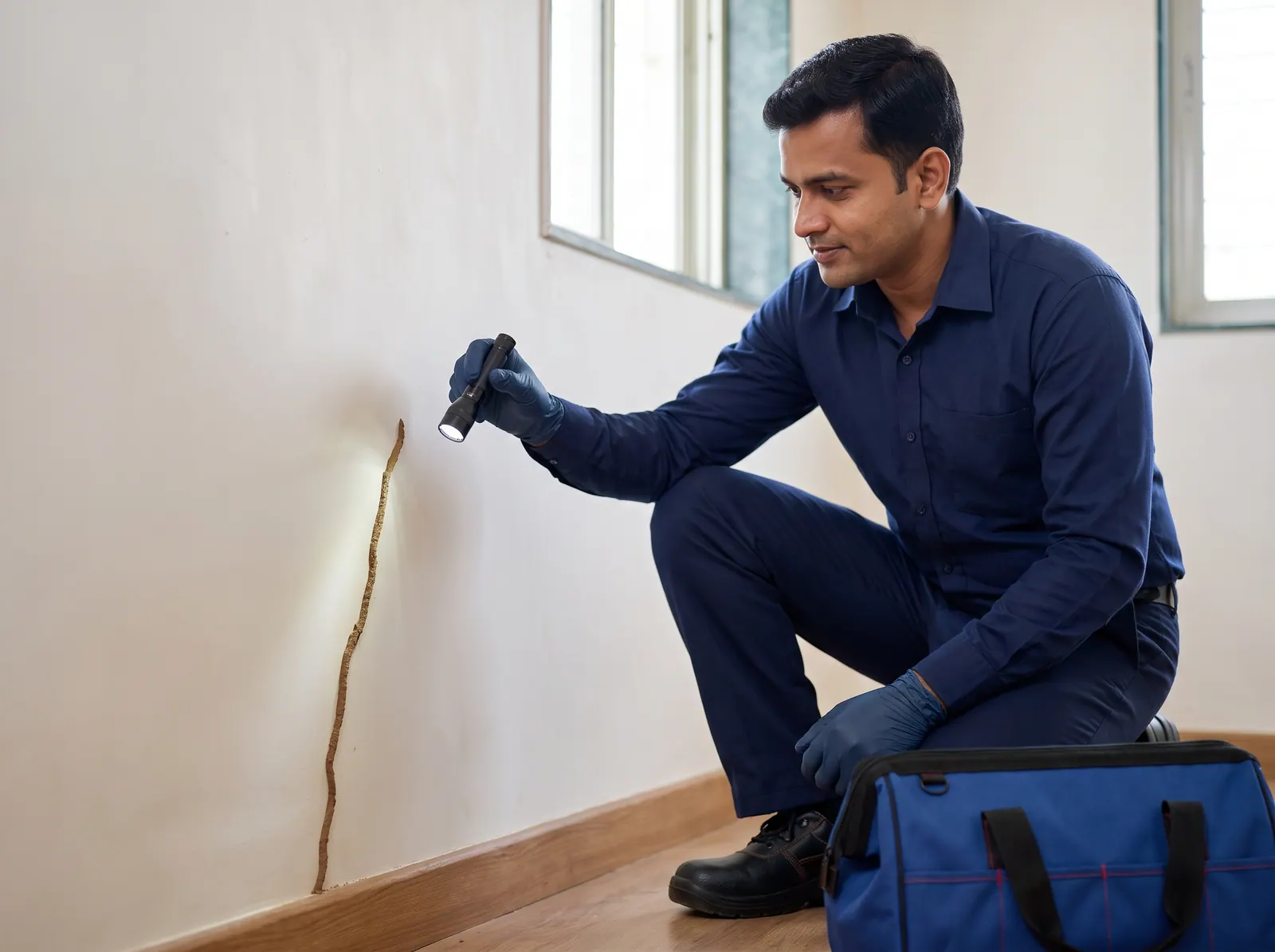
- Thin mud tubes running up walls, along the plinth, or behind cupboards.
- Wood that sounds hollow when tapped, or gives way under light pressure.
- Small piles of shed wings near windows and lights, usually after rain.
- Paint that bubbles or peels in a line, with soil behind it.
- Damaged papers, files or cartons in storerooms.
Fine, powdery dust and tiny round holes in furniture usually point to wood-boring beetles rather than termites. Borers need a different approach, which is covered on our wood borer treatment in Mapusa page. For a fuller checklist, read our guide to termite warning signs in Goan homes.
If you find mud tubes, try not to break them all open or spray household insecticide on them. The termites will simply move, and that makes their route harder to trace during the inspection.
Which termite treatment does your property need?
| Your situation | Treatment | What it involves |
|---|---|---|
| New house, extension or building under construction | Pre-construction soil treatment | The soil is treated at the foundation and plinth stages, before flooring is laid, so a treated layer lies beneath the building. This follows the approach in IS 6313 Part 2. |
| Occupied flat, house, shop or office | Post-construction drill-fill-seal | Small holes are drilled at floor–wall junctions and along the plinth, filled with a registered termiticide and then sealed. This follows the approach in IS 6313 Part 3. |
| Damaged doors, frames, furniture or roof timber | Wood treatment | Affected wood is treated directly, after checking whether it can be saved or needs replacing. |
If you are building or extending a home in Mapusa, plan termite protection before the flooring stage. Our page on pre-construction anti-termite treatment in Goa explains the stages involved. For a building that is already lived in or trading, see post-construction termite treatment. If you are buying an older property, it is worth reading about termite inspection before buying property in Goa.
What happens during a termite visit?
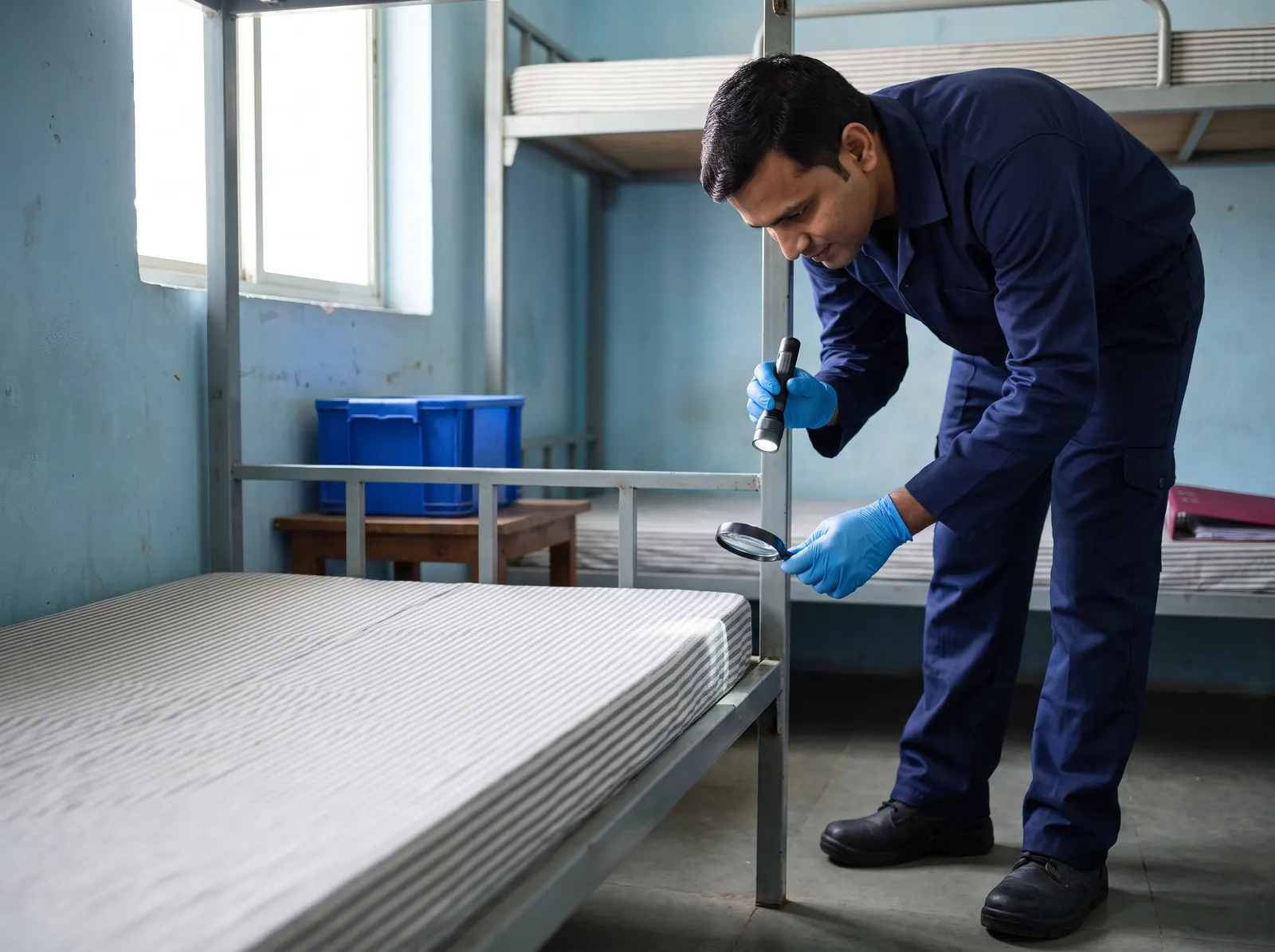
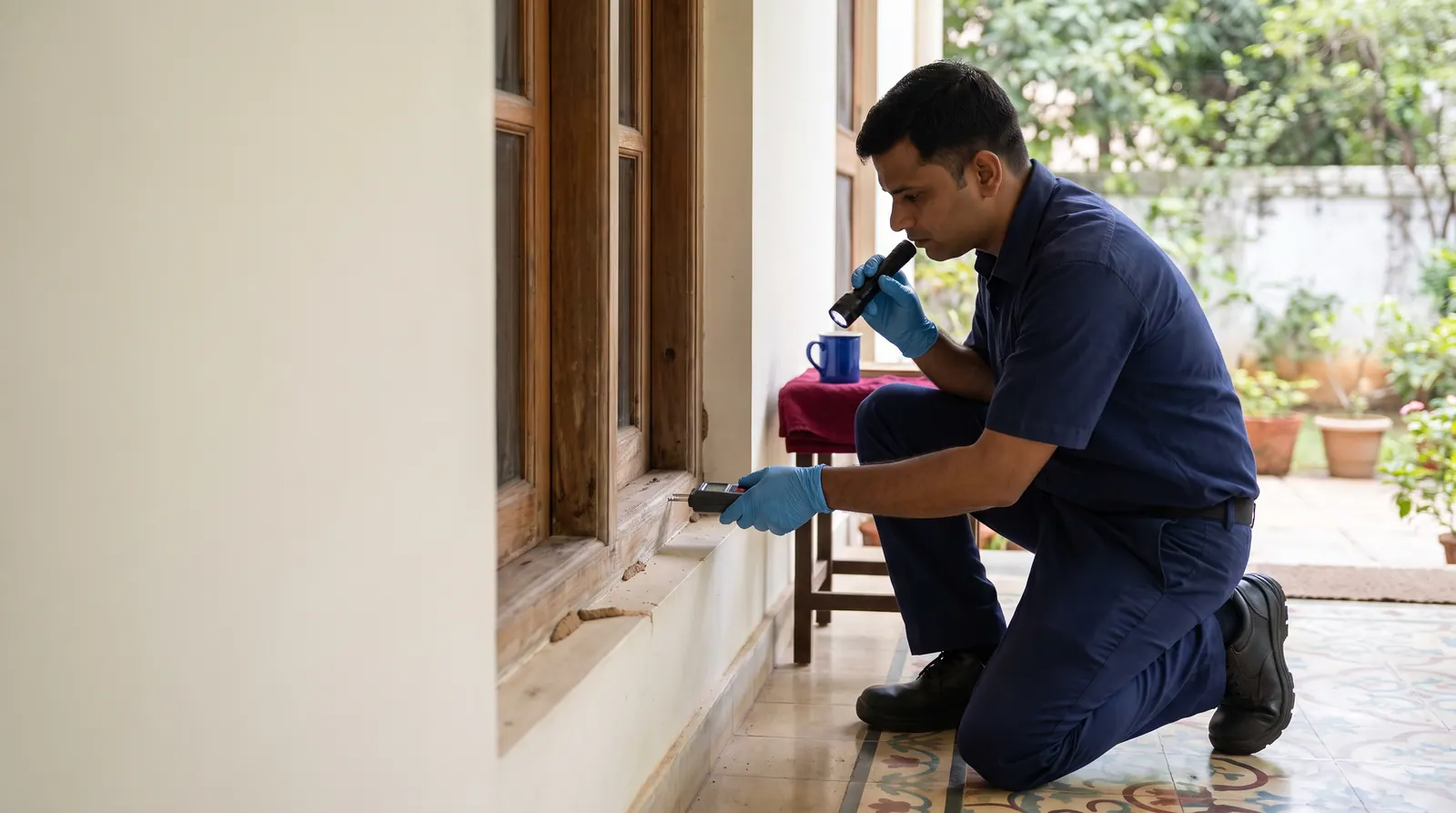
- Inspection. We check walls, the plinth, wooden fittings, storerooms and the compound. We look for live activity, mud tubes and damp, and note where the termites are entering.
- Plan. We explain what we found, which treatment suits the building, which rooms are involved and roughly how long the work will take.
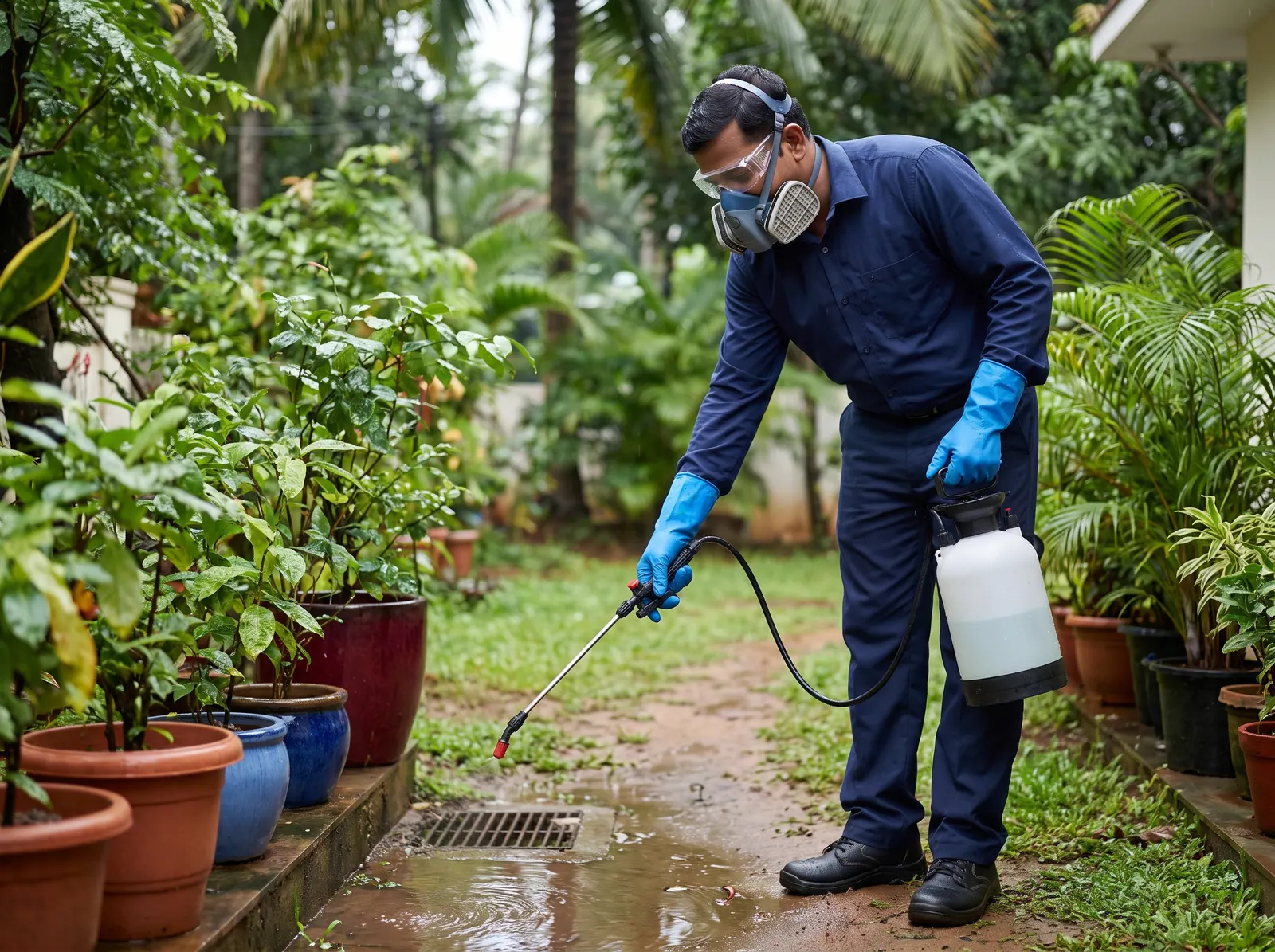
- Treatment. Technicians treat the soil, junctions or wood as planned. They follow label directions and the Material Safety Data Sheets we maintain for every product.
- Sealing and clean-up. Drill holes are sealed and the work area is left tidy.
- Service report. You receive a report as proof of service, along with WhatsApp updates. These records are useful for owners, tenants, housing societies and facility teams.
- Prevention advice. We point out leaks, wood touching soil, and storage habits that could invite termites back.
This is our Integrated Pest Management approach in practice. We inspect first, give sanitation and proofing advice, and then apply targeted treatment rather than spraying everywhere.
Termite control for shops, offices and food businesses
Around Mapusa's market and commercial streets, termite damage often starts in a room nobody checks very often. Common examples are stock stacked against a damp wall, old files in a cupboard, or wooden shelving resting on the floor. We can usually plan the treatment room by room, so the whole premises does not have to close.
For restaurants, bakeries and other food businesses, we provide documentation aligned with HACCP and FSSAI audit expectations. More on scheduled, documented service for businesses is on our commercial pest control in Mapusa page.
How should you prepare, and how do you stay safe?
- Clear the walls where drilling will happen. Move cupboards and stored items a little away from the walls.
- Remove food, utensils and children's toys from the work area.
- Keep children and pets away from treated areas until surfaces are dry, or for as long as the technician advises.
- Open the windows and ventilate rooms after the treatment.
- Wash your hands if you touch any treated surface.
A family member or staff representative should be present during the visit. They can give technicians access and answer questions. If anyone feels unwell after a treatment, see a doctor and mention the service.
What affects the cost and the warranty?
There is no fixed price for termite control, because two Mapusa buildings rarely need the same work. The quotation depends on:
- the floor area;
- how far the termites have spread;
- the treatment method;
- whether wooden fittings also need treating.
Pre-construction work is priced differently from treatment in an occupied building.
For specific services, a warranty applies to the treated area, as set out in your service agreement. It varies by treatment. It does not cover structural changes, new construction, or cases where the post-service instructions are not followed. Termites can still arrive from a neighbouring building or from open ground outside the treated area, so prevention on your side matters too.
How can you keep termites away after treatment?
- Fix roof leaks, plumbing leaks and damp walls before the next monsoon.
- Keep firewood, timber and planks off the ground and away from the house walls.
- Store cartons and files on racks, not directly on the floor.
- Do not let soil or planters pile up against the plinth.
- Check door frames and cupboards from time to time, especially after heavy rain.
To arrange an inspection, contact our Goa branch in Chimbel. Tell us your location in Mapusa, the type of property and what you have noticed; photos of mud tubes or damage are helpful. You can see our other services for the town on the pest control in Mapusa page.
Frequently asked questions
QDo you provide termite control in Mapusa?
Yes. Mapusa (also called Mapsa) is covered by our Goa branch in Chimbel, according to company records. We work with flats, independent houses, villas, shops, offices and storage buildings. When you contact us, share your exact location, the type of property and what you have noticed, such as mud tubes or hollow wood. The team can then plan an inspection visit.
QIs termite treatment safe if I have young children or pets?
We use CIB&RC-registered products, keep Material Safety Data Sheets for them, and apply treatment only where it is needed. Treatment is not spread around the whole house. Keep children and pets out of treated areas until surfaces are dry, or for as long as the technician advises. Ventilate the rooms afterwards and wash your hands if you touch a treated surface. If anyone feels unwell, please see a doctor.
QI am building a house near Mapusa. When should I arrange termite treatment?
Contact us before the foundation and plinth work, not after the flooring is laid. Pre-construction soil treatment is carried out in stages while the soil is still exposed, following the approach in IS 6313 Part 2. Once the floor is finished, the soil beneath it can no longer be treated this way. Any later protection would then need post-construction drilling.
QWill termites come back after treatment?
Treatment targets the treated area, and for specific services a warranty applies to that area, as set out in your service agreement. Termites can still arrive from a neighbouring building or open ground nearby, especially where damp persists. Fixing leaks, keeping wood off the soil and storing items on racks all reduce the chance of them returning. Our technician can advise on prevention for your property.
QHow long does a termite treatment take in a flat or shop?
It depends on the floor area, the number of rooms involved and how much drilling is needed. Many treatments in a flat or small shop are finished in a few hours. Larger premises may take longer. The technician will give you an estimated time after the inspection, so you can plan around family routines or trading hours.
QCan you give records for our housing society or business?
Yes. After each visit we share a service report as proof of service, with updates on WhatsApp. Housing societies, landlords and facility teams often keep these with their property records. For food businesses, we provide documentation aligned with HACCP and FSSAI audit expectations.
Last updated 13 October 2026. Information on this page is general guidance; your technician will advise on your specific property after inspection.